
Java基础—ArrayList源码浅析
注:以下源码均为JDK8的源码
一、 核心属性
基本属性如下:
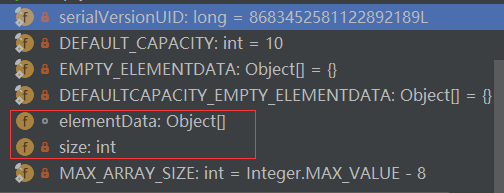
核心的属性其实是红框中的两个:
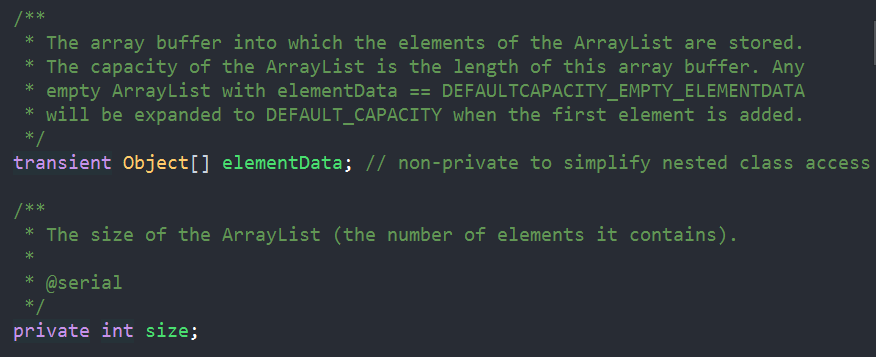
//从注释也容易看出,一个是集合元素,一个是集合长度(注意是逻辑长度,即元素的个数,而非数组长度)
其中:transient指明序列化时请忽略。
二、构造器
一共有3个构造器:

1.构造指定容量的ArrayList

2.默认构造器
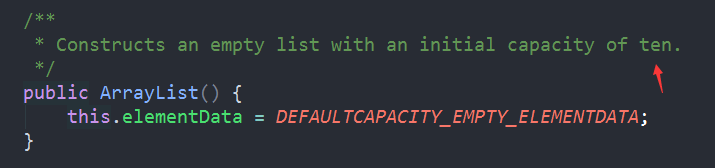
//可以看到,默认初始容量为10(基本属性中的DEFAULT_CAPACITY)
而 DEFAULTCAPACITY_EMPTY_ELEMENTDATA是一个空数组,所有默认构造器初始化的都指向它,目的是为了防止我们创建过多的无用的List
如果创建ArrayList时用的是无参构造器,则第一次插入时会进行一次扩容并且扩到默认数组大小10
3.使用collection参数的构造器

//接收一个集合进行构造,按照迭代器返回的顺序排列
更多容器初始化的介绍,参考是清浅池塘知乎专栏:https://zhuanlan.zhihu.com/p/27873515
三、添加元素
一共有5个(包含2个重载方法)
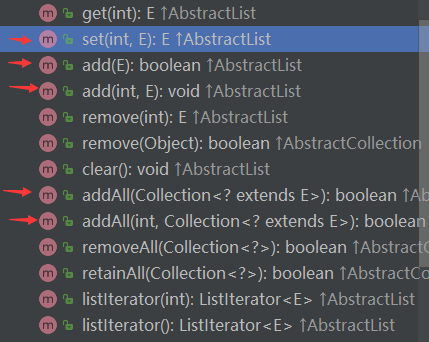
//由于是基于数组进行实现的,我们只要抓住它的特点,就能读懂总体的思路
1.set(int,E),使用新元素,替代指定位置旧元素

//比较容易读懂的一个方法:检查下标->取得旧元素->替代->返回新元素
2.add(E)/add(int,E),包含两个重载方法:在末尾添加元素与在指定位置添加元素
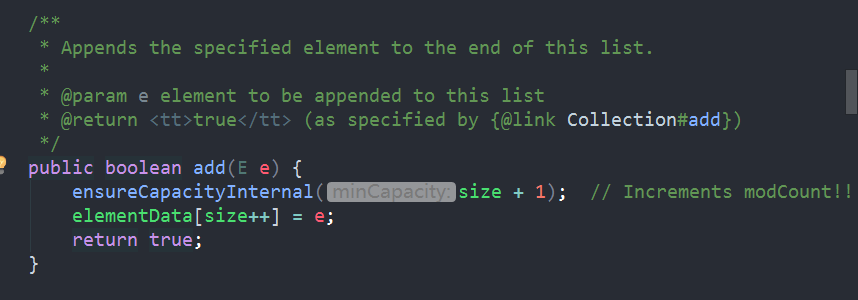
//先检查容量是否需要扩容(扩容算法不在这里展开),再在结尾添加元素(size+1)
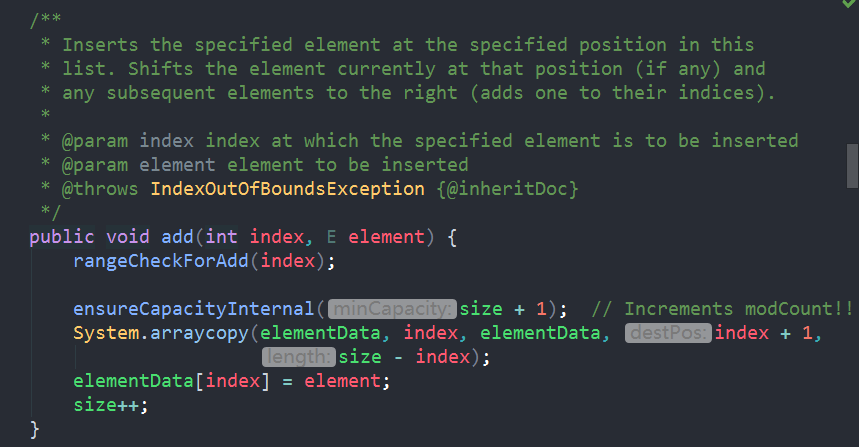
//同样的,涉及下标的都先检查下标,之后检查是否需要扩容,之后,由于是数组,先右移Index+1的元素,再添加
3.addAll(),两个addAll方法,与上面类似,一个为在末尾添加,一个在指定位置添加,顺序均为迭代器返回的顺序,这里就不展开:
  /**

     * Appends all of the elements in the specified collection to the end of

     * this list, in the order that they are returned by the

     * specified collection's Iterator.  The behavior of this operation is

     * undefined if the specified collection is modified while the operation

     * is in progress.  (This implies that the behavior of this call is

     * undefined if the specified collection is this list, and this

     * list is nonempty.)

     *

     * @param c collection containing elements to be added to this list

     * @return <tt>true</tt> if this list changed as a result of the call

     * @throws NullPointerException if the specified collection is null

     */

    public boolean addAll(Collection<? extends E> c) {

        Object[] a = c.toArray();

        int numNew = a.length;

        ensureCapacityInternal(size + numNew);  // Increments modCount

        System.arraycopy(a, 0, elementData, size, numNew);

        size += numNew;

        return numNew != 0;

    }

    /**

     * Inserts all of the elements in the specified collection into this

     * list, starting at the specified position.  Shifts the element

     * currently at that position (if any) and any subsequent elements to

     * the right (increases their indices).  The new elements will appear

     * in the list in the order that they are returned by the

     * specified collection's iterator.

     *

     * @param index index at which to insert the first element from the

     *              specified collection

     * @param c collection containing elements to be added to this list

     * @return <tt>true</tt> if this list changed as a result of the call

     * @throws IndexOutOfBoundsException {@inheritDoc}

     * @throws NullPointerException if the specified collection is null

     */

    public boolean addAll(int index, Collection<? extends E> c) {

        rangeCheckForAdd(index);

        Object[] a = c.toArray();

        int numNew = a.length;

        ensureCapacityInternal(size + numNew);  // Increments modCount

        int numMoved = size - index;

        if (numMoved > 0)

            System.arraycopy(elementData, index, elementData, index + numNew,

                             numMoved);

        System.arraycopy(a, 0, elementData, index, numNew);

        size += numNew;

        return numNew != 0;

    }
四、获取元素
一个我们常见的get方法:
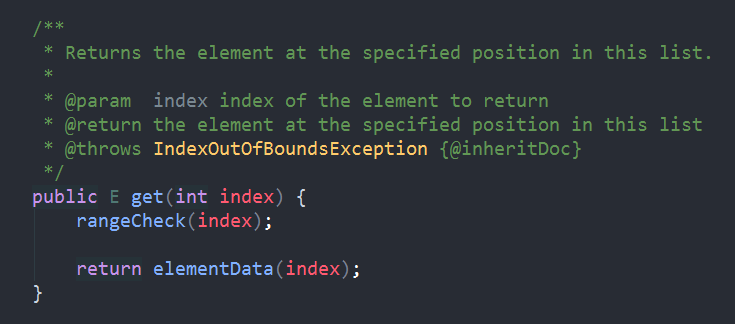
//比较简单的下标检查,获取元素
五、删除元素
3个基本的删除方法:

1.remove(int)/remove(Object),两个重载方法,分别是按照下标和按照元素删除:
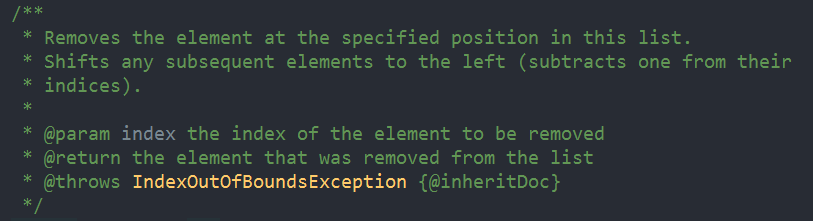
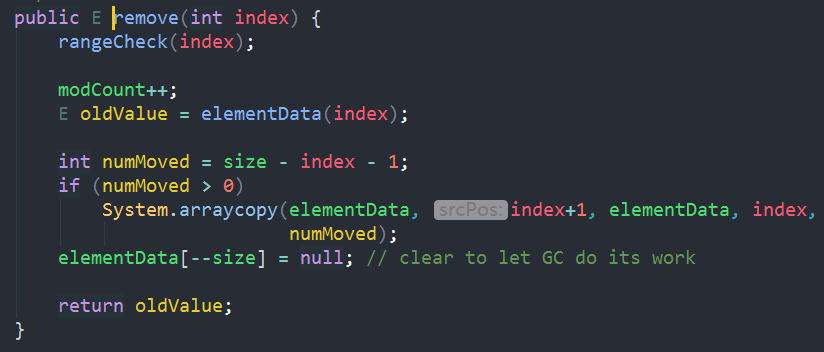
//范围检查->修改次数modCount加1->得到将要删除的元素,被删除元素后的元素向前进一位,末尾元素置空。
关于modCount:
ArrayList也采用了快速失败的机制,通过记录modCount参数来实现。在面对并发的修改时,迭代器很快就会完全失败,而不是冒着在将来某个不确定时间发生任意不确定行为的风险。
在使用迭代器遍历的时候,如果使用ArrayList中的remove(int index) remove(Object o) remove(int fromIndex ,int toIndex) add等方法的时候都会修改modCount,在迭代的时候需要保持单线程的唯一操作,如果期间进行了插入或者删除,就会被迭代器检查获知,从而出现运行时异常


//先检查要删除的元素在不在,存在则删除返回true,不存在返回false
2.removeRange(int,int),按照范围删除,实际是将elementData从toIndex位置开始的元素向前移动到fromIndex,然后将toIndex位置之后的元素全部置空顺便修改size。这里就不展开频率使用不高的范围删除方法了:
/**

     * Removes from this list all of the elements whose index is between

     * {@code fromIndex}, inclusive, and {@code toIndex}, exclusive.

     * Shifts any succeeding elements to the left (reduces their index).

     * This call shortens the list by {@code (toIndex - fromIndex)} elements.

     * (If {@code toIndex==fromIndex}, this operation has no effect.)

     *

     * @throws IndexOutOfBoundsException if {@code fromIndex} or

     *         {@code toIndex} is out of range

     *         ({@code fromIndex < 0 ||

     *          fromIndex >= size() ||

     *          toIndex > size() ||

     *          toIndex < fromIndex})

     */

    protected void removeRange(int fromIndex, int toIndex) {

        modCount++;

        int numMoved = size - toIndex;

        System.arraycopy(elementData, toIndex, elementData, fromIndex,

                         numMoved);

        // clear to let GC do its work

        int newSize = size - (toIndex-fromIndex);

        for (int i = newSize; i < size; i++) {

            elementData[i] = null;

        }

        size = newSize;

    }
清空元素也比较容易看懂:
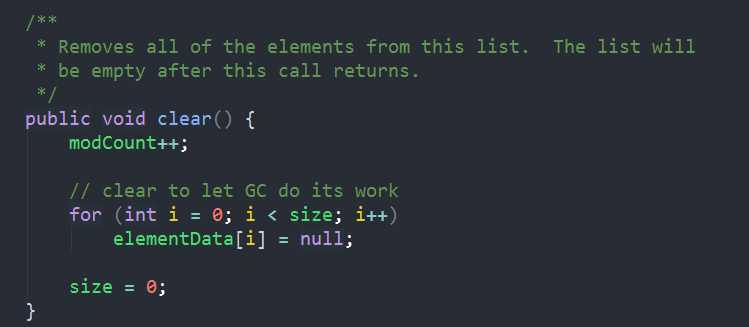
//元素置Null与size置0
在ArrayList中,底层数组存/取元素效率非常的高(get/set),时间复杂度是O(1),而查找,插入和删除元素效率不高,时间复杂度为O(n)。
并且由源码也知道,频繁地插入删除会导致底层数组地复制,这个应当由 LinkedList来弥补它地补足了。
Java基础—ArrayList源码浅析的更多相关文章
- Java基础 ArrayList源码分析 JDK1.8
一.概述 本篇文章记录通过阅读JDK1.8 ArrayList源码,结合自身理解分析其实现原理. ArrayList容器类的使用频率十分频繁,它具有以下特性: 其本质是一个数组,因此它是有序集合 通过 ...
- Java基础——集合源码解析 List List 接口
今天我们来学习集合的第一大体系 List. List 是一个接口,定义了一组元素是有序的.可重复的集合. List 继承自 Collection,较之 Collection,List 还添加了以下操作 ...
- Java集合——ArrayList源码详解
) ArrayList 实现了RandomAccess, Cloneable, java.io.Serializable三个标记接口,表示它自身支持快速随机访问,克隆,序列化. public clas ...
- java的Iterator源码浅析
在java的集合中,List接口继承Collection接口,AbstractList类实现了List接口,在AbstractList中的内部类Itr实现了Iterator接口 ArrayList实现 ...
- Java中ArrayList源码分析
一.简介 ArrayList是一个数组队列,相当于动态数组.每个ArrayList实例都有自己的容量,该容量至少和所存储数据的个数一样大小,在每次添加数据时,它会使用ensureCapacity()保 ...
- Java集合ArrayList源码解读
最近在回顾数据结构,想到JDK这样好的代码资源不利用有点可惜,这是第一篇,花了心思.篇幅有点长,希望想看的朋友认真看下去,提出宝贵的意见. :) 内部原理 ArrayList 的3个字段 priva ...
- ArrayList源码浅析(jdk1.8)
ArrayList的实质就是动态数组.所以可以通过下标准确的找到目标元素,因此查找的效率高.但是添加或删除元素会涉及到大量元素的位置移动,所以效率低. 一.构造方法 ArrayList提供了3个构造方 ...
- Java集合-ArrayList源码解析-JDK1.8
◆ ArrayList简介 ◆ ArrayList 是一个数组队列,相当于 动态数组.与Java中的数组相比,它的容量能动态增长.它继承于AbstractList,实现了List, RandomAcc ...
- 【thinking in java】ArrayList源码分析
简介 ArrayList底层是数组实现的,可以自增扩容的数组,此外它是非线程安全的,一般多用于单线程环境下(Vector是线程安全的,所以ArrayList 性能相对Vector 会好些) Array ...
随机推荐
- Windows 10 X64 ISO 专业版&家庭版下载与永久激活
好久没有更新博客,算算时间,已经有4年了,好吧,今天突发奇想,想把今天安装Windows 10的过程给记录下来. 2015年的时候,微软就发布了Windows 10,当时正版的Win7.Win8都可以 ...
- Apache PredictionIO在Docker上的搭建及使用
1.Apache PredictionIO介绍 Apache PredictionIO 是一个孵化中的机器学习服务器,它可以为为开发人员和数据科学家创建任何机器学习任务的预测引擎.官方原文: Apac ...
- PowerDNS简单教程(2):功能篇
目录: PowerDNS简单教程(1):安装篇 http://www.cnblogs.com/anpengapple/p/5205130.html PowerDNS简单教程(2):功能篇(本篇) Po ...
- Nginx卸载重装问题
1.删除nginx,-purge包括配置文件 sudo apt-get --purge remove nginx 2.移除全部不使用的软件包 sudo apt-get autoremove 3 ...
- PHP Socket 简单使用
<?php /*socket收发数据 @host(string) socket服务器IP @post(int) 端口 @str(string) 要发送的数据 @back 1|0 socket端是 ...
- Ajax同时上传表单序列化参数+自定义参数
$.ajax({ type:'POST', url :"<{:U('jiuzhu/edit')}>", data:$.param({'name1':value1,'na ...
- Kettle api 二次开发之 日志的保存
使用kettle做数据抽取的时候可以使用图形化的工具配置日志保存参数,选择数据库连接,输入日志表名称, 点击sql 执行对应的sql创建日志表即可. 点击保存之后,日志配置会保存在trans或者job ...
- 如何解决使用JMeter时遇到的问题
Apache JMeter是Apache组织开发的基于Java的压力测试工具.用于对软件做压力测试,它最初被设计用于Web应用测试但后来扩展到其他测试领域. 它可以用于测试静态和动态资源例如静态文件. ...
- 【题解】洛谷P1074 [NOIP2009TG] 靶形数独(DFS+剪枝)
洛谷P1074:https://www.luogu.org/problemnew/show/P1074 思路 这道题一看就是DFS 打一个分数表方便后面算分 我用x y z数组分别表示行 列 宫 是否 ...
- Windows中杀死某个端口对应的进程
netstat -ano | findstr 3000 //列出进程极其占用的端口,且包含 3000 tasklist | findstr 17692 // 查看是什么程序占用的 taskkill - ...