
Spring详解(五)------AspectJ 实现AOP
上一篇博客我们引出了 AOP 的概念,以及 AOP 的具体实现方式。但是为什么要这样实现?以及提出的切入点表达式到底该怎么理解?
这篇博客我们通过对 AspectJ 框架的介绍来详细了解。
1、什么是 AspectJ?
AspectJ是一个面向切面的框架,它扩展了Java语言。AspectJ定义了AOP语法,也可以说 AspectJ 是一个基于 Java 语言的 AOP 框架。通常我们在使用 Spring AOP 的时候,都会导入 AspectJ 的相关 jar 包。
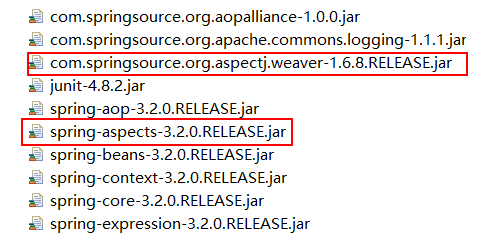
在 spring2.0以后,spring新增了对AspectJ 切点表达式的支持;Aspect1.5新增注解功能,通过 JDK5的注解技术,能直接在类中定义切面;新版本的 spring 框架,也都建议使用 AspectJ 来实现 AOP。所以说在 spring AOP 的核心包 Spring-aop-3.2.jar 里面也有对 AspectJ 的支持。
2、切入点表达式
上一篇博客中,我们在spring配置文件中配置如下:
<!-- 切入点表达式 -->

<aop:pointcut expression="execution(* com.ys.aop.*.*(..))" id="myPointCut"/>
那么它表达的意思是 返回值任意,包名为 com.ys.aop 下的任意类名中的任意方法名,参数任意。那么这到底是什么意思呢?
首先 execution 是 AspectJ 框架定义的一个切入点函数,其语法形式如下:
execution(modifiers-pattern? ref-type-pattern declaring-type-pattern? name-pattern(param-pattern) throws-pattern?)

             类修饰符           返回值           方法所在的包                  方法名                     方法抛出的异常
简单点来说就是:
语法:execution(修饰符 返回值 包.类.方法名(参数) throws异常)
具体解释我们用下面一张思维导图来看:
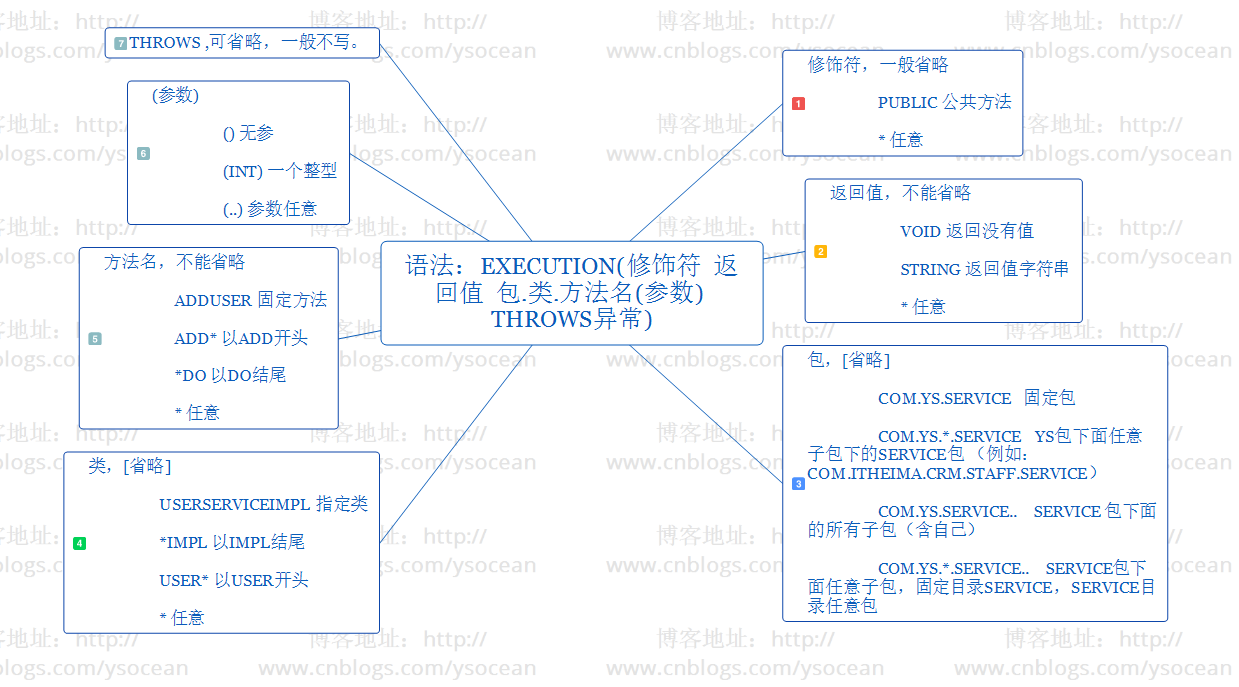
注意:如果切入点表达式有多个不同目录呢? 可以通过 || 来表示或的关系。
<aop:pointcut expression="execution(* com.ys.*Service1.*(..)) ||

                          execution(* com.ys.*Service2.*(..))" id="myPointCut"/>
表示匹配 com.ys包下的,以 Service1结尾或者以Service2结尾的类的任意方法。
AOP 切入点表达式支持多种形式的定义规则:
1、execution:匹配方法的执行(常用)

        execution(public *.*(..))

2.within:匹配包或子包中的方法(了解)

	within(com.ys.aop..*)

3.this:匹配实现接口的代理对象中的方法(了解)

	this(com.ys.aop.user.UserDAO)

4.target:匹配实现接口的目标对象中的方法(了解)

	target(com.ys.aop.user.UserDAO)

5.args:匹配参数格式符合标准的方法(了解)

	args(int,int)

6.bean(id)  对指定的bean所有的方法(了解)

	bean('userServiceId')
2、Aspect 通知类型
Aspect 通知类型,定义了类型名称以及方法格式。类型如下:
        before:前置通知(应用:各种校验)

		在方法执行前执行,如果通知抛出异常,阻止方法运行

	afterReturning:后置通知(应用:常规数据处理)

		方法正常返回后执行,如果方法中抛出异常,通知无法执行

		必须在方法执行后才执行,所以可以获得方法的返回值。

	around:环绕通知(应用:十分强大,可以做任何事情)

		方法执行前后分别执行,可以阻止方法的执行

		必须手动执行目标方法

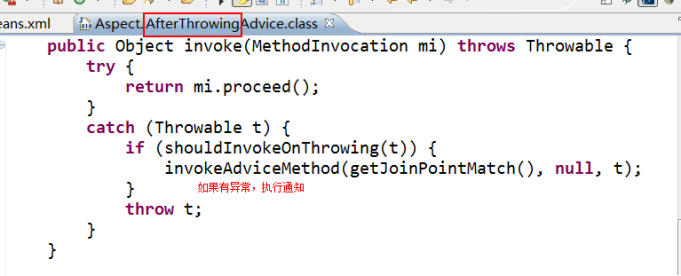
	afterThrowing:抛出异常通知(应用:包装异常信息)

		方法抛出异常后执行,如果方法没有抛出异常,无法执行

	after:最终通知(应用:清理现场)

		方法执行完毕后执行,无论方法中是否出现异常
这里最重要的是around,环绕通知,它可以代替上面的任意通知。
在程序中表示的意思如下:
try{

     //前置:before

    //手动执行目标方法

    //后置:afterRetruning

} catch(){

    //抛出异常 afterThrowing

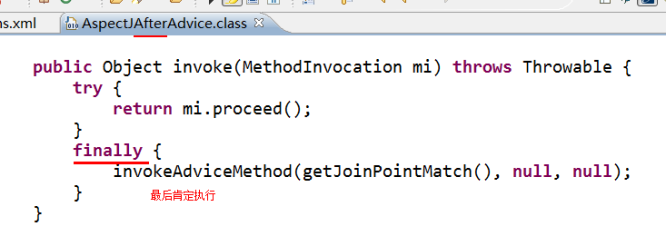
} finally{

    //最终 after

}
对应的 jar 包如下:
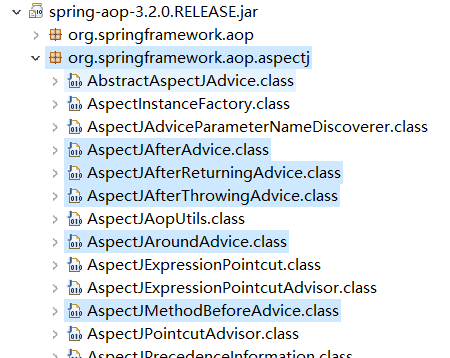
我们可以查看源码:
3、AOP具体实例
①、创建接口
package com.ys.aop;

public interface UserService {

	//添加 user

	public void addUser();

	//删除 user

	public void deleteUser();

}
②、创建实现类
package com.ys.aop;

public class UserServiceImpl implements UserService{

	@Override

	public void addUser() {

		System.out.println("增加 User");

	}

	@Override

	public void deleteUser() {

		System.out.println("删除 User");

	}

}
③、创建切面类(包含各种通知)
package com.ys.aop;

import org.aspectj.lang.JoinPoint;

public class MyAspect {

	/**

	 * JoinPoint 能获取目标方法的一些基本信息

	 * @param joinPoint

	 */

	public void myBefore(JoinPoint joinPoint){

		System.out.println("前置通知 : " + joinPoint.getSignature().getName());

	}

	public void myAfterReturning(JoinPoint joinPoint,Object ret){

		System.out.println("后置通知 : " + joinPoint.getSignature().getName() + " , -->" + ret);

	}

	public void myAfter(){

		System.out.println("最终通知");

	}

}
④、创建spring配置文件applicationContext.xml
我们首先测试前置通知、后置通知、最终通知
<beans xmlns="http://www.springframework.org/schema/beans"

       xmlns:xsi="http://www.w3.org/2001/XMLSchema-instance"

       xmlns:aop="http://www.springframework.org/schema/aop"

       xsi:schemaLocation="http://www.springframework.org/schema/beans

       					   http://www.springframework.org/schema/beans/spring-beans.xsd

       					   http://www.springframework.org/schema/aop

       					   http://www.springframework.org/schema/aop/spring-aop.xsd">

	<!--1、 创建目标类 -->

	<bean id="userService" class="com.ys.aop.UserServiceImpl"></bean>

	<!--2、创建切面类(通知)  -->

	<bean id="myAspect" class="com.ys.aop.MyAspect"></bean>

	<!--3、aop编程

		3.1 导入命名空间

		3.2 使用 <aop:config>进行配置

				proxy-target-class="true" 声明时使用cglib代理

				如果不声明,Spring 会自动选择cglib代理还是JDK动态代理

			<aop:pointcut> 切入点 ,从目标对象获得具体方法

			<aop:advisor> 特殊的切面,只有一个通知 和 一个切入点

				advice-ref 通知引用

				pointcut-ref 切入点引用

		3.3 切入点表达式

			execution(* com.ys.aop.*.*(..))

			选择方法         返回值任意   包             类名任意   方法名任意   参数任意

	-->

	<aop:config>

		<aop:aspect ref="myAspect">

		<!-- 切入点表达式 -->

		<aop:pointcut expression="execution(* com.ys.aop.*.*(..))" id="myPointCut"/>

		<!-- 3.1 前置通知

				<aop:before method="" pointcut="" pointcut-ref=""/>

					method : 通知,及方法名

					pointcut :切入点表达式,此表达式只能当前通知使用。

					pointcut-ref : 切入点引用,可以与其他通知共享切入点。

				通知方法格式:public void myBefore(JoinPoint joinPoint){

					参数1:org.aspectj.lang.JoinPoint  用于描述连接点(目标方法),获得目标方法名等

		-->

		<aop:before method="myBefore" pointcut-ref="myPointCut"/>

		<!-- 3.2后置通知  ,目标方法后执行,获得返回值

				<aop:after-returning method="" pointcut-ref="" returning=""/>

					returning 通知方法第二个参数的名称

				通知方法格式:public void myAfterReturning(JoinPoint joinPoint,Object ret){

					参数1:连接点描述

					参数2:类型Object,参数名 returning="ret" 配置的

		-->

		<aop:after-returning method="myAfterReturning" pointcut-ref="myPointCut" returning="ret" />

		<!-- 3.3 最终通知 -->

		<aop:after method="myAfter" pointcut-ref="myPointCut"/>

		</aop:aspect>

	</aop:config>

</beans>
⑤、测试
@Test

	public void testAop(){

		ApplicationContext context = new ClassPathXmlApplicationContext("applicationContext.xml");

		UserService useService = (UserService) context.getBean("userService");

		useService.addUser();

	}
控制台打印:
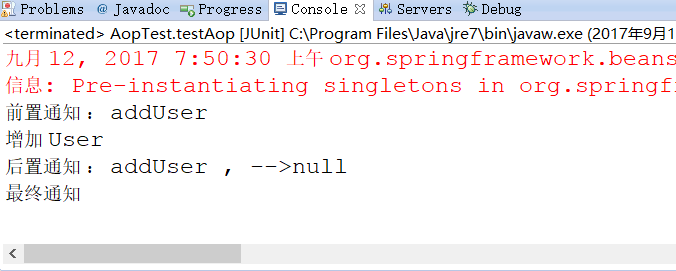
注意,后置通知的返回值为 null,是因为我们的目标方法 addUser() 没有返回值。如果有返回值,这里就是addUser() 的返回值。
4、测试异常通知
目标接口保持不变,目标类我们手动引入异常:
public void addUser() {

		int i = 1/0;//显然这里会抛出除数不能为 0

		System.out.println("增加 User");

	}
接着配置切面:MyAspect.java
public void myAfterThrowing(JoinPoint joinPoint,Throwable e){

		System.out.println("抛出异常通知 : " + e.getMessage());

	}
接着在 applicationContext.xml 中配置如下:
<!-- 3.4 抛出异常

				<aop:after-throwing method="" pointcut-ref="" throwing=""/>

					throwing :通知方法的第二个参数名称

				通知方法格式:public void myAfterThrowing(JoinPoint joinPoint,Throwable e){

					参数1:连接点描述对象

					参数2:获得异常信息,类型Throwable ,参数名由throwing="e" 配置

		-->

		<aop:after-throwing method="myAfterThrowing" pointcut-ref="myPointCut" throwing="e"/>
测试:
@Test

	public void testAop(){

		String str = "com/ys/execption/applicationContext.xml";

		ApplicationContext context = new ClassPathXmlApplicationContext(str);

		UserService useService = (UserService) context.getBean("userService");

		useService.addUser();

	}
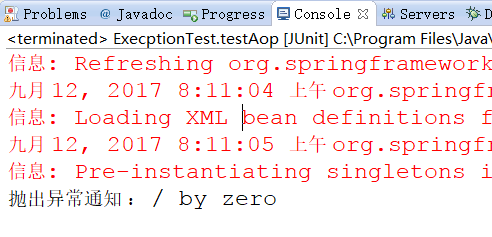
控制台打印:
5、测试环绕通知
目标接口和目标类保持不变,切面MyAspect 修改如下:
public class MyAspect {

	public Object myAround(ProceedingJoinPoint joinPoint) throws Throwable{

		System.out.println("前置通知");

		//手动执行目标方法

		Object obj = joinPoint.proceed();

		System.out.println("后置通知");

		return obj;

	}

}
applicationContext.xml 配置如下:
<!-- 环绕通知

				<aop:around method="" pointcut-ref=""/>

				通知方法格式:public Object myAround(ProceedingJoinPoint joinPoint) throws Throwable{

					返回值类型:Object

					方法名:任意

					参数:org.aspectj.lang.ProceedingJoinPoint

					抛出异常

				执行目标方法:Object obj = joinPoint.proceed();

		-->

		<aop:around method="myAround" pointcut-ref="myPointCut"/>
测试:
@Test

	public void testAop(){

		String str = "com/ys/around/applicationContext.xml";

		ApplicationContext context = new ClassPathXmlApplicationContext(str);

		UserService useService = (UserService) context.getBean("userService");

		useService.addUser();

	}
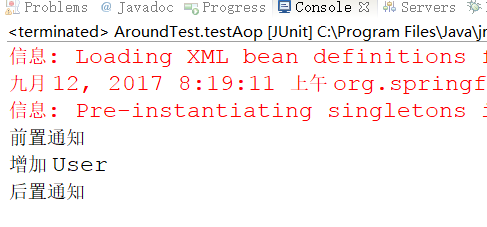
打印结果:
那么至此,通过 xml 配置的方式我们讲解了Spring AOP 的配置。下一章将通过注解的方式来实现。
Spring详解(五)------AspectJ 实现AOP的更多相关文章
- Spring详解(六)------AOP 注解
上一篇博客我们讲解了 AspectJ 框架如何实现 AOP,然后具体的实现方式我们是通过 xml 来进行配置的.xml 方式思路清晰,便于理解,但是书写过于麻烦.这篇博客我们将用 注解 的方式来进行 ...
- Spring详解(七)------AOP 注解
上一篇博客我们讲解了 AspectJ 框架如何实现 AOP,然后具体的实现方式我们是通过 xml 来进行配置的.xml 方式思路清晰,便于理解,但是书写过于麻烦.这篇博客我们将用 注解 的方式来进行 ...
- Spring 详解(二)------- AOP关键概念以及两种实现方式
目录 1. AOP 关键词 2. AOP 的作用 3. AOP 的通知类型 4. 基于 xml 的配置方式 5. 基于注解的配置方式 6. 切面的优先级 7. 重用切点表达式 8. 两种方式的比较(摘 ...
- Spring 详解(一)------- AOP前序
目录 1. AOP 简介 2. 示例需求 3. 解决方法一:使用静态代理 4. 解决方法二:使用动态代理 1. AOP 简介 AOP(Aspect Oriented Programming),通常 ...
- .NET DLL 保护措施详解(五)常规条件下的破解
为了证实在常规手段破解下能有效保护程序核心功能(演示版本对AES加解密算法及数据库的密钥(一段字符串)进行了保护),特对此DLL保护思路进行相应的测试,包含了反编译及反射测试,看是否能得到AES加解密 ...
- 转:Windows下的PHP开发环境搭建——PHP线程安全与非线程安全、Apache版本选择,及详解五种运行模式。
原文来自于:http://www.ituring.com.cn/article/128439 Windows下的PHP开发环境搭建——PHP线程安全与非线程安全.Apache版本选择,及详解五种运行模 ...
- python设计模式之迭代器与生成器详解(五)
前言 迭代器是设计模式中的一种行为模式,它提供一种方法顺序访问一个聚合对象中各个元素, 而又不需暴露该对象的内部表示.python提倡使用生成器,生成器也是迭代器的一种. 系列文章 python设计模 ...
- pika详解(五)登录认证及connectionParameters
pika详解(五)登录认证及connectionParameters 本文链接:https://blog.csdn.net/comprel/article/details/94662916 版权 pi ...
- Spring详解(六)------AspectJ 实现AOP
上一篇博客我们引出了 AOP 的概念,以及 AOP 的具体实现方式.但是为什么要这样实现?以及提出的切入点表达式到底该怎么理解? 这篇博客我们通过对 AspectJ 框架的介绍来详细了解. 1.什么是 ...
随机推荐
- 29. leetcode 167. Two Sum II - Input array is sorted
167. Two Sum II - Input array is sorted Given an array of integers that is already sorted in ascendi ...
- 处理Oracle数据中的无效对象
今天还原了一份数据库(在服务器上没有无效对象),还原在本地之后有三十几个无效对象,当时很是郁闷,然后我发现还原之后的数据库中缺少表! 开始我怀疑Oracle数据库的还原功能,但是在我创建表的时候发现, ...
- oracle数据库中的四种循环
[sql] DECLARE x number; BEGIN x:=9; <<repeat_loop>> --循环点 x:=x-1; DBMS_OUTPUT.PU ...
- LFLiveKit架构简介
LFLiveSession LFLiveSession 是整个sdk的核心,提供对外部的主要接口.主要功能有:管理推流开关.管理音视频录制及渲染.管理录制渲染后的音视频编码.管理编码后的数据上传.管理 ...
- 关于appcompat_v7兼容包的详细说明
1.appcompat_v7包的由来? appcompat_v7是Google提供的向下兼容包,是针对API level 7(Android2.1)及以上版本所开发的,其作用是为了让兼容低版本API( ...
- python发布及调用基于SOAP的webservice
现如今面向服务(SOA)的架构设计已经成为主流,把公用的服务打包成一个个webservice供各方调用是一种非常常用的做法,而应用最广泛的则是基于SOAP协议和wsdl的webservice.本文讲解 ...
- 【平板电脑模拟器】PC端-Chrome自带的功能
直接说使用方式吧, 启动方法:打开Chrome浏览器--〉F12--〉右下角的齿轮按钮(Settings)--〉选择"Overrides" 然后在"Overrides&q ...
- C++之STL总结精华笔记
一.一般介绍 STL(StandardTemplate Library),即标准模板库,是一个具有工业强度的,高效的C++程序库.它被容纳于C++标准程 ...
- Linux下C的线程同步机制
C里提供了保证线程安全性的三种方法: (添加头文件#include<pthread.h>,pthread 库不是 Linux 系统默认的库,连接时需要使用静态库 libpthread.a, ...
- Linux学习总结(十二)—— CentOS用户管理:创建用户、修改用户、修改密码、密码有效期、禁用账户、解锁账户、删除用户、查看所有用户信息
文章首发于Linux学习总结(十二)-- CentOS用户管理,请尊重原创保留原文链接. 创建用户 useradd -g webadmin -d /home/zhangsan zhangsan pas ...