
springboot注解开发
可以毫不夸张地说,这篇文章介绍的 Spring/SpringBoot 常用注解基本已经涵盖你工作中遇到的大部分常用的场景。对于每一个注解我都说了具体用法,掌握搞懂,使用 SpringBoot 来开发项目基本没啥大问题了!
1. @SpringBootApplication
这里先单独拎出@SpringBootApplication 注解说一下,虽然我们一般不会主动去使用它。
Guide 哥:这个注解是 Spring Boot 项目的基石,创建 SpringBoot 项目之后会默认在主类加上。
@SpringBootApplication

public class SpringSecurityJwtGuideApplication {

      public static void main(java.lang.String[] args) {

        SpringApplication.run(SpringSecurityJwtGuideApplication.class, args);

    }

}
我们可以把 @SpringBootApplication看作是 @Configuration、@EnableAutoConfiguration、@ComponentScan 注解的集合。
package org.springframework.boot.autoconfigure;

@Target(ElementType.TYPE)

@Retention(RetentionPolicy.RUNTIME)

@Documented

@Inherited

@SpringBootConfiguration

@EnableAutoConfiguration

@ComponentScan(excludeFilters = {

  @Filter(type = FilterType.CUSTOM, classes = TypeExcludeFilter.class),

  @Filter(type = FilterType.CUSTOM, classes = AutoConfigurationExcludeFilter.class) })

public @interface SpringBootApplication {

   ......

}

package org.springframework.boot;

@Target(ElementType.TYPE)

@Retention(RetentionPolicy.RUNTIME)

@Documented

@Configuration

public @interface SpringBootConfiguration {

}
根据 SpringBoot 官网,这三个注解的作用分别是:
@EnableAutoConfiguration:启用 SpringBoot 的自动配置机制@ComponentScan: 扫描被@Component(@Service,@Controller)注解的 bean,注解默认会扫描该类所在的包下所有的类。@Configuration:允许在 Spring 上下文中注册额外的 bean 或导入其他配置类
2. Spring Bean 相关
2.1. @Autowired
自动导入对象到类中,被注入进的类同样要被 Spring 容器管理比如:Service 类注入到 Controller 类中。
@Service

public class UserService {

  ......

}

@RestController

@RequestMapping("/users")

public class UserController {

   @Autowired

   private UserService userService;

   ......

}
2.2. Component,@Repository,@Service, @Controller
我们一般使用 @Autowired 注解让 Spring 容器帮我们自动装配 bean。要想把类标识成可用于 @Autowired 注解自动装配的 bean 的类,可以采用以下注解实现:
@Component:通用的注解,可标注任意类为Spring组件。如果一个 Bean 不知道属于哪个层,可以使用@Component注解标注。@Repository: 对应持久层即 Dao 层,主要用于数据库相关操作。@Service: 对应服务层,主要涉及一些复杂的逻辑,需要用到 Dao 层。@Controller: 对应 Spring MVC 控制层,主要用户接受用户请求并调用 Service 层返回数据给前端页面。
2.3. @RestController
@RestController注解是@Controller和@ResponseBody的合集,表示这是个控制器 bean,并且是将函数的返回值直 接填入 HTTP 响应体中,是 REST 风格的控制器。
现在都是前后端分离,说实话我已经很久没有用过@Controller。如果你的项目太老了的话,就当我没说。
单独使用 @Controller 不加 @ResponseBody的话一般使用在要返回一个视图的情况,这种情况属于比较传统的 Spring MVC 的应用,对应于前后端不分离的情况。@Controller +@ResponseBody 返回 JSON 或 XML 形式数据
2.4. @Scope
声明 Spring Bean 的作用域,使用方法:
@Bean

@Scope("singleton")

public Person personSingleton() {

    return new Person();

}
四种常见的 Spring Bean 的作用域:
- singleton : 唯一 bean 实例,Spring 中的 bean 默认都是单例的。
- prototype : 每次请求都会创建一个新的 bean 实例。
- request : 每一次 HTTP 请求都会产生一个新的 bean,该 bean 仅在当前 HTTP request 内有效。
- session : 每一次 HTTP 请求都会产生一个新的 bean,该 bean 仅在当前 HTTP session 内有效。
2.5. Configuration
一般用来声明配置类,可以使用 @Component注解替代,不过使用Configuration注解声明配置类更加语义化。
@Configuration

public class AppConfig {

    @Bean

    public TransferService transferService() {

        return new TransferServiceImpl();

    }

}
3. 处理常见的 HTTP 请求类型
5 种常见的请求类型:
- GET :请求从服务器获取特定资源。举个例子:
GET /users(获取所有学生) - POST :在服务器上创建一个新的资源。举个例子:
POST /users(创建学生) - PUT :更新服务器上的资源(客户端提供更新后的整个资源)。举个例子:
PUT /users/12(更新编号为 12 的学生) - DELETE :从服务器删除特定的资源。举个例子:
DELETE /users/12(删除编号为 12 的学生) - PATCH :更新服务器上的资源(客户端提供更改的属性,可以看做作是部分更新),使用的比较少,这里就不举例子了。
3.1. GET 请求
@GetMapping("users") 等价于@RequestMapping(value="/users",method=RequestMethod.GET)
@GetMapping("/users")

public ResponseEntity<List<User>> getAllUsers() {

 return userRepository.findAll();

}
3.2. POST 请求
@PostMapping("users") 等价于@RequestMapping(value="/users",method=RequestMethod.POST)
关于@RequestBody注解的使用,在下面的“前后端传值”这块会讲到。
@PostMapping("/users")

public ResponseEntity<User> createUser(@Valid @RequestBody UserCreateRequest userCreateRequest) {

 return userRespository.save(user);

}
3.3. PUT 请求
@PutMapping("/users/{userId}") 等价于@RequestMapping(value="/users/{userId}",method=RequestMethod.PUT)
@PutMapping("/users/{userId}")

public ResponseEntity<User> updateUser(@PathVariable(value = "userId") Long userId,

  @Valid @RequestBody UserUpdateRequest userUpdateRequest) {

  ......

}
3.4. DELETE 请求
@DeleteMapping("/users/{userId}")等价于@RequestMapping(value="/users/{userId}",method=RequestMethod.DELETE)
@DeleteMapping("/users/{userId}")

public ResponseEntity deleteUser(@PathVariable(value = "userId") Long userId){

  ......

}
3.5. PATCH 请求
一般实际项目中,我们都是 PUT 不够用了之后才用 PATCH 请求去更新数据。
  @PatchMapping("/profile")

  public ResponseEntity updateStudent(@RequestBody StudentUpdateRequest studentUpdateRequest) {

        studentRepository.updateDetail(studentUpdateRequest);

        return ResponseEntity.ok().build();

    }
4. 前后端传值
掌握前后端传值的正确姿势,是你开始 CRUD 的第一步!
4.1. @PathVariable 和 @RequestParam
@PathVariable用于获取路径参数,@RequestParam用于获取查询参数。
举个简单的例子:
@GetMapping("/klasses/{klassId}/teachers")

public List<Teacher> getKlassRelatedTeachers(

         @PathVariable("klassId") Long klassId,

         @RequestParam(value = "type", required = false) String type ) {

...

}
如果我们请求的 url 是:/klasses/{123456}/teachers?type=web
那么我们服务获取到的数据就是:klassId=123456,type=web。
4.2. @RequestBody
用于读取 Request 请求(可能是 POST,PUT,DELETE,GET 请求)的 body 部分并且Content-Type 为 application/json 格式的数据,接收到数据之后会自动将数据绑定到 Java 对象上去。系统会使用HttpMessageConverter或者自定义的HttpMessageConverter将请求的 body 中的 json 字符串转换为 java 对象。
我用一个简单的例子来给演示一下基本使用!
我们有一个注册的接口:
@PostMapping("/sign-up")

public ResponseEntity signUp(@RequestBody @Valid UserRegisterRequest userRegisterRequest) {

  userService.save(userRegisterRequest);

  return ResponseEntity.ok().build();

}
UserRegisterRequest对象:
@Data

@AllArgsConstructor

@NoArgsConstructor

public class UserRegisterRequest {

    @NotBlank

    private String userName;

    @NotBlank

    private String password;

    @FullName

    @NotBlank

    private String fullName;

}
我们发送 post 请求到这个接口,并且 body 携带 JSON 数据:
{"userName":"coder","fullName":"shuangkou","password":"123456"}
这样我们的后端就可以直接把 json 格式的数据映射到我们的 UserRegisterRequest 类上。
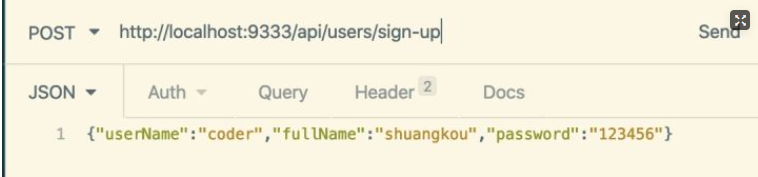
需要注意的是:一个请求方法只可以有一个@RequestBody,但是可以有多个@RequestParam和@PathVariable。 如果你的方法必须要用两个 @RequestBody来接受数据的话,大概率是你的数据库设计或者系统设计出问题了!
5. 读取配置信息
很多时候我们需要将一些常用的配置信息比如阿里云 oss、发送短信、微信认证的相关配置信息等等放到配置文件中。
下面我们来看一下 Spring 为我们提供了哪些方式帮助我们从配置文件中读取这些配置信息。
我们的数据源application.yml内容如下::
wuhan2020: 2020年初武汉爆发了新型冠状病毒,疫情严重,但是,我相信一切都会过去!武汉加油!中国加油!

my-profile:

  name: wcclovely

  email: wcc@qq.com

library:

  location: 湖北武汉加油中国加油

  books:

    - name: 天才基本法

      description: 二十二岁的林朝夕在父亲确诊阿尔茨海默病这天,得知自己暗恋多年的校园男神裴之即将出国深造的消息——对方考取的学校,恰是父亲当年为她放弃的那所。

    - name: 时间的秩序

      description: 为什么我们记得过去,而非未来?时间“流逝”意味着什么?是我们存在于时间之内,还是时间存在于我们之中?卡洛·罗韦利用诗意的文字,邀请我们思考这一亘古难题——时间的本质。

    - name: 了不起的我

      description: 如何养成一个新习惯?如何让心智变得更成熟?如何拥有高质量的关系? 如何走出人生的艰难时刻?
5.1. @value(常用)
使用 @Value("${property}") 读取比较简单的配置信息:
@Value("${wuhan2020}")

String wuhan2020;
5.2. @ConfigurationProperties(常用)
通过@ConfigurationProperties读取配置信息并与 bean 绑定。
@Component

@ConfigurationProperties(prefix = "library")

class LibraryProperties {

    @NotEmpty

    private String location;

    private List<Book> books;

    @Setter

    @Getter

    @ToString

    static class Book {

        String name;

        String description;

    }

  省略getter/setter

  ......

}
你可以像使用普通的 Spring bean 一样,将其注入到类中使用。
5.3. PropertySource(不常用)
@PropertySource读取指定 properties 文件
@Component

@PropertySource("classpath:website.properties")

class WebSite {

    @Value("${url}")

    private String url;

  省略getter/setter

  ......

}
6. 参数校验
数据的校验的重要性就不用说了,即使在前端对数据进行校验的情况下,我们还是要对传入后端的数据再进行一遍校验,避免用户绕过浏览器直接通过一些 HTTP 工具直接向后端请求一些违法数据。
JSR(Java Specification Requests) 是一套 JavaBean 参数校验的标准,它定义了很多常用的校验注解,我们可以直接将这些注解加在我们 JavaBean 的属性上面,这样就可以在需要校验的时候进行校验了,非常方便!
校验的时候我们实际用的是 Hibernate Validator 框架。Hibernate Validator 是 Hibernate 团队最初的数据校验框架,Hibernate Validator 4.x 是 Bean Validation 1.0(JSR 303)的参考实现,Hibernate Validator 5.x 是 Bean Validation 1.1(JSR 349)的参考实现,目前最新版的 Hibernate Validator 6.x 是 Bean Validation 2.0(JSR 380)的参考实现。
SpringBoot 项目的 spring-boot-starter-web 依赖中已经有 hibernate-validator 包,不需要引用相关依赖。如下图所示(通过 idea 插件—Maven Helper 生成):
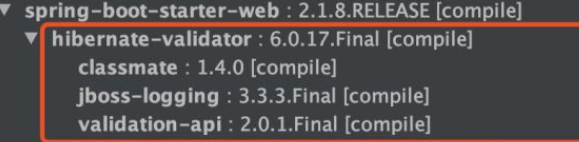
非 SpringBoot 项目需要自行引入相关依赖包,这里不多做讲解
需要注意的是: 所有的注解,推荐使用 JSR 注解,即javax.validation.constraints,而不是org.hibernate.validator.constraints
6.1. 一些常用的字段验证的注解
@NotEmpty被注释的字符串的不能为 null 也不能为空@NotBlank被注释的字符串非 null,并且必须包含一个非空白字符@Null被注释的元素必须为 null@NotNull被注释的元素必须不为 null@AssertTrue被注释的元素必须为 true@AssertFalse被注释的元素必须为 false@Pattern(regex=,flag=)被注释的元素必须符合指定的正则表达式@Email被注释的元素必须是 Email 格式。@Min(value)被注释的元素必须是一个数字,其值必须大于等于指定的最小值@Max(value)被注释的元素必须是一个数字,其值必须小于等于指定的最大值@DecimalMin(value)被注释的元素必须是一个数字,其值必须大于等于指定的最小值@DecimalMax(value)被注释的元素必须是一个数字,其值必须小于等于指定的最大值@Size(max=, min=)被注释的元素的大小必须在指定的范围内@Digits (integer, fraction)被注释的元素必须是一个数字,其值必须在可接受的范围内@Past被注释的元素必须是一个过去的日期@Future被注释的元素必须是一个将来的日期- ......
6.2. 验证请求体(RequestBody)
@Data

@AllArgsConstructor

@NoArgsConstructor

public class Person {

    @NotNull(message = "classId 不能为空")

    private String classId;

    @Size(max = 33)

    @NotNull(message = "name 不能为空")

    private String name;

    @Pattern(regexp = "((^Man$|^Woman$|^UGM$))", message = "sex 值不在可选范围")

    @NotNull(message = "sex 不能为空")

    private String sex;

    @Email(message = "email 格式不正确")

    @NotNull(message = "email 不能为空")

    private String email;

}
我们在需要验证的参数上加上了@Valid注解,如果验证失败,它将抛出MethodArgumentNotValidException。
@RestController

@RequestMapping("/api")

public class PersonController {

    @PostMapping("/person")

    public ResponseEntity<Person> getPerson(@RequestBody @Valid Person person) {

        return ResponseEntity.ok().body(person);

    }

}
6.3. 验证请求参数(Path Variables 和 Request Parameters)
一定一定不要忘记在类上加上 Validated 注解了,这个参数可以告诉 Spring 去校验方法参数。
@RestController

@RequestMapping("/api")

@Validated

public class PersonController {

    @GetMapping("/person/{id}")

    public ResponseEntity<Integer> getPersonByID(@Valid @PathVariable("id") @Max(value = 5,message = "超过 id 的范围了") Integer id) {

        return ResponseEntity.ok().body(id);

    }

}
7. 全局处理 Controller 层异常
介绍一下我们 Spring 项目必备的全局处理 Controller 层异常。
相关注解:
@ControllerAdvice:注解定义全局异常处理类@ExceptionHandler:注解声明异常处理方法
如何使用呢?拿我们在第 5 节参数校验这块来举例子。如果方法参数不对的话就会抛出MethodArgumentNotValidException,我们来处理这个异常。
@ControllerAdvice

@ResponseBody

public class GlobalExceptionHandler {

    /**

     * 请求参数异常处理

     */

    @ExceptionHandler(MethodArgumentNotValidException.class)

    public ResponseEntity<?> handleMethodArgumentNotValidException(MethodArgumentNotValidException ex, HttpServletRequest request) {

       ......

    }

}
8. JPA 相关
8.1. 创建表
@Entity声明一个类对应一个数据库实体。
@Table 设置表明
@Entity

@Table(name = "role")

public class Role {

    @Id

    @GeneratedValue(strategy = GenerationType.IDENTITY)

    private Long id;

    private String name;

    private String description;

    省略getter/setter......

}
8.2. 创建主键
@Id :声明一个字段为主键。
使用@Id声明之后,我们还需要定义主键的生成策略。我们可以使用 @GeneratedValue 指定主键生成策略。
1.通过 @GeneratedValue直接使用 JPA 内置提供的四种主键生成策略来指定主键生成策略。
@Id

@GeneratedValue(strategy = GenerationType.IDENTITY)

private Long id;
JPA 使用枚举定义了 4 中常见的主键生成策略,如下:
枚举替代常量的一种用法
public enum GenerationType {

    /**

     * 使用一个特定的数据库表格来保存主键

     * 持久化引擎通过关系数据库的一张特定的表格来生成主键,

     */

    TABLE,

    /**

     *在某些数据库中,不支持主键自增长,比如Oracle、PostgreSQL其提供了一种叫做"序列(sequence)"的机制生成主键

     */

    SEQUENCE,

    /**

     * 主键自增长

     */

    IDENTITY,

    /**

     *把主键生成策略交给持久化引擎(persistence engine),

     *持久化引擎会根据数据库在以上三种主键生成 策略中选择其中一种

     */

    AUTO

}
@GeneratedValue注解默认使用的策略是GenerationType.AUTO
public @interface GeneratedValue {

    GenerationType strategy() default AUTO;

    String generator() default "";

}
一般使用 MySQL 数据库的话,使用GenerationType.IDENTITY策略比较普遍一点(分布式系统的话需要另外考虑使用分布式 ID)。
2.通过 @GenericGenerator声明一个主键策略,然后 @GeneratedValue使用这个策略
@Id

@GeneratedValue(generator = "IdentityIdGenerator")

@GenericGenerator(name = "IdentityIdGenerator", strategy = "identity")

private Long id;
等价于:
@Id

@GeneratedValue(strategy = GenerationType.IDENTITY)

private Long id;
jpa 提供的主键生成策略有如下几种:
public class DefaultIdentifierGeneratorFactory

  implements MutableIdentifierGeneratorFactory, Serializable, ServiceRegistryAwareService {

 @SuppressWarnings("deprecation")

 public DefaultIdentifierGeneratorFactory() {

  register( "uuid2", UUIDGenerator.class );

  register( "guid", GUIDGenerator.class );   // can be done with UUIDGenerator + strategy

  register( "uuid", UUIDHexGenerator.class );   // "deprecated" for new use

  register( "uuid.hex", UUIDHexGenerator.class );  // uuid.hex is deprecated

  register( "assigned", Assigned.class );

  register( "identity", IdentityGenerator.class );

  register( "select", SelectGenerator.class );

  register( "sequence", SequenceStyleGenerator.class );

  register( "seqhilo", SequenceHiLoGenerator.class );

  register( "increment", IncrementGenerator.class );

  register( "foreign", ForeignGenerator.class );

  register( "sequence-identity", SequenceIdentityGenerator.class );

  register( "enhanced-sequence", SequenceStyleGenerator.class );

  register( "enhanced-table", TableGenerator.class );

 }

 public void register(String strategy, Class generatorClass) {

  LOG.debugf( "Registering IdentifierGenerator strategy [%s] -> [%s]", strategy, generatorClass.getName() );

  final Class previous = generatorStrategyToClassNameMap.put( strategy, generatorClass );

  if ( previous != null ) {

   LOG.debugf( "    - overriding [%s]", previous.getName() );

  }

 }

}
8.3. 设置字段类型
@Column 声明字段。
示例:
设置属性 userName 对应的数据库字段名为 user_name,长度为 32,非空
@Column(name = "user_name", nullable = false, length=32)

private String userName;
设置字段类型并且加默认值,这个还是挺常用的。
Column(columnDefinition = "tinyint(1) default 1")

private Boolean enabled;
8.4. 指定不持久化特定字段
@Transient :声明不需要与数据库映射的字段,在保存的时候不需要保存进数据库 。
如果我们想让secrect 这个字段不被持久化,可以使用 @Transient关键字声明。
Entity(name="USER")

public class User {

    ......

    @Transient

    private String secrect; // not persistent because of @Transient

}
除了 @Transient关键字声明, 还可以采用下面几种方法:
static String secrect; // not persistent because of static

final String secrect = “Satish”; // not persistent because of final

transient String secrect; // not persistent because of transient
一般使用注解的方式比较多。
8.5. 声明大字段
@Lob:声明某个字段为大字段。
@Lob

private String content;
更详细的声明:
@Lob

//指定 Lob 类型数据的获取策略, FetchType.EAGER 表示非延迟 加载,而 FetchType. LAZY 表示延迟加载 ;

@Basic(fetch = FetchType.EAGER)

//columnDefinition 属性指定数据表对应的 Lob 字段类型

@Column(name = "content", columnDefinition = "LONGTEXT NOT NULL")

private String content;
8.6. 创建枚举类型的字段
可以使用枚举类型的字段,不过枚举字段要用@Enumerated注解修饰。
public enum Gender {

    MALE("男性"),

    FEMALE("女性");

    private String value;

    Gender(String str){

        value=str;

    }

}

@Entity

@Table(name = "role")

public class Role {

    @Id

    @GeneratedValue(strategy = GenerationType.IDENTITY)

    private Long id;

    private String name;

    private String description;

    @Enumerated(EnumType.STRING)

    private Gender gender;

    省略getter/setter......

}
数据库里面对应存储的是 MAIL/FEMAIL。
8.7. 增加审计功能
只要继承了 AbstractAuditBase的类都会默认加上下面四个字段。
@Data

@AllArgsConstructor

@NoArgsConstructor

@MappedSuperclass

@EntityListeners(value = AuditingEntityListener.class)

public abstract class AbstractAuditBase {

    @CreatedDate

    @Column(updatable = false)

    @JsonIgnore

    private Instant createdAt;

    @LastModifiedDate

    @JsonIgnore

    private Instant updatedAt;

    @CreatedBy

    @Column(updatable = false)

    @JsonIgnore

    private String createdBy;

    @LastModifiedBy

    @JsonIgnore

    private String updatedBy;

}
我们对应的审计功能对应地配置类可能是下面这样的(Spring Security 项目):
@Configuration

@EnableJpaAuditing

public class AuditSecurityConfiguration {

    @Bean

    AuditorAware<String> auditorAware() {

        return () -> Optional.ofNullable(SecurityContextHolder.getContext())

                .map(SecurityContext::getAuthentication)

                .filter(Authentication::isAuthenticated)

                .map(Authentication::getName);

    }

}
简单介绍一下上面设计到的一些注解:
@CreatedDate: 表示该字段为创建时间时间字段,在这个实体被 insert 的时候,会设置值@CreatedBy:表示该字段为创建人,在这个实体被 insert 的时候,会设置值
@LastModifiedDate、@LastModifiedBy同理。
@EnableJpaAuditing:开启 JPA 审计功能。
8.8. 删除/修改数据
@Modifying 注解提示 JPA 该操作是修改操作,注意还要配合@Transactional注解使用。
@Repository

public interface UserRepository extends JpaRepository<User, Integer> {

    @Modifying

    @Transactional(rollbackFor = Exception.class)

    void deleteByUserName(String userName);

}
8.9. 关联关系
@OneToOne声明一对一关系@OneToMany声明一对多关系@ManyToOne声明多对一关系MangToMang声明多对多关系
9. 事务 @Transactional
在要开启事务的方法上使用@Transactional注解即可!
@Transactional(rollbackFor = Exception.class)

public void save() {

  ......

}
我们知道 Exception 分为运行时异常 RuntimeException 和非运行时异常。在@Transactional注解中如果不配置rollbackFor属性,那么事物只会在遇到RuntimeException的时候才会回滚,加上rollbackFor=Exception.class,可以让事物在遇到非运行时异常时也回滚。
@Transactional 注解一般用在可以作用在类或者方法上。
- 作用于类:当把
@Transactional 注解放在类上时,表示所有该类的public 方法都配置相同的事务属性信息。 - 作用于方法:当类配置了
@Transactional,方法也配置了@Transactional,方法的事务会覆盖类的事务配置信息。
10. json 数据处理
10.1. 过滤 json 数据
@JsonIgnoreProperties 作用在类上用于过滤掉特定字段不返回或者不解析。
//生成json时将userRoles属性过滤

@JsonIgnoreProperties({"userRoles"})

public class User {

    private String userName;

    private String fullName;

    private String password;

    @JsonIgnore

    private List<UserRole> userRoles = new ArrayList<>();

}
@JsonIgnore一般用于类的属性上,作用和上面的@JsonIgnoreProperties 一样。
public class User {

    private String userName;

    private String fullName;

    private String password;

   //生成json时将userRoles属性过滤

    @JsonIgnore

    private List<UserRole> userRoles = new ArrayList<>();

}
10.2. 格式化 json 数据
@JsonFormat一般用来格式化 json 数据。:
比如:
@JsonFormat(shape=JsonFormat.Shape.STRING, pattern="yyyy-MM-dd'T'HH:mm:ss.SSS'Z'", timezone="GMT")

private Date date;
10.3. 扁平化对象
@Getter

@Setter

@ToString

public class Account {

    @JsonUnwrapped

    private Location location;

    @JsonUnwrapped

    private PersonInfo personInfo;

  @Getter

  @Setter

  @ToString

  public static class Location {

     private String provinceName;

     private String countyName;

  }

  @Getter

  @Setter

  @ToString

  public static class PersonInfo {

    private String userName;

    private String fullName;

  }

}
未扁平化之前:
{

    "location": {

        "provinceName":"湖北",

        "countyName":"武汉"

    },

    "personInfo": {

        "userName": "coder1234",

        "fullName": "shaungkou"

    }

}
使用@JsonUnwrapped 扁平对象之后:
@Getter

@Setter

@ToString

public class Account {

    @JsonUnwrapped

    private Location location;

    @JsonUnwrapped

    private PersonInfo personInfo;

    ......

}

{

  "provinceName":"湖北",

  "countyName":"武汉",

  "userName": "coder1234",

  "fullName": "shaungkou"

}
11. 测试相关
@ActiveProfiles一般作用于测试类上, 用于声明生效的 Spring 配置文件。
@SpringBootTest(webEnvironment = RANDOM_PORT)

@ActiveProfiles("test")

@Slf4j

public abstract class TestBase {

  ......

}
@Test声明一个方法为测试方法
@Transactional被声明的测试方法的数据会回滚,避免污染测试数据。
@WithMockUser Spring Security 提供的,用来模拟一个真实用户,并且可以赋予权限。
      @Test

    @Transactional

    @WithMockUser(username = "user-id-18163138155", authorities = "ROLE_TEACHER")

    void should_import_student_success() throws Exception {

        ......

    }
springboot注解开发的更多相关文章
- springboot整合mybaits注解开发
springboot整合mybaits注解开发时,返回json或者map对象时,如果一个字段的value为空,需要更改springboot的配置文件 mybatis: configuration: c ...
- 小D课堂-SpringBoot 2.x微信支付在线教育网站项目实战_3-2.使用Mybatis注解开发视频列表增删改查
笔记 2.使用Mybatis注解开发视频列表增删改查 讲解:使用Mybatis3.x注解方式 增删改查实操, 控制台打印sql语句 1.控制台打印sql语句 ...
- springboot注解使用说明
springboot注解 @RestController和@RequestMapping注解 我们的Example类上使用的第一个注解是 @RestController .这被称为一个构造型(ster ...
- 千锋很火的SpringBoot实战开发教程视频
springboot是什么? Spring Boot是由Pivotal团队提供的全新框架,其设计目的是用来简化新Spring应用的初始搭建以及开发过程.该框架使用了特定的方式来进行配置,从而使开发人员 ...
- springboot 快速开发的定制补充
增强 SpringBoot 快速开发工具 项目地址:https://gitee.com/sanri/web-ui 优点:这是一个 web 通用配置的组件,即插即用,可用于新项目或私活.是对 Sprin ...
- Spring注解开发系列专栏
这个系列主要是讲Spring注解的使用,可以为后面SpringBoot的学习带来一定的帮助.我觉得从Spring直接过度到SpringBoot还是有点快,还是得需要一个演变的过程.从Spring开发, ...
- springboot实战开发全套教程,让开发像搭积木一样简单!Github星标已上10W+!
前言 先说一下,这份教程在github上面星标已上10W,下面我会一一给大家举例出来全部内容,原链接后面我会发出来!首先我讲一下接下来我们会讲到的知识和技术,对比讲解了多种同类技术的使用手日区别,大家 ...
- 【java框架】MyBatis(7)--MyBatis注解开发
1.MyBatis注解开发 1.1.Lombok的基本使用 Lombok是SpringBoot2.1.X版本与IDEA官方支持的一个插件,它是为简化POJO类中繁杂重复代码:geter/setter/ ...
- Spring学习04(使用注解开发)
7.使用注解开发 说明:在spring4之后,想要使用注解形式,必须得要引入aop的包. 在配置文件当中,还得要引入一个context约束 <?xml version="1.0&quo ...
随机推荐
- linux based bottlerocket-os
linux based bottlerocket-os 概要 aws开源,专注与运行容器的linux os 参看 https://github.com/bottlerocket-os
- js--获取滚动条位置,并实现页面滑动到锚点位置
前言 这篇来记录下最近工作中遇到的一个问题,在app原生和前端h5混合开发的过程中,其中一个页面是选择城市列表的页面,类似于美团饿了么城市选择,银行app中银行列表选择,通讯录中快速定位到联系人选择的 ...
- Cocos Creator 新资源管理系统剖析
目录 1.资源与构建 1.1 creator资源文件基础 1.2 资源构建 1.2.1 图片.图集.自动图集 1.2.2 Prefab与场景 1.2.3 资源文件合并规则 2. 理解与使用 Asset ...
- 常用 .gitignore 模板
前言 每次建项目的时候可以直接复制了,也算是方便自己,以后发现少的会更新 正文 作用 git提交时忽略文件 文件名 .gitignore Python # Byte-compiled / optimi ...
- Spark学习进度11-Spark Streaming&Structured Streaming
Spark Streaming Spark Streaming 介绍 批量计算 流计算 Spark Streaming 入门 Netcat 的使用 项目实例 目标:使用 Spark Streaming ...
- 《计算机组成原理 》& 《计算机网络》& 《数据库》 Roadmap for self-taugh student
计算机组成原理: UCB的这门课绝对是不错的资源. Great Ideas in Computer Architecture (Machine Structures) B站:https://www.b ...
- Nginx Consul nginx-upsync-module
nginx consul nginx-upsync-module 依赖包: yum -y install libpcre3 libpcre3-dev ruby zlib1g-dev patch 下载n ...
- Soat控制HAProxy 动态增减服务器
Soat控制HaProxy 动态增减服务器 安装HaProxy-1.5.18: yum install haproxy -y yum install socat -y HaProxy-1.5.18 配 ...
- Maven学习笔记之第一个Maven项目(Linux)
Maven是Apache旗下的管理Java项目jar包的项目管理工具,有了它可以很方便构建和管理我们的Java项目,你不必在互联网上逐个查找你需要的第三方jar包,你只需在maven reposito ...
- 【ASM】介绍Oracle自带的一些ASM维护工具 (kfod/kfed/amdu)
转自:http://blog.csdn.net/wenzhongyan/article/details/47043253 非常感谢作者的文章,很有价值!至此转载,非常感谢 1.前言 ASM(Autom ...