
SSM整合学习 四
事务管理
一:初步理解
理解事务之前,先讲一个你日常生活中最常干的事:取钱。
比如你去ATM机取1000块钱,大体有两个步骤:首先输入密码金额,银行卡扣掉1000元钱;然后ATM出1000元钱。这两个步骤必须是要么都执行要么都不执行。如果银行卡扣除了1000块但是ATM出钱失败的话,你将会损失1000元;如果银行卡扣钱失败但是ATM却出了1000块,那么银行将损失1000元。所以,如果一个步骤成功另一个步骤失败对双方都不是好事,如果不管哪一个步骤失败了以后,整个取钱过程都能回滚,也就是完全取消所有操作的话,这对双方都是极好的。
事务就是用来解决类似问题的。事务是一系列的动作,它们综合在一起才是一个完整的工作单元,这些动作必须全部完成,如果有一个失败的话,那么事务就会回滚到最开始的状态,仿佛什么都没发生过一样。
在企业级应用程序开发中,事务管理必不可少的技术,用来确保数据的完整性和一致性。
事务有四个特性:ACID
- 原子性(Atomicity):事务是一个原子操作,由一系列动作组成。事务的原子性确保动作要么全部完成,要么完全不起作用。
- 一致性(Consistency):一旦事务完成(不管成功还是失败),系统必须确保它所建模的业务处于一致的状态,而不会是部分完成部分失败。在现实中的数据不应该被破坏。
- 隔离性(Isolation):可能有许多事务会同时处理相同的数据,因此每个事务都应该与其他事务隔离开来,防止数据损坏。
- 持久性(Durability):一旦事务完成,无论发生什么系统错误,它的结果都不应该受到影响,这样就能从任何系统崩溃中恢复过来。通常情况下,事务的结果被写到持久化存储器中。
Spring事务管理包含两种情况,编程式事务、声明式事务。而声明式事务又包括基于注解@Transactional和tx+aop的方式。编程式事务管理使用TransactionTemplate或者PlatformTransactionManager。 编程式事务需要手动在代码中处理事务,项目中使用的较少,也不推荐使用,因为它直接耦合代码,这里就不多介绍了,本文主要讲解申明式事务
二:申明式事务
注解@Transactional
我们将之前的项目改造,在Spring配置文件applicationContext.xml中屏蔽AOP及TX部分
- <?xml version="1.0" encoding="UTF-8"?>
<beans xmlns="http://www.springframework.org/schema/beans"
xmlns:xsi="http://www.w3.org/2001/XMLSchema-instance"
xmlns:context="http://www.springframework.org/schema/context"
xmlns:tx="http://www.springframework.org/schema/tx"
xmlns:aop="http://www.springframework.org/schema/aop"
xsi:schemaLocation="http://www.springframework.org/schema/beans
http://www.springframework.org/schema/beans/spring-beans.xsd
http://www.springframework.org/schema/tx http://www.springframework.org/schema/tx/spring-tx.xsd
http://www.springframework.org/schema/aop https://www.springframework.org/schema/aop/spring-aop.xsd
http://www.springframework.org/schema/context
http://www.springframework.org/schema/context/spring-context-3.0.xsd">- <!--加载上下文注解配置-->
<context:annotation-config/>
<context:property-placeholder location="classpath:Resources/db.properties"/>
<context:component-scan base-package="com.founderit">
<context:exclude-filter type="annotation" expression="org.springframework.stereotype.Controller"/>
</context:component-scan>
<aop:aspectj-autoproxy/>- <!--DBCP数据库连接池-->
<bean id="dataSource"
class="org.apache.commons.dbcp2.BasicDataSource"
destroy-method="close" >
<property name="driverClassName" value="${DRIVERCLASS}"/>
<property name="url" value="${URL}"/>
<property name="username" value="${USERNAME}"/>
<property name="password" value="${PASSWORD}"/>
<!--maxActive: 最大连接数量-->
<property name="maxTotal" value="150"/>
<!--minIdle: 最小空闲连接-->
<property name="minIdle" value="5"/>
<!--maxIdle: 最大空闲连接-->
<property name="maxIdle" value="20"/>
<!--initialSize: 初始化连接-->
<property name="initialSize" value="30"/>
<!--removeAbandonedTimeout: 超时时间(以秒数为单位)-->
<property name="removeAbandonedTimeout" value="10"/>
</bean>- <!-- spring和MyBatis完美整合 -->
<bean id="sqlSessionFactory" class="org.mybatis.spring.SqlSessionFactoryBean">
<property name="dataSource" ref="dataSource"/>
<!-- 自动扫描mapping.xml文件 -->
<property name="mapperLocations" value="classpath:com/founderit/mapper/*.xml"></property>
</bean>- <!-- DAO接口所在包名,Spring会自动查找其下的类 -->
<bean class="org.mybatis.spring.mapper.MapperScannerConfigurer">
<property name="basePackage" value="com.founderit.dao"/>
<property name="sqlSessionFactoryBeanName" value="sqlSessionFactory"></property>
</bean>- <!--事务管理部分-->
<bean id="transactionManager"
class="org.springframework.jdbc.datasource.DataSourceTransactionManager">
<property name="dataSource" ref="dataSource" />
</bean>
<tx:annotation-driven transaction-manager="transactionManager" proxy-target-class="true" />- <!-- <tx:advice id="txAdvice" transaction-manager="transactionManager">-->
<!-- <tx:attributes>-->
<!-- <tx:method name="save*" propagation="REQUIRED" />-->
<!-- <tx:method name="insert*" propagation="REQUIRED" />-->
<!-- <tx:method name="add*" propagation="REQUIRED" />-->
<!-- <tx:method name="create*" propagation="REQUIRED" />-->
<!-- <tx:method name="delete*" propagation="REQUIRED" />-->
<!-- <tx:method name="update*" propagation="REQUIRED" />-->
<!-- <tx:method name="find*" propagation="SUPPORTS" read-only="true" />-->
<!-- <tx:method name="select*" propagation="SUPPORTS" read-only="true" />-->
<!-- <tx:method name="get*" propagation="SUPPORTS" read-only="true" />-->
<!-- </tx:attributes>-->
<!-- </tx:advice>-->- <!-- <aop:config>-->
<!-- <aop:pointcut id="iccardTerm" expression="execution(* com.founderit.service.*.*(..))" />-->
<!-- <aop:advisor pointcut-ref="iccardTerm" advice-ref="txAdvice" />-->
<!-- </aop:config>-->- </beans>
在Service层类上加@Transactional注解,并在catch错误中手动回滚事务
- @Transactional
@Override
public int insertObject(Object obj) {
int result=0;
try {
for (int i=0;i<4;i++) {
Student student=new Student();
student.setName("wll");
student.setAge(1);
student.setId(100+i);
result=userDao.insertObject(student);
}
}catch (Exception e){
TransactionAspectSupport.currentTransactionStatus().setRollbackOnly();
}
return result;
}
测试
项目中将插入四条记录,我们在插入第三条时手动报错,如果没有事务,前二条正常的记录将插入成功,运行tomcat,发起hello请求
- @Transactional
@Override
public int insertObject(Object obj) {
int result=0;
try {
for (int i=0;i<4;i++) {
Student student=new Student();
student.setName("wll");
student.setAge(1);
student.setId(100+i);
if (i==2){
int error=10/0;
}
result=userDao.insertObject(student);
}
}catch (Exception e){
TransactionAspectSupport.currentTransactionStatus().setRollbackOnly();
}
return result;
}
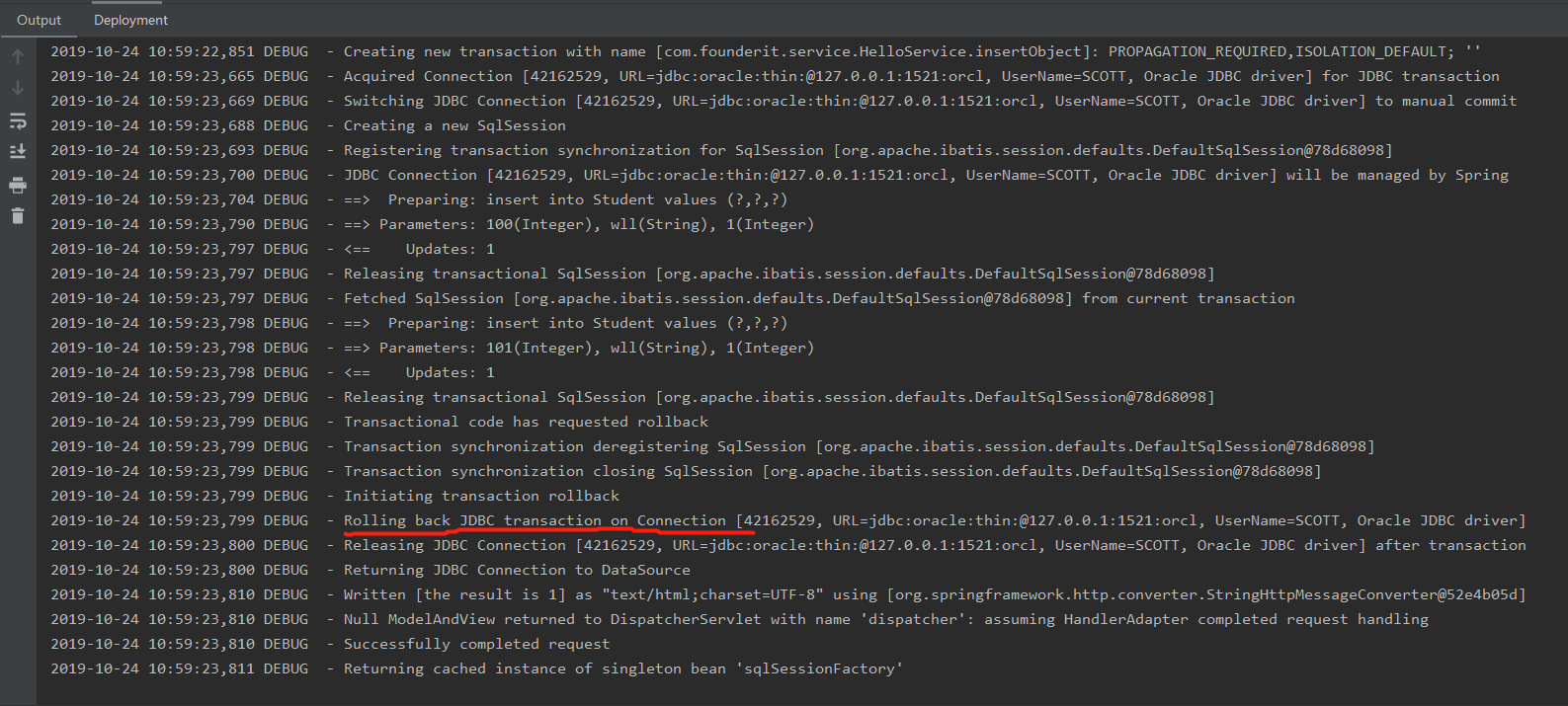
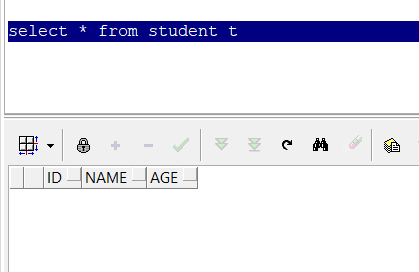
执行日志如下,可以看到前二条记录正确执行,但是插入第三条时报错,事务进行了回滚,导致一条也没有插入成功
基于tx+aop
在Spring配置文件applicationContext.xml中加上AOP及TX部分
- <?xml version="1.0" encoding="UTF-8"?>
<beans xmlns="http://www.springframework.org/schema/beans"
xmlns:xsi="http://www.w3.org/2001/XMLSchema-instance"
xmlns:context="http://www.springframework.org/schema/context"
xmlns:tx="http://www.springframework.org/schema/tx"
xmlns:aop="http://www.springframework.org/schema/aop"
xsi:schemaLocation="http://www.springframework.org/schema/beans
http://www.springframework.org/schema/beans/spring-beans.xsd
http://www.springframework.org/schema/tx http://www.springframework.org/schema/tx/spring-tx.xsd
http://www.springframework.org/schema/aop https://www.springframework.org/schema/aop/spring-aop.xsd
http://www.springframework.org/schema/context
http://www.springframework.org/schema/context/spring-context-3.0.xsd">- <!--加载上下文注解配置-->
<context:annotation-config/>
<context:property-placeholder location="classpath:Resources/db.properties"/>
<context:component-scan base-package="com.founderit">
<context:exclude-filter type="annotation" expression="org.springframework.stereotype.Controller"/>
</context:component-scan>
<aop:aspectj-autoproxy/>- <!--DBCP数据库连接池-->
<bean id="dataSource"
class="org.apache.commons.dbcp2.BasicDataSource"
destroy-method="close" >
<property name="driverClassName" value="${DRIVERCLASS}"/>
<property name="url" value="${URL}"/>
<property name="username" value="${USERNAME}"/>
<property name="password" value="${PASSWORD}"/>
<!--maxActive: 最大连接数量-->
<property name="maxTotal" value="150"/>
<!--minIdle: 最小空闲连接-->
<property name="minIdle" value="5"/>
<!--maxIdle: 最大空闲连接-->
<property name="maxIdle" value="20"/>
<!--initialSize: 初始化连接-->
<property name="initialSize" value="30"/>
<!--removeAbandonedTimeout: 超时时间(以秒数为单位)-->
<property name="removeAbandonedTimeout" value="10"/>
</bean>- <!-- spring和MyBatis完美整合 -->
<bean id="sqlSessionFactory" class="org.mybatis.spring.SqlSessionFactoryBean">
<property name="dataSource" ref="dataSource"/>
<!-- 自动扫描mapping.xml文件 -->
<property name="mapperLocations" value="classpath:com/founderit/mapper/*.xml"></property>
</bean>- <!-- DAO接口所在包名,Spring会自动查找其下的类 -->
<bean class="org.mybatis.spring.mapper.MapperScannerConfigurer">
<property name="basePackage" value="com.founderit.dao"/>
<property name="sqlSessionFactoryBeanName" value="sqlSessionFactory"></property>
</bean>- <!--事务管理部分-->
<bean id="transactionManager"
class="org.springframework.jdbc.datasource.DataSourceTransactionManager">
<property name="dataSource" ref="dataSource" />
</bean>
<tx:annotation-driven transaction-manager="transactionManager" proxy-target-class="true" />- <tx:advice id="txAdvice" transaction-manager="transactionManager">
<tx:attributes>
<tx:method name="save*" propagation="REQUIRED" />
<tx:method name="insert*" propagation="REQUIRED" />
<tx:method name="add*" propagation="REQUIRED" />
<tx:method name="create*" propagation="REQUIRED" />
<tx:method name="delete*" propagation="REQUIRED" />
<tx:method name="update*" propagation="REQUIRED" />
<tx:method name="find*" propagation="SUPPORTS" read-only="true" />
<tx:method name="select*" propagation="SUPPORTS" read-only="true" />
<tx:method name="get*" propagation="SUPPORTS" read-only="true" />
</tx:attributes>
</tx:advice>- <aop:config>
<aop:pointcut id="iccardTerm" expression="execution(* com.founderit.service.*.*(..))" />
<aop:advisor pointcut-ref="iccardTerm" advice-ref="txAdvice" />
</aop:config>- </beans>
service层
- @Override
- public int insertObject(Object obj) {
int result=0;
for (int i=0;i<4;i++) {
Student student=new Student();
student.setName("wll");
student.setAge(1);
student.setId(100+i);
result=userDao.insertObject(student);
}
return result;
}
测试
项目中将插入四条记录,我们在插入第三条时手动报错,如果没有事务,前二条正常的记录将插入成功,运行tomcat,发起hello请求
- @Override
- public int insertObject(Object obj) {
int result=0;
for (int i=0;i<4;i++) {
Student student=new Student();
student.setName("wll");
student.setAge(1);
student.setId(100+i);
if (i==2){
int error=10/0;
}
result=userDao.insertObject(student);
}
return result;
}
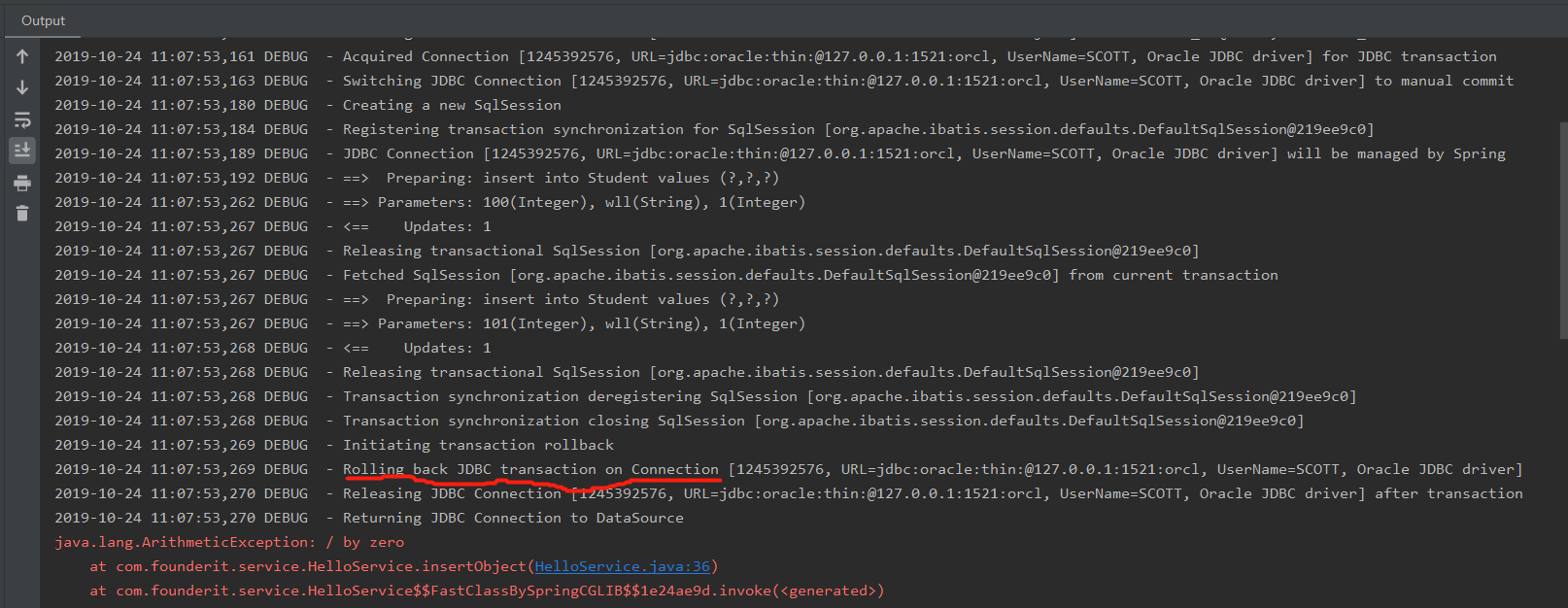
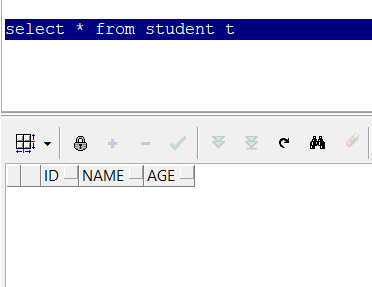
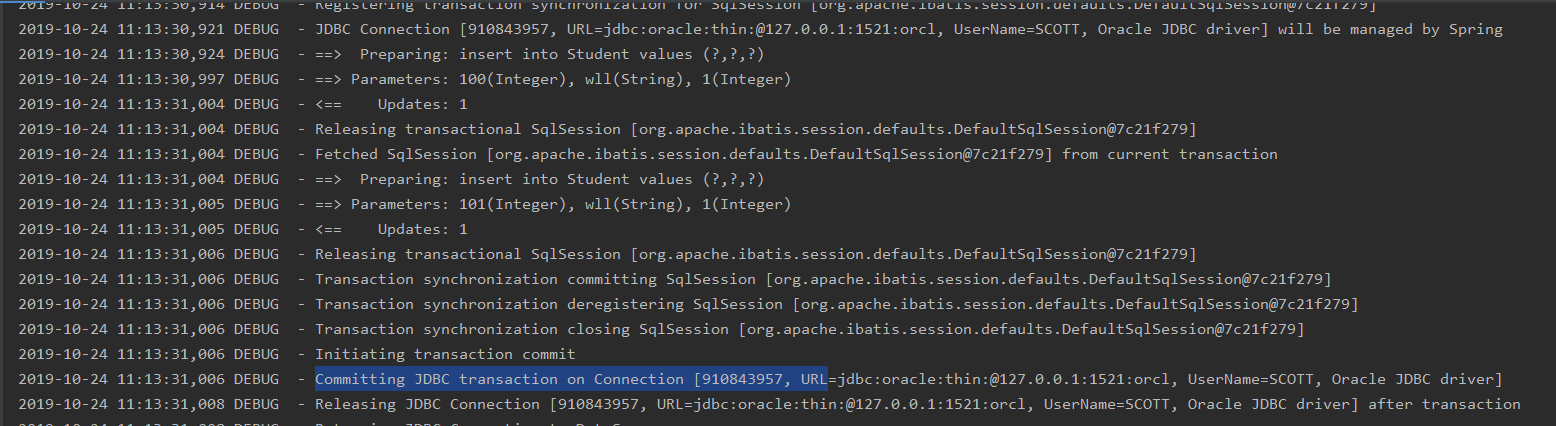
需要注意的是spring aop被拦截的方法需显式抛出异常,并不能经任何处理,这样aop代理才能捕获到方法的异常,才能进行回滚,默认情况下aop只捕获runtimeException的异常
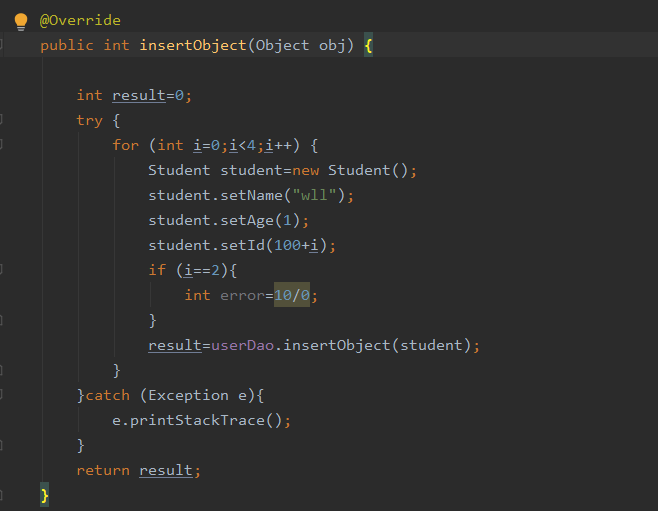
如service层做了异常处理,事务不会回滚,我们将service层做了try/catch处理,再次测试发现事务并没有回滚而是正常提交了
解决方案:
service层处理事务,那么service中的方法中不做异常捕获(推荐),或者在catch语句中最后增加throw new RuntimeException()语句,以便让aop捕获异常再去回滚,并且在service上层(controller)要继续捕获这个异常并处理
SSM整合学习 四的更多相关文章
- SSM整合(四)-整合后配置文件汇总
1.新建Maven项目创建pom.xml pom.xml内容如下 <project xmlns="http://maven.apache.org/POM/4.0.0" xml ...
- SSM整合学习 三
三:整合Mybatis 完整的项目如下 一:下载所需的jar包 <!--日志--><dependency> <groupId>log4j</groupId&g ...
- SSM整合学习笔记
对学习Spring+Spring MVC+Mybatis过程中出现的问题解决办法汇总 出现的问题 1.pom.xml报错 右键项目->maven->update project 因此每次更 ...
- SSM整合学习 二
二:与Spring MVC整合 一:添加Spring MVC Framework 右键项目名称,点击Add Framework Support 选择Spring-Spring MVC框架 选择Down ...
- SSM整合学习 一
一:新建maven项目 File--New Project选择maven项目下的maven-archetype-webapp,输入GroupId.Artifactld,选择maven信息,新建mave ...
- (转)SpringMVC学习(四)——Spring、MyBatis和SpringMVC的整合
http://blog.csdn.net/yerenyuan_pku/article/details/72231763 之前我整合了Spring和MyBatis这两个框架,不会的可以看我的文章MyBa ...
- Spring Boot 项目学习 (四) Spring Boot整合Swagger2自动生成API文档
0 引言 在做服务端开发的时候,难免会涉及到API 接口文档的编写,可以经历过手写API 文档的过程,就会发现,一个自动生成API文档可以提高多少的效率. 以下列举几个手写API 文档的痛点: 文档需 ...
- 零基础学习java------39---------json格式交互,Restful(不懂),静态资源映射,SSM整合(ssm整合思想,application.xml文件详解(声明式事务管理),)
一. json格式交互(知道) 1 . 回顾ajax基本语法 $.ajax({ url:"", // 请求的后台路径 data:{"":"" ...
- Spring框架学习笔记(4)——SSM整合以及创建Maven自定义模版
Spring+Spring MVC+MyBatis+Maven SSM整合的核心还是Spring+MyBatis的整合,回顾一下MyBatis操作数据库流程,我们是使用一个SQLSessionFact ...
随机推荐
- [PHP]Laravel无法使用COOKIE和SESSION的解决方法
COOKIE和SESSION的具体使用百度和官方文档上都有. 但是,文档里没有说明必须经过相应的中间件才能使用,百度搜索结果都是彼此copy的bullshit!!! 其实最终解决办法很简单,完全不是网 ...
- 网络编程——select介绍
一.select函数简介 select一般用在socket网络编程中,在网络编程的过程中,经常会遇到许多阻塞的函数,网络编程时使用的recv, recvfrom.connect函数都是阻塞的函数,当函 ...
- uni-app 图片上传实战
uni.uploadFile()将本地资源上传到开发者服务器客户端发起一个post请求content-type multipart/form-data 通过uni.chooseImage获取一个本地资 ...
- pandas批量读取带有日期的文件夹简单操作
工作中碰到了这样一个数据处理的问题,想让你把某个文件夹下的子文件夹中的excel表级联成为1张表,用excel来做会很浪费时间并且很劳累,这时候我们就可以用pandas来加大工作效率,只需要半个小时就 ...
- OpenGL的核心模式与立即渲染模式
早期的OpenGL使用立即渲染模式(Immediate mode,也就是固定渲染管线),这个模式下绘制图形很方便.OpenGL的大多数功能都被库隐藏起来,开发者很少能控制OpenGL如何进行计算的自由 ...
- SQL,NoSQL和NewSQL的区别
SQL(Structured Query Language):数据库,指关系型数据库.主要代表:SQL Server.Oracle.MySQL.PostgreSQL. NoSQL(Not Only S ...
- python windows下安装pip及rarfile
python之所以被广泛使用,倒不见得是本身语法简单,而是而nodejs/javascript一样把三方库的依赖管理简化了,而不用和java一样非得通过maven管理,而且还得打包后在classpat ...
- ([Ljava/lang/String;)V的含义
https://blog.csdn.net/longaiyunlay/article/details/80049440 “([Ljava/lang/String;)V” 它是一种对函数返回值和参数的编 ...
- tp的ajaxReturn后, 还要用echo $rt吗?
首先你要看 ajaxReturn的原型: protected function ajaxReturn ($data, $type='', $json_option=0){ ........ switc ...
- 批量删除sql语句
SET @I = 148;SELECT CONCAT("DELETE FROM supplier_change_log WHERE old_supplier_id=4194 AND id&g ...