
Linux内核中的常用宏container_of
Container_of在Linux内核中是一个常用的宏,用于从包含在某个结构中的指针获得结构本身的指针,通俗地讲就是通过结构体变量中某个成员的首地址进而获得整个结构体变量的首地址。
Container_of的定义如下:
- #define container_of(ptr, type, member) ({ \
- const typeof( ((type *)0)->member ) *__mptr = (ptr); \
- (type *)( (char *)__mptr - offsetof(type,member) );})
其实它的语法很简单,只是一些指针的灵活应用,它分两步:
第一步,首先定义一个临时的数据类型(通过typeof( ((type *)0)->member )获得)与ptr相同的指针变量__mptr,然后用它来保存ptr的值。
第二步,用(char *)__mptr减去member在结构体中的偏移量,得到的值就是整个结构体变量的首地址(整个宏的返回值就是这个首地址)。
其中的语法难点就是如何得出成员相对结构体的偏移量?
通过例子说明,如清单1:
- /* linux-2.6.38.8/include/linux/compiler-gcc4.h */
- #define __compiler_offsetof(a,b) __builtin_offsetof(a,b)
- /* linux-2.6.38.8/include/linux/stddef.h */
- #undef offsetof
- #ifdef __compiler_offsetof
- #define offsetof(TYPE,MEMBER) __compiler_offsetof(TYPE,MEMBER)
- #else
- #define offsetof(TYPE, MEMBER) ((size_t) &((TYPE *)0)->MEMBER)
- #endif
- #include <stdio.h>
- struct test_struct {
- int num;
- char ch;
- float fl;
- };
- int main(void)
- {
- printf("offsetof(struct test_struct, num) = %d\n",
- offsetof(struct test_struct, num));
- printf("offsetof(struct test_struct, ch) = %d\n",
- offsetof(struct test_struct, ch));
- printf("offsetof(struct test_struct, fl) = %d\n",
- offsetof(struct test_struct, fl));
- return 0;
- }
说明,__builtin_offsetof(a,b)是GCC的内置函数,可认为它的实现与((size_t) &((TYPE *)0)->MEMBER)这段代码是一致的。
例子输出结果:
- offsetof(struct test_struct, num) = 0
- offsetof(struct test_struct, ch) = 4
- offsetof(struct test_struct, fl) = 8
其中代码难以理解的地方就是它灵活地运用了0地址。如果觉得&( (struct test_struct *)0 )->ch这样的代码不好理解,那么我们可以假设在0地址分配了一个结构体变量struct test_struct a,然后定义结构体指针变量p并指向a(struct test_struct *p = &a),如此我们就可以通过&p->ch获得成员ch的地址。由于a的首地址为0x0,所以成员ch的首地址为0x4。
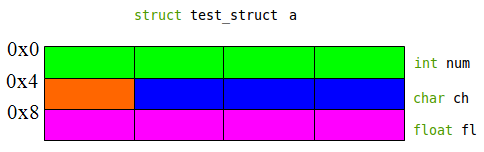
最后通过强制类型转换(size_t)把一个地址值转换为一个整数。
分析完container_of的定义,接下来举两个例子来体会一下它的使用方法。
正确的例子,如清单2:
- /* linux-2.6.38.8/include/linux/compiler-gcc4.h */
- #define __compiler_offsetof(a,b) __builtin_offsetof(a,b)
- /* linux-2.6.38.8/include/linux/stddef.h */
- #undef offsetof
- #ifdef __compiler_offsetof
- #define offsetof(TYPE,MEMBER) __compiler_offsetof(TYPE,MEMBER)
- #else
- #define offsetof(TYPE, MEMBER) ((size_t) &((TYPE *)0)->MEMBER)
- #endif
- /* linux-2.6.38.8/include/linux/kernel.h *
- * container_of - cast a member of a structure out to the containing structure
- * @ptr: the pointer to the member.
- * @type: the type of the container struct this is embedded in.
- * @member: the name of the member within the struct.
- *
- */
- #define container_of(ptr, type, member) ({ \
- const typeof( ((type *)0)->member ) *__mptr = (ptr); \
- (type *)( (char *)__mptr - offsetof(type,member) );})
- #include <stdio.h>
- struct test_struct {
- int num;
- char ch;
- float fl;
- };
- int main(void)
- {
- struct test_struct init_test_struct = { 99, 'C', 59.12 };
- char *char_ptr = &init_test_struct.ch;
- struct test_struct *test_struct = container_of(char_ptr, struct test_struct, ch);
- printf(" test_struct->num = %d\n test_struct->ch = %c\n test_struct->fl = %f\n",
- test_struct->num, test_struct->ch, test_struct->fl);
- return 0;
- }
例子输出结果:
- test_struct->num = 99
- test_struct->ch = C
- test_struct->fl = 59.119999
不适当的例子,如清单3:
- /* linux-2.6.38.8/include/linux/compiler-gcc4.h */
- #define __compiler_offsetof(a,b) __builtin_offsetof(a,b)
- /* linux-2.6.38.8/include/linux/stddef.h */
- #undef offsetof
- #ifdef __compiler_offsetof
- #define offsetof(TYPE,MEMBER) __compiler_offsetof(TYPE,MEMBER)
- #else
- #define offsetof(TYPE, MEMBER) ((size_t) &((TYPE *)0)->MEMBER)
- #endif
- /* linux-2.6.38.8/include/linux/kernel.h *
- * container_of - cast a member of a structure out to the containing structure
- * @ptr: the pointer to the member.
- * @type: the type of the container struct this is embedded in.
- * @member: the name of the member within the struct.
- *
- */
- #define container_of(ptr, type, member) ({ \
- const typeof( ((type *)0)->member ) *__mptr = (ptr); \
- (type *)( (char *)__mptr - offsetof(type,member) );})
- #include <stdio.h>
- struct test_struct {
- int num;
- char ch;
- float fl;
- };
- int main(void)
- {
- char real_ch = 'A';
- char *char_ptr = &real_ch;
- struct test_struct *test_struct = container_of(char_ptr, struct test_struct, ch);
- printf(" char_ptr = %p test_struct = %p\n\n", char_ptr, test_struct);
- printf(" test_struct->num = %d\n test_struct->ch = %c\n test_struct->fl = %f\n",
- test_struct->num, test_struct->ch, test_struct->fl);
- return 0;
- }
例子输出结果:
- char_ptr = 0xbfb72d7f test_struct = 0xbfb72d7b
- test_struct->num = -1511000897
- test_struct->ch = A
- test_struct->fl = 0.000000
注意,由于这里并没有一个具体的结构体变量,所以成员num和fl的值是不确定的。
Linux内核中的常用宏container_of的更多相关文章
- (十)Linux内核中的常用宏container_of
Container_of在Linux内核中是一个常用的宏,用于从包含在某个结构中的指针获得结构本身的指针,通俗地讲就是通过结构体变量中某个成员的首地址进而获得整个结构体变量的首地址. Containe ...
- Linux内核中的常用宏container_of其实很简单【转】
转自:http://blog.csdn.net/npy_lp/article/details/7010752 开发平台:Ubuntu11.04 编 译器:gcc version 4.5.2 (Ubun ...
- Linux内核中的常用宏container_of其实很简单
http://blog.csdn.net/npy_lp/article/details/7010752 通过一个结构体变量的地址,求该结构体的首地址. #ifndef CONTAINER_OF #de ...
- 《C预处理》Linux内核中可变参数宏的用法
http://blog.csdn.net/tankai19880619/article/details/12015305
- linux内核中的宏ffs(x)
linux内核中ffs(x)宏是平台相关的宏,在arm平台,该宏定义在 arch/arm/include/asm/bitops.h #define ffs(x) ({ unsigned long __ ...
- Linux内核中双向链表的经典实现
概要 前面一章"介绍双向链表并给出了C/C++/Java三种实现",本章继续对双向链表进行探讨,介绍的内容是Linux内核中双向链表的经典实现和用法.其中,也会涉及到Linux内核 ...
- Linux 内核中的 GCC 特性
https://www.ibm.com/developerworks/cn/linux/l-gcc-hacks/ GCC 和 Linux 是出色的组合.尽管它们是独立的软件,但是 Linux 完全依靠 ...
- 剖析linux内核中的宏---------container_of
#define container_of(ptr, type, member) ({ \ const typeof(((type *)0)->member) * __mptr = (ptr); ...
- Linux内核中常用的数据结构和算法(转)
知乎链接:https://zhuanlan.zhihu.com/p/58087261 Linux内核代码中广泛使用了数据结构和算法,其中最常用的两个是链表和红黑树. 链表 Linux内核代码大量使用了 ...
随机推荐
- Url几个常用的函数
parse_url() 本函数解析一个 URL 并返回一个关联数组,包含在 URL 中出现的各种组成部分. 本函数不是用来验证给定 URL 的合法性的,只是将其分解为下面列出的部分.不完整的 URL ...
- HDU 1016 Prime Ring Problem (DFS)
Prime Ring Problem Time Limit: 4000/2000 MS (Java/Others) Memory Limit: 65536/32768 K (Java/Other ...
- Spring 循环引用(singleton与prototype初始化的区别)
原文链接请参见:http://blog.csdn.net/u010723709/article/details/47185959
- input两种默认显示文字方式
First Note: placeholder属性 规定帮助用户填写输入字段的提示,值不会被提交, 且该提示会在输入字段为空时显示,并会在字段获得焦点时消失. 如 <input type=&qu ...
- 有些方法为什么会声明称static静态的
有些方法在调用的时候,没有必要都要先实例化一下,只需要:[类名. 静态方法 ]就行了. 哪些方法的调用没有必要实例化呢?网上找了个例子: 举个例子:Car类,1.静态方法Run(),Car.Run() ...
- HDOJ2002计算球体积
计算球体积 Time Limit: 2000/1000 MS (Java/Others) Memory Limit: 65536/32768 K (Java/Others)Total Submi ...
- 小生功能贴<一> --- 动态添加应用 具有长按删除功能
---恢复内容开始--- 动态添加应用 具有长按删除功能 功能如下图: (图片显示功能不是你要的,那就默默关闭页面吧) 设计思路: 页面一:用girdview网格显示图标 ...
- Sql Server关于text类型的替换
UPDATE Store SET Body=replace(convert(varchar(8000),Body),'http://120.89.46.68:8007','')
- 关于JAVA System常见类的一些总结
一.JAVA System类概述 1.概述: System 类是一个抽象类,所有的字段和方法都是静态的,即不能被实例化.其中包含一些有用的类字段和方法,它不能被实例化.在 System 类提供的设施中 ...
- ios开发:代理设计模式
代理是一种简单而功能强大的设计模式,这种模式用于一个对象“代表”另外一个对象去做和实现一些东西. 主对象维护一个代理(delegate)的引用并且在合适的时候向这个代理发送消息,这个消息通知“代理”对 ...