
mybatis与数据库访问相关的配置以及设计
mybatis与数据库访问相关的配置以及设计
mybatis不管如何NB,总是要与数据库进行打交道。通过提问的方式,逐步深入
- 我们常用的MyBatis配置中哪些是与数据库相关?
- 数据源配置:
         <environment id="development">

             <transactionManager type="JDBC"/>

             <dataSource type="POOLED">

                 <property name="driver" value="${driver}"/>

                 <property name="url" value="${url}"/>

                 <property name="username" value="${username}"/>

                 <property name="password" value="${password}"/>

             </dataSource>

         </environment>
看到这个配置文件,第一个直觉会想到由谁读取配置文件,谁有读取了配置信息?先忽略这个疑问,跳过。直接看下面的问题
1.配置数据源信息后,由谁来创建、管理数据源?
根据JDBC驱动中约束的接口,Connection需要DataSource中获取
如果自己设计,是否直接可以由工厂返回Connection?有什么好处,有什么坏处? //TODO
没看代码前:
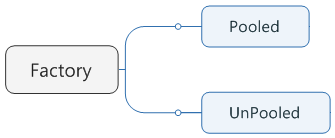
实际Mybatis设计,没有直接返回Connection,而返回了dataSource
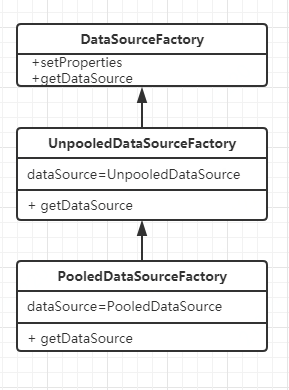
2.对于有连接池的数据源,和无连接池的数据源,我们自己会如何设计?
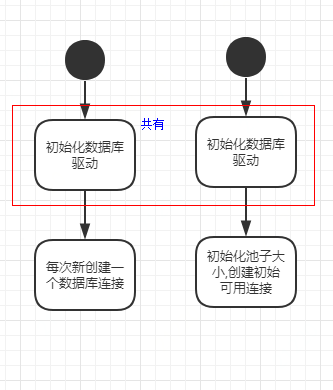
流程上的区别
职责上区别
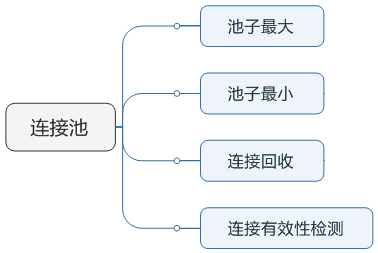
现在解开谜底:看实际Mybatis设计如何?
非池化类:
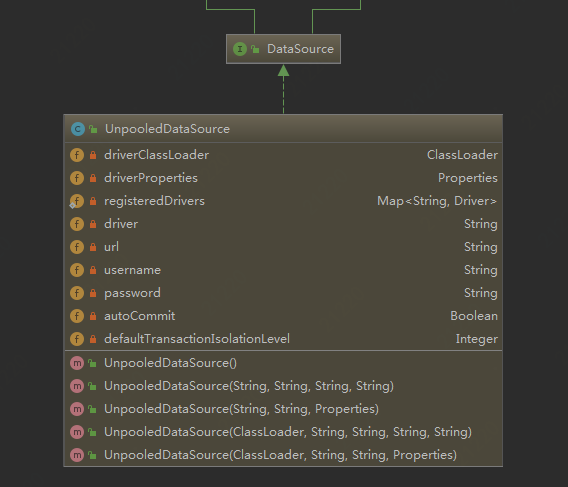
看下最关键的,获得数据库连接,和我们自己写的没啥区别。简单粗暴
  private Connection doGetConnection(Properties properties) throws SQLException {

    initializeDriver();

    Connection connection = DriverManager.getConnection(url, properties);

    configureConnection(connection);

    return connection;

  }
池化类:
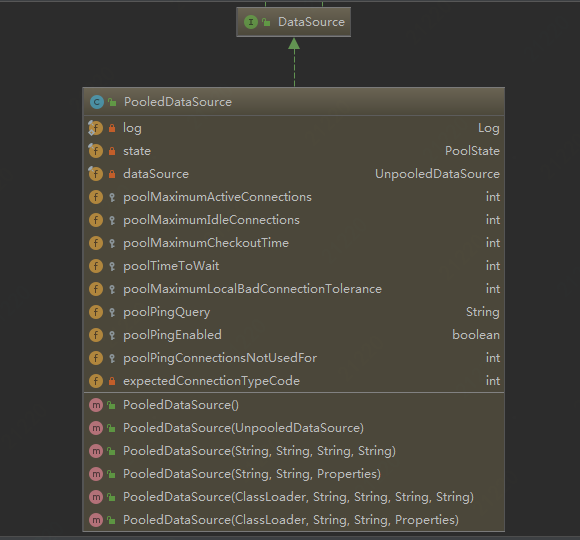
池化工作分配 :
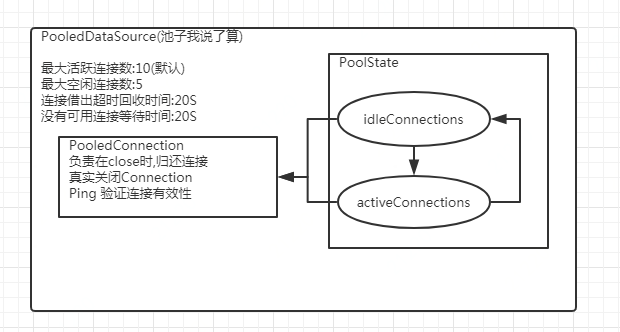
至此,MYBABTIS对于数据源的创建以及管理结束!看下代码,池化获得连接的代码
  @Override

  public Connection getConnection() throws SQLException {

    return popConnection(dataSource.getUsername(), dataSource.getPassword()).getProxyConnection();

  }
while (conn == null) { //够用就行,拿到一个就返回

      synchronized (state) {

          //只有有连接还回来,再走这里

        if (!state.idleConnections.isEmpty()) {

          // Pool has available connection

          conn = state.idleConnections.remove(0);

          if (log.isDebugEnabled()) {

            log.debug("Checked out connection " + conn.getRealHashCode() + " from pool.");

          }

        } else {

        //有两种可能:1种,都在使用中,池子没满,再新建

          // Pool does not have available connection

          if (state.activeConnections.size() < poolMaximumActiveConnections) {

            // Can create new connection

            //新建连接

            conn = new PooledConnection(dataSource.getConnection(), this);

            if (log.isDebugEnabled()) {

              log.debug("Created connection " + conn.getRealHashCode() + ".");

            }

          } else {

            // Cannot create new connection

            //找一个最老的,用的ArrayList,老的在ArrayList数组的前面

            PooledConnection oldestActiveConnection = state.activeConnections.get(0);

            long longestCheckoutTime = oldestActiveConnection.getCheckoutTime();

            //借出超时,不让他做了,直接rollback。。。暴力

            if (longestCheckoutTime > poolMaximumCheckoutTime) {

              // Can claim overdue connection

              state.claimedOverdueConnectionCount++;

              state.accumulatedCheckoutTimeOfOverdueConnections += longestCheckoutTime;

              state.accumulatedCheckoutTime += longestCheckoutTime;

              state.activeConnections.remove(oldestActiveConnection);

              if (!oldestActiveConnection.getRealConnection().getAutoCommit()) {

                try {

                  oldestActiveConnection.getRealConnection().rollback();

                } catch (SQLException e) {

                  /*

                     Just log a message for debug and continue to execute the following

                     statement like nothing happend.

                     Wrap the bad connection with a new PooledConnection, this will help

                     to not intterupt current executing thread and give current thread a

                     chance to join the next competion for another valid/good database

                     connection. At the end of this loop, bad {@link @conn} will be set as null.

                   */

                  log.debug("Bad connection. Could not roll back");

                }

              }

              //拿回来后,不再放到原有的PooledConnection,新建立一个。从新开始.老的REAL connection还被oldestActiveConnection引用,不会内存溢出?

              conn = new PooledConnection(oldestActiveConnection.getRealConnection(), this);

              conn.setCreatedTimestamp(oldestActiveConnection.getCreatedTimestamp());

              conn.setLastUsedTimestamp(oldestActiveConnection.getLastUsedTimestamp());

              oldestActiveConnection.invalidate();

              if (log.isDebugEnabled()) {

                log.debug("Claimed overdue connection " + conn.getRealHashCode() + ".");

              }

            } else {

              // Must wait

                //大家都在用着,你只能等着了。

              try {

                if (!countedWait) {

                  state.hadToWaitCount++;

                  countedWait = true;

                }

                if (log.isDebugEnabled()) {

                  log.debug("Waiting as long as " + poolTimeToWait + " milliseconds for connection.");

                }

                long wt = System.currentTimeMillis();

                state.wait(poolTimeToWait);

                state.accumulatedWaitTime += System.currentTimeMillis() - wt;

              } catch (InterruptedException e) {

                break;

              }

            }

          }

        }

        if (conn != null) {

          // ping to server and check the connection is valid or not

          if (conn.isValid()) {

            if (!conn.getRealConnection().getAutoCommit()) {

              conn.getRealConnection().rollback();

            }

            conn.setConnectionTypeCode(assembleConnectionTypeCode(dataSource.getUrl(), username, password));

            conn.setCheckoutTimestamp(System.currentTimeMillis());

            conn.setLastUsedTimestamp(System.currentTimeMillis());

            state.activeConnections.add(conn);

            state.requestCount++;

            state.accumulatedRequestTime += System.currentTimeMillis() - t;

          } else {

            if (log.isDebugEnabled()) {

              log.debug("A bad connection (" + conn.getRealHashCode() + ") was returned from the pool, getting another connection.");

            }

            state.badConnectionCount++;

            localBadConnectionCount++;

            conn = null;

            //如果累计有这些个链接失效了,则报个异常.

            if (localBadConnectionCount > (poolMaximumIdleConnections + poolMaximumLocalBadConnectionTolerance)) {

              if (log.isDebugEnabled()) {

                log.debug("PooledDataSource: Could not get a good connection to the database.");

              }

              throw new SQLException("PooledDataSource: Could not get a good connection to the database.");

            }

          }

        }

      }

    }
mybatis与数据库访问相关的配置以及设计的更多相关文章
- SpringBoot:4.SpringBoot整合Mybatis实现数据库访问
在公司项目开发中,使用Mybatis居多.在 SpringBoot:3.SpringBoot使用Spring-data-jpa实现数据库访问 中,这种jpa风格的把sql语句和java代码放到一起,总 ...
- mysql+spring+mybatis实现数据库读写分离[代码配置] .
场景:一个读数据源一个读写数据源. 原理:借助spring的[org.springframework.jdbc.datasource.lookup.AbstractRoutingDataSource] ...
- Spring Mvc和Mybatis的多数据库访问配置过程
Spring Mvc 加Mybatis的多数据库访问源配置访问过程如下: 在applicationContext.xml进行配置 <?xml version="1.0" en ...
- Spring+MyBatis实践—MyBatis数据库访问
关于spring整合mybatis的工程配置,已经在Spring+MyBatis实践—工程配置中全部详细列出.在此,记录一下几种通过MyBatis访问数据库的方式. 通过sqlSessionTempl ...
- 使用MyBatis搭建一个访问mysql数据库的简单示例
MyBatis是一个支持普通SQL查询,存储过程和高级映射的优秀持久层框架.MyBatis消除了几乎所有的JDBC代码和参数的手工设置以及对结果集的检索封装.MyBatis可以使用简单的XML或注解用 ...
- Spring+MyBatis双数据库配置
Spring+MyBatis双数据库配置 近期项目中遇到要调用其它数据库的情况.本来仅仅使用一个MySQL数据库.但随着项目内容越来越多,逻辑越来越复杂. 原来一个数据库已经不够用了,须要分库分表.所 ...
- Spring+Mybatis+Mysql搭建分布式数据库访问框架
一.前言 用Java开发企业应用软件, 经常会采用Spring+MyBatis+Mysql搭建数据库框架.如果数据量很大,一个MYSQL库存储数据访问效率很低,往往会采用分库存储管理的方式.本文讲述如 ...
- spring配置druid连接池和监控数据库访问性能
Druid连接池及监控在spring配置如下: <bean id="dataSource" class="com.alibaba.druid.pool.DruidD ...
- SpringBoot入门 (四) 数据库访问之JdbcTemplate
本文记录在SpringBoot中使用JdbcTemplate访问数据库. 一 JDBC回顾 最早是在上学时接触的使用JDBC访问数据库,主要有以下几个步骤: 1 加载驱动 Class.forName( ...
随机推荐
- WEB学习笔记2-结构组织和文件命名
常用的前端文件的组织结构: .js(放置javascript代码) .lib(放置框架javascript文件) .custom.js .css(放置CSS样式代码) .lib(放置框架CSS文件) ...
- C#中的session用法
Session具有以下特点: (1)Session中的数据保存在服务器端: (2)Session中可以保存任意类型的数据: (2)Session默认的生命周期是20分钟,可以手动设置更长或更短的时间. ...
- 常用的CMD & Linux命令
[CMD命令] 1.分行输入环境变量 使用echo %PATH%输出环境变量的时候没有分行输出,看起来十分麻烦: 通过xargs命令可以实现分行输出,命令如下: echo %PATH% | xargs ...
- Hadoop学习笔记1 - 使用Java API访问远程hdfs集群
转载请标注原链接 http://www.cnblogs.com/xczyd/p/8570437.html 2018年3月从新司重新起航了.之前在某司过了的蛋疼三个月,也算给自己放了个小假了. 第一个小 ...
- 在word中批量更改Mathtype公式的格式
方法参照下面这个链接 还有这个方法
- docker-compose部署mongodb+redis遇到的问题
Demo环境下需要用到Redis+mongodb两种DB配合使用,所以暂时直接使用docker的redids和mongodb镜像,用docker-compose进行联合部署 使用的版本如下: dock ...
- Python:从入门到实践--第四章--列表操作--练习
#1.想出至少三种你喜欢的水果,将其名称存储在一个列表中,再使用for循环将每种水果的名称都打印出来. #要求:(1)修改这个for循环,使其打印包含名称的句子,而不是仅仅是水果的名称.对于每种水果, ...
- 什么是混合app?
APP混合模式和原生模式的优劣 ECSHOP模板/ecshop开发中心(www.68ecshop.com) / 2014-06-27 每当你打算开发移动应用程序时,都要考虑你的应用如何创建以及如何部署 ...
- React项目中跨域问题的解决方案
刚刚找到到通过creat-react-app创建的项目中跨域问题的解决方案,记录下来以备后用. 如果接口地址为: http://my.example.com/eg-api 则配置package ...
- 关于html引用php文件在编译器正常运行,web浏览器出问题的一点心得
首先上图 第一张图是预期效果,也就是编译器运行的效果,第二张则是在浏览器打开的效果.那么为甚么会出现这何种问题呢? 原来:编译器能正常运行 是因为是走的cli模式,而浏览器现在走的是web模式,php ...