
iOS开发UI篇—使用xib自定义UItableviewcell实现一个简单的团购应用界面布局
iOS开发UI篇—使用xib自定义UItableviewcell实现一个简单的团购应用界面布局
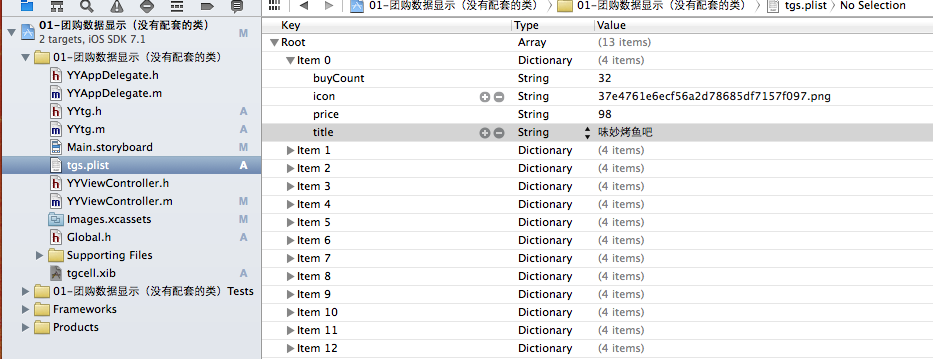
一、项目文件结构和plist文件
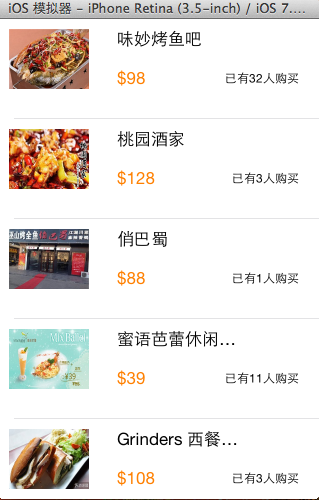
二、实现效果
三、代码示例
1.没有使用配套的类,而是直接使用xib文件控件tag值操作
数据模型部分:
YYtg.h文件
 //

 //  YYtg.h

 //  01-团购数据显示(没有配套的类)

 //

 //  Created by apple on 14-5-29.

 //  Copyright (c) 2014年 itcase. All rights reserved.

 //

 #import <Foundation/Foundation.h>

 #import "Global.h"

 @interface YYtg : NSObject

 @property(nonatomic,copy)NSString *buyCount;

 @property(nonatomic,copy)NSString *icon;

 @property(nonatomic,copy)NSString *price;

 @property(nonatomic,copy)NSString *title;

 YYinitH(tg)

 @end
YYtg.m文件
 //

 //  YYtg.m

 //  01-团购数据显示(没有配套的类)

 //

 //  Created by apple on 14-5-29.

 //  Copyright (c) 2014年 itcase. All rights reserved.

 //

 #import "YYtg.h"

 @implementation YYtg

 YYinitM(tg)

 @end
主控制器
YYViewController.m文件
 //

 //  YYViewController.m

 //  01-团购数据显示(没有配套的类)

 //

 //  Created by apple on 14-5-29.

 //  Copyright (c) 2014年 itcase. All rights reserved.

 //

 #import "YYViewController.h"

 #import "YYtg.h"

 @interface YYViewController ()<UITableViewDataSource>

 @property(nonatomic,strong)NSArray *tg;

 @property (strong, nonatomic) IBOutlet UITableView *tableview;

 @end

 @implementation YYViewController

 - (void)viewDidLoad

 {

     [super viewDidLoad];

     self.tableview.rowHeight=;

 }

 #pragma mark-  懒加载

 -(NSArray *)tg

 {

     if (_tg==nil) {

         NSString *fullpath=[[NSBundle mainBundle]pathForResource:@"tgs.plist" ofType:nil];

         NSArray *temparray=[NSArray arrayWithContentsOfFile:fullpath];

         NSMutableArray *arrayM=[NSMutableArray arrayWithCapacity:temparray.count];

         for (NSDictionary *dict in temparray) {

             YYtg *tg=[YYtg tgWithDict:dict];

             [arrayM addObject:tg];

         }

         _tg=[arrayM mutableCopy];

     }

     return _tg;

 }

 #pragma mark-数据显示

 -(NSInteger)numberOfSectionsInTableView:(UITableView *)tableView

 {

     return ;

 }

 -(NSInteger)tableView:(UITableView *)tableView numberOfRowsInSection:(NSInteger)section

 {

     return self.tg.count;

 }

 -(UITableViewCell *)tableView:(UITableView *)tableView cellForRowAtIndexPath:(NSIndexPath *)indexPath

 {

     //读取xib中的数据

 //    NSArray *arrayM=[[NSBundle mainBundle]loadNibNamed:@"tgcell" owner:nil options:nil];

 //    UITableViewCell *cell=[arrayM firstObject];

     static NSString *identifier=@"tg";

     UITableViewCell *cell=[tableView dequeueReusableCellWithIdentifier:identifier];

     if (cell==nil) {

        // cell=[[UITableViewCell alloc]initWithStyle:UITableViewCellStyleDefault reuseIdentifier:identifier];

         cell= [[[NSBundle mainBundle]loadNibNamed:@"tgcell" owner:nil options:nil] firstObject];

     }

     YYtg *tg=self.tg[indexPath.row];

     //设置数据

     //使用tag

     UIImageView *imgv=(UIImageView *)[cell viewWithTag:];

     imgv.image=[UIImage imageNamed:tg.icon];

     UILabel *buyCount=(UILabel *)[cell viewWithTag:];

     buyCount.text=[NSString stringWithFormat:@"已有%@人购买",tg.buyCount];

     UILabel *title=(UILabel *)[cell viewWithTag:];

     title.text=tg.title;

     UILabel *price=(UILabel *)[cell viewWithTag:];

     price.text=[NSString stringWithFormat:@"$%@",tg.price];

     //返回cell

     return cell;

 }

 //隐藏状态栏

 -(BOOL)prefersStatusBarHidden

 {

     return YES;

 }

 @end
使用xib自定义的UItableviewcell

代码分析:
上面的代码通过使用xib文件中各个控件的tag值,完成对每个部分数据的赋值和刷新。但是,作为主控制器,它应该知道xib文件中各个控件的tag值,它知道的是不是太多了呢?
为了解决上面的问题,我们可以为自定义的cell设置一个配套的类,让这个类来操作这个xib,对外提供接口,至于内部的数据处理,外界不需要关心,也不用关心。
改造后的代码如下:
2.使用xib和对应的类完成自定义cell的数据展示
新建一个类,用来管理对应的xib文件
注意类的继承类,并把该类和xib文件进行关联

YYtgcell.h文件代码:
 //

 //  YYtgcell.h

 //  02-团购(使用xib和类完成数据展示)

 //

 //  Created by apple on 14-5-29.

 //  Copyright (c) 2014年 itcase. All rights reserved.

 //

 #import <UIKit/UIKit.h>

 #import "YYtg.h"

 @interface YYtgcell : UITableViewCell

 @property(nonatomic,strong)YYtg *yytg;

 @end
YYtgcell.m文件
 //

 //  YYtgcell.m

 //  02-团购(使用xib和类完成数据展示)

 //

 //  Created by apple on 14-5-29.

 //  Copyright (c) 2014年 itcase. All rights reserved.

 //

 #import "YYtgcell.h"

 //私有扩展

 @interface YYtgcell()

 @property (strong, nonatomic) IBOutlet UIImageView *img;

 @property (strong, nonatomic) IBOutlet UILabel *titlelab;

 @property (strong, nonatomic) IBOutlet UILabel *pricelab;

 @property (strong, nonatomic) IBOutlet UILabel *buycountlab;

 @end

 @implementation YYtgcell

 #pragma mark 重写set方法,完成数据的赋值操作

 -(void)setYytg:(YYtg *)yytg

 {

     _yytg=yytg;

     self.img.image=[UIImage imageNamed:yytg.icon];

     self.titlelab.text=yytg.title;

     self.pricelab.text=[NSString stringWithFormat:@"$%@",yytg.price];

     self.buycountlab.text=[NSString stringWithFormat:@"已有%@人购买",yytg.buyCount];

 }

 @end
主控制器
YYViewController.m文件
 //

 //  YYViewController.m

 //  02-团购(使用xib和类完成数据展示)

 //

 //  Created by apple on 14-5-29.

 //  Copyright (c) 2014年 itcase. All rights reserved.

 //

 #import "YYViewController.h"

 #import "YYtg.h"

 #import "YYtgcell.h"

 @interface YYViewController ()<UITableViewDataSource,UITableViewDelegate>

 @property (strong, nonatomic) IBOutlet UITableView *tableview;

 @property(strong,nonatomic)NSArray *tg;

 @end

 @implementation YYViewController

 - (void)viewDidLoad

 {

     [super viewDidLoad];

     self.tableview.rowHeight=.f;

 }

 #pragma mark-  懒加载

 -(NSArray *)tg

 {

     if (_tg==nil) {

         NSString *fullpath=[[NSBundle mainBundle]pathForResource:@"tgs.plist" ofType:nil];

         NSArray *temparray=[NSArray arrayWithContentsOfFile:fullpath];

         NSMutableArray *arrayM=[NSMutableArray arrayWithCapacity:temparray.count];

         for (NSDictionary *dict in temparray) {

             YYtg *tg=[YYtg tgWithDict:dict];

             [arrayM addObject:tg];

         }

         _tg=[arrayM mutableCopy];

     }

     return _tg;

 }

 #pragma mark- xib创建cell数据处理

 #pragma mark 多少组

 -(NSInteger)numberOfSectionsInTableView:(UITableView *)tableView

 {

     return ;

 }

 #pragma mark多少行

 -(NSInteger)tableView:(UITableView *)tableView numberOfRowsInSection:(NSInteger)section

 {

     return self.tg.count;

 }

 #pragma mark设置每组每行

 -(UITableViewCell *)tableView:(UITableView *)tableView cellForRowAtIndexPath:(NSIndexPath *)indexPath

 {

     static NSString *identifier= @"tg";

     YYtgcell *cell=[tableView dequeueReusableCellWithIdentifier:identifier];

     if (cell==nil) {

         //如何让创建的cell加个戳

         //对于加载的xib文件,可以到xib视图的属性选择器中进行设置

         cell=[[[NSBundle mainBundle]loadNibNamed:@"tgcell" owner:nil options:nil]firstObject];

         NSLog(@"创建了一个cell");

     }

     //设置cell的数据

     //获取当前行的模型

     YYtg *tg=self.tg[indexPath.row];

     cell.yytg=tg;

     return cell;

 }

 -(BOOL)prefersStatusBarHidden

 {

     return YES;

 }

 @end
3.对上述代码进行进一步的优化和调整(MVC)
优化如下:
(1)把主控制器中创建cell的过程抽取到YYtgcell中完成,并对外提供一个接口。
YYtgcell.h文件(提供接口)
 #import <UIKit/UIKit.h>

 #import "YYtgModel.h"

 @interface YYtgcell : UITableViewCell

 @property(nonatomic,strong)YYtgModel *yytg;

 //把加载数据(使用xib创建cell的内部细节进行封装)

 +(instancetype)tgcellWithTableView:(UITableView *)tableView;

 @end
YYtgcell.m文件(把创建自定义cell的部分进行封装)
 //

 //  YYtgcell.m

 //  02-团购(使用xib和类完成数据展示)

 //

 //  Created by apple on 14-5-29.

 //  Copyright (c) 2014年 itcase. All rights reserved.

 //

 #import "YYtgcell.h"

 //私有扩展

 @interface YYtgcell()

 @property (strong, nonatomic) IBOutlet UIImageView *img;

 @property (strong, nonatomic) IBOutlet UILabel *titlelab;

 @property (strong, nonatomic) IBOutlet UILabel *pricelab;

 @property (strong, nonatomic) IBOutlet UILabel *buycountlab;

 @end

 @implementation YYtgcell

 #pragma mark 重写set方法,完成数据的赋值操作

 -(void)setYytg:(YYtgModel *)yytg

 {

     _yytg=yytg;

     self.img.image=[UIImage imageNamed:yytg.icon];

     self.titlelab.text=yytg.title;

     self.pricelab.text=[NSString stringWithFormat:@"$%@",yytg.price];

     self.buycountlab.text=[NSString stringWithFormat:@"已有%@人购买",yytg.buyCount];

 }

 +(instancetype)tgcellWithTableView:(UITableView *)tableView

 {

     static NSString *identifier= @"tg";

     YYtgcell *cell=[tableView dequeueReusableCellWithIdentifier:identifier];

     if (cell==nil) {

         //如何让创建的cell加个戳

         //对于加载的xib文件,可以到xib视图的属性选择器中进行设置

         cell=[[[NSBundle mainBundle]loadNibNamed:@"tgcell" owner:nil options:nil]firstObject];

         NSLog(@"创建了一个cell");

     }

     return cell;

 }

 @end
主控器中的业务逻辑更加清晰,YYViewController.m文件代码如下
 //

 //  YYViewController.m

 //  02-团购(使用xib和类完成数据展示)

 //

 //  Created by apple on 14-5-29.

 //  Copyright (c) 2014年 itcase. All rights reserved.

 //

 #import "YYViewController.h"

 #import "YYtgModel.h"

 #import "YYtgcell.h"

 @interface YYViewController ()<UITableViewDataSource,UITableViewDelegate>

 @property (strong, nonatomic) IBOutlet UITableView *tableview;

 @property(strong,nonatomic)NSArray *tg;

 @end

 @implementation YYViewController

 - (void)viewDidLoad

 {

     [super viewDidLoad];

     self.tableview.rowHeight=.f;

 }

 #pragma mark-  懒加载

 -(NSArray *)tg

 {

     if (_tg==nil) {

         NSString *fullpath=[[NSBundle mainBundle]pathForResource:@"tgs.plist" ofType:nil];

         NSArray *temparray=[NSArray arrayWithContentsOfFile:fullpath];

         NSMutableArray *arrayM=[NSMutableArray arrayWithCapacity:temparray.count];

         for (NSDictionary *dict in temparray) {

             YYtgModel *tg=[YYtgModel tgWithDict:dict];

             [arrayM addObject:tg];

         }

         _tg=[arrayM mutableCopy];

     }

     return _tg;

 }

 #pragma mark- xib创建cell数据处理

 #pragma mark 多少组

 -(NSInteger)numberOfSectionsInTableView:(UITableView *)tableView

 {

     return ;

 }

 #pragma mark多少行

 -(NSInteger)tableView:(UITableView *)tableView numberOfRowsInSection:(NSInteger)section

 {

     return self.tg.count;

 }

 #pragma mark设置每组每行

 -(UITableViewCell *)tableView:(UITableView *)tableView cellForRowAtIndexPath:(NSIndexPath *)indexPath

 {

     //1.创建cell

     YYtgcell *cell=[YYtgcell tgcellWithTableView:tableView];

     //2.获取当前行的模型,设置cell的数据

     YYtgModel *tg=self.tg[indexPath.row];

     cell.yytg=tg;

     //3.返回cell

     return cell;

 }

 #pragma mark- 隐藏状态栏

 -(BOOL)prefersStatusBarHidden

 {

     return YES;

 }

 @end
四、推荐调整的项目文件结构
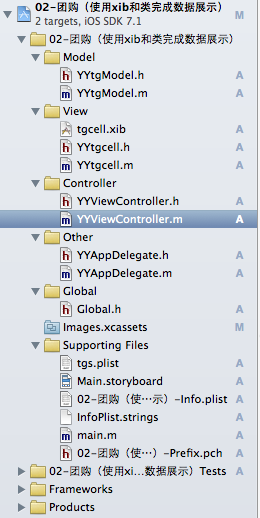
这是调整后的文件结构,完整的MVC架构。
注意:注意文件的命名规范。
提示技巧:批量改名,操作如下:

修改为想要的名称:

iOS开发UI篇—使用xib自定义UItableviewcell实现一个简单的团购应用界面布局的更多相关文章
- iOS开发UI篇—使用嵌套模型完成的一个简单汽车图标展示程序
iOS开发UI篇—使用嵌套模型完成的一个简单汽车图标展示程序 一.plist文件和项目结构图 说明:这是一个嵌套模型的示例 二.代码示例: YYcarsgroup.h文件代码: // // YYcar ...
- iOS开发UI篇—CAlayer(自定义layer)
iOS开发UI篇—CAlayer(自定义layer) 一.第一种方式 1.简单说明 以前想要在view中画东西,需要自定义view,创建一个类与之关联,让这个类继承自UIView,然后重写它的Draw ...
- iOS开发UI篇—核心动画(关键帧动画)
转自:http://www.cnblogs.com/wendingding/p/3801330.html iOS开发UI篇—核心动画(关键帧动画) 一.简单介绍 是CApropertyAnimatio ...
- iOS开发UI篇—核心动画(基础动画)
转自:http://www.cnblogs.com/wendingding/p/3801157.html 文顶顶 最怕你一生碌碌无为 还安慰自己平凡可贵 iOS开发UI篇—核心动画(基础动画) iOS ...
- ios开发UI篇—使用纯代码自定义UItableviewcell实现一个简单的微博界面布局
本文转自 :http://www.cnblogs.com/wendingding/p/3761730.html ios开发UI篇—使用纯代码自定义UItableviewcell实现一个简单的微博界面布 ...
- iOS开发UI篇—UITableviewcell的性能优化和缓存机制
iOS开发UI篇—UITableviewcell的性能问题 一.UITableviewcell的一些介绍 UITableView的每一行都是一个UITableViewCell,通过dataSource ...
- iOS开发UI篇—UITableviewcell的性能问题
iOS开发UI篇—UITableviewcell的性能问题 一.UITableviewcell的一些介绍 UITableView的每一行都是一个UITableViewCell,通过dataSource ...
- iOS开发UI篇—xib的简单使用
iOS开发UI篇—xib的简单使用 一.简单介绍 xib和storyboard的比较,一个轻量级一个重量级. 共同点: 都用来描述软件界面 都用Interface Builder工具来编辑 不同点: ...
- iOS开发UI篇—Quartz2D(自定义UIImageView控件)
iOS开发UI篇—Quartz2D(自定义UIImageView控件) 一.实现思路 Quartz2D最大的用途在于自定义View(自定义UI控件),当系统的View不能满足我们使用需求的时候,自定义 ...
随机推荐
- MyBatis Generator自动生成的配置及使用
注意:文件名不能有中文字符,不然不能自动生成 找到MyBatis Generator.rar\MyBatis Generator\eclipse里的features和plugins文件,把这两个文件复 ...
- 最长公共上升子序列(LCIS)
最长公共上升子序列慕名而知是两个字符串a,b的最长公共递增序列,不一定非得是连续的.刚开始看到的时候想的是先用求最长公共子序列,然后再从其中找到最长递增子序列,可是仔细想一想觉得这样有点不妥,然后从网 ...
- Java 之 List<T> 接口的实现:LinkedList
Collection├List│├LinkedList│├ArrayList│└Vector│ └Stack└SetMap├Hashtable├HashMap└WeakHashMap 隶属于队列Lis ...
- maven+springMVC+mybatis+mysql详细过程
1.工程目录 a.在src/main/java文件夹中,新建包cn.springmvc.model(存放javabean), cn.springmvc.dao(存放spring与mybatis连接接口 ...
- Objective-C语言多态性
动态类型和动态绑定,id可以表示任何指针类型,定义id变量不加* 多态性是指在父类中定义的成员变量和方法被子类继承之后,可以具有不同的数据类型或表现出不同的行为.这使得同一个变量和方法在父类及其各个子 ...
- python核心编程学习记录之函数与函数式编程
@func function 意思是func(function) @func(a) function 意思是func(a)这是个函数对象,在去调用function函数 如果要传额外的值,只传值用*tu ...
- Linux 批量改名之 rename 命令
刚学习到 rename 命令功能很强大,比win 下的 ren 厉害啊 具体看 man rename 语法: rename [ -h|-m|-V ] [ -v ] [ -n ] [ -f ] [ - ...
- [SDN] What is SDN?
本篇学习笔记写于 Sun Nov 13 15:08:02 2016, 可能有认识不全面的地方. 参考资料为ONF的官方网站中: Software-Defined Networking (SDN) De ...
- selenium操作滚动条方法
/*** 滚动条滚到最下方,和滚到指定位置*/@Test(priority =1 ) public void scrollingToBottomo(){ //使用JavaScri ...
- python 学习笔记十 rabbitmq(进阶篇)
RabbitMQ MQ全称为Message Queue, 消息队列(MQ)是一种应用程序对应用程序的通信方法.应用程序通过读写出入队列的消息(针对应用程序的数据)来通信,而无需专用连接来链接它们.消 ...