
JavaWeb_(Mybatis框架)关联查询_六
系列博文:
JavaWeb_(Mybatis框架)JDBC操作数据库和Mybatis框架操作数据库区别_一 传送门
JavaWeb_(Mybatis框架)使用Mybatis对表进行增、删、改、查操作_二 传送门
JavaWeb_(Mybatis框架)Mapper动态代理开发_三 传送门
JavaWeb_(Mybatis框架)主配置文件介绍_四 传送门
JavaWeb_(Mybatis框架)输入和输出参数_五 传送门
JavaWeb_(Mybatis框架)关联查询_六传送门 传送门
JavaWeb_(Mybatis框架)动态sql_七传送门 传送门
数据库中存在两张表user表和country表
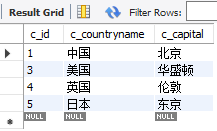
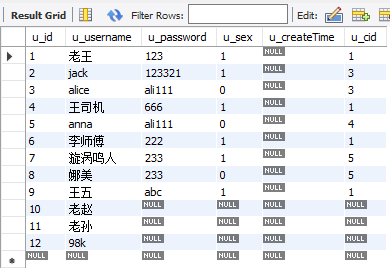
User表和Country表属于一对一:一个用户属于一个国家
Country表和User表属于一对多:一个国家有多个用户

一、一对一的查询
通过user为基准,查询user表中所有数据
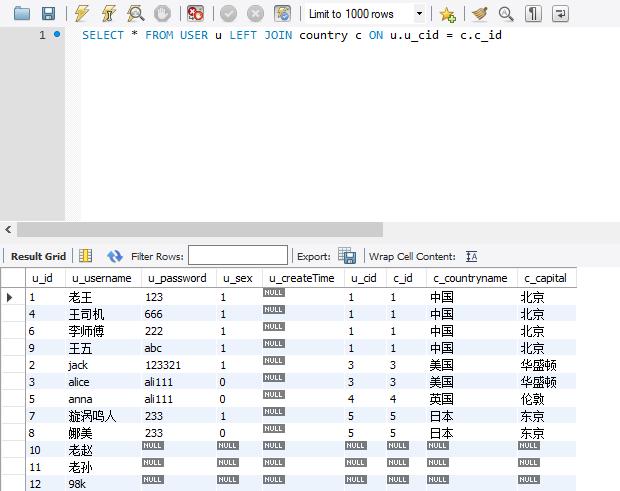
SELECT * FROM USER u LEFT JOIN country c ON u.u_cid = c.c_id
Gary.sql
UserVO.class中包含Country对象,通过用户去查询它属于哪一个国家
package com.Gary.bean;

//包装类

public class UserVo extends User{

    //包装类

    private Country country;

    public Country getCountry() {

        return country;

    }

    public void setCountry(Country country) {

        this.country = country;

    }

    @Override

    public String toString() {

        return "UserVo [country=" + country + ", toString()=" + super.toString() + ", getU_id()=" + getU_id()

                + ", getU_password()=" + getU_password() + "]";

    }

}
UserVo.class
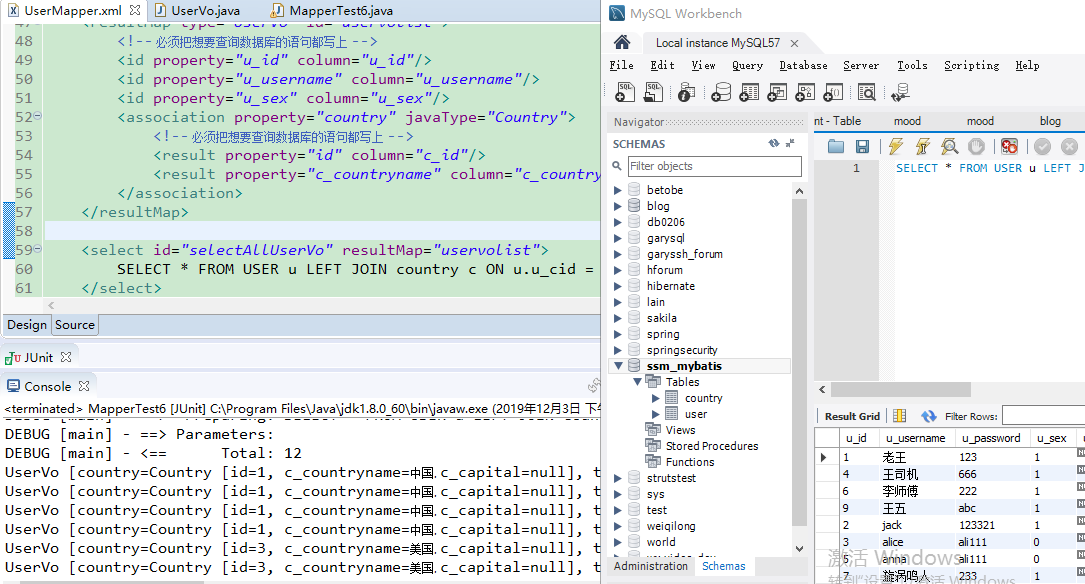
在UserMapper.xml中编写SQL语句,查询所有用户包装类
<id> 和 <result>区别:
id 和 result 元素都将一个列的值映射到一个简单数据类型(String, int, double, Date 等)的属性或字段。
这两者之间的唯一不同是,id 元素表示的结果将是对象的标识属性,这会在比较对象实例时用到。 这样可以提高整体的性能,尤其是进行缓存和嵌套结果映射(也就是连接映射)的时候。
<!-- 查询所有用户包装类 -->

     <resultMap type="UserVo" id="uservolist">

         <!-- 必须把想要查询数据库的语句都写上 -->

         <id property="u_id" column="u_id"/>

         <id property="u_username" column="u_username"/>

         <id property="u_sex" column="u_sex"/>

         <association property="country" javaType="Country">

             <!-- 必须把想要查询数据库的语句都写上 -->

             <result property="id" column="c_id"/>

             <result property="c_countryname" column="c_countryname"/>

         </association>

     </resultMap>

     <select id="selectAllUserVo" resultMap="uservolist">

         SELECT * FROM USER u LEFT JOIN country c ON u.u_cid = c.c_id

     </select>
<?xml version="1.0" encoding="UTF-8" ?>

<!DOCTYPE mapper

  PUBLIC "-//mybatis.org//DTD Mapper 3.0//EN"

  "http://mybatis.org/dtd/mybatis-3-mapper.dtd">

<mapper namespace="com.Gary.mapper.UserMapper">

     <select id="selectUserById" parameterType="Integer" resultType="user">

         select * from user where u_id = #{id}

     </select>

     <!-- #{}占位符 尽量使用#{}来解决问题 -->

     <!-- ${}字符串拼接   容易sql注入 (or 1 = 1) -->

     <!-- ${value}中间的字符串一定需要使用value -->

     <select id="selectUserByName" parameterType="String" resultType="com.Gary.bean.User">

         <!-- select * from user where u_username like '%${value}%' -->

              select * from user where u_username like "%"#{name}"%"

     </select>

     <!-- 添加用户 参数为全包名 -->

     <insert id="insertUser" parameterType="com.Gary.bean.User">

         insert into user values(null,#{u_username},#{u_password},#{u_sex},#{u_createTime},#{u_cid})

     </insert>

    <!-- 根据id修改username字段的语句 -->

     <update id="updateUser" parameterType="com.Gary.bean.User">

         update user set u_username = #{u_username} where u_id = #{u_id}

     </update>

     <!-- 根据id删除用户 -->

     <delete id="deleteUserById" parameterType="Integer">

         delete from user where u_id = #{id}

     </delete>

     <!-- 根据UserVo中的User对象的u_id去查询查询用户 -->

     <select id="selectUserByVoId" parameterType="UserVo" resultType="user">

         select * from user where u_id = #{user.u_id}

     </select>

     <!-- 查询用户的总条数 -->

     <select id="selectUserCount" resultType="Integer">

         select count(*) from user

     </select>

     <!-- 查询所有用户包装类 -->

     <resultMap type="UserVo" id="uservolist">

         <!-- 必须把想要查询数据库的语句都写上 -->

         <id property="u_id" column="u_id"/>

         <id property="u_username" column="u_username"/>

         <id property="u_sex" column="u_sex"/>

         <association property="country" javaType="Country">

             <!-- 必须把想要查询数据库的语句都写上 -->

             <result property="id" column="c_id"/>

             <result property="c_countryname" column="c_countryname"/>

         </association>

     </resultMap>

     <select id="selectAllUserVo" resultMap="uservolist">

         SELECT * FROM USER u LEFT JOIN country c ON u.u_cid = c.c_id

     </select>

</mapper>
UserMapper.xml
package com.Gary.test;

import java.io.IOException;

import java.io.InputStream;

import java.util.List;

import org.apache.ibatis.io.Resources;

import org.apache.ibatis.session.SqlSession;

import org.apache.ibatis.session.SqlSessionFactory;

import org.apache.ibatis.session.SqlSessionFactoryBuilder;

import org.junit.Test;

import com.Gary.bean.Country;

import com.Gary.bean.User;

import com.Gary.bean.UserVo;

import com.Gary.mapper.CountryMapper;

import com.Gary.mapper.UserMapper;

public class MapperTest6 {

    @Test

    public void Test6() throws IOException {

        //读取配置文件

        String resource = "sqlMapConfig.xml";

        InputStream in = Resources.getResourceAsStream(resource);

        //创建sqlSessionFactory

        SqlSessionFactory ssf = new SqlSessionFactoryBuilder().build(in);

        //生产一个sqlSession

        SqlSession session = ssf.openSession();

        UserMapper mapper = session.getMapper(UserMapper.class);

        List<UserVo> list = mapper.selectAllUserVo();

        for(UserVo userVo:list) {

            System.out.println(userVo);

        }

    }

}
MapperTest6.java
二、一对多的查询
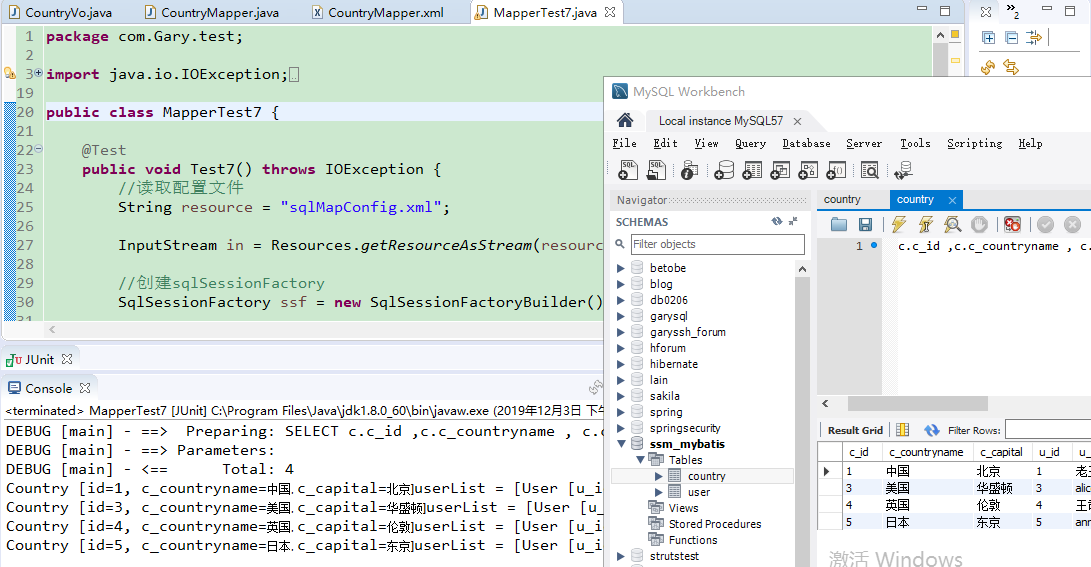
通过country表查询用户(用户id = 国家id)

SELECT c.c_id ,c.c_countryname , c.c_capital , u.u_id , u.u_username FROM country c LEFT JOIN USER u ON u.u_id = c.c_id
Gary.sql
CountryVo.class中包含User对象集合
package com.Gary.bean;

import java.util.List;

public class CountryVo extends Country{

    //需要维护一个User集合

    private List<User> userList;

    public List<User> getUserList() {

        return userList;

    }

    public void setUserList(List<User> userList) {

        this.userList = userList;

    }

    @Override

    public String toString() {

        return super.toString() + "userList = " + userList;

    }

}
CountryVo.java
查询国家中存在的用户存在的SQL语句
    <!-- 查询所有CountryVo -->

    <resultMap type="CountryVo" id="countryVo">

        <id property="id" column="c_id"/>

        <result property="c_countryname" column="c_countryname"/>

        <result property="c_capital" column="c_capital"/>

        <!-- 一对多关系 -->

        <collection property = "userList" ofType="User">

            <id property="u_id" column="u_id"/>

            <result property="u_username" column="u_username"/>

        </collection>

    </resultMap>

    <select id="selectAllCountryVo" resultMap="countryVo">

        SELECT c.c_id ,c.c_countryname , c.c_capital , u.u_id , u.u_username   FROM country c LEFT JOIN USER u ON u.u_id = c.c_id

    </select>
<?xml version="1.0" encoding="UTF-8" ?>

<!DOCTYPE mapper

  PUBLIC "-//mybatis.org//DTD Mapper 3.0//EN"

  "http://mybatis.org/dtd/mybatis-3-mapper.dtd">

<mapper namespace="com.Gary.mapper.CountryMapper">

    <resultMap type="Country" id="country">

        <result property="id" column="c_id"/>

    </resultMap>

    <!-- 查询所有 -->

    <select id="selectAll" resultMap="country">

        select * from country

    </select>

    <!-- 查询所有CountryVo -->

    <resultMap type="CountryVo" id="countryVo">

        <id property="id" column="c_id"/>

        <result property="c_countryname" column="c_countryname"/>

        <result property="c_capital" column="c_capital"/>

        <!-- 一对多关系 -->

        <collection property = "userList" ofType="User">

            <id property="u_id" column="u_id"/>

            <result property="u_username" column="u_username"/>

        </collection>

    </resultMap>

    <select id="selectAllCountryVo" resultMap="countryVo">

        SELECT c.c_id ,c.c_countryname , c.c_capital , u.u_id , u.u_username   FROM country c LEFT JOIN USER u ON u.u_id = c.c_id

    </select>

</mapper>
CountryMapper.xml
package com.Gary.test;

import java.io.IOException;

import java.io.InputStream;

import java.util.List;

import org.apache.ibatis.io.Resources;

import org.apache.ibatis.session.SqlSession;

import org.apache.ibatis.session.SqlSessionFactory;

import org.apache.ibatis.session.SqlSessionFactoryBuilder;

import org.junit.Test;

import com.Gary.bean.Country;

import com.Gary.bean.CountryVo;

import com.Gary.bean.User;

import com.Gary.bean.UserVo;

import com.Gary.mapper.CountryMapper;

import com.Gary.mapper.UserMapper;

public class MapperTest7 {

    @Test

    public void Test7() throws IOException {

        //读取配置文件

        String resource = "sqlMapConfig.xml";

        InputStream in = Resources.getResourceAsStream(resource);

        //创建sqlSessionFactory

        SqlSessionFactory ssf = new SqlSessionFactoryBuilder().build(in);

        //生产一个sqlSession

        SqlSession session = ssf.openSession();

        CountryMapper mapper = session.getMapper(CountryMapper.class);

        List<CountryVo> list = mapper.selectAllCountryVo();

        for(CountryVo countryVo : list){

            System.out.println(countryVo);

        }

    }

}
MapperTest7.java
JavaWeb_(Mybatis框架)关联查询_六的更多相关文章
- JavaWeb_(Mybatis框架)输入和输出参数_五
系列博文: JavaWeb_(Mybatis框架)JDBC操作数据库和Mybatis框架操作数据库区别_一 传送门 JavaWeb_(Mybatis框架)使用Mybatis对表进行增.删.改.查操作_ ...
- JavaWeb_(Mybatis框架)主配置文件介绍_四
系列博文: JavaWeb_(Mybatis框架)JDBC操作数据库和Mybatis框架操作数据库区别_一 传送门 JavaWeb_(Mybatis框架)使用Mybatis对表进行增.删.改.查操作_ ...
- JavaWeb_(Mybatis框架)JDBC操作数据库和Mybatis框架操作数据库区别_一
系列博文: JavaWeb_(Mybatis框架)JDBC操作数据库和Mybatis框架操作数据库区别_一 传送门 JavaWeb_(Mybatis框架)使用Mybatis对表进行增.删.改.查操作_ ...
- JavaWeb_(Mybatis框架)使用Mybatis对表进行增、删、改、查操作_二
系列博文: JavaWeb_(Mybatis框架)JDBC操作数据库和Mybatis框架操作数据库区别_一 传送门 JavaWeb_(Mybatis框架)使用Mybatis对表进行增.删.改.查操作_ ...
- JavaWeb_(Mybatis框架)Mapper动态代理开发_三
系列博文: JavaWeb_(Mybatis框架)JDBC操作数据库和Mybatis框架操作数据库区别_一 传送门 JavaWeb_(Mybatis框架)使用Mybatis对表进行增.删.改.查操作_ ...
- JavaWeb_(Mybatis框架)动态sql_七
系列博文: JavaWeb_(Mybatis框架)JDBC操作数据库和Mybatis框架操作数据库区别_一 传送门 JavaWeb_(Mybatis框架)使用Mybatis对表进行增.删.改.查操作_ ...
- mybatis_09关联查询_一对一
复杂查询时,单表对应的po类已不能满足输出结果集的映射. 所以有些时候就需要关联查询_一对一:通过条件查询结果每个字段都唯一 一对一:模型里面有模型 一对多:模型里面有集合 多对多:集合里面有集合 方 ...
- Mybatis之关联查询
一.一对一关联 1.1.提出需求 根据班级id查询班级信息(带老师的信息) 1.2.创建表和数据 创建一张教师表和班级表,这里我们假设一个老师只负责教一个班,那么老师和班级之间的关系就是一种一对一的关 ...
- SpringBoot+Mybatis实现关联查询
SpringBoot+Mybatis实现关联查询 今天学习了下Mybatis的动态查询,然后接着上次的Demo改造了下实现表的关联查询. 话不多说,开始今天的小Demo 首先接着上次的项目 https ...
随机推荐
- Asp.Net Core 2.0 之旅---@Html.Action
原文:Asp.Net Core 2.0 之旅---@Html.Action 版权声明:本文为博主原创文章,遵循CC 4.0 BY-SA版权协议,转载请附上原文出处链接和本声明. 本文链接:https: ...
- Linux增加虚拟内存
Docker容器启动Mysql镜像报错,提示无法分配内存,报错信息如下: 由此我们看到Swap为0,考虑适当增加swap. Linux开启swap空间有好几种方法,在这里只介绍比较常用的两种. 使用交 ...
- 重构与反思-<重构代码的7个阶段>有感
https://coolshell.cn/articles/5201.html/comment-page-2#comment-1932554 过去半年基本上完整经历了这个文章的各个阶段,看完文章结合自 ...
- spingboot启动报驱动Loading class `com.mysql.jdbc.Driver'. This is deprecated. The new driver class is `com.mysql.cj.jdbc.Driver'. The driver is automatically registered via the SPI and manual loading of th
原因: springboot应用了最新的驱动com.mysql.cj.jdbc.Driver,这个驱动需要用mysql-connector-java包的6.x版本才可以, 而mysql-connect ...
- MySQL数据库的创建&删除&选择
1.MySQL数据库的创建 方法1和2 方法3.使用PHP脚本 PHP中使用mysqli_query函数来创建或删除MySql数据库 mysqli_query函数:两个参数 返回值:执行成功 ...
- 前端理解控制反转ioc
工作一直都是写前端,而且都是偏业务的.相关的框架代码层面的了解还是有很大的缺失.一直想多写些维护性,可读性强的代码. 这段时间对控制反转ioc,这样的设计有了一个初步的了解. 前端为弱语言,平时代码的 ...
- MYSQL查询练习 1
-- 查询练习 1------------ CREATE TABLE stu ( sid ), sname ), age INT, gender ) ); , 'male'); , 'female') ...
- 浅谈JAVA继承关系中的构造函数
话不多说直接上例子,我的例子中定义了两个类,TheSon和TheFather,TheSon继承了TheFather,如图: TheSon类的定义: TheFather类的定义: 当我们初始化The ...
- 网络分类及OSI七层模型
一.网络分类: 局域网(LAN)是指在某一区域内由多台计算机互联成的计算机组.一般是方圆几千米以内.局域网可以实现文件管理.应用软件共享.打印机共享.工作组内的日程安排.电子邮件和传真通信服务等功能. ...
- My97DatePicker(js日期插件) v4.8
1.下载地址 https://files.cnblogs.com/files/yu-shang/My97DatePicker.zip 2.文档地址 http://my97.net/demo/index ...