
异步消息处理机制相关面试问题-handlerThread面试问题详解
handlerThread产生背景:
开启Thread子线程进行耗时操作,多次创建和销毁线程是很耗系统资源的。
handlerThread是什么?
handler + thread + looper
它其实也是一个线程,只是跟Thread是有区别的,它是一个thread内部有looper,
handlerThread的特点:
- 它本质上是一个线程,它继承了Thread。
- 它有自己的内部Looper对象,可以进行looper循环。
- 通过获取HandlerThread的looper对象传递给Handler对象,可以在handleMessage方法中执行异步任务。
- 优点是不会阻塞,减少了对性能的损耗,缺点是不能同时进行多任务的处理,需要等待进行处理,处理效率较低。
- 与线程池注重并发不同,HandlerThread是一个串行队列【也就是任务必须一个个执行,只有一个执行完了才会执行下一个】,HandlerThread背后只有一个线程。
handlerThread源码解析:
先贴一下它的完整源码:
/**

 * Handy class for starting a new thread that has a looper. The looper can then be

 * used to create handler classes. Note that start() must still be called.

 */

public class HandlerThread extends Thread {

    int mPriority;

    int mTid = -1;

    Looper mLooper;

    public HandlerThread(String name) {

        super(name);

        mPriority = Process.THREAD_PRIORITY_DEFAULT;

    }

    /**

     * Constructs a HandlerThread.

     * @param name

     * @param priority The priority to run the thread at. The value supplied must be from

     * {@link android.os.Process} and not from java.lang.Thread.

     */

    public HandlerThread(String name, int priority) {

        super(name);

        mPriority = priority;

    }

    /**

     * Call back method that can be explicitly overridden if needed to execute some

     * setup before Looper loops.

     */

    protected void onLooperPrepared() {

    }

    @Override

    public void run() {

        mTid = Process.myTid();

        Looper.prepare();

        synchronized (this) {

            mLooper = Looper.myLooper();

            notifyAll();

        }

        Process.setThreadPriority(mPriority);

        onLooperPrepared();

        Looper.loop();

        mTid = -1;

    }

    /**

     * This method returns the Looper associated with this thread. If this thread not been started

     * or for any reason is isAlive() returns false, this method will return null. If this thread

     * has been started, this method will block until the looper has been initialized.

     * @return The looper.

     */

    public Looper getLooper() {

        if (!isAlive()) {

            return null;

        }

        // If the thread has been started, wait until the looper has been created.

        synchronized (this) {

            while (isAlive() && mLooper == null) {

                try {

                    wait();

                } catch (InterruptedException e) {

                }

            }

        }

        return mLooper;

    }

    /**

     * Quits the handler thread's looper.

     * <p>

     * Causes the handler thread's looper to terminate without processing any

     * more messages in the message queue.

     * </p><p>

     * Any attempt to post messages to the queue after the looper is asked to quit will fail.

     * For example, the {@link Handler#sendMessage(Message)} method will return false.

     * </p><p class="note">

     * Using this method may be unsafe because some messages may not be delivered

     * before the looper terminates.  Consider using {@link #quitSafely} instead to ensure

     * that all pending work is completed in an orderly manner.

     * </p>

     *

     * @return True if the looper looper has been asked to quit or false if the

     * thread had not yet started running.

     *

     * @see #quitSafely

     */

    public boolean quit() {

        Looper looper = getLooper();

        if (looper != null) {

            looper.quit();

            return true;

        }

        return false;

    }

    /**

     * Quits the handler thread's looper safely.

     * <p>

     * Causes the handler thread's looper to terminate as soon as all remaining messages

     * in the message queue that are already due to be delivered have been handled.

     * Pending delayed messages with due times in the future will not be delivered.

     * </p><p>

     * Any attempt to post messages to the queue after the looper is asked to quit will fail.

     * For example, the {@link Handler#sendMessage(Message)} method will return false.

     * </p><p>

     * If the thread has not been started or has finished (that is if

     * {@link #getLooper} returns null), then false is returned.

     * Otherwise the looper is asked to quit and true is returned.

     * </p>

     *

     * @return True if the looper looper has been asked to quit or false if the

     * thread had not yet started running.

     */

    public boolean quitSafely() {

        Looper looper = getLooper();

        if (looper != null) {

            looper.quitSafely();

            return true;

        }

        return false;

    }

    /**

     * Returns the identifier of this thread. See Process.myTid().

     */

    public int getThreadId() {

        return mTid;

    }

}
以上就是它的完整源码,挺少的,但是设计很精妙,先来看一下它的类注解:
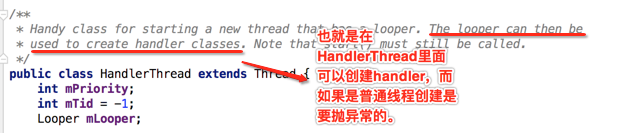
其中它就是继承Thread,很明显就是一个线程,接着来往下分析:
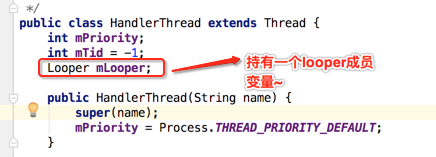

通过下面这句代码就可以知道:
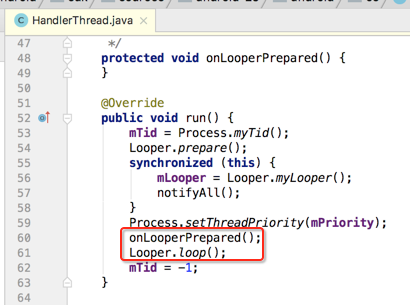
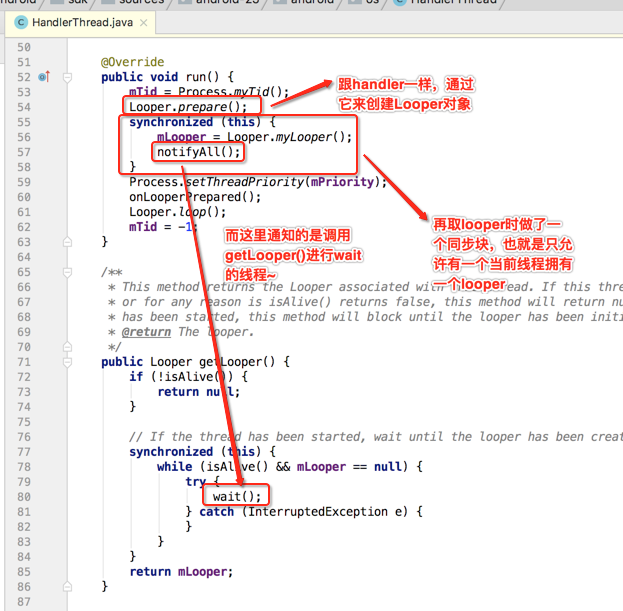
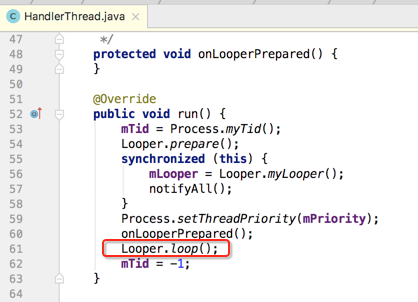
接着看一下线程最核心的run()方法:
最后执行loop方法:
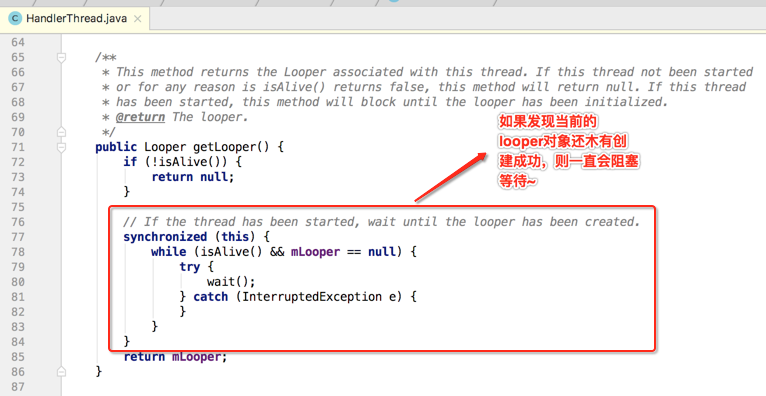
而看一下getLooper()方法:
最后再看一下跟退出相关的方法:
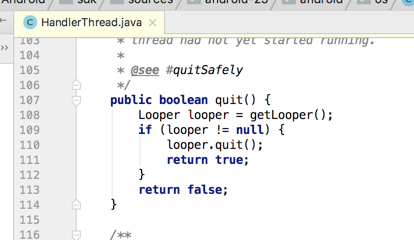
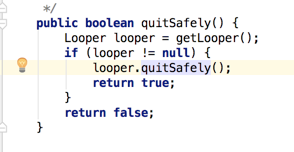
其中安全的退出效率肯定没有直接退出效率高。
异步消息处理机制相关面试问题-handlerThread面试问题详解的更多相关文章
- 异步消息处理机制相关面试问题-intentservice面试问题详解
IntentService是什么? IntentService是继承并处理异步请求的一个类,在IntentService内有一个工作线程来处理耗时操作,启动IntentService方法和启动传统的S ...
- 异步消息处理机制相关面试问题-handler面试问题详解
什么是handler? 这个异常应该也就是引出handler的原因,也就是默认在非UI线程中是无法去更新UI的东东滴,那到底什么上handler呢? handler通过发送和处理Message和Run ...
- 异步消息处理机制相关面试问题-AsyncTask面试问题详解
什么是AsyncTask: 它本质上是一个封装了线程池和handler的异步框架. AsyncTask的使用方法: 三个参数: 五个方法: AsyncTask的内部原理: AsyncTask的注意事项 ...
- 【转】Android 异步消息处理机制 让你深入理解 Looper、Handler、Message三者关系
转载请标明出处:http://blog.csdn.net/lmj623565791/article/details/38377229 ,本文出自[张鸿洋的博客] 很多人面试肯定都被问到过,请问Andr ...
- Android 异步消息处理机制 让你在深入了解 Looper、Handler、Message之间的关系
转载请注明出处:http://blog.csdn.net/lmj623565791/article/details/38377229 ,本文出自[张鸿洋的博客] 非常多人面试肯定都被问到过,请问And ...
- Android 异步消息处理机制 让你深入理解 Looper、Handler、Message三者关系
转自:http://blog.csdn.net/lmj623565791/article/details/38377229 ,本文出自[张鸿洋的博客] 很多人面试肯定都被问到过,请问Android中的 ...
- 【转载】Android异步消息处理机制详解及源码分析
PS一句:最终还是选择CSDN来整理发表这几年的知识点,该文章平行迁移到CSDN.因为CSDN也支持MarkDown语法了,牛逼啊! [工匠若水 http://blog.csdn.net/yanbob ...
- Android 异步消息处理机制终结篇 :深入理解 Looper、Handler、Message、MessageQueue四者关系
版权声明:本文出自汪磊的博客,转载请务必注明出处. 一.概述 我们知道更新UI操作我们需要在UI线程中操作,如果在子线程中更新UI会发生异常可能导致崩溃,但是在UI线程中进行耗时操作又会导致ANR,这 ...
- Android多线程----异步消息处理机制之Handler详解
[声明] 欢迎转载,但请保留文章原始出处→_→ 生命壹号:http://www.cnblogs.com/smyhvae/ 文章来源:http://www.cnblogs.com/smyhvae/p/ ...
随机推荐
- ParallelForTransform作业
ParallelForTransform作业是另一种ParallelFor作业 ; 专为在变形上操作而设计. 注意:ParallelForTransform作业是Unity中用于实现IJobParal ...
- LeetCode.1170-比较字符串中最小字符的出现频率(Compare Strings by Frequency of the Smallest Char)
这是小川的第412次更新,第444篇原创 看题和准备 今天介绍的是LeetCode算法题中Easy级别的第263题(顺位题号是1170).在一个非空字符串s上定义一个函数f(s),该函数计算s中最小字 ...
- vue的特点 关键字
1.对mvvm模式的理解 Model-view-viewmodel Model数据模型 View代表ui组件 Viewmodel监听模型数据的改变和控制视图行为.处理用户交互,简单理解就是一个同步vi ...
- python程序开子进程打包成exe文件运行炸内存原因剖析
首先给出伪代码 from multiprocessing import Process def task(): print("hahaha") pass if __name__ = ...
- Linux 文件和目录的属性及权限
一.Linux中的文件 1.1文件属性概述 Linux里一切皆文件! Linux系统中的文件或目录的属性主要包括;索引节点(inode).文件类型.权限属性.链接数.所归属的用户组.最近修改时间等内容 ...
- kafka修改topic副本数
工作案例: 大数据开发用系统脚本自动在kafka建topic,检查后才发现副本数只有1个,存在数据丢失的风险.需要立刻把副本数改为3个. 开始干活,首先想到的是下面的命令: ${BIN_PATH}/k ...
- VMware HorizonView虚拟化桌面TLS问题处理
问题描述 公司虚拟化桌面环境内,进出口事业部同事在使用"中国贸易单一窗口"登录系统时,其系统本地控件无法启动WSS服务,端口显示使用61231,并反复提示安装控件. 排查过程 首先 ...
- Python特色数据类型--元组
元组是不可改变的,创建后就不能做任何修改操作了 1.元组用()表示
- MySQL-存储引擎-创建表-字段数据类型-严格模式-字段约束-键-02
目录 扩展点 查看服务端字符.IP.端口配置 取消本次错误输入 例外情况 database 数据库操作 table 数据表操作 查看MySQL存储引擎 常见几个存储引擎 InnoDB MyISAM M ...
- [经验分享] Docker网络解决方案-Weave部署记录
前面说到了Flannel的部署,今天这里说下Docker跨主机容器间网络通信的另一个工具Weave的使用.当容器分布在多个不同的主机上时,这些容器之间的相互通信变得复杂起来.容器在不同主机之间都使用的 ...