
Concurrent - 并发框架
原创转载请注明出处:https://www.cnblogs.com/agilestyle/p/11426833.html
SynchronizedMap和ConcurrentHashMap有什么区别?
ConcurrentHashMap后者具有更高的并发
SynchronizedMap锁的是整个对象
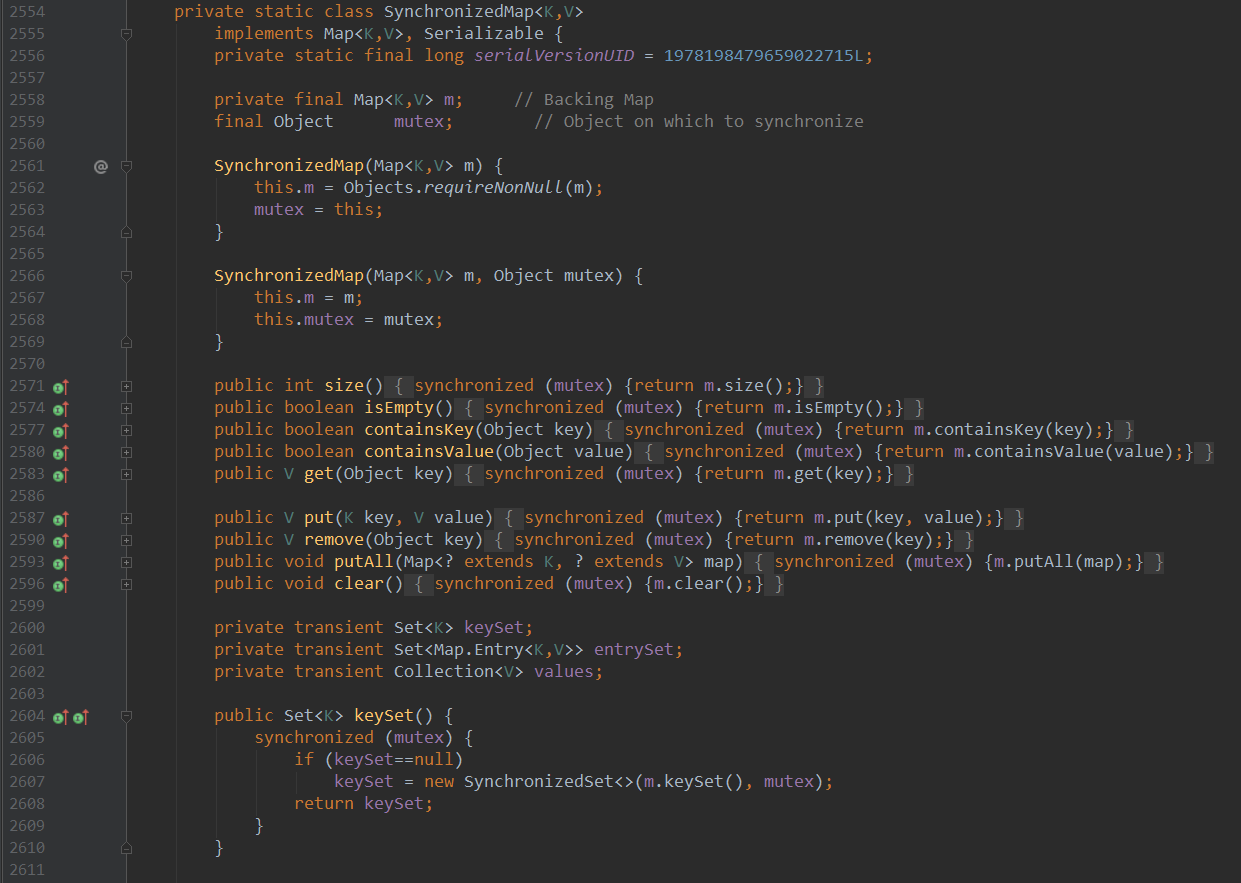
ConcurrentHashMap锁的是段
 ...

    /**

      * Maps the specified key to the specified value in this table.

      * Neither the key nor the value can be null.

      *

      * <p>The value can be retrieved by calling the {@code get} method

      * with a key that is equal to the original key.

      *

      * @param key key with which the specified value is to be associated

      * @param value value to be associated with the specified key

      * @return the previous value associated with {@code key}, or

      *         {@code null} if there was no mapping for {@code key}

      * @throws NullPointerException if the specified key or value is null

      */

     public V put(K key, V value) {

         return putVal(key, value, false);

     }

     /** Implementation for put and putIfAbsent */

     final V putVal(K key, V value, boolean onlyIfAbsent) {

         if (key == null || value == null) throw new NullPointerException();

         int hash = spread(key.hashCode());

         int binCount = 0;

         for (Node<K,V>[] tab = table;;) {

             Node<K,V> f; int n, i, fh;

             if (tab == null || (n = tab.length) == 0)

                 tab = initTable();

             else if ((f = tabAt(tab, i = (n - 1) & hash)) == null) {

                 if (casTabAt(tab, i, null,

                              new Node<K,V>(hash, key, value, null)))

                     break;                   // no lock when adding to empty bin

             }

             else if ((fh = f.hash) == MOVED)

                 tab = helpTransfer(tab, f);

             else {

                 V oldVal = null;

                 synchronized (f) {

                     if (tabAt(tab, i) == f) {

                         if (fh >= 0) {

                             binCount = 1;

                             for (Node<K,V> e = f;; ++binCount) {

                                 K ek;

                                 if (e.hash == hash &&

                                     ((ek = e.key) == key ||

                                      (ek != null && key.equals(ek)))) {

                                     oldVal = e.val;

                                     if (!onlyIfAbsent)

                                         e.val = value;

                                     break;

                                 }

                                 Node<K,V> pred = e;

                                 if ((e = e.next) == null) {

                                     pred.next = new Node<K,V>(hash, key,

                                                               value, null);

                                     break;

                                 }

                             }

                         }

                         else if (f instanceof TreeBin) {

                             Node<K,V> p;

                             binCount = 2;

                             if ((p = ((TreeBin<K,V>)f).putTreeVal(hash, key,

                                                            value)) != null) {

                                 oldVal = p.val;

                                 if (!onlyIfAbsent)

                                     p.val = value;

                             }

                         }

                     }

                 }

                 if (binCount != 0) {

                     if (binCount >= TREEIFY_THRESHOLD)

                         treeifyBin(tab, i);

                     if (oldVal != null)

                         return oldVal;

                     break;

                 }

             }

         }

         addCount(1L, binCount);

         return null;

     }

 ...
Note:
ConcurrentHashMap 的结构示意图

ConcurrentHashMap 在默认并发级别会创建包含 16 个 Segment 对象的数组。每个 Segment 的成员对象 table 包含若干个散列表的桶。每个桶是由 HashEntry 链接起来的一个链表。如果键能均匀散列,每个 Segment 大约守护整个散列表中桶总数的 1/16。
CopyOnWriteArrayList可以用于什么应用场景?
多读少写
 ...

    /**

      * Appends the specified element to the end of this list.

      *

      * @param e element to be appended to this list

      * @return {@code true} (as specified by {@link Collection#add})

      */

     public boolean add(E e) {

         final ReentrantLock lock = this.lock;

         lock.lock();

         try {

             Object[] elements = getArray();

             int len = elements.length;

             Object[] newElements = Arrays.copyOf(elements, len + 1);

             newElements[len] = e;

             setArray(newElements);

             return true;

         } finally {

             lock.unlock();

         }

     }

     /**

      * Inserts the specified element at the specified position in this

      * list. Shifts the element currently at that position (if any) and

      * any subsequent elements to the right (adds one to their indices).

      *

      * @throws IndexOutOfBoundsException {@inheritDoc}

      */

     public void add(int index, E element) {

         final ReentrantLock lock = this.lock;

         lock.lock();

         try {

             Object[] elements = getArray();

             int len = elements.length;

             if (index > len || index < 0)

                 throw new IndexOutOfBoundsException("Index: "+index+

                                                     ", Size: "+len);

             Object[] newElements;

             int numMoved = len - index;

             if (numMoved == 0)

                 newElements = Arrays.copyOf(elements, len + 1);

             else {

                 newElements = new Object[len + 1];

                 System.arraycopy(elements, 0, newElements, 0, index);

                 System.arraycopy(elements, index, newElements, index + 1,

                                  numMoved);

             }

             newElements[index] = element;

             setArray(newElements);

         } finally {

             lock.unlock();

         }

     }

 ...
Concurrent - 并发框架的更多相关文章
- J.U.C并发框架
转载:http://itindex.net/detail/48869-j.u.c-%E6%A1%86%E6%9E%B6 J.U.C并发框架 作者:Doug Lea SUNY Oswego Oswego ...
- 纯Java——简易高并发框架
转自:https://blog.csdn.net/MonkeyDCoding/article/details/81369610 0.源代码github-简易高并发框架 注:本篇博客知识来自于网课. 1 ...
- Java并发和多线程1:并发框架基本示例
Executor框架是指java 5中引入的一系列并发库中与executor相关的一些功能类,其中包括ThreadPool,Executor,Executors,ExecutorService,Com ...
- 深入理解Java并发框架AQS系列(一):线程
深入理解Java并发框架AQS系列(一):线程 深入理解Java并发框架AQS系列(二):AQS框架简介及锁概念 一.概述 1.1.前言 重剑无锋,大巧不工 读j.u.c包下的源码,永远无法绕开的经典 ...
- 深入理解Java并发框架AQS系列(二):AQS框架简介及锁概念
深入理解Java并发框架AQS系列(一):线程 深入理解Java并发框架AQS系列(二):AQS框架简介及锁概念 一.AQS框架简介 AQS诞生于Jdk1.5,在当时低效且功能单一的synchroni ...
- 深入理解Java并发框架AQS系列(三):独占锁(Exclusive Lock)
一.前言 优秀的源码就在那里 经过了前面两章的铺垫,终于要切入正题了,本章也是整个AQS的核心之一 从本章开始,我们要精读AQS源码,在欣赏它的同时也要学会质疑它.当然本文不会带着大家逐行过源码(会有 ...
- 协程并发框架gevent及其用法
gevent是python的一个并发框架,采用协程实现并发目的,用起来也非常简单 gevent的docs:http://www.gevent.org/contents.html 一个最简单的例子: i ...
- Python 开源异步并发框架的未来
http://segmentfault.com/a/1190000000471602 开源 Python 是开源的,介绍的这几个框架 Twisted.Tornado.Gevent 和 tulip 也都 ...
- Python开源异步并发框架
Python开源异步并发框架的未来 2014年3月30日,由全球最大的中文IT社区CSDN主办的“开源技术大会·” (Open Source Technology Conference ,简称OSTC ...
随机推荐
- xampp 配置HTTPS
参考: https://blog.csdn.net/qq_35128576/article/details/81326524
- Linux如何查看进程是否存活
ps -ef | grep nginx ps -ef | grep(过滤) 进程名字
- delphi String 与 Stream的互转
stream1 := TStringStream.create(str); str := TStringStream(stream1).DataString; Stream 是抽像类, ...
- java使用开源类库Tesseract实现图片识别
Tesseract-OCR支持中文识别,并且开源和提供全套的训练工具,是快速低成本开发的首选. Tess4J则是Tesseract在Java PC上的应用 Tesseract的OCR引擎最先由HP实验 ...
- centos清理缓存
释放网页缓存(To free pagecache): echo 1 > /proc/sys/vm/drop_caches 释放目录项和索引(To free dentries and inodes ...
- Vue&webpack入门实践
目录 1. 下载安装Vue 2. Vue 2.1 Vue要素 2.2 指令 2.3 组件化 2.4 vue-router 3. webpack 3.1 webpack简介 3.2 四个核心概念 3.3 ...
- git---从已有分支拉出新分支
文章目录 开发中,经常需要从一个已有的分支拉出一个新分支,去这个新分支做一些开发改动,这里示例为: 从master分支,重新拉取出一个新的分支,名字为dev,具体命令如下: 切换到被copy的分支(m ...
- 如何录制视频生成GIF动态图?
前言 在分享文章时有些知识不好讲清,就打算用gif图来展示,可是在网上找了几个录视频的工具都要会员才可以生成gif动态图,很是郁闷,不过苦苦寻找后,发现LICEcap很好用,可以很方便的生成gif动态 ...
- PromQL
PromQL (Prometheus Query Language) 是 Prometheus 自己开发的数据查询 DSL 语言,语言表现力非常丰富,内置函数很多,在日常数据可视化以及rule 告警中 ...
- 面试题22:链表中倒数第k个节点
# -*- coding:utf-8 -*- # class ListNode: # def __init__(self, x): # self.val = x # self.next = None ...