
[数据结构] 2.7 Heap 堆
* 注: 本文/本系列谢绝转载,如有转载,本人有权利追究相应责任。
1.堆是什么?
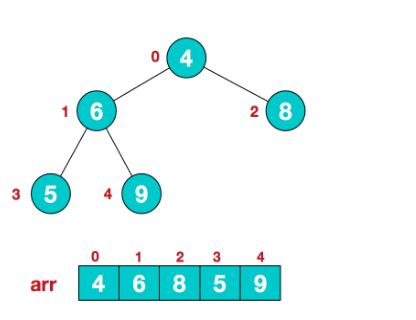
(如图所示是一个小堆)
1)堆是一颗完全二叉树,它的最后一层不是满的,其他每一层都是满的,最后一层从左到右也没有空隙。
简单的说? 完全二叉树也就是没有缝隙的二叉树。
2)堆常常通过数组实现,因为 父子节点直接的关系直接可以通过数组的索引换算
parent(i) = i/2
left child(i) = 2*i + 1
right child(i) = 2*i + 2
3)对于最大堆来说,每个节点的值都不大于其父节点的值,也就是根节点是最大的。
对于最小堆来说,每个节点的值都不小于其父节点的值,也就是根节点是最小的
4)堆进行插入和删除的时间复杂度均为 O(LogN)
2.堆的应用
堆可以解决的首先就是topK问题,假设要从N大小的实数数组中找到topK,那么需要K*logN的时间。
当N=10000时

当N=10000*10000时

也就是说N可以放的足够大,K可以适当大一些,经过本机实验,堆在单机单线程下只需要14s就可以处理一亿数据的Top1W操作。
3.堆的实现
堆的操作主要是两个 add、remove,有些地方也会存在buildHeap的操作,我们分别捋一下它们的思路。
一下基于一个最大堆。
1) add操作,添加元素
思路:
将添加的元素放在数组尾部,进行“上浮”操作。也就是比较父元素,如果大于父元素则上浮。
实际长度 ++
        /**

         * 插入过程需要上浮比较

         * @param node

         */

        public void insert(Node node){

            if(actualSize == MAX_N){

                System.out.println("当前堆已满!");

                return;

            }

            // 插入

            // 插入节点

            nodes[actualSize] = node;

            // 上浮过程

            // 调整堆,从这个节点开始与其夫节点进行比较,如果大于父节点则交换上浮

            for(int i = actualSize; i > 0 ;i = getParentIndex(i)){

                Node current = nodes[i];

                Node parent = nodes[getParentIndex(i)];

                if(parent.data < current.data){

                    nodes[i] = parent;

                    nodes[getParentIndex(i)] = current;

                }

            }

            actualSize ++;

        }
2) remove操作,删除元素
思路:
获得堆顶的值,然后用堆底节点替换堆顶节点。并针对此节点进行"下沉"操作,所谓下沉,就是如果比较当前元素与左右子节点的值,如果比它们小,则与最大者交换。
实际长度 --
 /**

         * 删除过程需要下沉比较

         * @param node

         */

        public void remove(Node node){

            if(actualSize == 0){

                System.out.println("当前堆已空!");

                return;

            }

            if(actualSize == 1){

               actualSize --;

               return;

            }

            // 删除过程

            // 使用最后一个节点替换掉顶点

            Node tailNode = nodes[actualSize-1];

            nodes[0] = tailNode;

            actualSize --;

            // 下沉比较

            for(int i = 0; i < actualSize;){

                Node current = nodes[i];

                Node leftChild = null;

                if(getLeftChildIndex(i) < actualSize){

                   leftChild = nodes[getLeftChildIndex(i)];

                }

                Node rightChild = null;

                if(getRightChildIndex(i) < actualSize){

                    rightChild = nodes[getRightChildIndex(i)];

                }

                if(leftChild == null && rightChild == null){

                    return;

                }

                if(leftChild != null && leftChild.data > current.data){

                    if(rightChild != null && rightChild.data > leftChild.data){ // 右枝最大

                        nodes[i] = rightChild;

                        nodes[getRightChildIndex(i)] = current;

                        // i走右枝

                        i = getRightChildIndex(i);

                        continue;

                    }else{ // 左枝最大

                        nodes[i] = leftChild;

                        nodes[getLeftChildIndex(i)] = current;

                        // i走左枝

                        i = getLeftChildIndex(i);

                        continue;

                    }

                }else{

                    if(rightChild != null && rightChild.data > current.data){ // 右枝最大

                        nodes[i] = rightChild;

                        nodes[getRightChildIndex(i)] = current;

                        // i走右枝

                        i = getRightChildIndex(i);

                        continue;

                    }else if(rightChild != null && rightChild.data <= current.data){ // 当前点最大

                        //保持现状,直接结束循环

                        break;

                    }

                }

            }

        }
3)buildHeap操作,给一个数组,进行建立堆操作
思路:
遍历数组的每一个节点,针对每个节点进行"上浮"操作.
Code:
package ds6.heap;

import java.util.Arrays;

public class Heap {

    static class Node{

        long data;

        public Node(long data) {

            this.data = data;

        }

        @Override

        public String toString() {

            return "Node{" +

                    "data=" + data +

                    '}';

        }

    }

    /**

     * TopN最大值堆

     */

    static class TopNMaxHeap{

        int MAX_N = 10; // Top N ,指定堆的最大大小

        Node[] nodes;

        int actualSize = 0;

        public TopNMaxHeap(int MAX_N) {

            this.MAX_N = MAX_N;

            nodes = new Node[MAX_N];

        }

        public void foreachPrint(){

            System.out.println(Arrays.toString(nodes));

        }

        /**

         * 删除过程需要下沉比较

         * @param node

         */

        public void remove(Node node){

            if(actualSize == 0){

                System.out.println("当前堆已空!");

                return;

            }

            if(actualSize == 1){

               actualSize --;

               return;

            }

            // 删除过程

            // 使用最后一个节点替换掉顶点

            Node tailNode = nodes[actualSize-1];

            nodes[0] = tailNode;

            actualSize --;

            // 下沉比较

            for(int i = 0; i < actualSize;){

                Node current = nodes[i];

                Node leftChild = null;

                if(getLeftChildIndex(i) < actualSize){

                   leftChild = nodes[getLeftChildIndex(i)];

                }

                Node rightChild = null;

                if(getRightChildIndex(i) < actualSize){

                    rightChild = nodes[getRightChildIndex(i)];

                }

                if(leftChild == null && rightChild == null){

                    return;

                }

                if(leftChild != null && leftChild.data > current.data){

                    if(rightChild != null && rightChild.data > leftChild.data){ // 右枝最大

                        nodes[i] = rightChild;

                        nodes[getRightChildIndex(i)] = current;

                        // i走右枝

                        i = getRightChildIndex(i);

                        continue;

                    }else{ // 左枝最大

                        nodes[i] = leftChild;

                        nodes[getLeftChildIndex(i)] = current;

                        // i走左枝

                        i = getLeftChildIndex(i);

                        continue;

                    }

                }else{

                    if(rightChild != null && rightChild.data > current.data){ // 右枝最大

                        nodes[i] = rightChild;

                        nodes[getRightChildIndex(i)] = current;

                        // i走右枝

                        i = getRightChildIndex(i);

                        continue;

                    }else{ // 当前点最大

                        //保持现状,直接结束循环

                        break;

                    }

                }

            }

        }

        /**

         * 插入过程需要上浮比较

         * @param node

         */

        public void insert(Node node){

            if(actualSize == MAX_N){

                System.out.println("当前堆已满!");

                return;

            }

            // 插入

            // 插入节点

            nodes[actualSize] = node;

            // 上浮过程

            // 调整堆,从这个节点开始与其夫节点进行比较,如果大于父节点则交换上浮

            for(int i = actualSize; i > 0 ;i = getParentIndex(i)){

                Node current = nodes[i];

                Node parent = nodes[getParentIndex(i)];

                if(parent.data < current.data){

                    nodes[i] = parent;

                    nodes[getParentIndex(i)] = current;

                }

            }

            actualSize ++;

        }

        public int getParentIndex(int x){

            return (x-1)/2;

        }

        public int getLeftChildIndex(int x){

            return 2*x + 1;

        }

        public int getRightChildIndex(int x){

            return 2*x + 2;

        }

    }

    public static void main(String[] args) {

        TopNMaxHeap topNMaxHeap = new TopNMaxHeap(10);

        topNMaxHeap.insert(new Node(27));

        topNMaxHeap.insert(new Node(33));

        topNMaxHeap.insert(new Node(30));

        topNMaxHeap.insert(new Node(31));

        Node nodeToRemove = new Node(40);

        topNMaxHeap.insert(nodeToRemove);

        topNMaxHeap.insert(new Node(20));

        topNMaxHeap.foreachPrint();

        topNMaxHeap.remove(nodeToRemove);

        topNMaxHeap.foreachPrint();

    }

}
result:
[Node{data=40}, Node{data=33}, Node{data=30}, Node{data=27}, Node{data=31}, Node{data=20}, null, null, null, null]

[Node{data=33}, Node{data=31}, Node{data=30}, Node{data=27}, Node{data=20}, Node{data=20}, null, null, null, null]
4.堆排序
因为堆的这个特性,通过不断poll出堆顶元素就可以对元素列表进行排序。
测试:
    public static void test2(){

        int[] toSort = new int[]{

                7,10,6,8,9,3,5,4

        };

        TopNMaxHeap heap = new TopNMaxHeap(toSort.length);

        for(int i = 0 ; i < toSort.length; i++ ){

            heap.insert(new Node(toSort[i]));

        }

        int[] result = new int[toSort.length];

        for(int i = 0; i < toSort.length; i++ ){

            result[i]=(int)heap.nodes[0].data;

            heap.remove(heap.nodes[0]);

        }

        System.out.println(Arrays.toString(result));

    }
result:
[10, 9, 8, 7, 6, 5, 4, 3]
[数据结构] 2.7 Heap 堆的更多相关文章
- Stack栈 Heap堆
Stack(栈) 栈(stack) 又名堆栈,它是一种运算受限的线性表.其限制是仅允许在表的一端进行插入和删除运算.这一端被称为栈顶,相对地,把另一端称为栈底.向一个栈插入新元素又称作进栈.入栈或压栈 ...
- 栈 堆 stack heap 堆内存 栈内存 内存分配中的堆和栈 掌握堆内存的权柄就是返回的指针 栈是面向线程的而堆是面向进程的。 new/delete and malloc/ free 指针与内存模型
小结: 1.栈内存 为什么快? Due to this nature, the process of storing and retrieving data from the stack is ver ...
- Heap堆的理解以及在IAR中如何设置堆的大小
文章首发于浩瀚先森博客 堆栈的概念在脑海里已经存在有一段时间了,今天就测试来整理下Heap堆.栈以后再说. 堆区不像全局变量和局部变量总是有指定的内存大小,它是为了在程序运行时动态分配内存而设定的一块 ...
- java - Stack栈和Heap堆的区别
首先分清楚Stack,Heap的中文翻译:Stack—栈,Heap—堆. 在中文里,Stack可以翻译为“堆栈”,所以我直接查找了计算机术语里面堆和栈开头的词语: 堆存储 ...
- Heap(堆)和stack(栈)有的区别是什么。
java的内存分为两类,一类是栈内存,一类是堆内存.栈内存是指程序进入一个方法时,会为这个方法单独分配一块私属存储空间,用于存储这个方法内部的局部变量,当这个方法结束时,分配给这个方法的栈会释放,这个 ...
- JAVA Stack栈和Heap堆的区别(转)
首先分清楚Stack,Heap的中文翻译:Stack—栈,Heap—堆. 在中文里,Stack可以翻译为“堆栈”,所以我直接查找了计算机术语里面堆和栈开头的词语: ...
- 逻辑运算符、三元运算符、for循环、stack(栈),heap(堆),方法区,静态域
Lesson One 2018-04-17 19:58:39 逻辑运算符(用于逻辑运算,左右两边都是 true 或 false) 逻辑与-& 和 短路与-&& 区别: & ...
- linux heap堆分配
heap堆分配在用户层面:malloc函数用于heap内存分配 void* malloc(size_t size); 进程的虚拟内存地址布局: 对用户来说,主要关注的空间是User Space.将Us ...
- 如何给女朋友讲明白:Java 中 Stack(栈) 与 Heap(堆)
背景 Java 中 Stack(栈) 与 Heap(堆) 是面试中被经常问到的一个话题. 有没有对 Java 中 Stack(栈) 与 Heap(堆) 烂熟于心的童鞋,请举手!!!(怎么没人举手-) ...
随机推荐
- bootstrap引入
方法一: 注意:引入js时需先引入jQuery 1.在bootstrap中文网上下载源码,解压到路径 (<E:\Lern\bootstrap>) 2 ...
- ubuntu 切换到ROOT权限
1.sudo+命令,输入当前用户密码后以root权限执行命令,有时间限制且仅限当前命令. 2.sudo -i,输入当前用户密码后以root权限登录shell,无时间限制.使用exit或logout退出 ...
- weixin://connectToFreeWifi/?apKey=协议如何跳转到微信客户端打开在wifi指定任意网页?
微信门店wifi接口,任意站跳转,跳转二维码长按识别加粉,接口支持动态传参数,支持微信支付等特殊接口对接. 代码如下使用 <head> <meta charset="utf ...
- C#中类成员的执行顺序
先进行细分: 类的成员分为:字段.属性.方法.构造方法 成员的修饰符:静态成员.实例成员 层次结构:父类.子类 先不考虑继承关系,执行顺序为: 静态字段静态构造方法实例字段实例构造方法属性和方法是在调 ...
- python3.*的一些笔记
因为使用python越来越频繁,有一些细节的东西经常用后一段时间没去用就会忘记,做些简单的笔记吧. 1.break和continue和pass a = 0 while 1: a+=1 if(a%3== ...
- 279. Perfect Squares(动态规划)
Given a positive integer n, find the least number of perfect square numbers (for example, 1, 4, 9, 1 ...
- Sitecore 8.2 页面架构设计:模板与组件
介绍 Sitecore的开放式架构和众多API意味着在Sitecore中实施网站可能会在很多方向上发生偏差.架构的一个特别重要的方面涉及页面构建 - 如何构建Sitecore中的网页? Sitecor ...
- Web前端培训教程:CSS3动画怎么实现的
动画 CSS3属性中有关于制作动画的三个属性: transform,transition,animation keyframes @keyframes mymove{ from{初始状态属性} to{ ...
- EXCEL 如何实现下拉填充公式,保持公式部分内容不变,使用绝对引用
EXCEL 如何实现下拉填充公式,保持公式部分内容不变,使用绝对引用 在不想变的单元格前加$符号(列标和列数,两个都要加$),变成绝对引用,默认情况是相对引用 L4固定不变的方式:$L$4 M4固定不 ...
- ThinkAdmin for PHP后台管理系统
ThinkAdmin for PHP后台管理系统 ThinkAdmin 是一个基于 Thinkphp 5.1.x 开发的后台管理系统,集成后台系统常用功能.基于 ThinkPHP 5.1 基础开发平台 ...