
[编织消息框架][netty源码分析]11 UnpooledHeapByteBuf 与 ByteBufAllocator

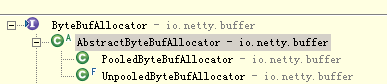
每种ByteBuf都有相应的分配器ByteBufAllocator,类似工厂模式。我们先学习UnpooledHeapByteBuf与其对应的分配器UnpooledByteBufAllocator
如何知道alloc分配器那是个?
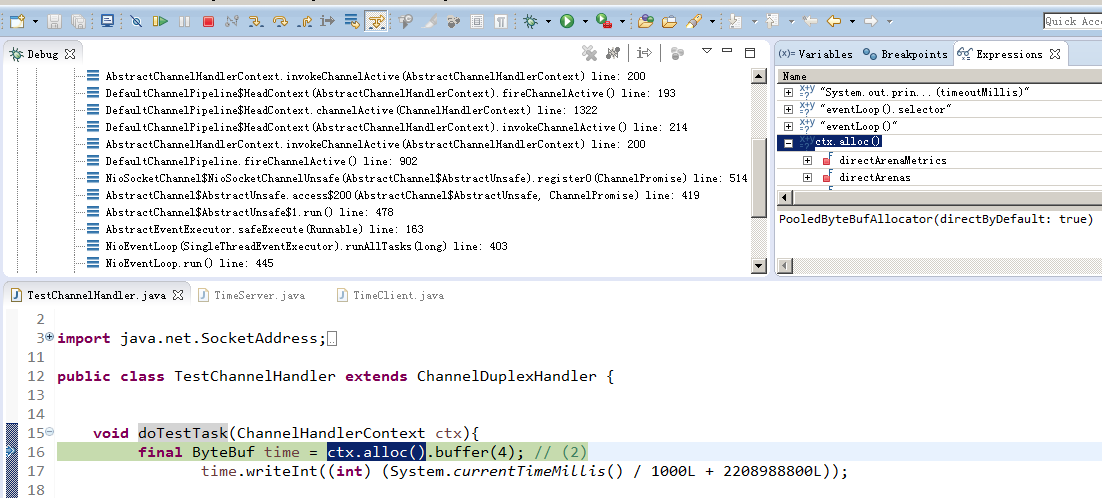
可以从官方下载的TimeServer 例子来学习,本项目已有源码可在 TestChannelHandler.class里断点追踪
从图可以看出netty 4.1.8默认的ByteBufAllocator是PooledByteBufAllocator,可以参过启动参数-Dio.netty.allocator.type unpooled/pooled 设置
细心的读者可以看出分配ByteBuf只有pool跟unpool,但ByteBuf有很多类型,可能出于使用方面考虑,有时不一定设计太死板,太规范反而使学习成本很大
public final class ByteBufUtil {

    static final ByteBufAllocator DEFAULT_ALLOCATOR;

    static {

        String allocType = SystemPropertyUtil.get(

                "io.netty.allocator.type", PlatformDependent.isAndroid() ? "unpooled" : "pooled");

        allocType = allocType.toLowerCase(Locale.US).trim();

        ByteBufAllocator alloc;

        if ("unpooled".equals(allocType)) {

            alloc = UnpooledByteBufAllocator.DEFAULT;

        } else if ("pooled".equals(allocType)) {

            alloc = PooledByteBufAllocator.DEFAULT;

        } else {

            alloc = PooledByteBufAllocator.DEFAULT;

        }

        DEFAULT_ALLOCATOR = alloc;

    }

}
AbstractReferenceCountedByteBuf是统计引用总数处理,用到Atomic*技术。
refCnt是从1开始,每引用一次加1,释放引用减1,当refCnt变成1时执行deallocate由子类实现
public abstract class AbstractReferenceCountedByteBuf extends AbstractByteBuf {

    private static final AtomicIntegerFieldUpdater<AbstractReferenceCountedByteBuf> refCntUpdater =

            AtomicIntegerFieldUpdater.newUpdater(AbstractReferenceCountedByteBuf.class, "refCnt");

    private volatile int refCnt = 1;

    @Override

    public ByteBuf retain() {

        return retain0(1);

    }

    private ByteBuf retain0(int increment) {

        for (;;) {

            int refCnt = this.refCnt;

            final int nextCnt = refCnt + increment;

            if (nextCnt <= increment) {

                throw new IllegalReferenceCountException(refCnt, increment);

            }

            if (refCntUpdater.compareAndSet(this, refCnt, nextCnt)) {

                break;

            }

        }

        return this;

    }

    @Override

    public boolean release() {

        return release0(1);

    }

    private boolean release0(int decrement) {

        for (;;) {

            int refCnt = this.refCnt;

            if (refCnt < decrement) {

                throw new IllegalReferenceCountException(refCnt, -decrement);

            }

            if (refCntUpdater.compareAndSet(this, refCnt, refCnt - decrement)) {

                if (refCnt == decrement) {

                    deallocate();

                    return true;

                }

                return false;

            }

        }

    }

    protected abstract void deallocate();

}
对于ByteBuf I/O 操作经常用的是 writeByte readByte两种
由于ByteBuf支持多种bytes对象,如 OutputStream、GatheringByteChannel、ByteBuffer、ByteBuf等,
我们只拿两三种常用的API来做分析,其它逻辑大同小异
如果读者有印象的话,通常底层只负责流程控制,实现交给应用层/子类处理,AbstractByteBuf.class writeByte/readByte 也是这种处理方式
public class UnpooledHeapByteBuf extends AbstractReferenceCountedByteBuf {

    //分配器

    private final ByteBufAllocator alloc;

    //数据

    byte[] array;

    //临时ByteBuffer,用于内部缓存

    private ByteBuffer tmpNioBuf;

    private UnpooledHeapByteBuf(

            ByteBufAllocator alloc, byte[] initialArray, int readerIndex, int writerIndex, int maxCapacity) {

        //省去部分代码同边界处理

        super(maxCapacity);

        this.alloc = alloc;

        array = initialArray;

        this.readerIndex = readerIndex;

        this.writerIndex = writerIndex;

    }

    //获取ByteBuffer容量

    @Override

    public int capacity() {

        ensureAccessible();

        return array.length;

    }

    @Override

    public boolean hasArray() {

        return true;

    }

    //获取原始数据

    @Override

    public byte[] array() {

        ensureAccessible();

        return array;

    }

    //扩容/缩容

    @Override

    public ByteBuf capacity(int newCapacity) {

        ensureAccessible();

        //newCapacity参数边界判断

        if (newCapacity < 0 || newCapacity > maxCapacity()) {

            throw new IllegalArgumentException("newCapacity: " + newCapacity);

        }

        int oldCapacity = array.length;

        //扩容处理,直接cp到新的array

        if (newCapacity > oldCapacity) {

            byte[] newArray = new byte[newCapacity];

            System.arraycopy(array, 0, newArray, 0, array.length);

            setArray(newArray);

        } else if (newCapacity < oldCapacity) {

            //减容处理

            //这里有两种处理情况

            //1.readerIndex > newCapacity 说明还有数据未处理直接将 readerIndex,writerIndex相等 newCapacity

            //2.否则 writerIndex =Math.min(writerIndex,newCapacity),取最少值,然后直接复制数据

            //可以看出netty处理超出readerIndex、writerIndex 限界直接丢弃数据。。。。。。

            byte[] newArray = new byte[newCapacity];

            int readerIndex = readerIndex();

            if (readerIndex < newCapacity) {

                int writerIndex = writerIndex();

                if (writerIndex > newCapacity) {

                    writerIndex = newCapacity

                    this.writerIndex = writerIndex;

                }

                System.arraycopy(array, readerIndex, newArray, readerIndex, writerIndex - readerIndex);

              //System.arraycopy(复制来源数组, 来源组起始坐标, 目标数组, 目标数组起始坐标, 复制数据长度);

            } else {

                this.readerIndex = newCapacity;

                this.writerIndex = newCapacity;

            }

            setArray(newArray);

        }

        return this;

    }

}
AbstractByteBuf.class readBytes 调用子类实现 getBytes方法,区别是调用readBytes会改变readerIndex记录
public abstract class AbstractByteBuf extends ByteBuf {

    @Override

    public ByteBuf readBytes(ByteBuffer dst) {

        int length = dst.remaining();

        //checkReadableBytes(length);

         if (readerIndex > (writerIndex - length)) {

            throw new IndexOutOfBoundsException(String.format(

                    "readerIndex(%d) + length(%d) exceeds writerIndex(%d): %s",

                    readerIndex, length, writerIndex, this));

        }

        //调用子类实现

        getBytes(readerIndex, dst);

        //记录已读长度

        readerIndex += length;

        return this;

    }

    @Override

    public ByteBuf readBytes(ByteBuf dst, int dstIndex, int length) {

        checkReadableBytes(length);

        getBytes(readerIndex, dst, dstIndex, length);

        readerIndex += length;

        return this;

    }

    //这里如果index不为负的话只需要 capacity - (index + length) < 0 判断就可以

    //用到 | 运算 如果 index为-1的话 index | length 还是负数 第二个 | (index + length)运算有可能 index + length相加为负

    public static boolean isOutOfBounds(int index, int length, int capacity) {

        return (index | length | (index + length) | (capacity - (index + length))) < 0;

    }

}
public class UnpooledHeapByteBuf extends AbstractReferenceCountedByteBuf {

    //支持ByteBuffer读取

    @Override

    public ByteBuf getBytes(int index, ByteBuffer dst) {

        //checkIndex(index, dst.remaining());

        if (isOutOfBounds(index,  dst.remaining(), capacity())) {

            throw new IndexOutOfBoundsException(String.format(

                    "index: %d, length: %d (expected: range(0, %d))", index, dst.remaining(), capacity()));

        }

        dst.put(array, index, dst.remaining());

        return this;

    }

    //支持ByteBuf读取

    @Override

    public ByteBuf getBytes(int index, ByteBuf dst, int dstIndex, int length) {

        checkDstIndex(index, length, dstIndex, dst.capacity());

        //是unsafe类型,要调用jdk unsafe方法复制

        if (dst.hasMemoryAddress()) {

            PlatformDependent.copyMemory(array, index, dst.memoryAddress() + dstIndex, length);

        } else if (dst.hasArray()) { //如果是数组即 heap类型,直接复制过去

            getBytes(index, dst.array(), dst.arrayOffset() + dstIndex, length);

        } else {

            dst.setBytes(dstIndex, array, index, length);

        }

        return this;

    }

    //支持数组读取

    @Override

    public ByteBuf getBytes(int index, byte[] dst, int dstIndex, int length) {

        checkDstIndex(index, length, dstIndex, dst.length);

        System.arraycopy(array, index, dst, dstIndex, length);

        return this;

    }

}
AbstractByteBuf.class writeBytes 调用子类实现 setBytes方法,区别是调用writeBytes会改变writerIndex记录
public abstract class AbstractByteBuf extends ByteBuf {

    @Override

    public ByteBuf writeBytes(ByteBuf src) {

        writeBytes(src, src.readableBytes());

        return this;

    }

    @Override

    public ByteBuf writeBytes(ByteBuf src, int length) {

        if (length > src.readableBytes()) {

            throw new IndexOutOfBoundsException(String.format(

                    "length(%d) exceeds src.readableBytes(%d) where src is: %s", length, src.readableBytes(), src));

        }

        writeBytes(src, src.readerIndex(), length);

        //读取src数据到this.ByteBuf 所以要更改src readerIndex

        src.readerIndex(src.readerIndex() + length);

        return this;

    }

    @Override

    public ByteBuf writeBytes(ByteBuf src, int srcIndex, int length) {

        ensureAccessible();

        //是否扩容处理

        ensureWritable(length);

        //调用子类实现

        setBytes(writerIndex, src, srcIndex, length);

        //记录已写长度

        writerIndex += length;

        return this;

    }

    private void ensureWritable0(int minWritableBytes) {

        if (minWritableBytes <= writableBytes()) {

            return;

        }

        //写入数据长度大于最大空间剩余长度抛异常

        if (minWritableBytes > maxCapacity - writerIndex) {

            throw new IndexOutOfBoundsException(String.format(

                    "writerIndex(%d) + minWritableBytes(%d) exceeds maxCapacity(%d): %s",

                    writerIndex, minWritableBytes, maxCapacity, this));

        }

        //通过分配器计算,参数1写完后的writerIndex记录,参数2最大容量长度

        int newCapacity = alloc().calculateNewCapacity(writerIndex + minWritableBytes, maxCapacity);

        //子类实现

        capacity(newCapacity);

    }

    //////////////////////////////AbstractByteBufAllocator.class//////////////////////////////////////

    @Override

    public int calculateNewCapacity(int minNewCapacity, int maxCapacity) {

        if (minNewCapacity < 0) {

            throw new IllegalArgumentException("minNewCapacity: " + minNewCapacity + " (expectd: 0+)");

        }

        if (minNewCapacity > maxCapacity) {

            throw new IllegalArgumentException(String.format(

                    "minNewCapacity: %d (expected: not greater than maxCapacity(%d)",

                    minNewCapacity, maxCapacity));

        }

        final int threshold = 1048576 * 4; // 4 MiB page

        if (minNewCapacity == threshold) {

            return threshold;

        }

        //如果新容量大于4M,不走双倍扩大算法,数值范围取 minNewCapacity <= maxCapacity

        if (minNewCapacity > threshold) {

            // 除以threshold再乘以threshold得出的结果是 threshold的倍数,可以理解是去掉余数

            int newCapacity = minNewCapacity / threshold * threshold;

            //如果剩余容量不够4M直接给maxCapacity,否则自增4M

            if (newCapacity > maxCapacity - threshold) {

                newCapacity = maxCapacity;

            } else {

                newCapacity += threshold;

            }

            return newCapacity;

        }

        //newCapacity <<= 1 意思是 newCapacity*2,双倍自增

        int newCapacity = 64;

        while (newCapacity < minNewCapacity) {

            newCapacity <<= 1;

        }

        return Math.min(newCapacity, maxCapacity);

    }

}
//setBytes逻辑跟getBytes一样

public class UnpooledHeapByteBuf extends AbstractReferenceCountedByteBuf {

    @Override

    public ByteBuf setBytes(int index, ByteBuf src, int srcIndex, int length) {

        checkSrcIndex(index, length, srcIndex, src.capacity());

        if (src.hasMemoryAddress()) {

            PlatformDependent.copyMemory(src.memoryAddress() + srcIndex, array, index, length);

        } else  if (src.hasArray()) {

            setBytes(index, src.array(), src.arrayOffset() + srcIndex, length);

        } else {

            src.getBytes(srcIndex, array, index, length);

        }

        return this;

    }

    @Override

    public ByteBuf setBytes(int index, byte[] src, int srcIndex, int length) {

        checkSrcIndex(index, length, srcIndex, src.length);

        System.arraycopy(src, srcIndex, array, index, length);

        return this;

    }

}
总结:
1.writeBytes跟setBytes、readBytes跟getBytes区别是前者有记录,后者没有,而后者是子类的实现
2.扩容算法是两种策略:
2.1.大于4M时不走double自增,数值范围取 minNewCapacity <= maxCapacity
2.2.少于4M时从64开始double自增
3.更改容量也是每个子类实现,要考虑两种情况
3.1.大于当前容量
3.2.小于当前容量,当小于的时候要考虑 readerIndex、writerIndex边界,当超过 readerIndex、writerIndex边界heap的策略是丢去原来的数据
4.heap是继承 AbstractReferenceCountedByteBuf的,当refCnt记录为1时释放数据
[编织消息框架][netty源码分析]11 UnpooledHeapByteBuf 与 ByteBufAllocator的更多相关文章
- [编织消息框架][netty源码分析]11 ByteBuf 实现类UnpooledHeapByteBuf职责与实现
每种ByteBuf都有相应的分配器ByteBufAllocator,类似工厂模式.我们先学习UnpooledHeapByteBuf与其对应的分配器UnpooledByteBufAllocator 如何 ...
- [编织消息框架][netty源码分析]1分析切入点
在分析源码之前有几个疑问 1.BOSS线程如何转交给handle(业务)线程2.职业链在那个阶段执行3.socket accept 后转给上层对象是谁4.netty控流算法 另外要了解netty的对象 ...
- [编织消息框架][netty源码分析]2 eventLoop
eventLoop从命名上看是专门处理事件 事件系统主要由线程池同队列技术组成,有以下几个优点 1.任务出队有序执行,不会出现错乱,当然前提执行线程池只有一个 2.解偶系统复杂度,这是个经典的生产者/ ...
- [编织消息框架][netty源码分析]6 ChannelPipeline 实现类DefaultChannelPipeline职责与实现
ChannelPipeline 负责channel数据进出处理,如数据编解码等.采用拦截思想设计,经过A handler处理后接着交给next handler ChannelPipeline 并不是直 ...
- [编织消息框架][netty源码分析]10 ByteBuf 与 ByteBuffer
因为jdk ByteBuffer使用起来很麻烦,所以netty研发出ByteBuf对象维护管理内存使用ByteBuf有几个概念需要知道1.向ByteBuf提取数据时readerIndex记录最后读取坐 ...
- [编织消息框架][netty源码分析]4 eventLoop 实现类NioEventLoop职责与实现
NioEventLoop 是jdk nio多路处理实现同修复jdk nio的bug 1.NioEventLoop继承SingleThreadEventLoop 重用单线程处理 2.NioEventLo ...
- [编织消息框架][netty源码分析]5 eventLoop 实现类NioEventLoopGroup职责与实现
分析NioEventLoopGroup最主有两个疑问 1.next work如何分配NioEventLoop 2.boss group 与child group 是如何协作运行的 从EventLoop ...
- [编织消息框架][netty源码分析]8 Channel 实现类NioSocketChannel职责与实现
Unsafe是托委访问socket,那么Channel是直接提供给开发者使用的 Channel 主要有两个实现 NioServerSocketChannel同NioSocketChannel 致于其它 ...
- [编织消息框架][netty源码分析]9 Promise 实现类DefaultPromise职责与实现
netty Future是基于jdk Future扩展,以监听完成任务触发执行Promise是对Future修改任务数据DefaultPromise是重要的模板类,其它不同类型实现基本是一层简单的包装 ...
随机推荐
- Linux文件查看与查找命令
cat 查看一个文件 -E: 显示行结束符$ -n: 对显示出的每一行进行编号 -A:显示所有控制符 -b:非空行编号 -s:压缩连续的空行成一行 -T:显示制表符 常用:cat -An /etc/ ...
- JVM调优总结:分代垃圾回收详述
为什么要分代 分代的垃圾回收策略,是基于这样一个事实:不同的对象的生命周期是不一样的.因此,不同生命周期的对象可以采取不同的收集方式,以便提高回收效率. 在Java程序运行的过程中,会产生大量的对象, ...
- 分布式缓存技术redis学习—— 深入理解Spring Redis的使用
关于spring redis框架的使用,网上的例子很多很多.但是在自己最近一段时间的使用中,发现这些教程都是入门教程,包括很多的使用方法,与spring redis丰富的api大相径庭,真是浪费了这么 ...
- Micro 架构与设计
Micro 架构与设计 翻译自 Micro architecture & design patterns for microservices 注: 原文作者即 Micro 框架的开发者. 过去 ...
- 写给Android App开发人员看的Android底层知识(1)
这个系列的文章一共8篇,我酝酿了很多年,参考了很多资源,查看了很多源码,直到今天把它写出来,也是战战兢兢,生怕什么地方写错了,贻笑大方. (一)引言 早在我还是Android菜鸟的时候,有很多技术我都 ...
- CodeBlocks
- H5与客户端联调
进行H5移动端开发时,我们可以使用谷歌浏览器的设备工具栏进行,此方法实时方便快速,但这也是有限的,当我们需要在特定机型特定系统或者在webview中调试时,这种方法就显得很吃力了. 安卓: 一.与安卓 ...
- 第 12 章 MySQL 可扩展设计的基本原则
前言: 随着信息量的飞速增加,硬件设备的发展已经慢慢的无法跟上应用系统对处理能力的要求了.此时,我们如何来解决系统对性能的要求?只有一个办法,那就是通过改造系统的架构体系,提升系统的扩展能力,通过组合 ...
- URL的标准格式
URL的标准格式 scheme://host:port/path?query#fragment 1. scheme:协议 2. host:主机 3. port:端口 4. path:路径 5. qu ...
- oracle配置odbc数据源
今天配置oracle数据源心得: 1.需安装oracle客户端,若校验报错,将杀毒软件全部退出之后再重新安装: 2.安装完成后,运行odbcad32(64位),在odbc界面可找到相应驱动: 3.客户 ...