
InitializingBean和DisposableBean
InitializingBean
记住一点:InitializingBean接口为bean提供了初始化方法的方式,它只包括afterPropertiesSet方法,凡是继承该接口的子类,在初始化bean的时候会执行该方法。
下面看下简单的例子:(环境是用Spring Boot搭建,直接用SpringtestApplication启动即可)
<bean id="myInitializingBean" class="com.paic.phssp.springtest.init.MyInitializingBean" init-method="testInit"></bean>
package com.paic.phssp.springtest.init;

import org.springframework.beans.factory.InitializingBean;

import org.springframework.stereotype.Component;

import javax.annotation.PostConstruct;

/**

 * 继承InitializingBean接口的类,在初始化bean的时候会执行该方法

 */

//@Component

public class MyInitializingBean implements InitializingBean {

    public MyInitializingBean() {

        System.out.println("MyInitializingBean....");

    }

    @Override

    public void afterPropertiesSet() throws Exception {

        System.out.println("ceshi MyInitializingBean>>>>>>>>>>>>>>>>>>>");

    }

    @PostConstruct  //功能上近似init-method,但加载时机不同

    public void test(){

        System.out.println("PostConstruct >>>>>>>>>>>>");

    }

    public void testInit(){

        System.out.println("ceshi init-method");

    }

}
结果:
MyInitializingBean....
PostConstruct >>>>>>>>>>>>
ceshi MyInitializingBean>>>>>>>>>>>>>>>>>>>
ceshi init-method
说明:
通过上述输出结果,三者的先后顺序也就一目了然了:
Constructor > @PostConstruct > InitializingBean > init-method
(1)通过查看spring的加载bean的源码类(AbstractAutowireCapableBeanFactory)可看出其中奥妙:
AbstractAutowireCapableBeanFactory.invokeInitMethods
protected void invokeInitMethods(String beanName, Object bean, @Nullable RootBeanDefinition mbd) throws Throwable {

        boolean isInitializingBean = bean instanceof InitializingBean;

        if (isInitializingBean && (mbd == null || !mbd.isExternallyManagedInitMethod("afterPropertiesSet"))) {

            if (this.logger.isTraceEnabled()) {

                this.logger.trace("Invoking afterPropertiesSet() on bean with name '" + beanName + "'");

            }

            if (System.getSecurityManager() != null) {

                try {

                    AccessController.doPrivileged(() -> {

                        ((InitializingBean)bean).afterPropertiesSet();

                        return null;

                    }, this.getAccessControlContext());

                } catch (PrivilegedActionException var6) {

                    throw var6.getException();

                }

            } else {

                ((InitializingBean)bean).afterPropertiesSet();

            }

        }

        if (mbd != null && bean.getClass() != NullBean.class) {

            String initMethodName = mbd.getInitMethodName();

            if (StringUtils.hasLength(initMethodName) && (!isInitializingBean || !"afterPropertiesSet".equals(initMethodName)) && !mbd.isExternallyManagedInitMethod(initMethodName)) {

                this.invokeCustomInitMethod(beanName, bean, mbd);

            }

        }

    }
说明:
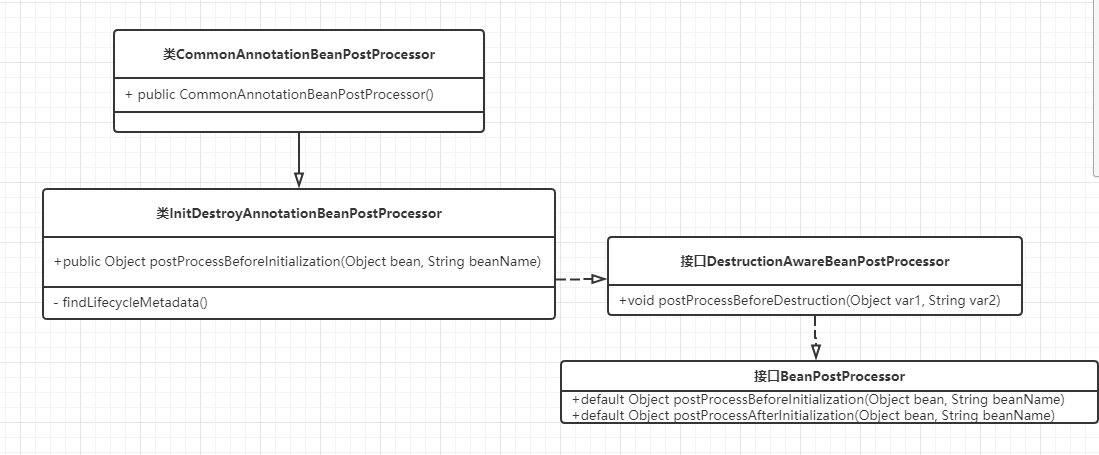
看下源码:InitDestroyAnnotationBeanPostProcessor.class
public Object postProcessBeforeInitialization(Object bean, String beanName) throws BeansException {

        InitDestroyAnnotationBeanPostProcessor.LifecycleMetadata metadata = this.findLifecycleMetadata(bean.getClass());

        try {
        //利用反射,执行注解方法

            metadata.invokeInitMethods(bean, beanName);

            return bean;

        } catch (InvocationTargetException var5) {

            throw new BeanCreationException(beanName, "Invocation of init method failed", var5.getTargetException());

        } catch (Throwable var6) {

            throw new BeanCreationException(beanName, "Failed to invoke init method", var6);

        }

    }

private InitDestroyAnnotationBeanPostProcessor.LifecycleMetadata findLifecycleMetadata(Class<?> clazz) {

    if (this.lifecycleMetadataCache == null) {

        return this.buildLifecycleMetadata(clazz);

    } else {

        InitDestroyAnnotationBeanPostProcessor.LifecycleMetadata metadata = (InitDestroyAnnotationBeanPostProcessor.LifecycleMetadata)this.lifecycleMetadataCache.get(clazz);

        if (metadata == null) {

            Map var3 = this.lifecycleMetadataCache;

            synchronized(this.lifecycleMetadataCache) {

                metadata = (InitDestroyAnnotationBeanPostProcessor.LifecycleMetadata)this.lifecycleMetadataCache.get(clazz);

                if (metadata == null) {

                    metadata = this.buildLifecycleMetadata(clazz);

                    this.lifecycleMetadataCache.put(clazz, metadata);

                }

                return metadata;

            }

        } else {

            return metadata;

        }

    }

}

private InitDestroyAnnotationBeanPostProcessor.LifecycleMetadata buildLifecycleMetadata(Class<?> clazz) {

    List<InitDestroyAnnotationBeanPostProcessor.LifecycleElement> initMethods = new ArrayList();

    List<InitDestroyAnnotationBeanPostProcessor.LifecycleElement> destroyMethods = new ArrayList();

    Class targetClass = clazz;

    do {

        List<InitDestroyAnnotationBeanPostProcessor.LifecycleElement> currInitMethods = new ArrayList();

        List<InitDestroyAnnotationBeanPostProcessor.LifecycleElement> currDestroyMethods = new ArrayList();

        ReflectionUtils.doWithLocalMethods(targetClass, (method) -> {
        //判断是否是指定的注解类型

            if (this.initAnnotationType != null && method.isAnnotationPresent(this.initAnnotationType)) {

                InitDestroyAnnotationBeanPostProcessor.LifecycleElement element = new InitDestroyAnnotationBeanPostProcessor.LifecycleElement(method);

                currInitMethods.add(element);

                if (this.logger.isTraceEnabled()) {

                    this.logger.trace("Found init method on class [" + clazz.getName() + "]: " + method);

                }

            }

            if (this.destroyAnnotationType != null && method.isAnnotationPresent(this.destroyAnnotationType)) {

                currDestroyMethods.add(new InitDestroyAnnotationBeanPostProcessor.LifecycleElement(method));

                if (this.logger.isTraceEnabled()) {

                    this.logger.trace("Found destroy method on class [" + clazz.getName() + "]: " + method);

                }

            }

        });

        initMethods.addAll(0, currInitMethods);

        destroyMethods.addAll(currDestroyMethods);

        targetClass = targetClass.getSuperclass();

    } while(targetClass != null && targetClass != Object.class);

    return new InitDestroyAnnotationBeanPostProcessor.LifecycleMetadata(clazz, initMethods, destroyMethods);

}
方法:buildLifecycleMetadata(),判断是否是指定的注解类型,而这个属性,在CommonAnnotationBeanPostProcessor.class构造方法中被初始化为PostConstruct。
public CommonAnnotationBeanPostProcessor() {

        this.setOrder(2147483644);

        this.setInitAnnotationType(PostConstruct.class);

        this.setDestroyAnnotationType(PreDestroy.class);

        this.ignoreResourceType("javax.xml.ws.WebServiceContext");

    }
那么问题来了,以上只能说明实现了BeanPostProcessor的postProcessBeforeInitialization()方法,不足说明@PostConstruct 先InitializingBean 。
再看AbstractAutowireCapableBeanFactory.class 的initializeBean()方法。
protected Object initializeBean(String beanName, Object bean, @Nullable RootBeanDefinition mbd) {

        if (System.getSecurityManager() != null) {

            AccessController.doPrivileged(() -> {

                this.invokeAwareMethods(beanName, bean);

                return null;

            }, this.getAccessControlContext());

        } else {

            this.invokeAwareMethods(beanName, bean);

        }

        Object wrappedBean = bean;

        if (mbd == null || !mbd.isSynthetic()) {

            wrappedBean = this.applyBeanPostProcessorsBeforeInitialization(bean, beanName);

        }

        try {

            this.invokeInitMethods(beanName, wrappedBean, mbd);

        } catch (Throwable var6) {

            throw new BeanCreationException(mbd != null ? mbd.getResourceDescription() : null, beanName, "Invocation of init method failed", var6);

        }

        if (mbd == null || !mbd.isSynthetic()) {

            wrappedBean = this.applyBeanPostProcessorsAfterInitialization(wrappedBean, beanName);

        }

        return wrappedBean;

    }
这下明显了,下面小结下:
--> 调用BeanPostProcessor的postProcessBeforeInitialization方法 (@PostConstruct在此)
--> 调用bean实例的初始化方法(invokeInitMethods-> InitializingBean->init-method)
--> 调用BeanPostProcessor的postProcessAfterInitialization方法
参考:https://blog.csdn.net/zl834205311/article/details/78802584
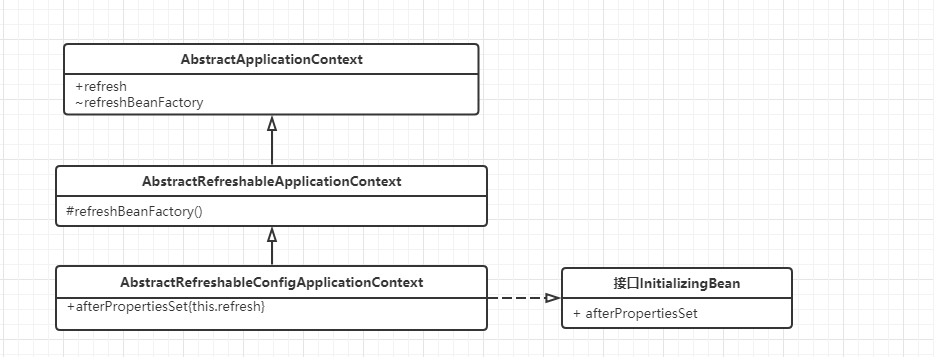
其中AbstractApplicationContext.refresh()
@Override

    public void refresh() throws BeansException, IllegalStateException {

        synchronized (this.startupShutdownMonitor) {

            // Prepare this context for refreshing.

            // 为刷新工作做一些当前上下文 context 上的准备工作

            prepareRefresh();

            // Tell the subclass to refresh the internal bean factory.

            // ApplicationContext 实现了 BeanFactory 接口,但是并非直接作为 Bean 容器。

            // ApplicationContext 中真正直接作为 Bean 容器的是一个内部Bean工厂 BeanFactory,

            // 通过其方法 getBeanFactory() 得到,此方法在 AbstractApplicationContext 中

            // 被声明为 abstract, 其实现要求由实现子类提供。下面的语句 obtainFreshBeanFactory()

            // 内部就是通过调用 getBeanFactory() 获得这个内部 Bean 工厂的。

            ConfigurableListableBeanFactory beanFactory = obtainFreshBeanFactory();

            // Prepare the bean factory for use in this context.

            // 准备当前上下文使用的Bean容器 BeanFactory,设置其标准上下文特征,比如类加载器等

            // 1. BeanFactory 的类加载器设置为当前上下文的类加载器

            // 2. BeanFactory 的Bean表达式解析器设置为 new StandardBeanExpressionResolver()

            // 3. BeanFactory 增加 BeanPostProcessror new ApplicationListenerDetector(this)

            // 4.三个单例Bean被注册 : environment,systemProperties,systemEnvironment

            prepareBeanFactory(beanFactory);

            try {

                // Allows post-processing of the bean factory in context subclasses.

                // 在当前上下文使用的Bean容器BeanFactory的标准初始化完成后对其做一些修改。此时

                // 所有的Bean definition都已经加载但是还没有 Bean 被创建。

                // 当前上下文使用的Bean容器 BeanFactory 的 post process

                // 1.当前上下文是 EmbeddedWebApplicationContext 时,

                // 这个步骤中会对 beanFactory 注册一个 BeanPostProcessor :

                // WebApplicationContextServletContextAwareProcessor

                // 2.当前上下文是 AnnotationConfigEmbeddedWebApplicationContext 时,

                // 如果设置了 basePackages,

                // 这里会使用 AnnotatedBeanDefinitionReader扫描basePackages;

                // 如果设置了 annotatedClasses,

                // 这里会使用 ClassPathBeanDefinitionScanner登记annotatedClasses;

                postProcessBeanFactory(beanFactory);

                // Invoke factory processors registered as beans in the context.

                // 在 beanFactory 上调用 BeanFactoryPostProcessors,

                // 当前上下文可能会有多个 BeanFactoryPostProcessor 需要应用在 beanFactory 上

                // ****************************************************************

                // 这里需要尤其注意区别 BeanFactoryPostProcessor 和 BeanPostProcessor

                // BeanFactoryPostProcessor : 作用在 Bean定义 上,用来定制修改 Bean定义

                // BeanPostProcessor :作用在 Bean实例 上,用来修改或者包装 Bean实例

                // ****************************************************************

                // 该方法实际上将实现委托出去 :

                // PostProcessorRegistrationDelegate.invokeBeanFactoryPostProcessors()

                invokeBeanFactoryPostProcessors(beanFactory);

                // Register bean processors that intercept bean creation.

                // 注册 BeanPostProcessor

                // 该步骤实际工作委托给工具类 PostProcessorRegistrationDelegate 的静态方法

                // void registerBeanPostProcessors(

                //   ConfigurableListableBeanFactory beanFactory,

                //   AbstractApplicationContext applicationContext)

                registerBeanPostProcessors(beanFactory);

                // Initialize message source for this context.

                initMessageSource();

                // Initialize event multicaster for this context.

                // 初始化当前上下文ApplicationContext要使用的 事件多播器

                // ApplicationEventMulticaster applicationEventMulticaster。

                //

                // 如果容器中已经注册类型为ApplicationEventMulticaster并且名称为

                // applicationEventMulticaster 的Bean,则直接使用;否则,

                // 新建一个SimpleApplicationEventMulticaster实例并注册到

                // Bean容器,Bean名称使用 applicationEventMulticaster。

                initApplicationEventMulticaster();

                // Initialize other special beans in specific context subclasses.

                // AbstractApplicationContext 中 onRefresh() 方法实现为空,其目的就是

                // 留给实现子类一个机会做一些上下文相关的刷新工作。在一些特殊Bean初始化时,单

                // 例 singleton Bean 初始化之前该方法被调用。

                // 1. 当前上下文是 EmbeddedWebApplicationContext 时,该步骤会创建一个

                // 内置的 Servlet 容器, 具体参考 EmbeddedWebApplicationContext 的

                // 方法 void createEmbeddedServletContainer()

                onRefresh();

                // Check for listener beans and register them.

                // 1. 将外部指定到当前上下文的 ApplicationListener 实例关联到上下文多播器

                //    Q : 什么时候外部给当前上下文指定 ApplicationListener ?

                //    A : 举例说明,Springboot 应用 SpringApplication 的情况下,是在

                //        prepareContext()结尾时SpringApplicationRunListeners的

                //        contextLoaded() 调用中发生的,此时正在广播事件

                //        ApplicationPreparedEvent

                // 2. 将实现了 ApplicationListener 接口的所有 Bean 关联到上下文多播器

                // 3. 如果上下文属性earlyApplicationEvents中有要通知的事件,广播出去

                registerListeners();

                // Instantiate all remaining (non-lazy-init) singletons.

                // 完成 BeanFactory 的初始化工作

                // 1.BeanFactory冻结所有的Bean定义:不再可以修改或者做post process操作

                // 2.确保所有的non-lazy-init单例Bean被初始化,也包括FactoryBean

                // 3.如果所初始化的单例Bean实现了接口SmartInitializingSingleton,调用

                //   其方法 afterSingletonsInstantiated()

                finishBeanFactoryInitialization(beanFactory);

                // Last step: publish corresponding event.

                // 1. 初始化生命周期处理器 LifecycleProcessor, 使用已经存在的Bean或者

                //    一个新的DefaultLifecycleProcessor实例;

                // 2. 生命周期处理器 LifecycleProcessor 上传播 refresh 事件

                // 3. 发布事件 ContextRefreshedEvent

                // 4. 如果存在 LiveBeansView MBean 的话,关联到当前上下文

                // 当前上下文是EmbeddedWebApplicationContext的情况下,还会:

                // 5. 启动EmbeddedServletContainer,比如启动内置 tomcat容器

                // 6. 发布事件 EmbeddedServletContainerInitializedEvent

                finishRefresh();

            }

            catch (BeansException ex) {

                if (logger.isWarnEnabled()) {

                    logger.warn("Exception encountered during context initialization - " +

                            "cancelling refresh attempt: " + ex);

                }

                // Destroy already created singletons to avoid dangling resources.

                destroyBeans();

                // Reset 'active' flag.

                cancelRefresh(ex);

                // Propagate exception to caller.

                throw ex;

            }

            finally {

                // Reset common introspection caches in Spring's core, since we

                // might not ever need metadata for singleton beans anymore...

                resetCommonCaches();

            }

        }

    }
org.springframework.context.support.AbstractApplicationContext#refresh的这一行代码
protected ConfigurableListableBeanFactory obtainFreshBeanFactory() {

   refreshBeanFactory();

   ConfigurableListableBeanFactory beanFactory = getBeanFactory();

   if (logger.isDebugEnabled()) {

      logger.debug("Bean factory for " + getDisplayName() + ": " + beanFactory);

   }

   return beanFactory;

}
org.springframework.context.support.AbstractRefreshableApplicationContext#refreshBeanFactory
 protected final void refreshBeanFactory() throws BeansException {

        if (this.hasBeanFactory()) {

            this.destroyBeans();

            this.closeBeanFactory();

        }

        try {

            DefaultListableBeanFactory beanFactory = this.createBeanFactory();

            beanFactory.setSerializationId(this.getId());

            this.customizeBeanFactory(beanFactory);

            this.loadBeanDefinitions(beanFactory);

            Object var2 = this.beanFactoryMonitor;

            synchronized(this.beanFactoryMonitor) {

                this.beanFactory = beanFactory;

            }

        } catch (IOException var5) {

            throw new ApplicationContextException("I/O error parsing bean definition source for " + this.getDisplayName(), var5);

        }

    }
进入到这个方法org.springframework.context.support.AbstractApplicationContext#destroyBeans
protected void destroyBeans() {

        this.getBeanFactory().destroySingletons();

    }
org.springframework.beans.factory.support.DefaultListableBeanFactory#destroySingletons
@Override

   public void destroySingletons() {

      super.destroySingletons();

//    清除记录的单例beanName的缓存

      this.manualSingletonNames.clear();

      clearByTypeCache();

   }
org.springframework.beans.factory.support.DefaultSingletonBeanRegistry#destroySingletons
@Override

   public void destroySingletons() {

      super.destroySingletons();

//    清空beanFactory缓存

      this.factoryBeanObjectCache.clear();

   }

public void destroySingletons() {

      if (logger.isDebugEnabled()) {

         logger.debug("Destroying singletons in " + this);

      }

//    这里使用ConcurrentHashMap本地缓存单例的bean实例,访问次数比较多,提搞并发量

      synchronized (this.singletonObjects) {

         this.singletonsCurrentlyInDestruction = true;

      }

      String[] disposableBeanNames;

//    这里是用LinkedHashMap本地缓存销毁的bean实例

      synchronized (this.disposableBeans) {

         disposableBeanNames = StringUtils.toStringArray(this.disposableBeans.keySet());

      }

      for (int i = disposableBeanNames.length - 1; i >= 0; i--) {

//       销毁单例的bean

         destroySingleton(disposableBeanNames[i]);

      }

      this.containedBeanMap.clear();

      this.dependentBeanMap.clear();

      this.dependenciesForBeanMap.clear();

//    同步清空缓存

      synchronized (this.singletonObjects) {

         this.singletonObjects.clear();

         this.singletonFactories.clear();

         this.earlySingletonObjects.clear();

         this.registeredSingletons.clear();

         this.singletonsCurrentlyInDestruction = false;

      }

   }

public void destroySingleton(String beanName) {

      // Remove a registered singleton of the given name, if any.删除单例的bean,从本地缓存中删除

      removeSingleton(beanName);

      // Destroy the corresponding DisposableBean instance.

      DisposableBean disposableBean;

      synchronized (this.disposableBeans) {

//       从本地缓存中删除

         disposableBean = (DisposableBean) this.disposableBeans.remove(beanName);

      }

//    bean销毁的逻辑

      destroyBean(beanName, disposableBean);

   }

protected void destroyBean(String beanName, @Nullable DisposableBean bean) {

      // Trigger destruction of dependent beans first... 先触发依赖的bean销毁,从本地缓存中删除

      Set<String> dependencies = this.dependentBeanMap.remove(beanName);

      if (dependencies != null) {

         if (logger.isDebugEnabled()) {

            logger.debug("Retrieved dependent beans for bean '" + beanName + "': " + dependencies);

         }

         for (String dependentBeanName : dependencies) {

//          这里用了一个递归删除单例bean,当这个bean没有依赖的bean要删除的时候,递归结束

            destroySingleton(dependentBeanName);

         }

      }

      // Actually destroy the bean now... 这里开始删除单例bean

      if (bean != null) {

         try {

//          bean可以实现DisposableBean这个接口,重写父类的bean destory的方法

            bean.destroy();

         }

         catch (Throwable ex) {

            logger.error("Destroy method on bean with name '" + beanName + "' threw an exception", ex);

         }

      }

      // Trigger destruction of contained beans...从本地缓存中销毁内部bean

      Set<String> containedBeans = this.containedBeanMap.remove(beanName);

      if (containedBeans != null) {

         for (String containedBeanName : containedBeans) {

//          这个地方还是递归调用,删除单例bean,当这个bean没有内部bean时递归结束

            destroySingleton(containedBeanName);

         }

      }

      // Remove destroyed bean from other beans' dependencies. 从其他bean依赖中删除销毁的bean

      synchronized (this.dependentBeanMap) {

         for (Iterator<Map.Entry<String, Set<String>>> it = this.dependentBeanMap.entrySet().iterator(); it.hasNext();) {

            Map.Entry<String, Set<String>> entry = it.next();

            Set<String> dependenciesToClean = entry.getValue();

            dependenciesToClean.remove(beanName);

            if (dependenciesToClean.isEmpty()) {

               it.remove();

            }

         }

      }

      // Remove destroyed bean's prepared dependency information.删除销毁的bean准备的依赖信息

      this.dependenciesForBeanMap.remove(beanName);

   }
bean可以实现DisposableBean这个接口,重写父类的bean destory的方法
@Override

   public void destroy() {

//    执行beanPostProcessors,beanPostProcessors用对对bean的过程进行处理的抽象

      if (!CollectionUtils.isEmpty(this.beanPostProcessors)) {

         for (DestructionAwareBeanPostProcessor processor : this.beanPostProcessors) {

//          在bean销毁之前进行一些处理

            processor.postProcessBeforeDestruction(this.bean, this.beanName);

         }

      }

      if (this.invokeDisposableBean) {

         if (logger.isDebugEnabled()) {

            logger.debug("Invoking destroy() on bean with name '" + this.beanName + "'");

         }

         try {

            if (System.getSecurityManager() != null) {

               AccessController.doPrivileged((PrivilegedExceptionAction<Object>) () -> {

                  ((DisposableBean) bean).destroy();

                  return null;

               }, acc);

            }

            else {

//             bean实现DisposableBean接口的方式,注解调用子类destroy方法

               ((DisposableBean) bean).destroy();

            }

         }

         catch (Throwable ex) {

            String msg = "Invocation of destroy method failed on bean with name '" + this.beanName + "'";

            if (logger.isDebugEnabled()) {

               logger.warn(msg, ex);

            }

            else {

               logger.warn(msg + ": " + ex);

            }

         }

      }

      if (this.destroyMethod != null) {

//       执行bean定义中指定的bean销毁方法

         invokeCustomDestroyMethod(this.destroyMethod);

      }

      else if (this.destroyMethodName != null) {

         Method methodToCall = determineDestroyMethod(this.destroyMethodName);

         if (methodToCall != null) {

            invokeCustomDestroyMethod(methodToCall);

         }

      }

   }
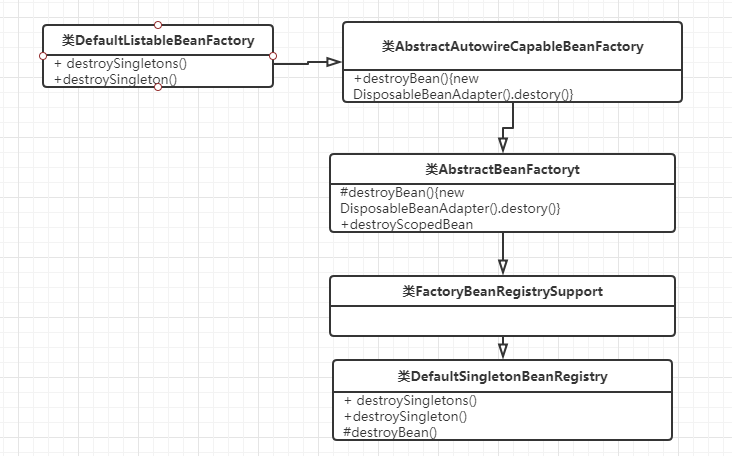
具体结构如下:
InitializingBean和DisposableBean的更多相关文章
- Spring InitializingBean and DisposableBean example
In Spring, InitializingBean and DisposableBean are two marker interfaces, a useful way for Spring to ...
- Spring中Bean的生命中期与InitializingBean和DisposableBean接口
Spring提供了一些标志接口,用来改变BeanFactory中的bean的行为.它们包括InitializingBean和DisposableBean.实现这些接口将会导致BeanFactory调用 ...
- Spring Bean InitializingBean和DisposableBean实例
在Spring中,InitializingBean和DisposableBean是两个标记接口,为Spring执行时bean的初始化和销毁某些行为时的有用方法. 对于Bean实现 Initializi ...
- InitializingBean 和 DisposableBean 指定初始化和销毁方法
通过实现 InitializingBean 和 DisposableBean 接口,也可以指定 bean 的初始化和销毁方法 二.Student 类 public class Student impl ...
- 13、生命周期-InitializingBean和DisposableBean
13.生命周期-InitializingBean和DisposableBean InitializingBean接口 package org.springframework.beans.factory ...
- 【Spring注解驱动开发】使用InitializingBean和DisposableBean来管理bean的生命周期,你真的了解吗?
写在前面 在<[Spring注解驱动开发]如何使用@Bean注解指定初始化和销毁的方法?看这一篇就够了!!>一文中,我们讲述了如何使用@Bean注解来指定bean初始化和销毁的方法.具体的 ...
- spring InitializingBean和DisposableBean init-method 和destroy-method @PostConstruct @PreDestroy
对于初始化函数: @PostConstruct 注解的方法 InitializingBean接口定义的回调afterPropertiesSet() Bean配置中自定义的初始化函数 对于析构则与上相同 ...
- Spring的InitializingBean与DisposableBean方法
在bean初始化的时候,将所有显示提供的属性设置完毕后调用这个方法 org.springframework.beans.factory.InitializingBean#afterProperties ...
- Spring bean 实现InitializingBean和DisposableBean接口实现初始化和销毁前操作
# InitializingBean接口> Spring Bean 实现这个接口,重写afterPropertiesSet方法,这样spring初始化完这个实体类后会调用这个方法```@Over ...
随机推荐
- 守护进程,互斥锁,IPC,队列,生产者与消费者模型
小知识点:在子进程中不能使用input输入! 一.守护进程 守护进程表示一个进程b 守护另一个进程a 当被守护的进程结束后,那么守护进程b也跟着结束了 应用场景:之所以开子进程,是为了帮助主进程完成某 ...
- Java1.7 HashMap 实现原理和源码分析
HashMap 源码分析是面试中常考的一项,下面一篇文章讲得很好,特地转载过来. 本文转自:https://www.cnblogs.com/chengxiao/p/6059914.html 参考博客: ...
- spring配置jax-ws
在spring配置文件中新建bean(或者是在配置文件中添加bean),在该bean中添加指定的访问地址. @Bean public static SimpleJaxWsServiceExporter ...
- How to Rerun Failed Tests in JUnit?
该帖转自其他出处 Sometimes due to some temporarily problems such as connection problems, server problems, br ...
- Oracle SQL——varchar2() 和 char()关联查询 存在空格
背景 表dbcontinfo 字段loanid,类型为varchar2(60) 表dbloanbal 字段loanid,类型为char(60) loanid字段实际长度为24位 问题 两张表dbloa ...
- 枚举+排序|神奇算式|2014年蓝桥杯A组题解析第三题-fishers
标题:神奇算式 由4个不同的数字,组成的一个乘法算式,它们的乘积仍然由这4个数字组成. 比如: 210 x 6 = 1260 8 x 473 = 3784 27 x 81 = 2187 都符合要求. ...
- POJ 3903 Stock Exchange(LIS || 线段树)题解
题意:求最大上升子序列 思路:才发现自己不会LIS,用线段树写的,也没说数据范围就写了个离散化,每次查找以1~a[i]-1结尾的最大序列答案,然后更新,这样遍历一遍就行了.最近代码总是写残啊... 刚 ...
- ProgrammingError: You must not use 8-bit bytestrings...
问题出现: You must not use 8-bit bytestrings unless you use a text_factory that can interpret 8-bit byte ...
- Css下拉菜单设置
<style type="text/css"> *{margin:0px;padding:0px;}设置所有标签属性<初始化页面属性> #nav{backg ...
- LightOJ 1258 Making Huge Palindromes(KMP)
题意 给定一个字符串 \(S\) ,一次操作可以在这个字符串的右边增加任意一个字符.求操作之后的最短字符串,满足操作结束后的字符串是回文. \(1 \leq |S| \leq 10^6\) 思路 \( ...