
mybatis 关联查询和嵌套查询的简单示例
两个表:
Customer 顾客表
create table  if not exists customer(
  customer_id int primary key auto_increment,
  first_name varchar(20),
  last_name varchar(20),
  company varchar(20),
  address varchar(20),
  city varchar(20),
  state int ,
  country varchar(20),
  postal_code varchar(20),
  phone varchar(11),
  fax varchar(11),
  email varchar(20),
  support_repld int

);

Invoice 发票表
create table if not exists invoice(
  invoice_id int primary key auto_increment,
  invoice_date date,
  billing_address varchar(20),
  billing_city varchar(20),
  billing_state int ,
  billing_country varchar(20),
  billing_postalCode varchar(20),
  total decimal(10,2),
  customer_id int  references coustomer(customer_id)
);

1、根据两个表合理创建
2、三个类能正确创建出来,并建立友好关系

要求:1、依据发票的id查询发票的信息,请配置映射,要求Invoice与BillingInfo的实例都能正确创建出来。
   2、假定要依据客户的id,查询出客户及其关联的发票信息,请配置映射。

实体类
Customer
package com.oukele.entity_invoice;

import java.util.List;

public class Customer {

    private int customerId;

    private String firstName;

    private String lastName;

    private String company;

    private String address;

    private String city;

    private int state;

    private String country;

    private String postalCode;

    private String phone;

    private String fax;

    private String email;

    private int supportRepId;

    private List<Invoice> invoices;

    public int getCustomerId() {

        return customerId;

    }

    public void setCustomerId(int customerId) {

        this.customerId = customerId;

    }

    public String getFirstName() {

        return firstName;

    }

    public void setFirstName(String firstName) {

        this.firstName = firstName;

    }

    public String getLastName() {

        return lastName;

    }

    public void setLastName(String lastName) {

        this.lastName = lastName;

    }

    public String getCompany() {

        return company;

    }

    public void setCompany(String company) {

        this.company = company;

    }

    public String getAddress() {

        return address;

    }

    public void setAddress(String address) {

        this.address = address;

    }

    public String getCity() {

        return city;

    }

    public void setCity(String city) {

        this.city = city;

    }

    public int getState() {

        return state;

    }

    public void setState(int state) {

        this.state = state;

    }

    public String getCountry() {

        return country;

    }

    public void setCountry(String country) {

        this.country = country;

    }

    public String getPostalCode() {

        return postalCode;

    }

    public void setPostalCode(String postalCode) {

        this.postalCode = postalCode;

    }

    public String getPhone() {

        return phone;

    }

    public void setPhone(String phone) {

        this.phone = phone;

    }

    public String getFax() {

        return fax;

    }

    public void setFax(String fax) {

        this.fax = fax;

    }

    public String getEmail() {

        return email;

    }

    public void setEmail(String email) {

        this.email = email;

    }

    public int getSupportRepId() {

        return supportRepId;

    }

    public void setSupportRepId(int supportRepId) {

        this.supportRepId = supportRepId;

    }

    public List<Invoice> getInvoices() {

        return invoices;

    }

    public void setInvoices(List<Invoice> invoices) {

        this.invoices = invoices;

    }

    @Override

    public String toString() {

        return "Customer{" +

                "customerId=" + customerId +

                ", firstName='" + firstName + '\'' +

                ", lastName='" + lastName + '\'' +

                ", company='" + company + '\'' +

                ", address='" + address + '\'' +

                ", city='" + city + '\'' +

                ", state=" + state +

                ", country='" + country + '\'' +

                ", postalCode='" + postalCode + '\'' +

                ", phone='" + phone + '\'' +

                ", fax='" + fax + '\'' +

                ", email='" + email + '\'' +

                ", supportRepId=" + supportRepId +

                ", invoices=" + invoices +

                '}';

    }

}
BillingInfo
package com.oukele.entity_invoice;

public class BillingInfo {

    private String billingAddress;

    private String billingCity;

    private int billingState;

    private String billingCountry;

    private String billingPostalCode;

    public BillingInfo() {

    }

    public String getBillingAddress() {

        return billingAddress;

    }

    public void setBillingAddress(String billingAddress) {

        this.billingAddress = billingAddress;

    }

    public String getBillingCity() {

        return billingCity;

    }

    public void setBillingCity(String billingCity) {

        this.billingCity = billingCity;

    }

    public int getBillingState() {

        return billingState;

    }

    public void setBillingState(int billingState) {

        this.billingState = billingState;

    }

    public String getBillingCountry() {

        return billingCountry;

    }

    public void setBillingCountry(String billingCountry) {

        this.billingCountry = billingCountry;

    }

    public String getBillingPostalCode() {

        return billingPostalCode;

    }

    public void setBillingPostalCode(String billingPostalCode) {

        this.billingPostalCode = billingPostalCode;

    }

    @Override

    public String toString() {

        return "BillingInfo{" +

                "billingAddress='" + billingAddress + '\'' +

                ", billingCity='" + billingCity + '\'' +

                ", billingState=" + billingState +

                ", billingCountry='" + billingCountry + '\'' +

                ", billingPostalCode='" + billingPostalCode + '\'' +

                '}';

    }

}
Invoice
package com.oukele.entity_invoice;

import java.util.Date;

public class Invoice {

    private int invoiceId;

    private Date invoiceDate;

    private Customer customer;

    private BillingInfo billingInfo;

    private long total;

    public Invoice() {

    }

    public int getInvoiceId() {

        return invoiceId;

    }

    public Customer getCoustomer() {

        return customer;

    }

    public void setCoustomer(Customer customer) {

        this.customer = customer;

    }

    public void setInvoiceId(int invoiceId) {

        this.invoiceId = invoiceId;

    }

    public Date getInvoiceDate() {

        return invoiceDate;

    }

    public void setInvoiceDate(Date invoiceDate) {

        this.invoiceDate = invoiceDate;

    }

    public BillingInfo getBillingInfo() {

        return billingInfo;

    }

    public void setBillingInfo(BillingInfo billingInfo) {

        this.billingInfo = billingInfo;

    }

    public long getTotal() {

        return total;

    }

    public void setTotal(long total) {

        this.total = total;

    }

    @Override

    public String toString() {

        return "Invoice{" +

                "invoiceId=" + invoiceId +

                ", invoiceDate=" + invoiceDate +

                ", customer=" + customer +

                ", billingInfo=" + billingInfo +

                ", total=" + total +

                '}';

    }

}
mybatis配置文件
<?xml version="1.0" encoding="UTF-8" ?>

<!DOCTYPE configuration

        PUBLIC "-//mybatis.org//DTD Config 3.0//EN"

        "http://mybatis.org/dtd/mybatis-3-config.dtd">

<configuration>

    <!--定义一些可以复用的变量-->

    <properties resource="jdbc.properties"></properties>

    <settings>

        <!--<setting name="autoMappingBehavior " value="FULL"/>-->

        <!--配置驼峰映射-->

        <setting name="mapUnderscoreToCamelCase" value="true"/>

    </settings>

    <!--设置别名,简化映射xml的完全限制名的使用-->

    <typeAliases>

        <!--手动-->

        <!--<typeAlias alias="Lnvoice" type="com.oukele.entity.LnvoiceEntity"/>-->

        <!--自动-->

        <package name="com.oukele.entity_invoice"/> <!-- 可以使用 @Alias 注解 -->

        <package name="com.oukele.entity"/>

    </typeAliases>

<!--数据源-->

    <environments default="development">

        <environment id="development">

            <transactionManager type="JDBC"/>

            <dataSource type="POOLED">

                <property name="driver" value="${jdbc.driver}"/>

                <property name="url" value="${jdbc.url}"/>

                <property name="username" value="${jdbc.username}"/>

                <property name="password" value="${jdbc.password}"/>

            </dataSource>

        </environment>

    </environments>

<!--映射文件-->

    <mappers>

        <mapper resource="mapper/EntityMapper2.xml"/>

    </mappers>

</configuration>
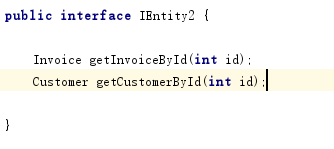
接口方法
映射xml文件
<?xml version="1.0" encoding="UTF-8" ?>

<!DOCTYPE mapper

        PUBLIC "-//mybatis.org//DTD Mapper 3.0//EN"

        "http://mybatis.org/dtd/mybatis-3-mapper.dtd">

<mapper namespace="com.oukele.dao.IEntity2">

    <!-- start 关联查询-->

    <!-- 得到属于Invoice的数据-->

    <select id="getInvoiceById" resultMap="rmInvoice">

       select i.*,c.* from invoice i left join customer c on i.customer_id=c.customer_id  where i.invoice_id=#{id}

    </select>

    <!-- 得到属于Customer的数据 -->

    <select id="getCustomerById" resultMap="rmCustomer">

         select i.*,c.* from invoice i left join customer c on i.customer_id=c.customer_id  where i.customer_id=#{id}

    </select>

    <!--填充Customer类的数据 -->

    <resultMap id="rmCustomer" autoMapping="true" type="Customer">

        <!--使用递归关系     Customer类中的 invoices 要输出要删除,不然会造成递归死循环  -->

        <collection property="invoices" ofType="Invoice" resultMap="rmInvoice" autoMapping="true" javaType="java.util.ArrayList"/>

     </resultMap>

    <!--填充 Invoice类 的数据 -->

    <resultMap id="rmInvoice" autoMapping="true" type="Invoice">

        <association property="billingInfo" autoMapping="true" javaType="BillingInfo"/>

        <association property="customer" autoMapping="true" resultMap="rmCustomer" javaType="Customer"/>

    </resultMap>

    <!--end 关联查询-->

    <!-- start 嵌套查询-->

    <select id="getInvoiceById" parameterType="int" resultMap="rmInvoice">

       select * from invoice  where invoice_id=#{id}

    </select>

    <select id="getBillingInfoById" parameterType="int" resultType="BillingInfo" >

       select

            billing_address,

            billing_city,

            billing_country,

            billing_postalCode,

            billing_state

        from invoice where invoice_id=#{id}

    </select>

    <select id="getCustomerById" resultType="Customer" parameterType="int">

        select c.*,i.* from customer c left  join invoice i on c.customer_id=i.customer_id where i.invoice_id=#{id}

    </select>

    <resultMap id="rmInvoice" autoMapping="true" type="Invoice">

        <association property="billingInfo" autoMapping="true"  column="invoice_id" select="getBillingInfoById"></association>

        <collection property="customer" ofType="Customer" column="invoice_id" select="getCustomerById"></collection>

    </resultMap>

    <!--end 嵌套查询-->

</mapper>
mybatis 关联查询和嵌套查询的简单示例的更多相关文章
- SQL Server 之 子查询与嵌套查询
当由where子句指定的搜索条件指向另一张表时,就需要使用子查询或嵌套查询. 1 子查询 子查询是一个嵌套在select.insert.update或delete语句或其他子查询中的查询.任何允许使用 ...
- SQL数据查询之——嵌套查询
一.概念描述 在SQL语言中,一个 SELECT-FROM-WHERE 语句称为一个查询块.将一个查询块嵌套在另一个查询块的 WHERE 子句或 HAVING 短语的条件中的查询称为 嵌套查询.例如: ...
- SQL基础--查询之三--嵌套查询
SQL基础--查询之三--嵌套查询
- mybatis的嵌套查询(嵌套查询nested select和嵌套结果nested results查询)区别
(转自:http://blog.csdn.net/canot/article/details/51485955) Mybatis表现关联关系比hibernate简单,没有分那么细致one-to-man ...
- Mybatis解决字段与属性不匹配的问题、链表查询、嵌套查询、#{}和${}的区别
1.使用接口结合xml映射文件 创建一个接口,该接口要和映射文件匹配(接口中方法名要和映射文件中的id相同) 映射文件中命名空间要和接口全类名相同 测试: 创建一个与src同级的源文件夹resourc ...
- 数据库开发基础-SQl Server 主键、外键、子查询(嵌套查询)
主键 数据库主键是指表中一个列或列的组合,其值能唯一地标识表中的每一行.这样的一列或多列称为表的主键,通过它可强制表的实体完整性.当创建或更改表时可通过定义 PRIMARY KEY约束来创建主键.一个 ...
- Oracle子查询(嵌套查询)
概念: 所谓子查询,即一个select语句中嵌套了另外的一个或者多个select语句 需求:查找和Smith同部门的所有员工的id和last_name 目标: 员工id,last_name from: ...
- SQL连接查询和嵌套查询详解
连接查询 若一个查询同时涉及两个或两个以上的表,则称之为连接查询.连接查询是数据库中最最要的查询, 包括: 1.等值连接查询 2.自然连接查询 3.非等值连接查询 4.自身连接查询 5.外连接查询 6 ...
- mysql_数据查询_嵌套查询
嵌套查询 一个SELECT-FROM-WHERE语句称为一个查询块. 嵌套查询:将一个查询块嵌套在另一个查询块的WHERE子句或者HAVING短语的条件中的查询. 注:子查询的SELECT语句中不能使 ...
随机推荐
- python高级篇
1.切片功能:类似于java中的split方法.对list或者triple中几个值进行取出的过程. L = ['a','b','c','d'] L[0:3] = ['a','b','c'] # ...
- C学习笔记-结构体与二进制文件增删改查
使用结构体整理数据,然后利用二进制存储文件,这样存储的文件类似于数据库,可以实现文件的增删改查 定义结构体 struct student { unsigned int ID; char name[20 ...
- python笔记之列表
python中列表使用list类. 创建一个列表:list1 = [1,2,3,4]使用逗号隔开每个元素,使用方括号包含起来,创建空列表直接使用list2 = [] #!/usr/bin/env py ...
- Linux里添加用户的一些简单命令
普通用户---------普通用户对应提示符$ 超级用户-----------超级用户对应提示符# 1.添加用户:useradd diqi 2.查看用户:tail -1 /etc/passwd 3.设 ...
- 深入理解Java中的Clone与深拷贝和浅拷贝
1.Java对象的创建 clone顾名思义就是复制, 在Java语言中, clone方法被对象调用,所以会复制对象.所谓的复制对象,首先要分配一个和源对象同样大小的空间,在这个空间中创建一个新的对象. ...
- # log对数Hash映射优化
log对数Hash映射优化 利用了一个数学技巧:$\forall k \in [0,35],2^{k} mod 37 互不相等,且恰好取遍整数1-36 $ 应用:将int范围内的\(2^k映射到k\) ...
- Feign声明式服务调用
Feign是一种声明式.模板化的HTTP客户端(仅在Application Client中使用).声明式调用是指,就像调用本地方法一样调用远程方法,无需感知操作远程http请求. Spring Clo ...
- React应该如何优雅的绑定事件?
前言 由于JS的灵活性,我们在React中其实有很多种绑定事件的方式,然而,其实有许多我们常见的事件绑定,其实并不是高效的.所以本文想给大家介绍一下React绑定事件的正确姿势. 常见两种种错误绑定事 ...
- Windows Runtime (RT)
学了sl for wp 开发了1年都没入门,只能说自己的学习欲望太低了. 今天偶然才发现wrt 跟 .net 是2个东西... orz. 得抛弃 sl ,wrt才是未来的主流吧... 这篇文章不错 h ...
- JavaSSM框架精选50道面试题
JavaSSM框架精选50道面试题 2019年02月13日 19:04:43 EerhtSedah 阅读数 7760更多 分类专栏: 面试题 版权声明:本文为博主原创文章,遵循CC 4.0 BY- ...