
【Zookeeper】源码之序列化
一、前言
在完成了前面的理论学习后,现在可以从源码角度来解析Zookeeper的细节,首先笔者想从序列化入手,因为在网络通信、数据存储中都用到了序列化,下面开始分析。
二、序列化
序列化主要在zookeeper.jute包中,其中涉及的主要接口如下
· InputArchive
· OutputArchive
· Index
· Record
2.1 InputArchive
其是所有反序列化器都需要实现的接口,其方法如下
public interface InputArchive {

    // 读取byte类型

    public byte readByte(String tag) throws IOException;

    // 读取boolean类型

    public boolean readBool(String tag) throws IOException;

    // 读取int类型

    public int readInt(String tag) throws IOException;

    // 读取long类型

    public long readLong(String tag) throws IOException;

    // 读取float类型

    public float readFloat(String tag) throws IOException;

    // 读取double类型

    public double readDouble(String tag) throws IOException;

    // 读取String类型

    public String readString(String tag) throws IOException;

    // 通过缓冲方式读取

    public byte[] readBuffer(String tag) throws IOException;

    // 开始读取记录

    public void readRecord(Record r, String tag) throws IOException;

    // 开始读取记录

    public void startRecord(String tag) throws IOException;

    // 结束读取记录

    public void endRecord(String tag) throws IOException;

    // 开始读取向量

    public Index startVector(String tag) throws IOException;

    // 结束读取向量

    public void endVector(String tag) throws IOException;

    // 开始读取Map

    public Index startMap(String tag) throws IOException;

    // 结束读取Map

    public void endMap(String tag) throws IOException;

}
InputArchive的类结构如下
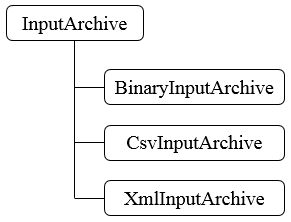
1. BinaryInputArchive
public class BinaryInputArchive implements InputArchive {

    // DataInput接口,用于从二进制流中读取字节

    private DataInput in;

    // 静态方法,用于获取Archive

    static public BinaryInputArchive getArchive(InputStream strm) {

        return new BinaryInputArchive(new DataInputStream(strm));

    }

    // 内部类,对应BinaryInputArchive索引

    static private class BinaryIndex implements Index {

        private int nelems;

        BinaryIndex(int nelems) {

            this.nelems = nelems;

        }

        public boolean done() {

            return (nelems <= 0);

        }

        public void incr() {

            nelems--;

        }

    }

    /** Creates a new instance of BinaryInputArchive */

    // 构造函数

    public BinaryInputArchive(DataInput in) {

        this.in = in;

    }

    // 读取字节

    public byte readByte(String tag) throws IOException {

        return in.readByte();

    }

    // 读取boolean类型

    public boolean readBool(String tag) throws IOException {

        return in.readBoolean();

    }

    // 读取int类型

    public int readInt(String tag) throws IOException {

        return in.readInt();

    }

    // 读取long类型

    public long readLong(String tag) throws IOException {

        return in.readLong();

    }

    // 读取float类型

    public float readFloat(String tag) throws IOException {

        return in.readFloat();

    }

    // 读取double类型

    public double readDouble(String tag) throws IOException {

        return in.readDouble();

    }

    // 读取String类型

    public String readString(String tag) throws IOException {

        // 确定长度

        int len = in.readInt();

        if (len == -1) return null;

        byte b[] = new byte[len];

        // 从输入流中读取一些字节,并将它们存储在缓冲区数组b中

        in.readFully(b);

        return new String(b, "UTF8");

    }

    // 最大缓冲值

    static public final int maxBuffer = Integer.getInteger("jute.maxbuffer", 0xfffff);

    // 读取缓冲

    public byte[] readBuffer(String tag) throws IOException {

        // 确定长度

        int len = readInt(tag);

        if (len == -1) return null;

        // Since this is a rough sanity check, add some padding to maxBuffer to

        // make up for extra fields, etc. (otherwise e.g. clients may be able to

        // write buffers larger than we can read from disk!)

        if (len < 0 || len > maxBuffer + 1024) { // 检查长度是否合理

            throw new IOException("Unreasonable length = " + len);

        }

        byte[] arr = new byte[len];

        // 从输入流中读取一些字节,并将它们存储在缓冲区数组arr中

        in.readFully(arr);

        return arr;

    }

    // 读取记录

    public void readRecord(Record r, String tag) throws IOException {

        // 反序列化,动态调用

        r.deserialize(this, tag);

    }

    // 开始读取记录,实现为空

    public void startRecord(String tag) throws IOException {}

    // 结束读取记录,实现为空

    public void endRecord(String tag) throws IOException {}

    // 开始读取向量

    public Index startVector(String tag) throws IOException {

        // 确定长度

        int len = readInt(tag);

        if (len == -1) {

            return null;

        }

        // 返回索引

        return new BinaryIndex(len);

    }

    // 结束读取向量

    public void endVector(String tag) throws IOException {}

    // 开始读取Map

    public Index startMap(String tag) throws IOException {

        // 返回索引

        return new BinaryIndex(readInt(tag));

    }

    // 结束读取Map,实现为空

    public void endMap(String tag) throws IOException {}

}
2. CsvInputArchive
/**

 * Licensed to the Apache Software Foundation (ASF) under one

 * or more contributor license agreements.  See the NOTICE file

 * distributed with this work for additional information

 * regarding copyright ownership.  The ASF licenses this file

 * to you under the Apache License, Version 2.0 (the

 * "License"); you may not use this file except in compliance

 * with the License.  You may obtain a copy of the License at

 *

 *     http://www.apache.org/licenses/LICENSE-2.0

 *

 * Unless required by applicable law or agreed to in writing, software

 * distributed under the License is distributed on an "AS IS" BASIS,

 * WITHOUT WARRANTIES OR CONDITIONS OF ANY KIND, either express or implied.

 * See the License for the specific language governing permissions and

 * limitations under the License.

 */

package org.apache.jute;

import java.io.IOException;

import java.io.InputStream;

import java.io.InputStreamReader;

import java.io.PushbackReader;

import java.io.UnsupportedEncodingException;

/**

 *

 */

class CsvInputArchive implements InputArchive {

    // 推回字节流

    private PushbackReader stream;

    // 内部类,对应CsvInputArchive索引

    private class CsvIndex implements Index {

        public boolean done() {

            char c = '\0';

            try {

                c = (char) stream.read();

                stream.unread(c);

            } catch (IOException ex) {

            }

            return (c == '}') ? true : false;

        }

        public void incr() {}

    }

    // 私有方法,抛出异常

    private void throwExceptionOnError(String tag) throws IOException {

        throw new IOException("Error deserializing "+tag);

    }

    // 私有方法,读取字段

    private String readField(String tag) throws IOException {

        try {

            StringBuilder buf = new StringBuilder();

            while (true) {

                // 读取并转化为字符

                char c = (char) stream.read();

                switch (c) { // 判断字符

                    case ',':

                        // 读取字段完成,可直接返回

                        return buf.toString();

                    case '}':

                    case '\n':

                    case '\r':

                        // 推回缓冲区

                        stream.unread(c);

                        return buf.toString();

                    default: // 默认添加至buf中

                        buf.append(c);

                }

            }

        } catch (IOException ex) {

            throw new IOException("Error reading "+tag);

        }

    }

    // 获取CsvInputArchive

    static CsvInputArchive getArchive(InputStream strm)

    throws UnsupportedEncodingException {

        return new CsvInputArchive(strm);

    }

    /** Creates a new instance of CsvInputArchive */

    // 构造函数

    public CsvInputArchive(InputStream in)

    throws UnsupportedEncodingException {

        // 初始化stream属性

        stream = new PushbackReader(new InputStreamReader(in, "UTF-8"));

    }

    // 读取byte类型

    public byte readByte(String tag) throws IOException {

        return (byte) readLong(tag);

    }

    // 读取boolean类型

    public boolean readBool(String tag) throws IOException {

        String sval = readField(tag);

        return "T".equals(sval) ? true : false;

    }

    // 读取int类型

    public int readInt(String tag) throws IOException {

        return (int) readLong(tag);

    }

    // 读取long类型

    public long readLong(String tag) throws IOException {

        // 读取字段

        String sval = readField(tag);

        try {

            // 转化

            long lval = Long.parseLong(sval);

            return lval;

        } catch (NumberFormatException ex) {

            throw new IOException("Error deserializing "+tag);

        }

    }

    // 读取float类型

    public float readFloat(String tag) throws IOException {

        return (float) readDouble(tag);

    }

    // 读取double类型

    public double readDouble(String tag) throws IOException {

        // 读取字段

        String sval = readField(tag);

        try {

            // 转化

            double dval = Double.parseDouble(sval);

            return dval;

        } catch (NumberFormatException ex) {

            throw new IOException("Error deserializing "+tag);

        }

    }

    // 读取String类型

    public String readString(String tag) throws IOException {

        // 读取字段

        String sval = readField(tag);

        // 转化

        return Utils.fromCSVString(sval);

    }

    // 读取缓冲类型

    public byte[] readBuffer(String tag) throws IOException {

        // 读取字段

        String sval = readField(tag);

        // 转化

        return Utils.fromCSVBuffer(sval);

    }

    // 读取记录

    public void readRecord(Record r, String tag) throws IOException {

        // 反序列化

        r.deserialize(this, tag);

    }

    // 开始读取记录

    public void startRecord(String tag) throws IOException {

        if (tag != null && !"".equals(tag)) {

            // 读取并转化为字符

            char c1 = (char) stream.read();

            // 读取并转化为字符

            char c2 = (char) stream.read();

            if (c1 != 's' || c2 != '{') { // 进行判断

                throw new IOException("Error deserializing "+tag);

            }

        }

    }

    // 结束读取记录

    public void endRecord(String tag) throws IOException {

        // 读取并转化为字符

        char c = (char) stream.read();

        if (tag == null || "".equals(tag)) {

            if (c != '\n' && c != '\r') { // 进行判断

                throw new IOException("Error deserializing record.");

            } else {

                return;

            }

        }

        if (c != '}') { // 进行判断

            throw new IOException("Error deserializing "+tag);

        }

        // 读取并转化为字符

        c = (char) stream.read();

        if (c != ',') {

            // 推回缓冲区

            stream.unread(c);

        }

        return;

    }

    // 开始读取vector

    public Index startVector(String tag) throws IOException {

        char c1 = (char) stream.read();

        char c2 = (char) stream.read();

        if (c1 != 'v' || c2 != '{') {

            throw new IOException("Error deserializing "+tag);

        }

        return new CsvIndex();

    }

    // 结束读取vector

    public void endVector(String tag) throws IOException {

        char c = (char) stream.read();

        if (c != '}') {

            throw new IOException("Error deserializing "+tag);

        }

        c = (char) stream.read();

        if (c != ',') {

            stream.unread(c);

        }

        return;

    }

    // 开始读取Map

    public Index startMap(String tag) throws IOException {

        char c1 = (char) stream.read();

        char c2 = (char) stream.read();

        if (c1 != 'm' || c2 != '{') {

            throw new IOException("Error deserializing "+tag);

        }

        return new CsvIndex();

    }

    // 结束读取Map

    public void endMap(String tag) throws IOException {

        char c = (char) stream.read();

        if (c != '}') {

            throw new IOException("Error deserializing "+tag);

        }

        c = (char) stream.read();

        if (c != ',') {

            stream.unread(c);

        }

        return;

    }

}
3. XmlInputArchive
/**

 * Licensed to the Apache Software Foundation (ASF) under one

 * or more contributor license agreements.  See the NOTICE file

 * distributed with this work for additional information

 * regarding copyright ownership.  The ASF licenses this file

 * to you under the Apache License, Version 2.0 (the

 * "License"); you may not use this file except in compliance

 * with the License.  You may obtain a copy of the License at

 *

 *     http://www.apache.org/licenses/LICENSE-2.0

 *

 * Unless required by applicable law or agreed to in writing, software

 * distributed under the License is distributed on an "AS IS" BASIS,

 * WITHOUT WARRANTIES OR CONDITIONS OF ANY KIND, either express or implied.

 * See the License for the specific language governing permissions and

 * limitations under the License.

 */

package org.apache.jute;

import java.io.IOException;

import java.io.InputStream;

import java.util.ArrayList;

import javax.xml.parsers.ParserConfigurationException;

import javax.xml.parsers.SAXParser;

import javax.xml.parsers.SAXParserFactory;

import org.xml.sax.Attributes;

import org.xml.sax.SAXException;

import org.xml.sax.helpers.DefaultHandler;

/**

 *

 */

class XmlInputArchive implements InputArchive {

    // 内部类,值(包含类型和值)

    static private class Value {

        private String type;

        private StringBuffer sb;

        public Value(String t) {

            type = t;

            sb = new StringBuffer();

        }

        // 添加chars

        public void addChars(char[] buf, int offset, int len) {

            sb.append(buf, offset, len);

        }

        // 返回value

        public String getValue() { return sb.toString(); }

        // 返回type

        public String getType() { return type; }

    }

    // 内部类,XML解析器

    private static class XMLParser extends DefaultHandler {

        private boolean charsValid = false;

        private ArrayList<Value> valList;

        private XMLParser(ArrayList<Value> vlist) {

            valList = vlist;

        }

        // 文档开始,空的实现

        public void startDocument() throws SAXException {}

        // 文档结束,空的实现

        public void endDocument() throws SAXException {}

        // 开始解析元素

        public void startElement(String ns,

                String sname,

                String qname,

                Attributes attrs) throws SAXException {

            //

            charsValid = false;

            if ("boolean".equals(qname) ||        // boolean类型

                    "i4".equals(qname) ||        // 四个字节

                    "int".equals(qname) ||        // int类型

                    "string".equals(qname) ||    // String类型

                    "double".equals(qname) ||    // double类型

                    "ex:i1".equals(qname) ||    // 一个字节

                    "ex:i8".equals(qname) ||    // 八个字节

                    "ex:float".equals(qname)) { // 基本类型

                //

                charsValid = true;

                // 添加至列表

                valList.add(new Value(qname));

            } else if ("struct".equals(qname) ||

                "array".equals(qname)) { // 结构体或数组类型

                // 添加至列表

                valList.add(new Value(qname));

            }

        }

        // 结束解析元素

        public void endElement(String ns,

                String sname,

                String qname) throws SAXException {

            charsValid = false;

            if ("struct".equals(qname) ||

                    "array".equals(qname)) { // 结构体或数组类型

                // 添加至列表

                valList.add(new Value("/"+qname));

            }

        }

        public void characters(char buf[], int offset, int len)

        throws SAXException {

            if (charsValid) { // 是否合法

                // 从列表获取value

                Value v = valList.get(valList.size()-1);

                // 将buf添加至value

                v.addChars(buf, offset,len);

            }

        }

    }

    // 内部类,对应XmlInputArchive

    private class XmlIndex implements Index {

        // 是否已经完成

        public boolean done() {

            // 根据索引获取value

            Value v = valList.get(vIdx);

            if ("/array".equals(v.getType())) { // 类型为/array

                // 设置开索引值为null

                valList.set(vIdx, null);

                // 增加索引值

                vIdx++;

                return true;

            } else {

                return false;

            }

        }

        // 增加索引值,空的实现

        public void incr() {}

    }

    // 值列表

    private ArrayList<Value> valList;

    // 值长度

    private int vLen;

    // 索引

    private int vIdx;

    // 下一项

    private Value next() throws IOException {

        if (vIdx < vLen) { // 当前索引值小于长度

            // 获取值

            Value v = valList.get(vIdx);

            // 设置索引值为null

            valList.set(vIdx, null);

            // 增加索引值

            vIdx++;

            return v;

        } else {

            throw new IOException("Error in deserialization.");

        }

    }

    // 获取XmlInputArchive

    static XmlInputArchive getArchive(InputStream strm)

    throws ParserConfigurationException, SAXException, IOException {

        return new XmlInputArchive(strm);

    }

    /** Creates a new instance of BinaryInputArchive */

    // 构造函数

    public XmlInputArchive(InputStream in)

    throws ParserConfigurationException, SAXException, IOException {

        // 初始化XmlInputArchive的相应字段

        valList = new ArrayList<Value>();

        DefaultHandler handler = new XMLParser(valList);

        SAXParserFactory factory = SAXParserFactory.newInstance();

        SAXParser parser = factory.newSAXParser();

        parser.parse(in, handler);

        vLen = valList.size();

        vIdx = 0;

    }

    // 读取byte类型

    public byte readByte(String tag) throws IOException {

        Value v = next();

        if (!"ex:i1".equals(v.getType())) {

            throw new IOException("Error deserializing "+tag+".");

        }

        return Byte.parseByte(v.getValue());

    }

    // 读取Boolean类型

    public boolean readBool(String tag) throws IOException {

        Value v = next();

        if (!"boolean".equals(v.getType())) {

            throw new IOException("Error deserializing "+tag+".");

        }

        return "1".equals(v.getValue());

    }

    // 读取int类型

    public int readInt(String tag) throws IOException {

        Value v = next();

        if (!"i4".equals(v.getType()) &&

                !"int".equals(v.getType())) {

            throw new IOException("Error deserializing "+tag+".");

        }

        return Integer.parseInt(v.getValue());

    }

    // 读取long类型

    public long readLong(String tag) throws IOException {

        Value v = next();

        if (!"ex:i8".equals(v.getType())) {

            throw new IOException("Error deserializing "+tag+".");

        }

        return Long.parseLong(v.getValue());

    }

    // 读取float类型

    public float readFloat(String tag) throws IOException {

        Value v = next();

        if (!"ex:float".equals(v.getType())) {

            throw new IOException("Error deserializing "+tag+".");

        }

        return Float.parseFloat(v.getValue());

    }

    // 读取double类型

    public double readDouble(String tag) throws IOException {

        Value v = next();

        if (!"double".equals(v.getType())) {

            throw new IOException("Error deserializing "+tag+".");

        }

        return Double.parseDouble(v.getValue());

    }

    // 读取String类型

    public String readString(String tag) throws IOException {

        Value v = next();

        if (!"string".equals(v.getType())) {

            throw new IOException("Error deserializing "+tag+".");

        }

        return Utils.fromXMLString(v.getValue());

    }

    // 读取Buffer类型

    public byte[] readBuffer(String tag) throws IOException {

        Value v = next();

        if (!"string".equals(v.getType())) {

            throw new IOException("Error deserializing "+tag+".");

        }

        return Utils.fromXMLBuffer(v.getValue());

    }

    // 读取Record类型

    public void readRecord(Record r, String tag) throws IOException {

        r.deserialize(this, tag);

    }

    // 开始读取Record

    public void startRecord(String tag) throws IOException {

        Value v = next();

        if (!"struct".equals(v.getType())) {

            throw new IOException("Error deserializing "+tag+".");

        }

    }

    // 结束读取Record

    public void endRecord(String tag) throws IOException {

        Value v = next();

        if (!"/struct".equals(v.getType())) {

            throw new IOException("Error deserializing "+tag+".");

        }

    }

    // 开始读取vector

    public Index startVector(String tag) throws IOException {

        Value v = next();

        if (!"array".equals(v.getType())) {

            throw new IOException("Error deserializing "+tag+".");

        }

        return new XmlIndex();

    }

    // 结束读取vector

    public void endVector(String tag) throws IOException {}

    // 开始读取Map

    public Index startMap(String tag) throws IOException {

        return startVector(tag);

    }

    // 停止读取Map

    public void endMap(String tag) throws IOException { endVector(tag); }

}
2.2 OutputArchive
其是所有序列化器都需要实现此接口,其方法如下。
public interface OutputArchive {

    // 写Byte类型

    public void writeByte(byte b, String tag) throws IOException;

    // 写boolean类型

    public void writeBool(boolean b, String tag) throws IOException;

    // 写int类型

    public void writeInt(int i, String tag) throws IOException;

    // 写long类型

    public void writeLong(long l, String tag) throws IOException;

    // 写float类型

    public void writeFloat(float f, String tag) throws IOException;

    // 写double类型

    public void writeDouble(double d, String tag) throws IOException;

    // 写String类型

    public void writeString(String s, String tag) throws IOException;

    // 写Buffer类型

    public void writeBuffer(byte buf[], String tag)

        throws IOException;

    // 写Record类型

    public void writeRecord(Record r, String tag) throws IOException;

    // 开始写Record

    public void startRecord(Record r, String tag) throws IOException;

    // 结束写Record

    public void endRecord(Record r, String tag) throws IOException;

    // 开始写Vector

    public void startVector(List v, String tag) throws IOException;

    // 结束写Vector

    public void endVector(List v, String tag) throws IOException;

    // 开始写Map

    public void startMap(TreeMap v, String tag) throws IOException;

    // 结束写Map

    public void endMap(TreeMap v, String tag) throws IOException;

}
OutputArchive的类结构如下
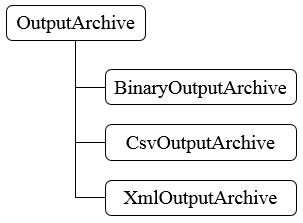
1. BinaryOutputArchive
/**

 * Licensed to the Apache Software Foundation (ASF) under one

 * or more contributor license agreements.  See the NOTICE file

 * distributed with this work for additional information

 * regarding copyright ownership.  The ASF licenses this file

 * to you under the Apache License, Version 2.0 (the

 * "License"); you may not use this file except in compliance

 * with the License.  You may obtain a copy of the License at

 *

 *     http://www.apache.org/licenses/LICENSE-2.0

 *

 * Unless required by applicable law or agreed to in writing, software

 * distributed under the License is distributed on an "AS IS" BASIS,

 * WITHOUT WARRANTIES OR CONDITIONS OF ANY KIND, either express or implied.

 * See the License for the specific language governing permissions and

 * limitations under the License.

 */

package org.apache.jute;

import java.io.DataOutput;

import java.io.DataOutputStream;

import java.io.IOException;

import java.io.OutputStream;

import java.nio.ByteBuffer;

import java.util.List;

import java.util.TreeMap;

/**

 *

 */

public class BinaryOutputArchive implements OutputArchive {

    // 字节缓冲

    private ByteBuffer bb = ByteBuffer.allocate(1024);

    // DataInput接口,用于从二进制流中读取字节

    private DataOutput out;

    // 静态方法,用于获取Archive

    public static BinaryOutputArchive getArchive(OutputStream strm) {

        return new BinaryOutputArchive(new DataOutputStream(strm));

    }

    /** Creates a new instance of BinaryOutputArchive */

    // 构造函数

    public BinaryOutputArchive(DataOutput out) {

        this.out = out;

    }

    // 写Byte类型

    public void writeByte(byte b, String tag) throws IOException {

        out.writeByte(b);

    }

    // 写boolean类型

    public void writeBool(boolean b, String tag) throws IOException {

        out.writeBoolean(b);

    }

    // 写int类型

    public void writeInt(int i, String tag) throws IOException {

        out.writeInt(i);

    }

    // 写long类型

    public void writeLong(long l, String tag) throws IOException {

        out.writeLong(l);

    }

    // 写float类型

    public void writeFloat(float f, String tag) throws IOException {

        out.writeFloat(f);

    }

    // 写double类型

    public void writeDouble(double d, String tag) throws IOException {

        out.writeDouble(d);

    }

    /**

     * create our own char encoder to utf8. This is faster

     * then string.getbytes(UTF8).

     * @param s the string to encode into utf8

     * @return utf8 byte sequence.

     */

    // 将String类型转化为ByteBuffer类型

    final private ByteBuffer stringToByteBuffer(CharSequence s) {

        // 清空ByteBuffer

        bb.clear();

        // s的长度

        final int len = s.length();

        for (int i = 0; i < len; i++) { // 遍历s

            if (bb.remaining() < 3) { // ByteBuffer剩余大小小于3

                // 再进行一次分配(扩大一倍)

                ByteBuffer n = ByteBuffer.allocate(bb.capacity() << 1);

                // 切换方式

                bb.flip();

                // 写入bb

                n.put(bb);

                bb = n;

            }

            char c = s.charAt(i);

            if (c < 0x80) { // 小于128,直接写入

                bb.put((byte) c);

            } else if (c < 0x800) { // 小于2048,则进行相应处理

                bb.put((byte) (0xc0 | (c >> 6)));

                bb.put((byte) (0x80 | (c & 0x3f)));

            } else { // 大于2048,则进行相应处理

                bb.put((byte) (0xe0 | (c >> 12)));

                bb.put((byte) (0x80 | ((c >> 6) & 0x3f)));

                bb.put((byte) (0x80 | (c & 0x3f)));

            }

        }

        // 切换方式

        bb.flip();

        return bb;

    }

    // 写String类型

    public void writeString(String s, String tag) throws IOException {

        if (s == null) {

            writeInt(-1, "len");

            return;

        }

        ByteBuffer bb = stringToByteBuffer(s);

        writeInt(bb.remaining(), "len");

        out.write(bb.array(), bb.position(), bb.limit());

    }

    // 写Buffer类型

    public void writeBuffer(byte barr[], String tag)

    throws IOException {

        if (barr == null) {

            out.writeInt(-1);

            return;

        }

        out.writeInt(barr.length);

        out.write(barr);

    }

    // 写Record类型

    public void writeRecord(Record r, String tag) throws IOException {

        r.serialize(this, tag);

    }

    // 开始写Record

    public void startRecord(Record r, String tag) throws IOException {}

    // 结束写Record

    public void endRecord(Record r, String tag) throws IOException {}

    // 开始写Vector

    public void startVector(List v, String tag) throws IOException {

        if (v == null) {

            writeInt(-1, tag);

            return;

        }

        writeInt(v.size(), tag);

    }

    // 结束写Vector

    public void endVector(List v, String tag) throws IOException {}

    // 开始写Map

    public void startMap(TreeMap v, String tag) throws IOException {

        writeInt(v.size(), tag);

    }

    // 结束写Map

    public void endMap(TreeMap v, String tag) throws IOException {}

}
2. CsvOutputArchive
/**

 * Licensed to the Apache Software Foundation (ASF) under one

 * or more contributor license agreements.  See the NOTICE file

 * distributed with this work for additional information

 * regarding copyright ownership.  The ASF licenses this file

 * to you under the Apache License, Version 2.0 (the

 * "License"); you may not use this file except in compliance

 * with the License.  You may obtain a copy of the License at

 *

 *     http://www.apache.org/licenses/LICENSE-2.0

 *

 * Unless required by applicable law or agreed to in writing, software

 * distributed under the License is distributed on an "AS IS" BASIS,

 * WITHOUT WARRANTIES OR CONDITIONS OF ANY KIND, either express or implied.

 * See the License for the specific language governing permissions and

 * limitations under the License.

 */

package org.apache.jute;

import java.io.IOException;

import java.io.OutputStream;

import java.io.PrintStream;

import java.io.UnsupportedEncodingException;

import java.util.List;

import java.util.TreeMap;

/**

 *

 */

public class CsvOutputArchive implements OutputArchive {

    // PrintStream为其他输出流添加了功能,使它们能够方便地打印各种数据值表示形式

    private PrintStream stream;

    // 默认为第一次

    private boolean isFirst = true;

    // 获取Archive

    static CsvOutputArchive getArchive(OutputStream strm)

    throws UnsupportedEncodingException {

        return new CsvOutputArchive(strm);

    }

    // 私有函数,抛出异常

    private void throwExceptionOnError(String tag) throws IOException {

        if (stream.checkError()) {

            throw new IOException("Error serializing "+tag);

        }

    }

    // 私有函数,除第一次外,均打印","

    private void printCommaUnlessFirst() {

        if (!isFirst) {

            stream.print(",");

        }

        isFirst = false;

    }

    /** Creates a new instance of CsvOutputArchive */

    // 构造函数

    public CsvOutputArchive(OutputStream out)

    throws UnsupportedEncodingException {

        stream = new PrintStream(out, true, "UTF-8");

    }

    // 写Byte类型

    public void writeByte(byte b, String tag) throws IOException {

        writeLong((long)b, tag);

    }

    // 写boolean类型

    public void writeBool(boolean b, String tag) throws IOException {

        // 打印","

        printCommaUnlessFirst();

        String val = b ? "T" : "F";

        // 打印值

        stream.print(val);

        // 抛出异常

        throwExceptionOnError(tag);

    }

    // 写int类型

    public void writeInt(int i, String tag) throws IOException {

        writeLong((long)i, tag);

    }

    // 写long类型

    public void writeLong(long l, String tag) throws IOException {

        printCommaUnlessFirst();

        stream.print(l);

        throwExceptionOnError(tag);

    }

    // 写float类型

    public void writeFloat(float f, String tag) throws IOException {

        writeDouble((double)f, tag);

    }

    // 写double类型

    public void writeDouble(double d, String tag) throws IOException {

        printCommaUnlessFirst();

        stream.print(d);

        throwExceptionOnError(tag);

    }

    // 写String类型

    public void writeString(String s, String tag) throws IOException {

        printCommaUnlessFirst();

        stream.print(Utils.toCSVString(s));

        throwExceptionOnError(tag);

    }

    // 写Buffer类型

    public void writeBuffer(byte buf[], String tag)

    throws IOException {

        printCommaUnlessFirst();

        stream.print(Utils.toCSVBuffer(buf));

        throwExceptionOnError(tag);

    }

    // 写Record类型

    public void writeRecord(Record r, String tag) throws IOException {

        if (r == null) {

            return;

        }

        r.serialize(this, tag);

    }

    // 开始写Record

    public void startRecord(Record r, String tag) throws IOException {

        if (tag != null && !"".equals(tag)) {

            printCommaUnlessFirst();

            stream.print("s{");

            isFirst = true;

        }

    }

    // 结束写Record

    public void endRecord(Record r, String tag) throws IOException {

        if (tag == null || "".equals(tag)) {

            stream.print("\n");

            isFirst = true;

        } else {

            stream.print("}");

            isFirst = false;

        }

    }

    // 开始写Vector

    public void startVector(List v, String tag) throws IOException {

        printCommaUnlessFirst();

        stream.print("v{");

        isFirst = true;

    }

    // 结束写Vector

    public void endVector(List v, String tag) throws IOException {

        stream.print("}");

        isFirst = false;

    }

    // 开始写Map

    public void startMap(TreeMap v, String tag) throws IOException {

        printCommaUnlessFirst();

        stream.print("m{");

        isFirst = true;

    }

    // 结束写Map

    public void endMap(TreeMap v, String tag) throws IOException {

        stream.print("}");

        isFirst = false;

    }

}
3. XmlOutputArchive
/**

 * Licensed to the Apache Software Foundation (ASF) under one

 * or more contributor license agreements.  See the NOTICE file

 * distributed with this work for additional information

 * regarding copyright ownership.  The ASF licenses this file

 * to you under the Apache License, Version 2.0 (the

 * "License"); you may not use this file except in compliance

 * with the License.  You may obtain a copy of the License at

 *

 *     http://www.apache.org/licenses/LICENSE-2.0

 *

 * Unless required by applicable law or agreed to in writing, software

 * distributed under the License is distributed on an "AS IS" BASIS,

 * WITHOUT WARRANTIES OR CONDITIONS OF ANY KIND, either express or implied.

 * See the License for the specific language governing permissions and

 * limitations under the License.

 */

package org.apache.jute;

import java.io.IOException;

import java.io.OutputStream;

import java.io.PrintStream;

import java.util.List;

import java.util.Stack;

import java.util.TreeMap;

/**

 *

 */

class XmlOutputArchive implements OutputArchive {

    // PrintStream为其他输出流添加了功能,使它们能够方便地打印各种数据值表示形式

    private PrintStream stream;

    // 缩进个数

    private int indent = 0;

    // 栈结构

    private Stack<String> compoundStack;

    // 存放缩进

    private void putIndent() {

        StringBuilder sb = new StringBuilder("");

        for (int idx = 0; idx < indent; idx++) {

            sb.append("  ");

        }

        stream.print(sb.toString());

    }

    // 添加缩进

    private void addIndent() {

        indent++;

    }

    // 减少缩进

    private void closeIndent() {

        indent--;

    }

    // 打印文件头格式

    private void printBeginEnvelope(String tag) {

        if (!compoundStack.empty()) {

            String s = compoundStack.peek();

            if ("struct".equals(s)) {

                putIndent();

                stream.print("<member>\n");

                addIndent();

                putIndent();

                stream.print("<name>"+tag+"</name>\n");

                putIndent();

                stream.print("<value>");

            } else if ("vector".equals(s)) {

                stream.print("<value>");

            } else if ("map".equals(s)) {

                stream.print("<value>");

            }

        } else {

            stream.print("<value>");

        }

    }

    // 打印文件尾格式

    private void printEndEnvelope(String tag) {

        if (!compoundStack.empty()) {

            String s = compoundStack.peek();

            if ("struct".equals(s)) {

                stream.print("</value>\n");

                closeIndent();

                putIndent();

                stream.print("</member>\n");

            } else if ("vector".equals(s)) {

                stream.print("</value>\n");

            } else if ("map".equals(s)) {

                stream.print("</value>\n");

            }

        } else {

            stream.print("</value>\n");

        }

    }

    //

    private void insideVector(String tag) {

        printBeginEnvelope(tag);

        compoundStack.push("vector");

    }

    private void outsideVector(String tag) throws IOException {

        String s = compoundStack.pop();

        if (!"vector".equals(s)) {

            throw new IOException("Error serializing vector.");

        }

        printEndEnvelope(tag);

    }

    private void insideMap(String tag) {

        printBeginEnvelope(tag);

        compoundStack.push("map");

    }

    private void outsideMap(String tag) throws IOException {

        String s = compoundStack.pop();

        if (!"map".equals(s)) {

            throw new IOException("Error serializing map.");

        }

        printEndEnvelope(tag);

    }

    private void insideRecord(String tag) {

        printBeginEnvelope(tag);

        compoundStack.push("struct");

    }

    private void outsideRecord(String tag) throws IOException {

        String s = compoundStack.pop();

        if (!"struct".equals(s)) {

            throw new IOException("Error serializing record.");

        }

        printEndEnvelope(tag);

    }

    // 获取Archive

    static XmlOutputArchive getArchive(OutputStream strm) {

        return new XmlOutputArchive(strm);

    }

    /** Creates a new instance of XmlOutputArchive */

    // 构造函数

    public XmlOutputArchive(OutputStream out) {

        stream = new PrintStream(out);

        compoundStack = new Stack<String>();

    }

    // 写Byte类型

    public void writeByte(byte b, String tag) throws IOException {

        printBeginEnvelope(tag);

        stream.print("<ex:i1>");

        stream.print(Byte.toString(b));

        stream.print("</ex:i1>");

        printEndEnvelope(tag);

    }

    // 写boolean类型

    public void writeBool(boolean b, String tag) throws IOException {

        printBeginEnvelope(tag);

        stream.print("<boolean>");

        stream.print(b ? "1" : "0");

        stream.print("</boolean>");

        printEndEnvelope(tag);

    }

    // 写int类型

    public void writeInt(int i, String tag) throws IOException {

        printBeginEnvelope(tag);

        stream.print("<i4>");

        stream.print(Integer.toString(i));

        stream.print("</i4>");

        printEndEnvelope(tag);

    }

    // 写long类型

    public void writeLong(long l, String tag) throws IOException {

        printBeginEnvelope(tag);

        stream.print("<ex:i8>");

        stream.print(Long.toString(l));

        stream.print("</ex:i8>");

        printEndEnvelope(tag);

    }

    // 写float类型

    public void writeFloat(float f, String tag) throws IOException {

        printBeginEnvelope(tag);

        stream.print("<ex:float>");

        stream.print(Float.toString(f));

        stream.print("</ex:float>");

        printEndEnvelope(tag);

    }

    // 写double类型

    public void writeDouble(double d, String tag) throws IOException {

        printBeginEnvelope(tag);

        stream.print("<double>");

        stream.print(Double.toString(d));

        stream.print("</double>");

        printEndEnvelope(tag);

    }

    // 写String类型

    public void writeString(String s, String tag) throws IOException {

        printBeginEnvelope(tag);

        stream.print("<string>");

        stream.print(Utils.toXMLString(s));

        stream.print("</string>");

        printEndEnvelope(tag);

    }

    // 写Buffer类型

    public void writeBuffer(byte buf[], String tag)

    throws IOException {

        printBeginEnvelope(tag);

        stream.print("<string>");

        stream.print(Utils.toXMLBuffer(buf));

        stream.print("</string>");

        printEndEnvelope(tag);

    }

    // 写Record类型

    public void writeRecord(Record r, String tag) throws IOException {

        r.serialize(this, tag);

    }

    // 开始写Record类型

    public void startRecord(Record r, String tag) throws IOException {

        insideRecord(tag);

        stream.print("<struct>\n");

        addIndent();

    }

    // 结束写Record类型

    public void endRecord(Record r, String tag) throws IOException {

        closeIndent();

        putIndent();

        stream.print("</struct>");

        outsideRecord(tag);

    }

    // 开始写Vector类型

    public void startVector(List v, String tag) throws IOException {

        insideVector(tag);

        stream.print("<array>\n");

        addIndent();

    }

    // 结束写Vector类型

    public void endVector(List v, String tag) throws IOException {

        closeIndent();

        putIndent();

        stream.print("</array>");

        outsideVector(tag);

    }

    // 开始写Map类型

    public void startMap(TreeMap v, String tag) throws IOException {

        insideMap(tag);

        stream.print("<array>\n");

        addIndent();

    }

    // 结束写Map类型

    public void endMap(TreeMap v, String tag) throws IOException {

        closeIndent();

        putIndent();

        stream.print("</array>");

        outsideMap(tag);

    }

}
2.3 Index
其用于迭代反序列化器的迭代器。
public interface Index {

    // 是否已经完成

    public boolean done();

    // 下一项

    public void incr();

}
Index的类结构如下
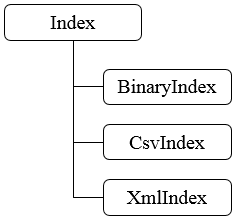
1. BinaryIndex
    static private class BinaryIndex implements Index {

        // 元素个数

        private int nelems;

        // 构造函数

        BinaryIndex(int nelems) {

            this.nelems = nelems;

        }

        // 是否已经完成

        public boolean done() {

            return (nelems <= 0);

        }

        // 移动一项

        public void incr() {

            nelems--;

        }

    }
2. CsxIndex
    private class CsvIndex implements Index {

        // 是否已经完成

        public boolean done() {

            char c = '\0';

            try {

                // 读取字符

                c = (char) stream.read();

                // 推回缓冲区

                stream.unread(c);

            } catch (IOException ex) {

            }

            return (c == '}') ? true : false;

        }

        // 什么都不做

        public void incr() {}

    }
3. XmlIndex
    private class XmlIndex implements Index {

        // 是否已经完成

        public boolean done() {

            // 根据索引获取值

            Value v = valList.get(vIdx);

            if ("/array".equals(v.getType())) { // 判断是否值的类型是否为/array

                // 设置索引的值

                valList.set(vIdx, null);

                // 索引加1

                vIdx++;

                return true;

            } else {

                return false;

            }

        }

        // 什么都不做

        public void incr() {}

    }
2.4 Record
所有用于网络传输或者本地存储的类型都实现该接口,其方法如下
public interface Record {

    // 序列化

    public void serialize(OutputArchive archive, String tag)

        throws IOException;

    // 反序列化

    public void deserialize(InputArchive archive, String tag)

        throws IOException;

}
所有的实现类都需要实现seriallize和deserialize方法。
三、示例
下面通过一个示例来理解OutputArchive和InputArchive的搭配使用。
package com.leesf.zookeeper_samples;

import java.io.File;

import java.io.FileInputStream;

import java.io.FileOutputStream;

import java.io.IOException;

import java.io.InputStream;

import java.io.OutputStream;

import java.util.Set;

import java.util.TreeMap;

import org.apache.jute.BinaryInputArchive;

import org.apache.jute.BinaryOutputArchive;

import org.apache.jute.Index;

import org.apache.jute.InputArchive;

import org.apache.jute.OutputArchive;

import org.apache.jute.Record;

public class ArchiveTest {

    public static void main( String[] args ) throws IOException {

        String path = "F:\\test.txt";

        // write operation

        OutputStream outputStream = new FileOutputStream(new File(path));

        BinaryOutputArchive binaryOutputArchive = BinaryOutputArchive.getArchive(outputStream);

        binaryOutputArchive.writeBool(true, "boolean");

        byte[] bytes = "leesf".getBytes();

        binaryOutputArchive.writeBuffer(bytes, "buffer");

        binaryOutputArchive.writeDouble(13.14, "double");

        binaryOutputArchive.writeFloat(5.20f, "float");

        binaryOutputArchive.writeInt(520, "int");

        Person person = new Person(25, "leesf");

        binaryOutputArchive.writeRecord(person, "leesf");

        TreeMap<String, Integer> map = new TreeMap<String, Integer>();

        map.put("leesf", 25);

        map.put("dyd", 25);

        Set<String> keys = map.keySet();

        binaryOutputArchive.startMap(map, "map");

        int i = 0;

        for (String key: keys) {

            String tag = i + "";

            binaryOutputArchive.writeString(key, tag);

            binaryOutputArchive.writeInt(map.get(key), tag);

            i++;

        }

        binaryOutputArchive.endMap(map, "map");

        // read operation

        InputStream inputStream = new FileInputStream(new File(path));

        BinaryInputArchive binaryInputArchive = BinaryInputArchive.getArchive(inputStream);

        System.out.println(binaryInputArchive.readBool("boolean"));

        System.out.println(new String(binaryInputArchive.readBuffer("buffer")));

        System.out.println(binaryInputArchive.readDouble("double"));

        System.out.println(binaryInputArchive.readFloat("float"));

        System.out.println(binaryInputArchive.readInt("int"));

        Person person2 = new Person();

        binaryInputArchive.readRecord(person2, "leesf");

        System.out.println(person2);

        Index index = binaryInputArchive.startMap("map");

        int j = 0;

        while (!index.done()) {

            String tag = j + "";

            System.out.println("key = " + binaryInputArchive.readString(tag)

                + ", value = " + binaryInputArchive.readInt(tag));

            index.incr();

            j++;

        }

    }

    static class Person implements Record {

        private int age;

        private String name;

        public Person() {

        }

        public Person(int age, String name) {

            this.age = age;

            this.name = name;

        }

        public void serialize(OutputArchive archive, String tag) throws IOException {

            archive.startRecord(this, tag);

            archive.writeInt(age, "age");

            archive.writeString(name, "name");

            archive.endRecord(this, tag);

        }

        public void deserialize(InputArchive archive, String tag) throws IOException {

            archive.startRecord(tag);

            age = archive.readInt("age");

            name = archive.readString("name");

            archive.endRecord(tag);

        }

        public String toString() {

            return "age = " + age + ", name = " + name;

        }

    }

}
运行结果:
true

leesf

13.14

5.2

520

age = 25, name = leesf

key = dyd, value = 25

key = leesf, value = 25
四、总结
本篇博文分析了序列化中涉及到的类,主要是org.zookeeper.jute包下的类,相对来说还是相对简单,也谢谢各位园友的观看~
【Zookeeper】源码之序列化的更多相关文章
- Zookeeper 源码(二)序列化组件 Jute
Zookeeper 源码(二)序列化组件 Jute 一.序列化组件 Jute 对于一个网络通信,首先需要解决的就是对数据的序列化和反序列化处理,在 ZooKeeper 中,使用了Jute 这一序列化组 ...
- zookeeper源码分析之四服务端(单机)处理请求流程
上文: zookeeper源码分析之一服务端启动过程 中,我们介绍了zookeeper服务器的启动过程,其中单机是ZookeeperServer启动,集群使用QuorumPeer启动,那么这次我们分析 ...
- zookeeper源码分析之三客户端发送请求流程
znode 可以被监控,包括这个目录节点中存储的数据的修改,子节点目录的变化等,一旦变化可以通知设置监控的客户端,这个功能是zookeeper对于应用最重要的特性,通过这个特性可以实现的功能包括配置的 ...
- Zookeeper源码(启动+选举)
简介 关于Zookeeper,目前普遍的应用场景基本作为服务注册中心,用于服务发现.但这只是Zookeeper的一个的功能,根据Apache的官方概述:"The Apache ZooKeep ...
- zookeeper源码分析之五服务端(集群leader)处理请求流程
leader的实现类为LeaderZooKeeperServer,它间接继承自标准ZookeeperServer.它规定了请求到达leader时需要经历的路径: PrepRequestProcesso ...
- 如何编译Zookeeper源码
1. 安装Ant Ant下载地址:http://ant.apache.org/bindownload.cgi 解压即可. 2. 下载Zookeeper源码包 https://github.com/ap ...
- Zookeeper源码编译为Eclipse工程(转)
原文地址:http://blog.csdn.net/jiyiqinlovexx/article/details/41179293 为了深入学习ZooKeeper源码,首先就想到将其导入到Eclispe ...
- Zookeeper 源码分析-启动
Zookeeper 源码分析-启动 博客分类: Zookeeper 本文主要介绍了zookeeper启动的过程 运行zkServer.sh start命令可以启动zookeeper.入口的main ...
- 使用ant编译zookeeper源码
1. 安装Ant Ant下载地址:http://ant.apache.org/bindownload.cgi 解压即可. 注意如果不配置环境变量的话需要使用绝对路径,我配置了. 开始我ant跑错了 U ...
- Zookeeper源码编译为Eclipse工程(win7下Ant编译)
前言 ZooKeeper是雅虎的.用Ant进行软件构建. 千里之行,始于足下.想看源码的第一步,是下载源码并导入某个IDE工具. Ant http://ant.apache.org/ Windows: ...
随机推荐
- June本地环境搭建
python-china.org论坛使用的June程序就是这货了,使用了Python Flask + SQLite + Node.js 的轻论坛,以后就打算拿这个学习了,如果可能,进行二次开发. Gi ...
- Spring IOC 之Bean定义的继承
一个Bean的定义可以包含大量的配置信息,包括构造器参数.属性值以及容器规范信息,比如初始化方法.静态工厂方法名字等等.一子bean的定义可以从父bean的定义中继承配置数据信息.子bean定义可以覆 ...
- HDU1024 Max Sum Plus Plus(DP)
状态:d(i,j)它代表前j划分数i部并且包括第一j最佳结果时的数.g(i,j)表示前j划分数i最好的结果时,段,g(m,n)结果,需要. 本题数据较大.需採用滚动数组.注意:这题int类型就够用了, ...
- /bin/bash^M: bad interpreter: No such file or directory
<今天遇到的问题, 网上有非常多类似的文章, 个人记录下来, 加深记忆, 已经明确的就绕路吧.> 运行一个脚本full_build.sh 时, 一直是提示我: -bash: ./f ...
- leetcode[105] Construct Binary Tree from Inorder and Postorder Traversal
代码实现:给定一个中序遍历和后序遍历怎么构造出这颗树!(假定树中没有重复的数字) 因为没有规定是左小右大的树,所以我们随意画一颗数,来进行判断应该是满足题意的. 3 / \ 2 4 /\ / \1 6 ...
- css Cursor:url()自定义鼠标指针样式为图片
css自定义鼠标指针样式为图片Cursor:url()的使用,今天在项目中,要用到自定义鼠标样式,格式: css:{cursor:url('绝对路径的图片(格式:cur,ico)'),-moz-zoo ...
- java中数据库通用层
/** * 数据库通用类 * */ public class ConnDB { /** * 获取数据库连接对象 * @return 数据库连接对象 * */ public static Connect ...
- css,js工具篇
4. web前端开发分享-css,js工具篇 web前端开发乃及其它的相关开发,推荐sublime text, webstorm(jetbrains公司系列产品)这两个的原因在于,有个技术叫emm ...
- Attribute Routing
Attribute Routing 系列导航地址http://www.cnblogs.com/fzrain/p/3490137.html 题外话:由于这个技术点是新学的,并不属于原系列,但借助了原系列 ...
- CGI杂谈
CGI是一个连接外部应用程序到信息服务器(比如HTTP或者网络服务器)的标准.一个简单的HTML文档是无交互后台程序,它是静态的,也就是说它处于一个不可变的状态,即文本文件不可以变化.相反地,CGI程 ...