
day2 self __init__ __str__
1 self 谁调用指向谁自己 相当于其他语言的this
#1.类名

class Cat():   #大驼峰的命名规范

#2.类的属性

#3.类的方法

    def eat(self):

        print("我在吃东西。。。")

    def run(self):

        print("我在跑步")

  #第二种 获取对象的属性

    def instroduce(self):

        print("%s的年龄是%d"%(self.name,self.age))   #self

#创建一个对象

tom = Cat()

#调用tom指向的对象中的 方法

tom.eat()

tom.run()

#给tom指向的对象添加2个属性

tom.name = "汤姆"

tom.age = 18

tom.instroduce()  #相当于 tom.instroduce(tom)

lanmao = Cat()

lanmao.name = "蓝猫"

lanmao.age = 13

lanmao.instroduce()
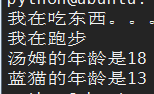

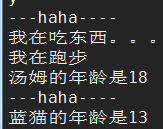
2 .__init__方法 魔法方法
 class Cat():

     '''定义1个Cat类'''

     def __init__(self):                #python解释器自动执行__init__方法

         print("---haha----")

     def eat(self):

         print("我在吃东西。。。")

     def run(self):

         print("我在跑步")

     def instroduce(self):

         print("%s的年龄是%d"%(self.name,self.age))

 #创建一个对象

 tom = Cat()

 tom.eat()

 tom.run()

 tom.name = "汤姆"

 tom.age = 18

 tom.instroduce()

 lanmao = Cat()

 lanmao.name = "蓝猫"

 lanmao.age = 13

 lanmao.instroduce()
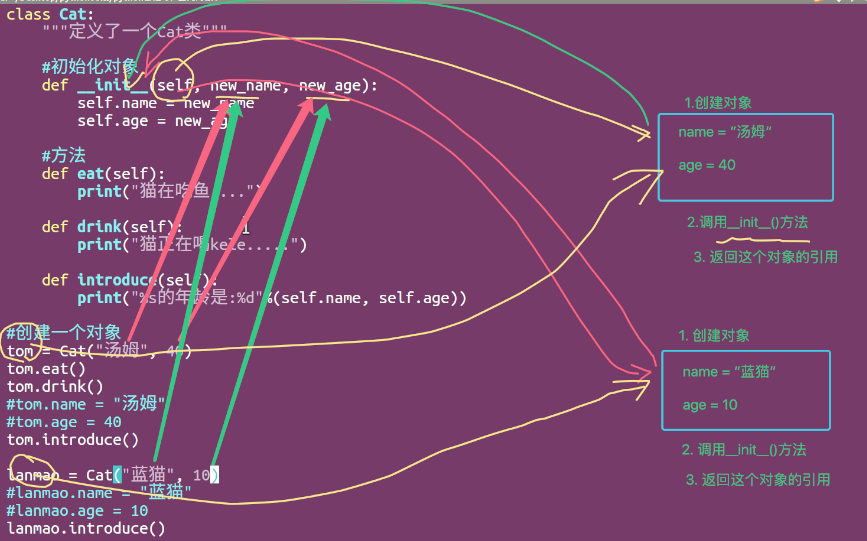
3 .__init__方法的流程
 class Cat():

     '''定义1个Cat类'''
     #初始化一个对象

     def __init__(self,new_name,new_age):

         self.name = new_name

         self.age = new_age

     def eat(self):

         print("我在吃东西。。。")

     def run(self):

         print("我在跑步")

     def instroduce(self):

         print("%s的年龄是%d"%(self.name,self.age))

 #创建一个对象

 tom = Cat("汤姆",33)

 tom.eat()

 tom.run()

 #tom.name = "汤姆"

 #tom.age = 18

 tom.instroduce()

 lanmao = Cat("蓝猫",22)

 #lanmao.name = "蓝猫"

 #lanmao.age = 13

 lanmao.instroduce()
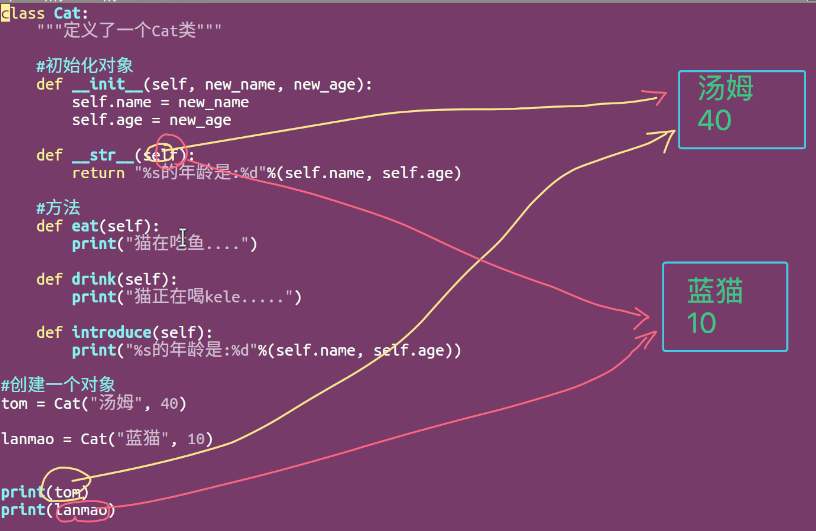
4.__str__方法 魔法方法 获取对象的描述信息
调用的是对象里面的name,age
1)版本1:
class Cat():

    '''定义1个Cat类'''

    def __init__(self,new_name,new_age):

        self.name = new_name

        self.age = new_age

    def eat(self):

        print("我在吃东西。。。")

    def run(self):

        print("我在跑步")

    def instroduce(self):

        print("%s的年龄是%d"%(self.name,self.age))

#创建一个对象

tom = Cat("汤姆",33)

lanmao = Cat("蓝猫",22)

print(tom)

print(lanmao)

####执行结果

python@ubuntu:~/pythonS6/python基础07$ python3 10-__str__.py

<__main__.Cat object at 0x7f2030af3978>

<__main__.Cat object at 0x7f2030af39b0>
2)版本2:
class Cat():

    '''定义1个Cat类'''

    def __init__(self,new_name,new_age):

        self.name = new_name

        self.age = new_age

    def __str__(self):

        return("hahah")

    def eat(self):

        print("我在吃东西。。。")

    def run(self):

        print("我在跑步")

    def instroduce(self):

        print("%s的年龄是%d"%(self.name,self.age))

#创建一个对象

tom = Cat("汤姆",33)

lanmao = Cat("蓝猫",22)

print(tom)

print(lanmao)

### 结果

hahah

hahah
3)版本3:
class Cat():

    '''定义1个Cat类'''

    def __init__(self,new_name,new_age):

        self.name = new_name

        self.age = new_age

## 获取对象的描述信息

    def __str__(self):

        return("%s的年龄是%d"%(self.name,self.age))      #调用的是对象内存中的name,age

    def eat(self):

        print("我在吃东西。。。")

    def run(self):

        print("我在跑步")

    def instroduce(self):

        print("%s的年龄是%d"%(self.name,self.age))

#创建一个对象

tom = Cat("汤姆",33)

lanmao = Cat("蓝猫",22)

print(tom)

print(lanmao)

#### 执行结果

汤姆的年龄是33

蓝猫的年龄是22
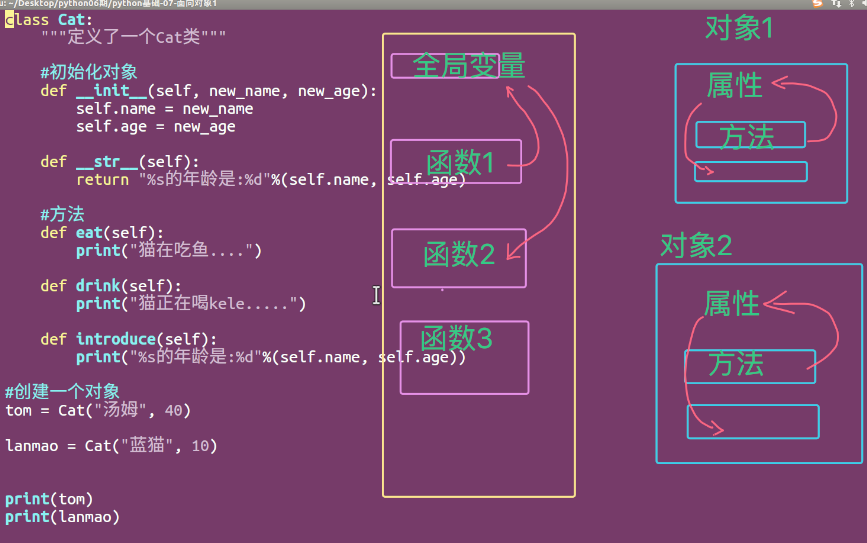
5.全局变量,函数 和属性,方法的区别
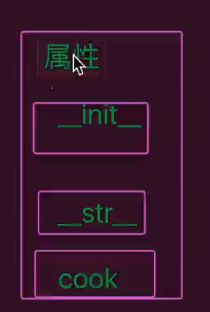
6.小应用:烤地瓜
1)版本1:
class SweetPotato:

    def __init__(self):

        self.cookedString = '生的'

        self.cookedLevel = 0

    def __str__(self):

        return "地瓜状态:%s(%d)"%(self.cookedString,self.cookedLevel)

    def cook(self,cooked_time):

        self.cookedLevel += cooked_time

        if self.cookedLevel>=0 and self.cookedLevel<3:

            self.cookedString = "生的"

        elif self.cookedLevel>=3 and self.cookedLevel<5:

            self.cookedString = "半生不熟"

        elif self.cookedLevel>=5 and self.cookedLevel<8:

            self.cookedString = "熟了"

        elif self.cookedLevel>=8:

            self.cookedString = "烤糊了"

#创建一个对象

di_gua = SweetPotato()

print(di_gua)

#开始烤地瓜

di_gua.cook(1)

print(di_gua)

di_gua.cook(1)

print(di_gua)

di_gua.cook(1)

print(di_gua)

di_gua.cook(1)

print(di_gua)

di_gua.cook(1)

print(di_gua)

di_gua.cook(1)

print(di_gua)

di_gua.cook(1)

print(di_gua)
地瓜状态:生的(0)

地瓜状态:生的(1)

地瓜状态:生的(2)

地瓜状态:半生不熟(3)

地瓜状态:半生不熟(4)

地瓜状态:熟了(5)

地瓜状态:熟了(6)

地瓜状态:熟了(7)
2)版本2:添加作料
class SweetPotato:

    def __init__(self):

        self.cookedString = '生的'

        self.cookedLevel = 0

        self.add_list = []

    def __str__(self):

        return "地瓜状态:%s(%d)添加了%s"%(self.cookedString,self.cookedLevel,str(self.add_list))

    def cook(self,cooked_time):

        self.cookedLevel += cooked_time

        if self.cookedLevel>=0 and self.cookedLevel<3:

            self.cookedString = "生的"

        elif self.cookedLevel>=3 and self.cookedLevel<5:

            self.cookedString = "半生不熟"

        elif self.cookedLevel>=5 and self.cookedLevel<8:

            self.cookedString = "熟了"

        elif self.cookedLevel>=8:

            self.cookedString = "烤糊了"

    def add(self,add_something):

        self.add_list.append(add_something)

#创建一个对象

di_gua = SweetPotato()

print(di_gua)

#开始烤地瓜

di_gua.cook(1)

print(di_gua)

di_gua.cook(1)

print(di_gua)

di_gua.cook(1)

di_gua.add("葱")

print(di_gua)

di_gua.cook(1)

di_gua.add("蒜")

print(di_gua)

di_gua.cook(1)

print(di_gua)

di_gua.cook(1)

di_gua.add("酱")

print(di_gua)

di_gua.cook(1)

print(di_gua)
地瓜状态:生的(0)添加了[]

地瓜状态:生的(1)添加了[]

地瓜状态:生的(2)添加了[]

地瓜状态:半生不熟(3)添加了['葱']

地瓜状态:半生不熟(4)添加了['葱', '蒜']

地瓜状态:熟了(5)添加了['葱', '蒜']

地瓜状态:熟了(6)添加了['葱', '蒜', '酱']

地瓜状态:熟了(7)添加了['葱', '蒜', '酱']
3)版本3:优化版
class SweetPotato:

    '''定义了一个地瓜类'''

    def __init__(self):

        self.cookedString = '生的'

        self.cookedLevel = 0

        self.add_list = [] #为了能够存储多个数据,往往在开发中让一个属性是列表list

    def __str__(self):

        return "地瓜状态:%s(%d)添加了%s"%(self.cookedString,self.cookedLevel,str(self.add_list))

    def cook(self,cooked_time):

        #因为这个方法被调用了多次,为了能够再一次调用这个方法的时候 能够获取到上一次调用这个方法的cooked_time

        #所以需要在此,把cooked_time保存到这个对象的属性中,因为属性不会随着方法的调用而结束(一个方法被调用的时候是可以用局部变量来保存数据的,但是当这个方法定义结束之后这个方法中的所有数据就没有了)

        self.cookedLevel += cooked_time

        if self.cookedLevel>=0 and self.cookedLevel<3:

            self.cookedString = "生的"

        elif self.cookedLevel>=3 and self.cookedLevel<5:

            self.cookedString = "半生不熟"

        elif self.cookedLevel>=5 and self.cookedLevel<8:

            self.cookedString = "熟了"

        elif self.cookedLevel>=8:

            self.cookedString = "烤糊了"

    def add(self,add_something):

        self.add_list.append(add_something)

#创建一个对象

di_gua = SweetPotato()

print(di_gua)

#开始烤地瓜

di_gua.cook(1)

print(di_gua)

di_gua.cook(1)

print(di_gua)

di_gua.cook(1)

di_gua.add("葱")

print(di_gua)

di_gua.cook(1)

di_gua.add("蒜")

print(di_gua)

di_gua.cook(1)

print(di_gua)

di_gua.cook(1)

di_gua.add("酱")

print(di_gua)

di_gua.cook(1)

print(di_gua)
7.小应用:存放家居
1)版本1:
 #1.定义房子类

 class Home:

     def __init__(self,new_area,new_info,new_addr):

         self.area = new_area

         self.info = new_info

         self.addr = new_addr

     def __str__(self):

         return "房子面积是:%d,户型是:%s,地址是:%s"%(self.area,self.info,self.addr)

 #2,创建对象房子

 fangzi = Home(200,"三室一厅","北京朝阳区")

 print(fangzi)
2)版本2:创建床类
#1.定义房子类

class Home:

    def __init__(self,new_area,new_info,new_addr):

        self.area = new_area

        self.info = new_info

        self.addr = new_addr

    def __str__(self):

        return "房子面积是:%d,户型是:%s,地址是:%s"%(self.area,self.info,self.addr)

class Bed:

    '''定义床类'''

    def __init__(self,new_name,new_area):

        self.name = new_name

        self.area = new_area

    def __str__(self):

        return "%s占用大面积是%d"%(self.name,self.area)

#2,创建对象房子

fangzi = Home(200,"三室一厅","北京朝阳区")

print(fangzi)

#创建床对象

bed1 = Bed("双人床",5)

print(bed1)
3)版本3:添加床到房子里面
#1.定义房子类

class Home:

    def __init__(self,new_area,new_info,new_addr):

        self.area = new_area

        self.info = new_info

        self.addr = new_addr

    def __str__(self):

        message  = "房子面积是:%d,户型是:%s,地址是:%s"%(self.area,self.info,self.addr)

        message += "剩余面积是%s"%self.area

        return message

    def add(self,item):

        self.area -= item.area

class Bed:

    '''定义床类'''

    def __init__(self,new_name,new_area):

        self.name = new_name

        self.area = new_area

    def __str__(self):

        return "%s占用大面积是%d"%(self.name,self.area)

#2,创建对象房子

fangzi = Home(200,"三室一厅","北京朝阳区")

print(fangzi)

#创建床对象

bed1 = Bed("双人床",5)

print(bed1)

fangzi.add(bed1)

print(fangzi)
房子面积是:200,户型是:三室一厅,地址是:北京朝阳区剩余面积是200

双人床占用大面积是5

房子面积是:195,户型是:三室一厅,地址是:北京朝阳区剩余面积是195
4)版本4:打印房子的物品
#1.定义房子类

class Home:

    def __init__(self,new_area,new_info,new_addr):

        self.area = new_area

        self.info = new_info

        self.addr = new_addr

        self.left_area = new_area

        self.contain_items = []

    def __str__(self):

        message  = "房子面积是:%d,剩余面积%s,户型是:%s,地址是:%s,物品有%s"%(self.area,self.left_area,self.info,self.addr,str(self.contain_items))

        return message

    def add(self,item):

        self.left_area  -= item.area

        self.contain_items.append(item.name)

class Bed:

    '''定义床类'''

    def __init__(self,new_name,new_area):

        self.name = new_name

        self.area = new_area

    def __str__(self):

        return "%s占用大面积是%d"%(self.name,self.area)

#2,创建对象房子

fangzi = Home(200,"三室一厅","北京朝阳区")

print(fangzi)

#创建床对象

bed1 = Bed("双人床",5)

print(fangzi)

fangzi.add(bed1)

print(fangzi)
房子面积是:200,剩余面积200,户型是:三室一厅,地址是:北京朝阳区,物品有[]

房子面积是:200,剩余面积200,户型是:三室一厅,地址是:北京朝阳区,物品有[]

房子面积是:200,剩余面积195,户型是:三室一厅,地址是:北京朝阳区,物品有['双人床']

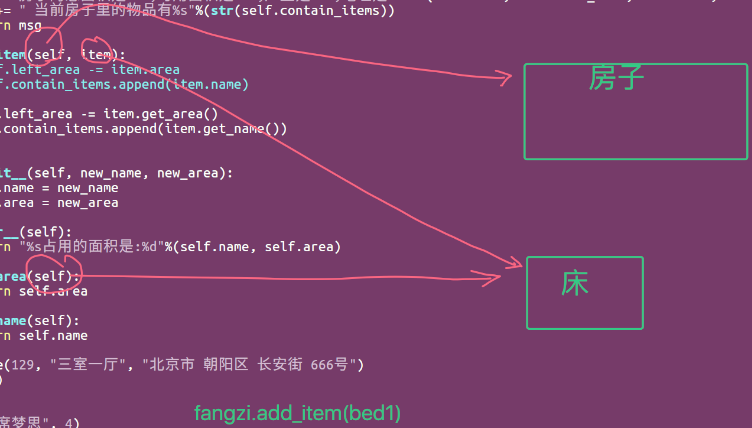
5)版本5:推荐调用bed里面方法
房子面积是:200,剩余面积200,户型是:三室一厅,地址是:北京朝阳区,物品有[]

房子面积是:200,剩余面积200,户型是:三室一厅,地址是:北京朝阳区,物品有[]

房子面积是:200,剩余面积200,户型是:三室一厅,地址是:北京朝阳区,物品有[]

房子面积是:200,剩余面积195,户型是:三室一厅,地址是:北京朝阳区,物品有['双人床']

房子面积是:200,剩余面积186,户型是:三室一厅,地址是:北京朝阳区,物品有['双人床', '架子床']
#1.定义房子类

class Home:

    def __init__(self,new_area,new_info,new_addr):

        self.area = new_area

        self.info = new_info

        self.addr = new_addr

        self.left_area = new_area

        self.contain_items = []

    def __str__(self):

        message  = "房子面积是:%d,剩余面积%s,户型是:%s,地址是:%s,物品有%s"%(self.area,self.left_area,self.info,self.addr,str(self.contain_items))

        return message

    def add(self,item):

       # self.left_area  -= item.area

        #self.contain_items.append(item.name)

        self.left_area -= item.get_area()                  #推荐用bed的方法

        self.contain_items.append(item.get_name())

class Bed:

    '''定义床类'''

    def __init__(self,new_name,new_area):

        self.name = new_name

        self.area = new_area

    def __str__(self):

        return "%s占用大面积是%d"%(self.name,self.area)

    def get_name(self):

        return self.name

    def get_area(self):

        return self.area

#2,创建对象房子

fangzi = Home(200,"三室一厅","北京朝阳区")

print(fangzi)

#创建床对象

bed1 = Bed("双人床",5)

print(fangzi)

bed2 = Bed("架子床",9)

print(fangzi)

fangzi.add(bed1)

print(fangzi)

fangzi.add(bed2)

print(fangzi)
day2 self __init__ __str__的更多相关文章
- python中魔法方法__init__,__str__,__del__的详细使用方法
1. python中的魔法方法, 类似__init__, __str__等等,这些内置好的特定的方法进行特定的操作时会自动被调用 2. __init__的使用方法 class 类名(object): ...
- python__基础 : 类的__init__,__str__,__del__方法
__init__:当实例化一个类的时候,首相会执行__new__方法创建一个对象,接下来会执行__init__方法对对象的一些属性进行初始化. 所以如果对象有属性,一般会直接写在__init__方法里 ...
- miniproject black jack--Fail
第一部分 下载这个小项目的程序模板并回顾card类的定义.这个类已经执行了所以你的任务是自己熟悉下代码.开始,通过粘贴card类定义到程序模板中并验证我们的代码如预期那样工作. 实现“__init__ ...
- Understanding Python metaclasses
转载:https://blog.ionelmc.ro/2015/02/09/understanding-python-metaclasses/ None of the existing article ...
- 理解Python元类(转)
add by zhj:先收藏了,有时间看,图倒是不少,可以配合stackover flow上那篇文章一起看 原文:http://blog.ionelmc.ro/2015/02/09/understan ...
- Python元类实践--自己定义一个和collections中一样的namedtuple
大家可能很熟悉在collections模块中有一个很好用的扩展数据类型-namedtuple. 如果你还不知道这个类型,那么请翻看标准手册. 我利用元类轻松定义一个namedtuple. 先把代码贴上 ...
- Python面试题(练习二)
1.用Python实现一个二分查找的函数. data = [1, 3, 6, 7, 9, 12, 14, 16, 17, 18, 20, 21, 22, 23, 30, 32, 33, 35] def ...
- python部分 + 数据库 + 网络编程
PS:附上我的博客地址,答案中略的部分我的博客都有,直接原标题搜索即可.https://www.cnblogs.com/Roc-Atlantis/ 第一部分 Python基础篇(80题) 为什么学习P ...
- Python3 面向对象进阶2
目录 Classmethod Staticmethod Isinstance Issubclass 反射 概念 hasattr getattr setattr delattr 魔法方法 概念 __ne ...
随机推荐
- BZOJ 1002 轮状病毒 矩阵树定理
题目链接: https://www.lydsy.com/JudgeOnline/problem.php?id=1002 题目大意: 给定n(N<=100),编程计算有多少个不同的n轮状病毒 思路 ...
- 关于numpy mean函数的axis参数
import numpy as np X = np.array([[1, 2], [4, 5], [7, 8]]) print np.mean(X, axis=0, keepdims=True) pr ...
- 验证码帮助类【CaptchaHelper 】
GDI+:Graphics Device Interface Plus也就是图形设备接口,提供了各种丰富的图形图像处理功能;在C#.NET中,使用GDI+处理二维(2D)的图形和图像,使用Direct ...
- 闲话缓存:ZFS 读缓存深入研究-ARC(一)
在Solaris ZFS 中实现的ARC(Adjustable Replacement Cache)读缓存淘汰算法真是很有意义的一块软件代码.它是基于IBM的Megiddo和Modha提出的ARC(A ...
- 解决apache启动错误:Could not reliably determine the server's fully qualified domain name
启动apache遇到错误:httpd: Could not reliably determine the server's fully qualified domain name [root@serv ...
- 用JavaScript编写气泡
<!DOCTYPE html> <html lang="en"> <head> <meta charset="UTF-8&quo ...
- 原生js创建模态框
1.效果图如下: 2.代码如下: <!DOCTYPE html> <html> <head> <meta charset="UTF-8"& ...
- AFNetworking 2.x 的SSL身份认证
一般来讲如果app用了web service , 我们需要防止数据嗅探来保证数据安全.通常的做法是用ssl来连接以防止数据抓包和嗅探 其实这么做的话还是不够的.我们还需要防止中间人攻击(不明白的自己去 ...
- PHP实现验证码功能
原文链接:http://www.qqdeveloper.com/a/54.html 什么是验证码? 借用百度的解释:验证码这个词最早是在2002年由卡内基梅隆大学的路易斯·冯·安.Manuel Blu ...
- mongo数据集合属性中存在点号(.)
基本知识点: 1.似乎mongo3.6之前不允许插入带点(.)或美元符号($)的键,但是当我使用mongoimport工具导入包含点的JSON文件时,它工作正常. 2.在使用spring-data-m ...