
[DFNews] 入侵汽车控制刹车和油门?——速度与激情6 的节奏?
原文跳转:
http://arstechnica.com/security/2013/07/disabling-a-cars-brakes-and-speed-by-hacking-its-computers-a-new-how-to/
Tampering with a car’s brakes and speed by hacking its computers: A new how-to
The "Internet of automobiles" may hold promise, but it comes with risks, too.
by Dan Goodin - July 29 2013, 10:43pm +0800
Just about everything these days ships with tiny embedded computers that are designed to make users' lives easier. High-definition TVs, for instance, can run Skype and Pandora and connect directly to the Internet, while heating systems have networked interfaces that allow people to crank up the heat on their way home from work. But these newfangled features can often introduce opportunities for malicious hackers. Witness "Smart TVs" from Samsung or a popular brand of software for controlling heating systems in businesses.
Now, security researchers are turning their attention to the computers in cars, which typically contain as many as 50 distinct ECUs—short for electronic control units—that are all networked together. Cars have relied on on-board computers for some three decades, but for most of that time, the circuits mostly managed low-level components. No more. Today, ECUs control or finely tune a wide array of critical functions, including steering, acceleration, braking, and dashboard displays. More importantly, as university researchers documented in papers published in 2010 and 2011, on-board components such as CD players, Bluetooth for hands-free calls, and "telematics" units for OnStar and similar road-side services make it possible for an attacker to remotely execute malicious code.
The research is still in its infancy, but its implications are unsettling. Trick a driver into loading the wrong CD or connecting the Bluetooth to the wrong handset, and it's theoretically possible to install malicious code on one of the ECUs. Since the ECUs communicate with one another using little or no authentication, there's no telling how far the hack could extend.
Later this week at the Defcon hacker conference, researchers plan to demonstrate an arsenal of attacks that can be performed on two popular automobiles: a Toyota Prius and a Ford Escape, both 2010 models. Starting with the premise that it's possible to infect one or more of the ECUs remotely and cause them to send instructions to other nodes, Charlie Miller and Chris Valasek have developed a series of attacks that can carry out a range of scary scenarios. The researchers work for Twitter and security firm IOActive respectively.
Among the attacks: suddenly engaging the brakes of the Prius, yanking its steering wheel, or causing it to accelerate. On the Escape, they can disable the brakes when the SUV is driving slowly. With an $80,000 grant from the DARPA Cyber Fast Track program, they have documented the cars' inner workings and included all the code needed to make the attacks work in the hopes of coming up with new ways to make vehicles that are more resistant to hacking.
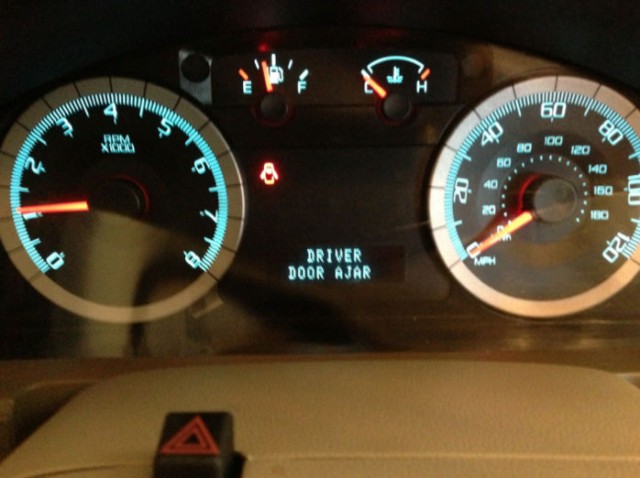
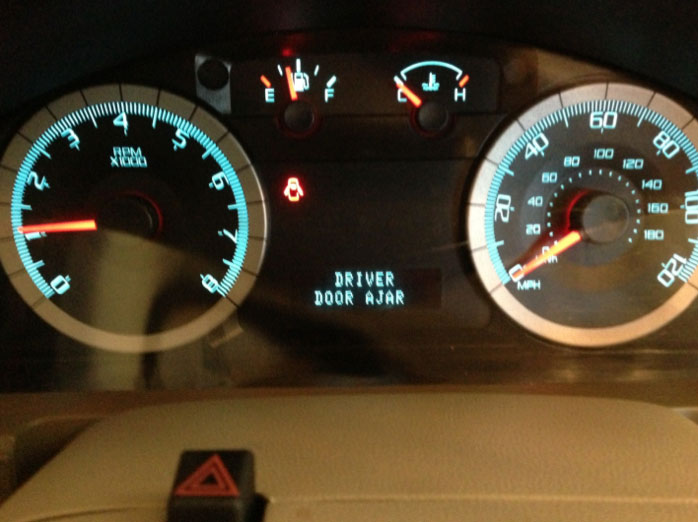
"Currently, there is no easy way to write custom software to monitor and interact with the ECUs in modern automobiles," a white paper documenting their work states. "The fact that a risk of attack exists but there is not a way for researchers to monitor or interact with the system is distressing. This paper is intended to provide a framework that will allow the construction of such tools for automotive systems and to demonstrate the use on two modern automobiles."
The hacking duo reverse-engineered the vehicles' CAN, or controller area networks, to isolate the code one ECU sends to another when requesting it take some sort of action, such as turning the steering wheel or disengaging the brakes. They discovered that the network has no mechanism for positively identifying the ECU sending a request or using an authentication passcode to ensure a message sent to a controller is coming from a trusted source. These omissions make it easy for them to monitor all messages sent over the network and to inject phony messages that masquerade as official requests from a trusted ECU.
"By examining the CAN on which the ECUs communicate, it is possible to send proprietary messages to the ECUs in order to cause them to take some action, or even completely reprogram the ECU," the researchers wrote in their report. "ECUs are essentially embedded devices, networked together on the CAN bus. Each is powered and has a number of sensors and actuators attached to them."
Using a computer connected to the cars' On-Board Diagnostic System, Miller and Valasek were able to cause the vehicles to do some scary things. For instance, by tampering with the so-called Intelligent Park Assist System of the Prius, which helps drivers parallel park, they were able to jerk the wheel of the vehicle, even when it's moving at high speeds. The feat takes only seconds to perform, but it involved a lot of work to initially develop, since it required requests made in precisely the right sequence from multiple ECUs. By replaying the request in the same order, they were able to control the steering even when the Prius wasn't in reverse, as is usually required when invoking the park assist system. They developed similar techniques to control acceleration, braking, and other critical functions, as well as ways to change readings displayed by speedometers, odometers, and other dashboard features.
For a video demonstration of the hacks, see this segment from Monday's The Today Show. In it, both Toyota and the Ford Motor company emphasize that the manipulations Miller and Valasek carry out require physical access to the car's computer systems. That's a fair point, but it's also worth remembering the previous research showing that there are often more stealthy ways to commandeer a vehicle's on-board computers. The aim behind this latest project wasn't to develop new ways to take control but to show the range of things that are possible once that happens.
When combined with the previous research into hacking cars' Bluetooth and other interfaces, the proof-of-concept exploits should serve as a wake-up call not only to automobile manufacturers, but to anyone designing other so-called Internet-of-things devices. If Apple, Microsoft, and the rest of the computing behemoths have to invest heavily to ensure their products are hack-resistant, so too will those embedding tiny computers into their once-mundane wares. A car, TV, or even your washing machine that interacts with Internet-connected services is only nifty until someone gets owned.
[DFNews] 入侵汽车控制刹车和油门?——速度与激情6 的节奏?的更多相关文章
- unity3d笔记:控制特效的播放速度
一般在游戏中,主角或者怪物会受到减速效果,或者攻击速度减慢等类似的状态.本身动作减速的同时,衔接在角色上的特效也需要改变相应的播放速度.一般特效有三个游戏组件: 关键点就是改变Ani ...
- Java程序如何限速(控制下载和上传速度)
转自 http://www.blogjava.net/canvas/articles/bandwidthlimiter.html 这里简单的讨论一下java设计网络程序中如何控制上传和下载速度,我们常 ...
- hdu 1598 (并查集加贪心) 速度与激情
题目传送门:http://acm.hdu.edu.cn/showproblem.php?pid=1598 一道带有贪心思想的并查集 所以说像二分,贪心这类基础的要掌握的很扎实才行. 用结构体数组储存公 ...
- JAVA 对象引用,以及对象赋值
注:引自http://zwmf.iteye.com/blog/1738574 关键字: java对象 引用 Java对象及其引用 关于对象与引用之间的一些基本概念. 初学Java时,在很长一段时间里, ...
- JAVA 对象引用,以及对象赋值(转)
原文链接:http://zwmf.iteye.com/blog/1738574 关键字: java对象 引用 Java对象及其引用 关于对象与引用之间的一些基本概念. 初学Java时,在很长一段时间里 ...
- [转载]转载一篇好文章作为Java与面向对象之随感(3)
关于对象与引用之间的一些基本概念. 初学Java时,在很长一段时间里,总觉得基本概念很模糊.后来才知道,在许多Java书中,把对象和对象的引用混为一谈.可是,如果我分不清对象与对象引用, 那实在没法很 ...
- Java对象引用和对象赋值
关于对象与引用之间的一些基本概念. 初学Java时,在很长一段时间里,总觉得基本概念很模糊.后来才知道,在许多Java书中,把对象和对象的引用混为一谈.可是,如果我分不清对象与对象引用,那实在没法很好 ...
- JAVA学习笔记之JAVA 对象引用以及赋值
关于对象与引用之间的一些基本概念. 初学Java时,在很长一段时间里,总觉得基本概念很模糊.后来才知道,在许多Java书中,把对象和对象的引用混为一谈.可是,如果我分不清对象与对象引用, 那实在没 ...
- 转发:Java对象及其引用
原文: http://zwmf.iteye.com/blog/1738574 Java对象及其引用 关于对象与引用之间的一些基本概念. 初学Java时,在很长一段时间里,总觉得基本概念很模糊.后来才知 ...
随机推荐
- NSURLCache 和 NSCache 的区别
NSURLCache 和 NSCache 的区别 NSURLCache提供的是URL Request缓存,可以在Memory和Disk上:NSCache提供了HTTP Request外的东西的缓存方式 ...
- enmo_day_03
安装 装载点 : /u01 (第一个挂载点 LUN1) /u01 (第二个挂载点LUN2) /disk01 目录 : /u01/app/oracle /u01/app/app 文件 : 控制文件 :c ...
- php一个简单的计算器
<?php if(isset($_POST['sub'])) { $result = ''; switch($_POST['ysf']) { case '+': $result = $_POST ...
- 【转】Nginx 安装配置
Nginx("engine x")是一款是由俄罗斯的程序设计师Igor Sysoev所开发高性能的 Web和 反向代理 服务器,也是一个 IMAP/POP3/SMTP 代理服务器. ...
- <s:textfield>标签
中的value=“”还是挺有用的,比如说更新之前,根据需要更新的用户(地址.商品等等等等)的id,在updateInput方法中,先做一些准备,根据这个id去数据库取属性出来,放到ActionCont ...
- 《Java中的单例模式--两种》
//单例模式:饿汉式和懒汉式 //单例模式 /* 设计模式:解决某一类问题行之有效的解决办法(思想). 单例(Singleton):设计模式: 学习设计模式必须先弄清楚它是解决什么问题的. 单例模式是 ...
- jQuery固定浮动侧边栏(jQuery fixed Sidebar)
这个功能现在应用的非常普遍,如果页面比较高,当滚动条拖到页面的下面的时候,侧边栏会出现一个固定跟随浏览器的DIV框,现思路是这样的:首先获取需要跟随的DIV距离页面顶部的距离,然后判断,当浏览器滚动的 ...
- Java最最基础的语法小结
一定得记住,不然吃大亏了真的 注意不可同时运行,每次只能运行一个类型 package aad;///建根文件的时候选择了这一项就要写,没选择可以不用写 import java.io.*; import ...
- WAMPSERVER多站点配置
1.配置wamp网站地址: 找到wamp的安装目录,如~\wamp\bin\apache\Apache2.4.4\conf\extra\httpd-vhosts.conf 打开httpd-vhosts ...
- vim替换指令备忘
1. 替换当前行中的内容: :s/from/to/ (s即substitude) :s/from/to/ : 将当前行中的第一个from,替换成to.如果当前行含有多个 ...