
067 Flume协作框架
一:介绍
1.概述
-》flume的三大功能
collecting, aggregating, and moving
收集 聚合 移动
数据源:web service RDBMS
采集: shell flume sqoop
清洗:mapreduce,hive
数据的保存:sqoop
监控与调度:hue,oozie
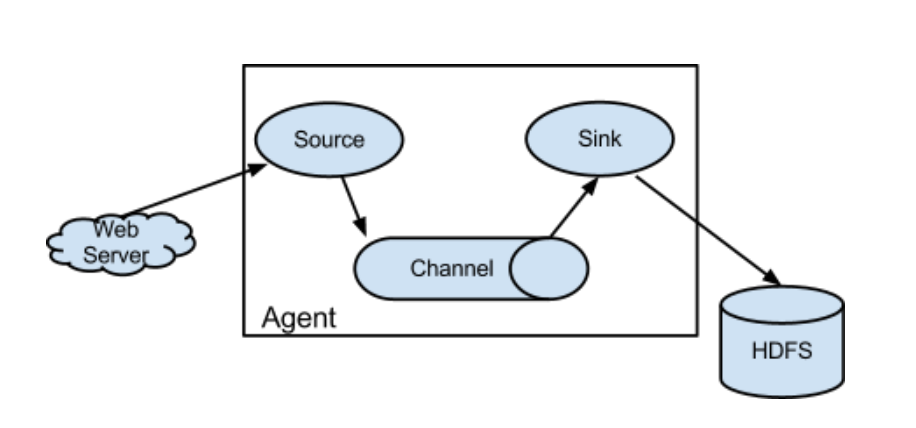
2.框图
3.架构特点
-》on streaming data flows
基于流式的数据
数据流:job-》不断获取数据
任务流:job1->job2->job3&job4
-》for online analytic application.
时时的分析工具
-》Flume仅仅运行在linux环境下
-》非常简单
写一个配置文件,运行这个配置文件
source、channel、sink
-》实时架构
flume+kafka spark/storm impala
-》agent三大部分
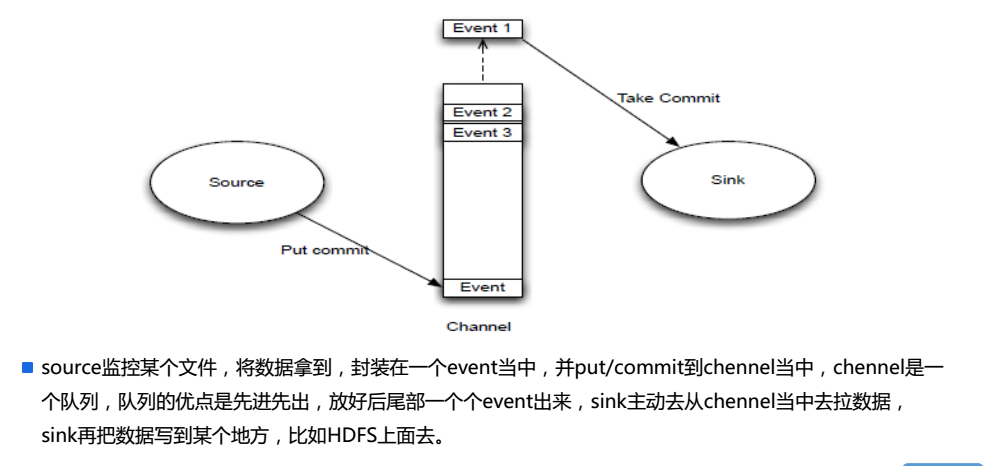
-》source:采集数据,并发送给channel
是产生数据流的地方,同时,source会将产生的数据流传输到channel、
-》channel:管道,用于连接source和sink的
保证数据的完整性,同时,可以减低网络的IO流。
-》sink:写数据,同时,采集channel中的数据
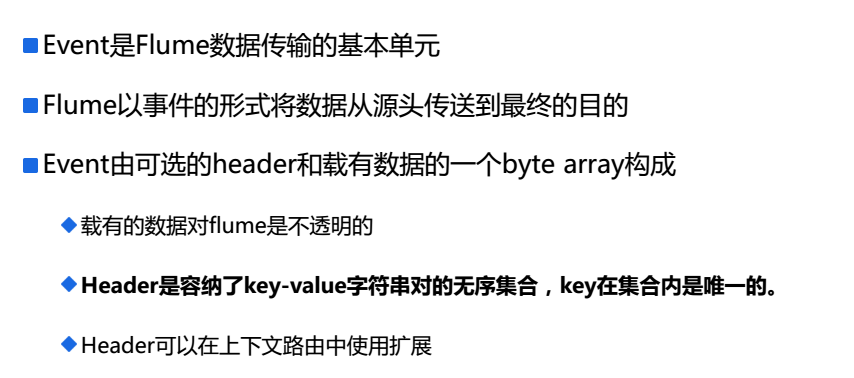
4.Event
5.Source/Channel/Sink
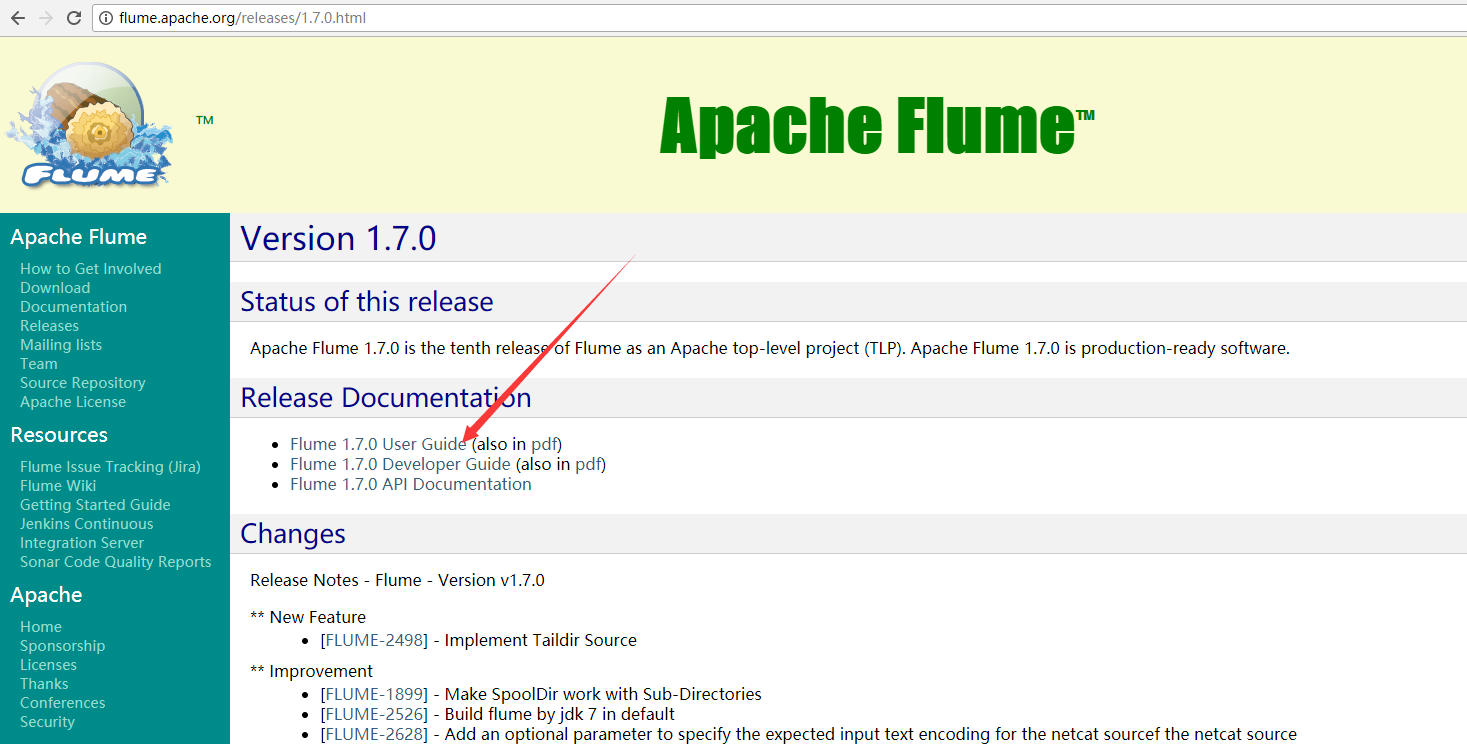
6.官网文档
7.配置source,channel,sink
二:配置
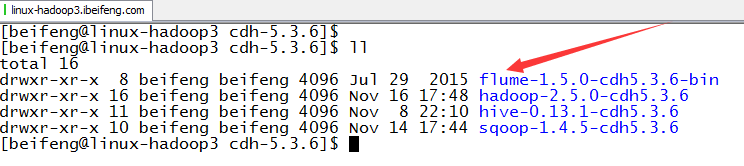
1.下载解压
下载的是Flume版本1.5.0
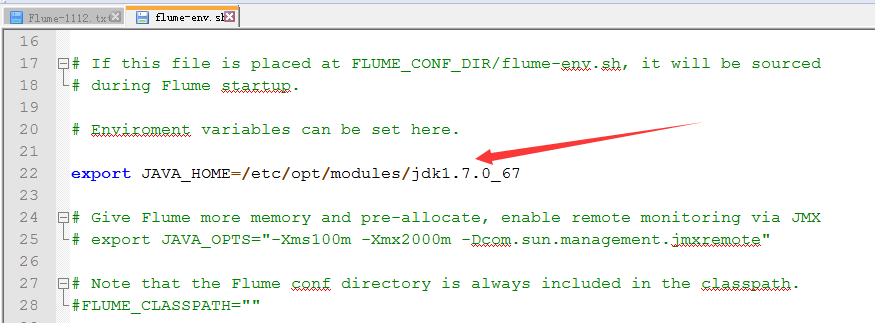
2.启用flume-env.sh

3.修改flume-env.sh
4.增加HADOOP_HOME
因为在env.sh中没有配置,选择的方式是将hdfs的配置放到conf目录下,主要有core,hdfs-site.xml。
全局查找HADOOP_HOME。
将hdfs的配置文件放到conf下。
在agent的配置文件中配置写明HDFS的绝对路径。

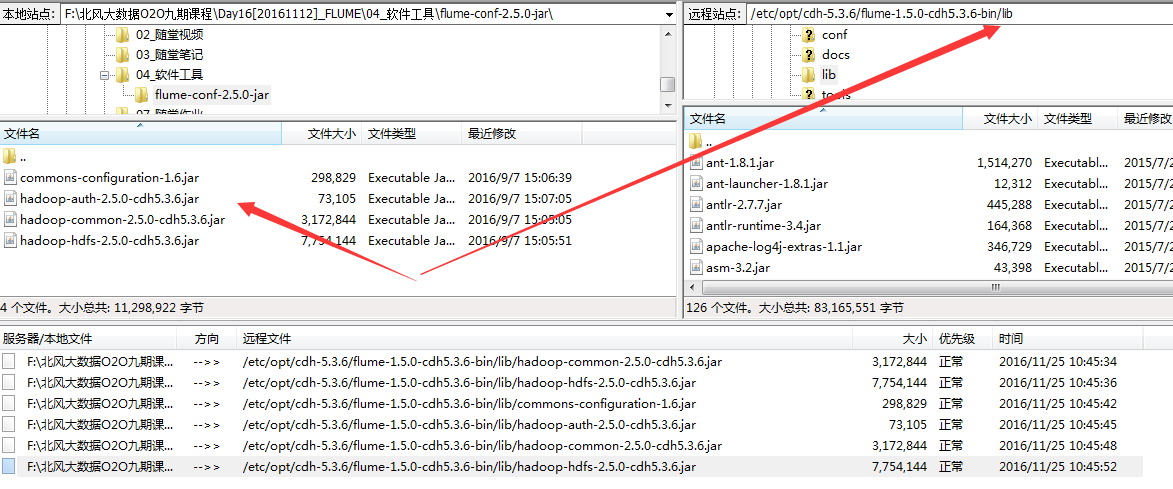
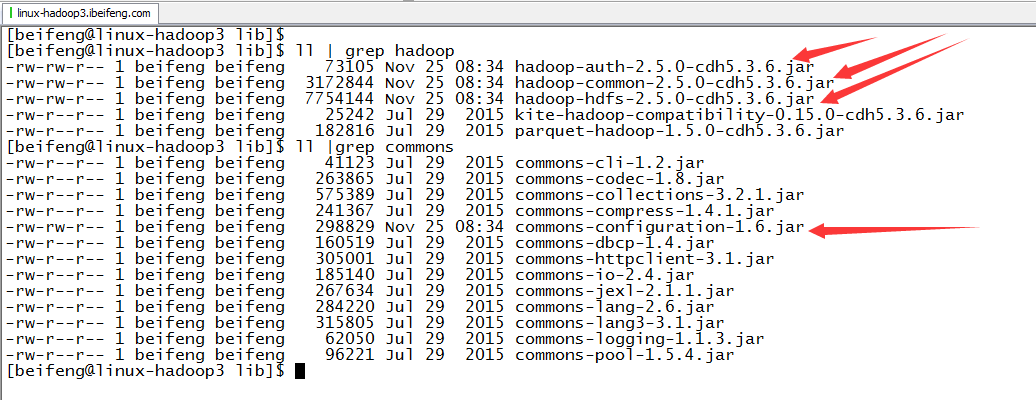
5.放入jar包
6.验证
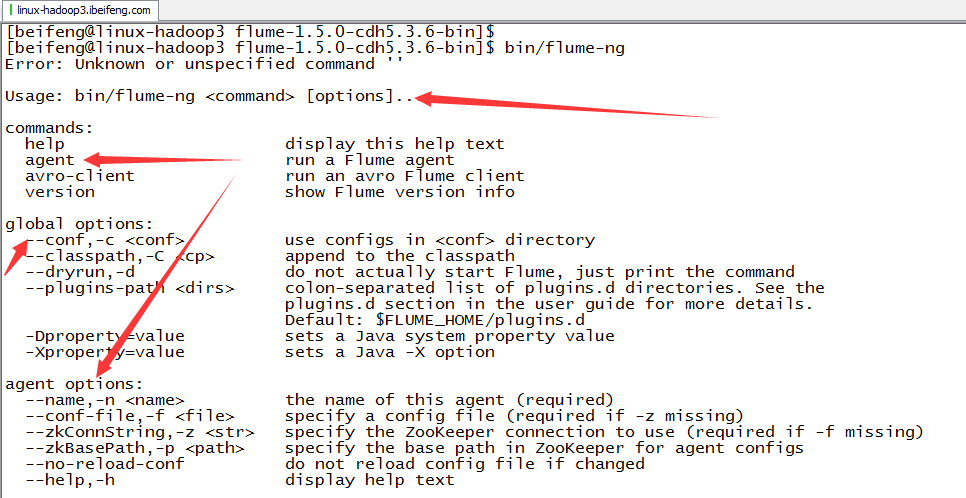
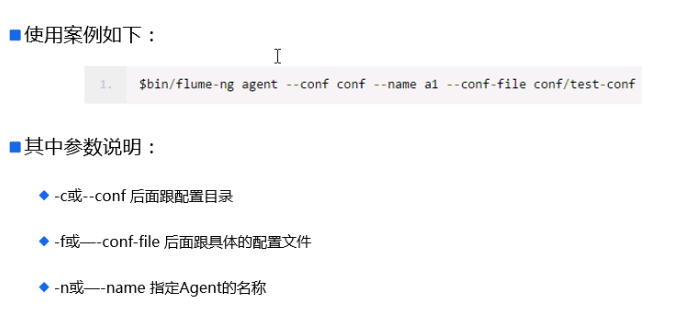
7.用法
三:Flume的使用(hive-memory-logger)
1.案例1
source:hive.log channel:mem sink:logger
2.配置
cp flume-conf.properties.template hive-mem-log.properties
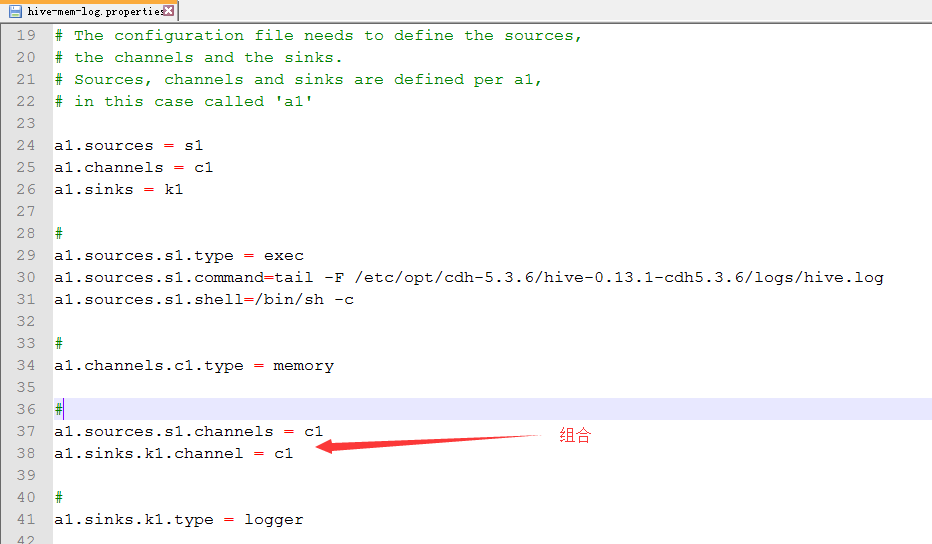
3.配置hive-mem-log.properties
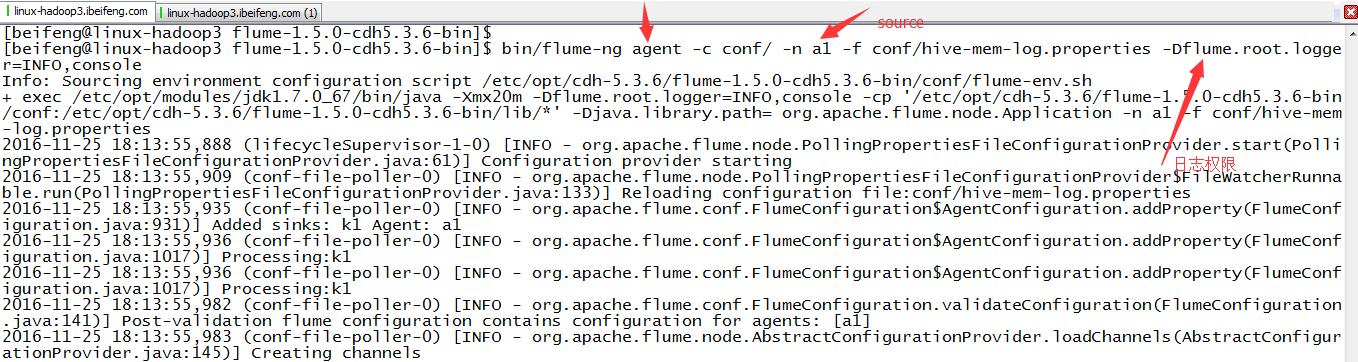
4.运行
那边是日志级别
bin/flume-ng agent -c conf/ -n a1 -f conf/hive-mem-log.properties -Dflume.root.logger=INFO,console
5.注意点
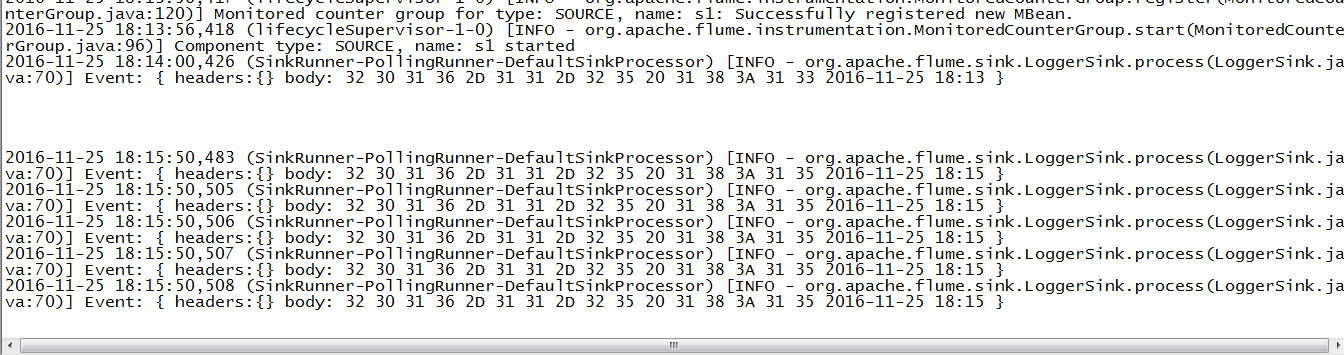
这边的属于实时采集,所以在控制台上的信息随着hive.log的变化在变化
6.源配置文件
 a1.sources = s1

 a1.channels = c1

 a1.sinks = k1

 # For each one of the sources, the type is defined

 a1.sources.s1.type = exec

 a1.sources.s1.command = tail -f /opt/cdh-5.3.6/hive-0.13.1-cdh5.3.6/logs/hive.log

 a1.sources.s1.shell = /bin/sh -c

 # Each channel's type is defined.

 a1.channels.c1.type = memory

 # Each sink's type must be defined

 a1.sinks.k1.type = logger

 # The channel can be defined as follows.

 a1.sources.s1.channels = c1

 #Specify the channel the sink should use

 a1.sinks.k1.channel = c1

 # Other config values specific to each type of channel(sink or source)

 # can be defined as well

 # In this case, it specifies the capacity of the memory channel

 a1.channels.c1.capacity = 100
四:Flume的使用(hive-file-logger)
1.案例二
source:hive.log channel:file sink:logger
2.配置
cp hive-mem-log.properties hive-file-log.properties
3.配置hive-file-log.properties
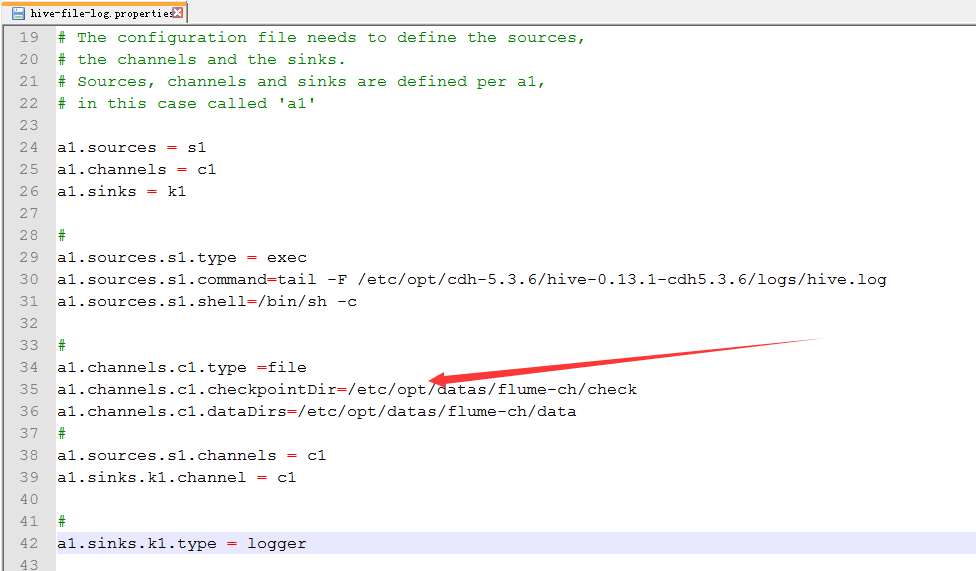
新建file的目录

配置
4.运行
bin/flume-ng agent -c conf/ -n a1 -f conf/hive-file-log.properties -Dflume.root.logger=INFO,console
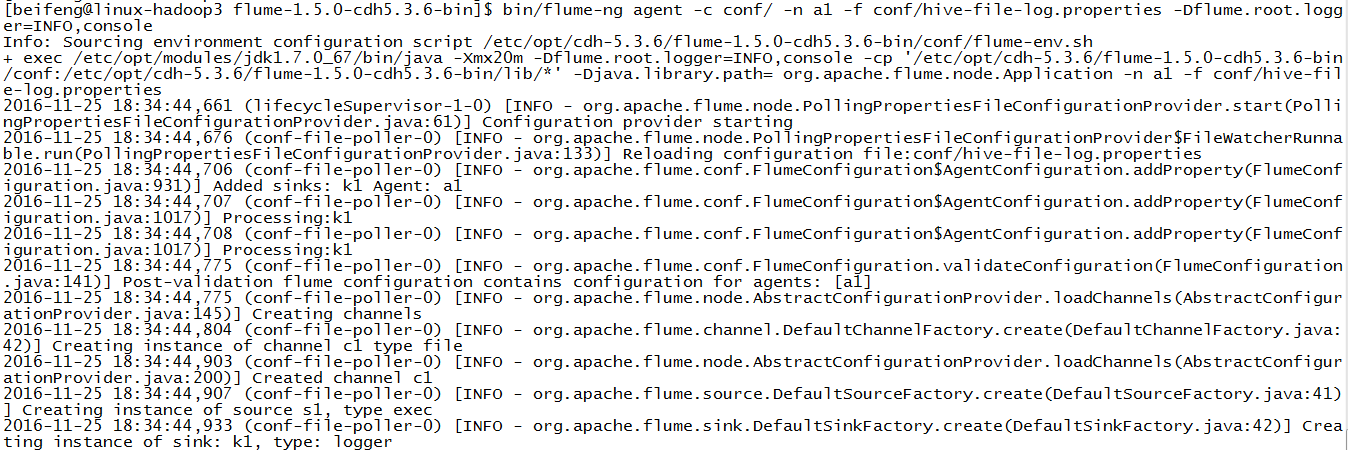
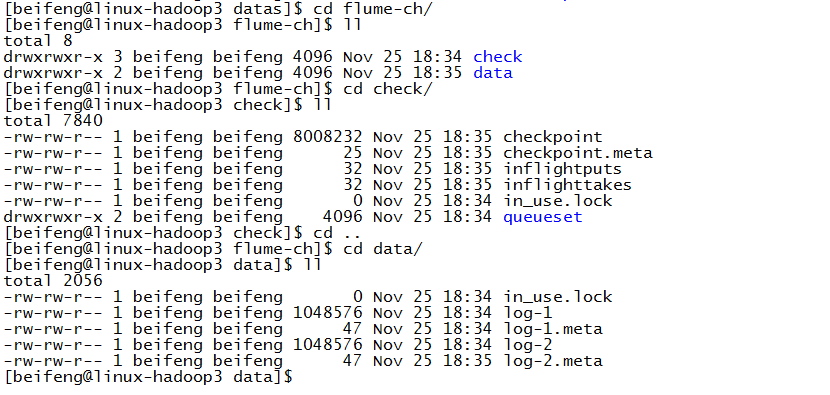
5.结果
6.源配置文件
 a1.sources = s1

 a1.channels = c1

 a1.sinks = k1

 # For each one of the sources, the type is defined

 a1.sources.s1.type = exec

 a1.sources.s1.command = tail -f /opt/cdh-5.3.6/hive-0.13.1-cdh5.3.6/logs/hive.log

 a1.sources.s1.shell = /bin/sh -c

 # Each channel's type is defined.

 a1.channels.c1.type = file

 a1.channels.c1.checkpointDir = /opt/datas/flume-ch/check

 a1.channels.c1.dataDirs = /opt/datas/flume-ch/data

 # Each sink's type must be defined

 a1.sinks.k1.type = logger

 # The channel can be defined as follows.

 a1.sources.s1.channels = c1

 #Specify the channel the sink should use

 a1.sinks.k1.channel = c1

 # Other config values specific to each type of channel(sink or source)

 # can be defined as well

 # In this case, it specifies the capacity of the memory channel
五:Flume的使用(hive-mem-hdfs)
1.案例三
source:hive.log channel:mem sink:hdfs
2.配置
cp hive-mem-log.properties hive-mem-hdfs.properties
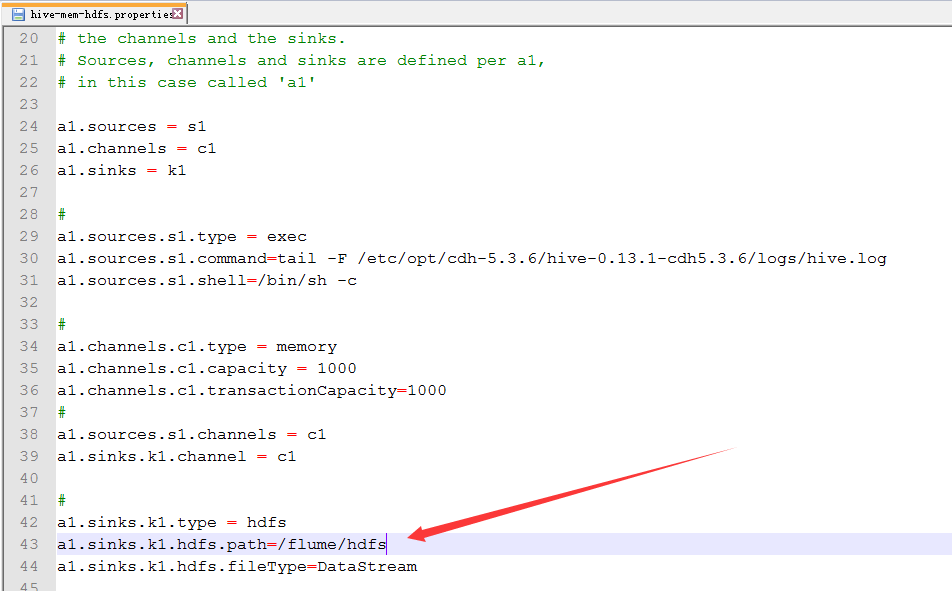
3.配置hive-mem-hdfs.properties
4.运行
bin/flume-ng agent -c conf/ -n a1 -f conf/hive-mem-hdfs.properties -Dflume.root.logger=INFO,console
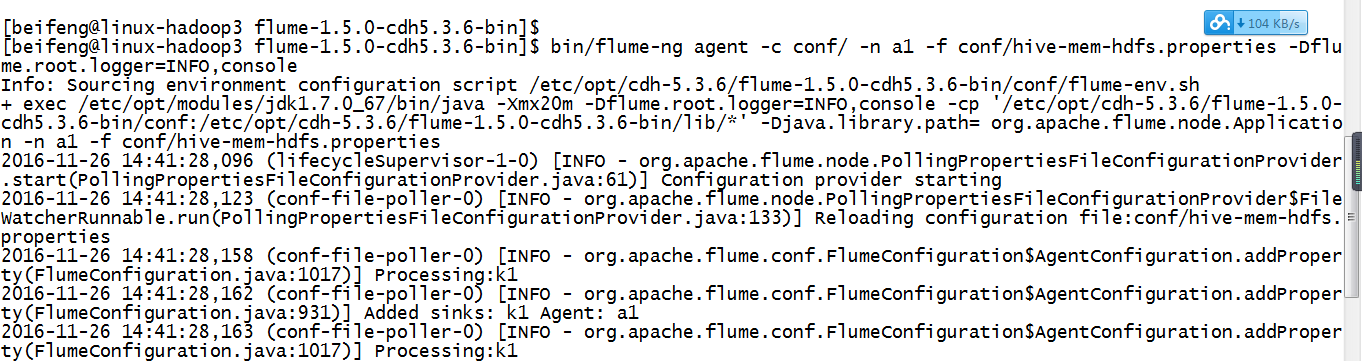
验证了,在配置文件中不需要有这个目录,会自动产生。
5.源文件
 a1.sources = s1

 a1.channels = c1

 a1.sinks = k1

 # For each one of the sources, the type is defined

 a1.sources.s1.type = exec

 a1.sources.s1.command = tail -f /opt/cdh-5.3.6/hive-0.13.1-cdh5.3.6/logs/hive.log

 a1.sources.s1.shell = /bin/sh -c

 # Each channel's type is defined.

 a1.channels.c1.type = memory

 # Each sink's type must be defined

 a1.sinks.k1.type = hdfs

 a1.sinks.k1.hdfs.path = /flume/hdfs

 # The channel can be defined as follows.

 a1.sources.s1.channels = c1

 #Specify the channel the sink should use

 a1.sinks.k1.channel = c1

 # Other config values specific to each type of channel(sink or source)

 # can be defined as well

 # In this case, it specifies the capacity of the memory channel

 a1.channels.c1.capacity = 100
六:企业思考一
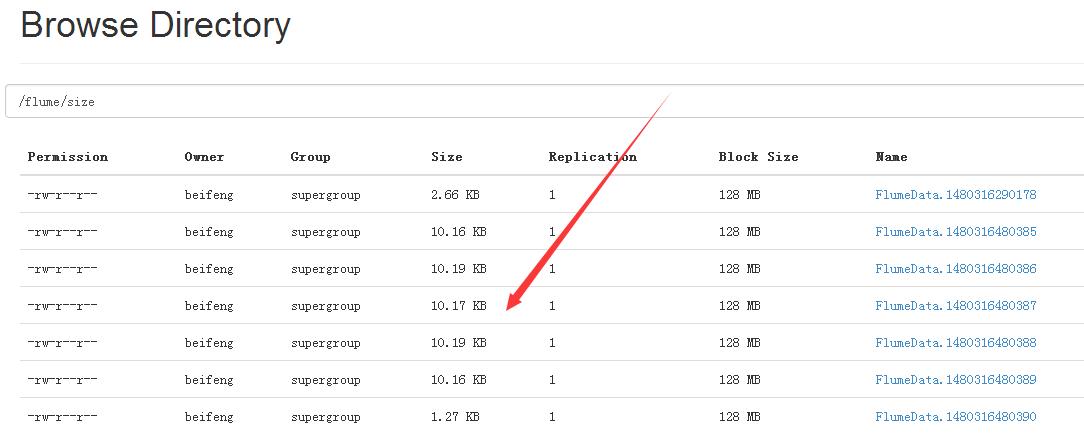
1.案例四(文件的大小与个数)
因为在hdfs上会生成许多小文件,文件的大小的设置。
2.配置
cp hive-mem-hdfs.properties hive-mem-size.properties
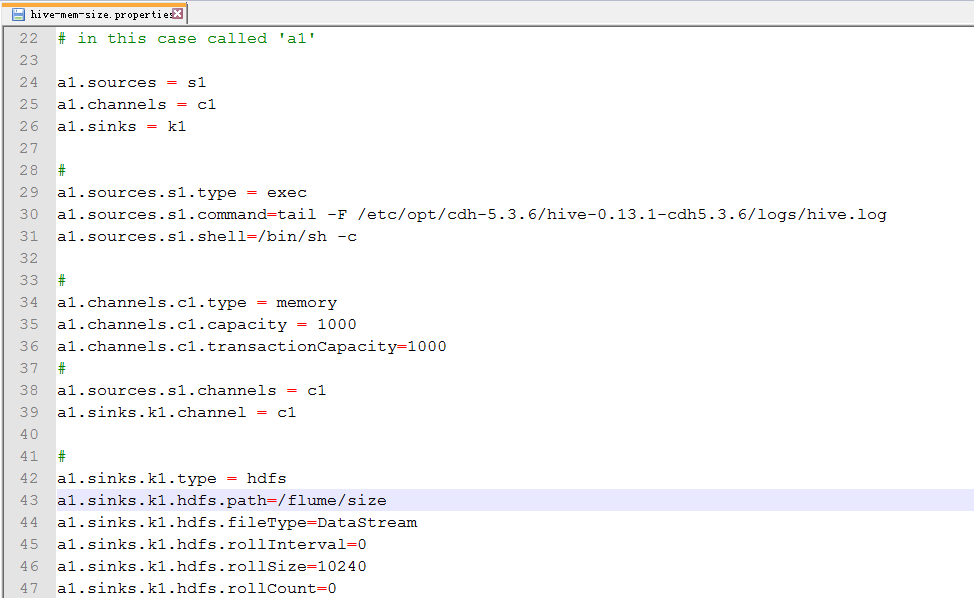
3.配置hive-mem-size.properties
默认的文件大小是1024byte,就是1KB。
=0,表示不启用。
4.运行
bin/flume-ng agent -c conf/ -n a1 -f conf/hive-mem-size.properties -Dflume.root.logger=INFO,console
5.结果
6.源文件
 a1.sources = s1

 a1.channels = c1

 a1.sinks = k1

 # For each one of the sources, the type is defined

 a1.sources.s1.type = exec

 a1.sources.s1.command = tail -f /opt/cdh-5.3.6/hive-0.13.1-cdh5.3.6/logs/hive.log

 a1.sources.s1.shell = /bin/sh -c

 # Each channel's type is defined.

 a1.channels.c1.type = memory

 # Each sink's type must be defined

 a1.sinks.k1.type = hdfs

 a1.sinks.k1.hdfs.path = /flume/size

 a1.sinks.k1.hdfs.rollInterval = 0

 a1.sinks.k1.hdfs.rollSize = 10240

 a1.sinks.k1.hdfs.rollCount = 0

 # The channel can be defined as follows.

 a1.sources.s1.channels = c1

 #Specify the channel the sink should use

 a1.sinks.k1.channel = c1

 # Other config values specific to each type of channel(sink or source)

 # can be defined as well

 # In this case, it specifies the capacity of the memory channel

 a1.channels.c1.capacity = 100
七:企业思考一
1.案例五
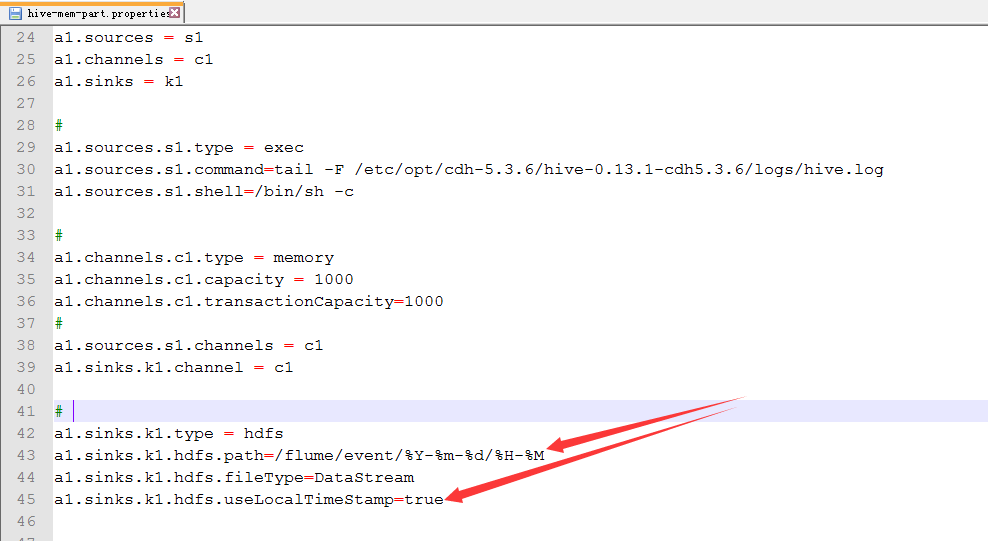
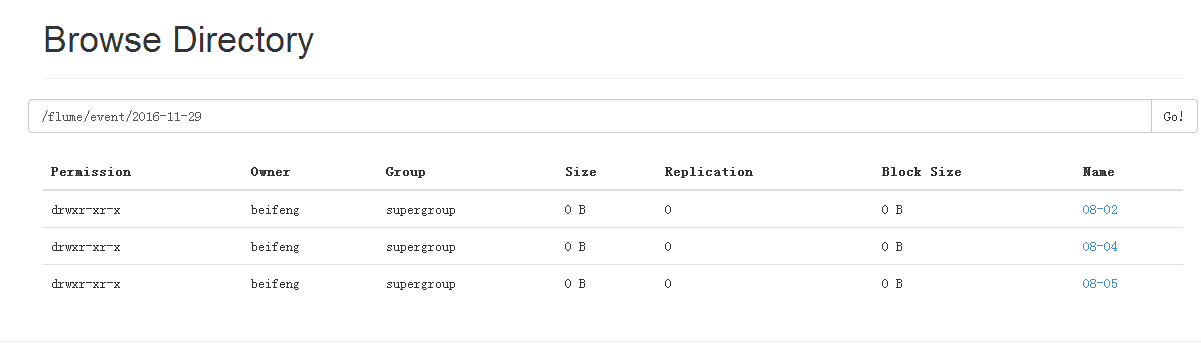
按时间进行分区
2.配置
cp hive-mem-hdfs.properties hive-mem-part.properties
3.配置hive-mem-part.properties
4.运行
bin/flume-ng agent -c conf/ -n a1 -f conf/hive-mem-part.properties -Dflume.root.logger=INFO,console
5.运行结果
6.注意点
Note
For all of the time related escape sequences, a header with the key “timestamp” must exist among the headers of the event (unless hdfs.useLocalTimeStamp is set to true). One way to add this automatically is to use the TimestampInterceptor.
需要添加时间戳。
八:企业思考一
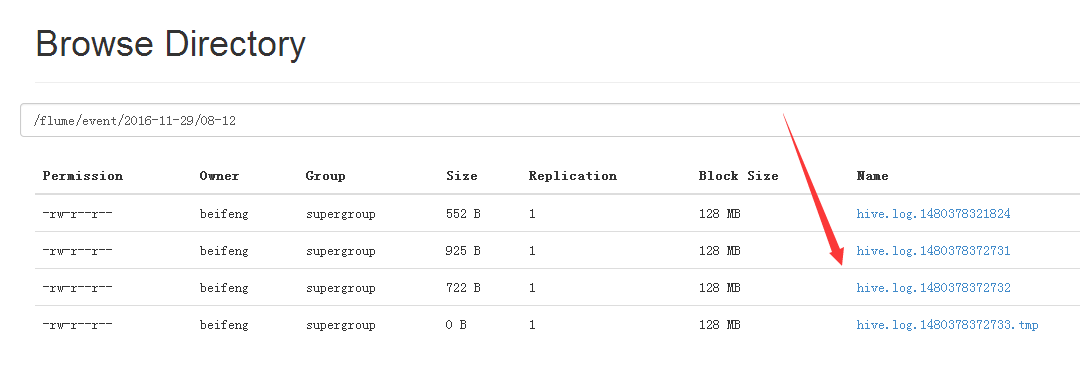
1.案例六
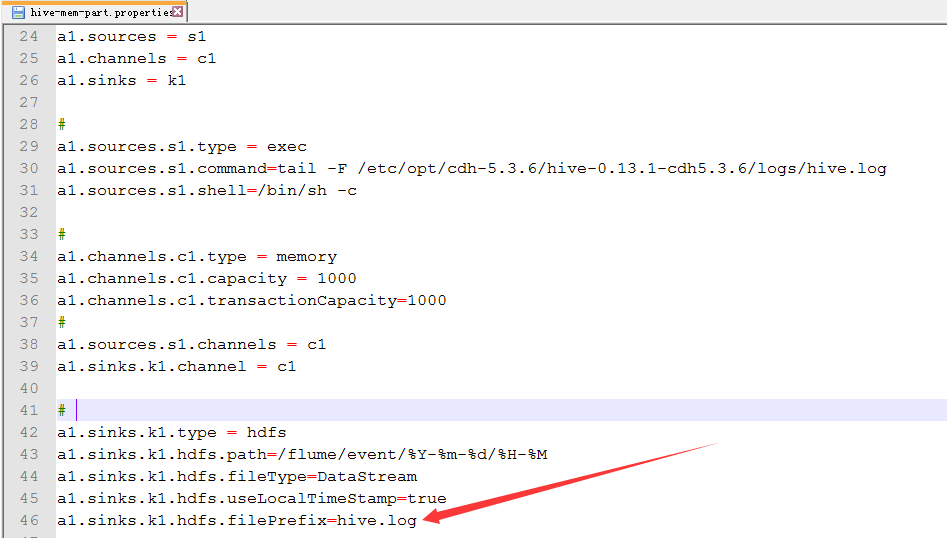
自定义文件开头
2.配置hive-mem-part.properties
默认的文件开头是FlumeData。
3.运行效果
九:数据仓库的架构
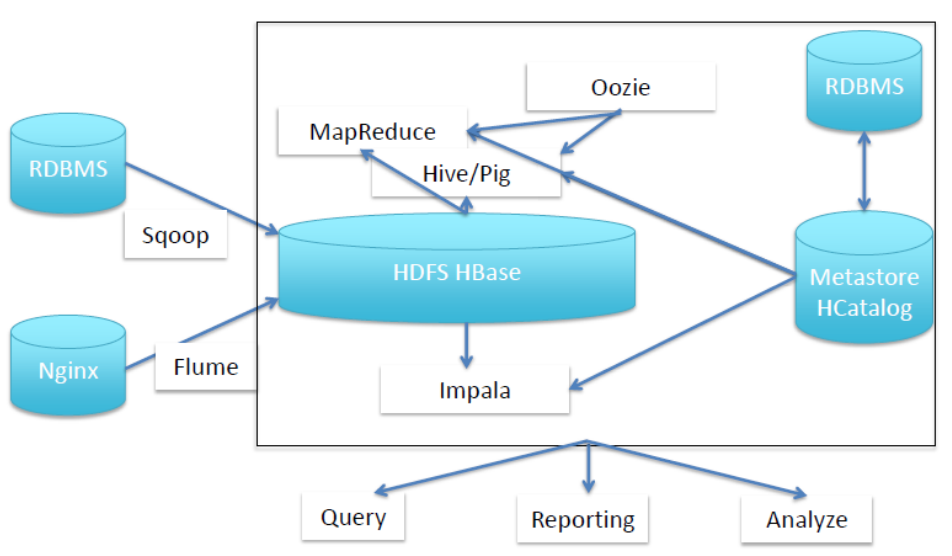
1.结构
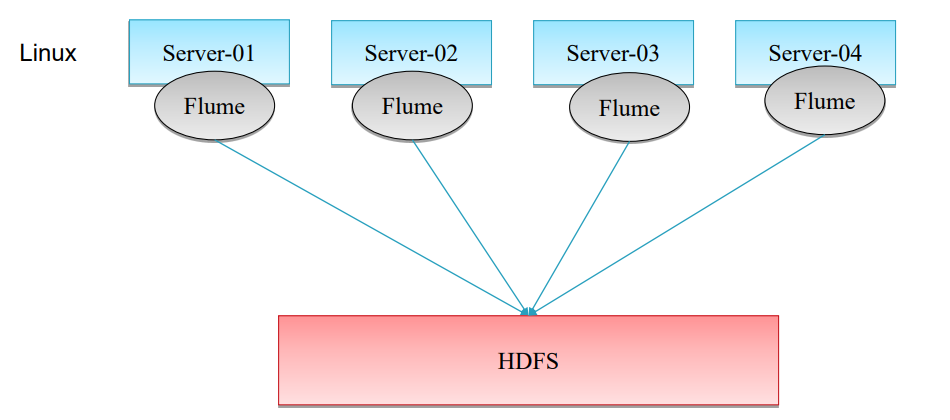
2.普通的采集架构
但是IO过大。
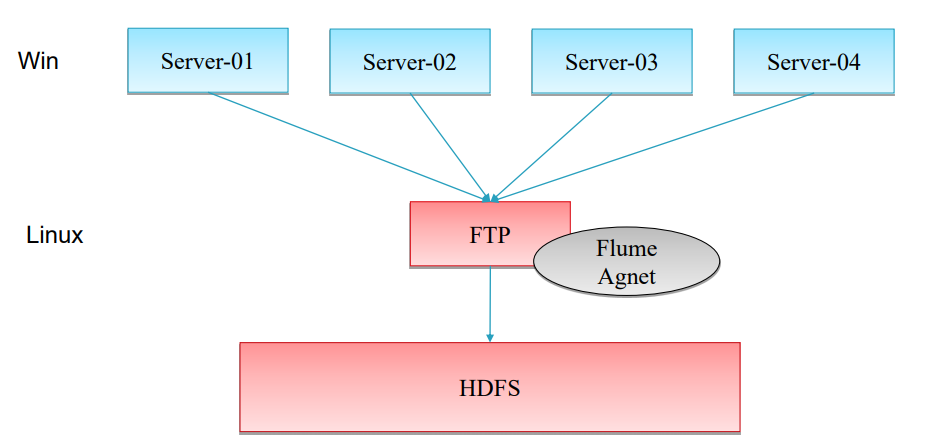
3.服务器在window上的解决方式
Flume只能挂在linux上,如果日志在windows下,使用下面的解决方式。
搭建nfs。
十:企业思考二
1.案例七
source:用来监控文件夹
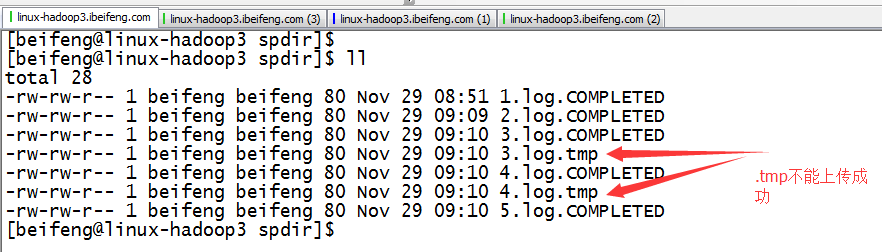
文件中先存在.tmp
到第二日出现新的.tmp文件。前一天的.tmp马上变成log结尾,这时监控文件夹时,马上发现出现一个新的文件,就被上传进HDFS
2.配置
cp hive-mem-hdfs.properties dir-mem-hdfs.properties
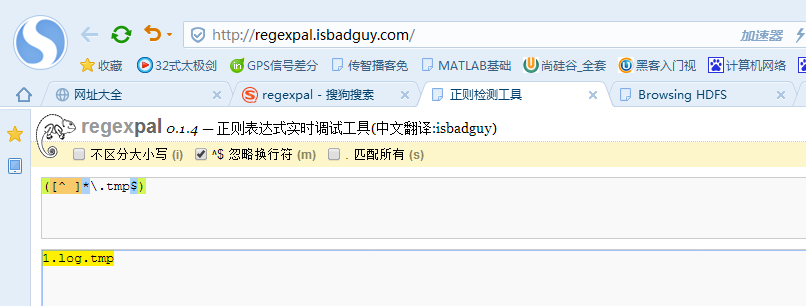
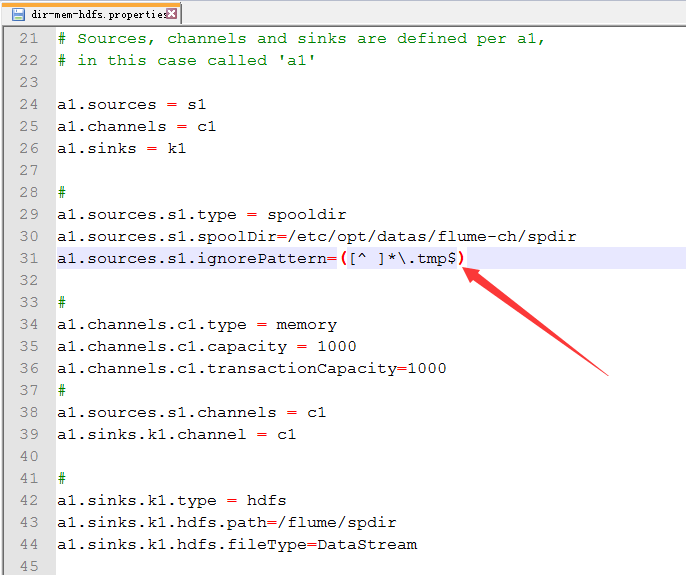
3.正则表达式忽略上传的.tmp文件
因为,企业刚生成是.tmp。
所以,先过滤掉tmp,先不上传。
3.配置dir-mem-hdfs.properties
新建文件夹

配置
4.观察结果
成功上传之后,文件的名字转为COMPLETED。
十一:企业思考二
1.案例二
source:监控文件夹下文件一次性写好文件名,日志只是不断动态追加
这个配置将在下面讲解
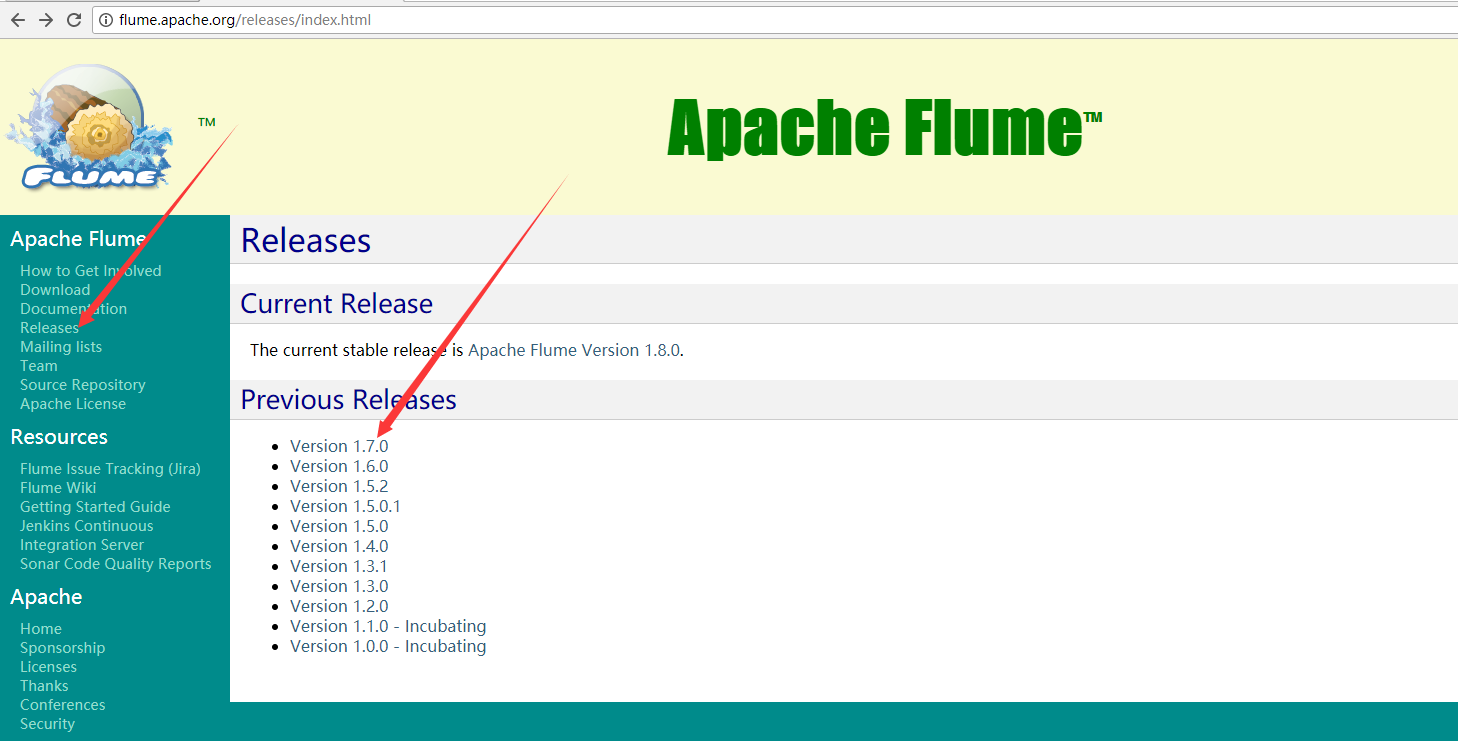
这个功能在1.7版本才有,所以在1.5上没有,所以需要自己编译去实现。
十二:企业实际架构
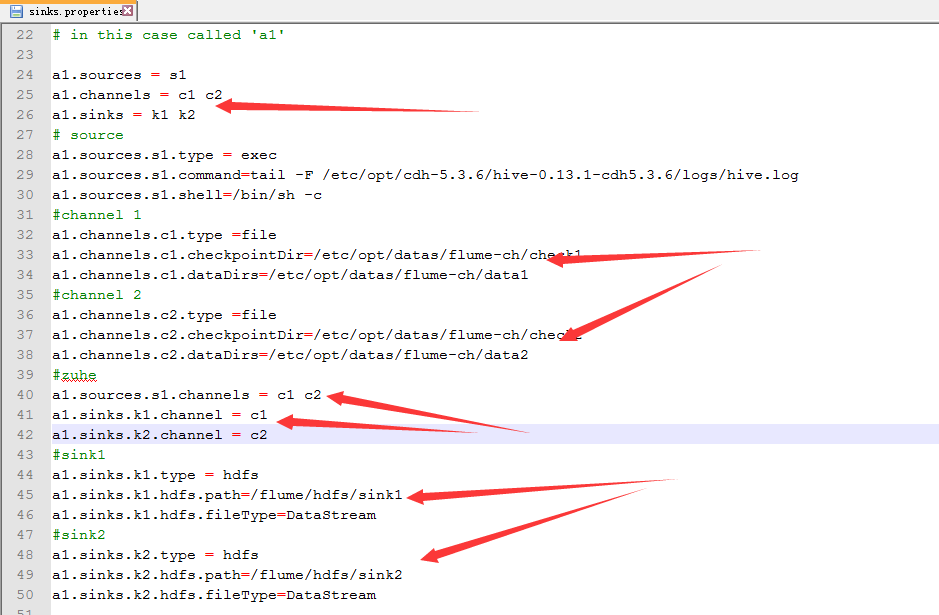
1.flume多sink
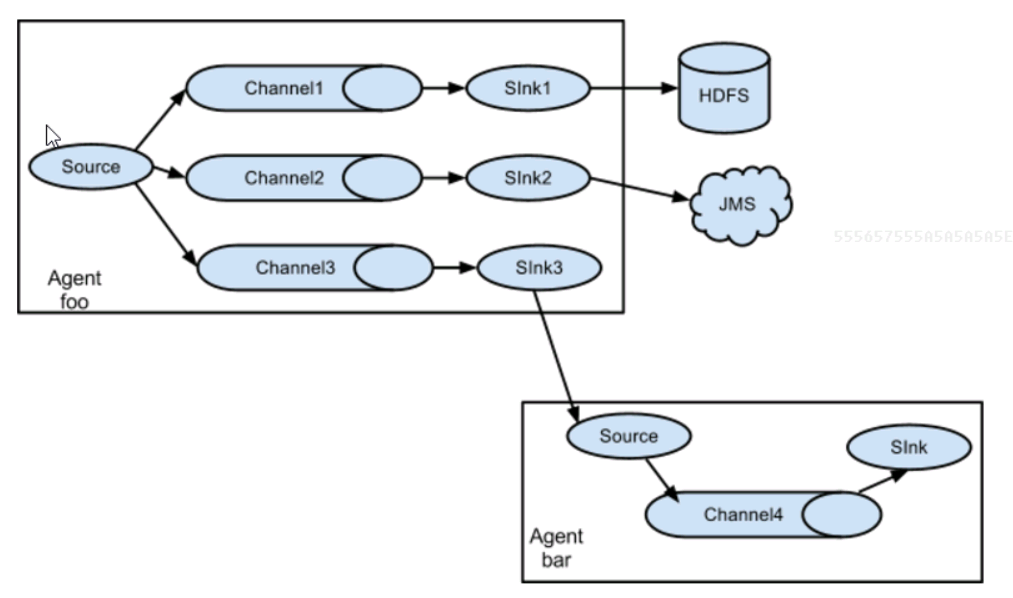
同一份数据采集到不同的框架
采集source:一份数据
管道channel:案例中使用两个管道
目标sink:多个针对于多个channel
2.案例
source:hive.log channel:file sink:hdfs
3.配置
cp hive-mem-hdfs.properties sinks.properties
4.配置sink.properties
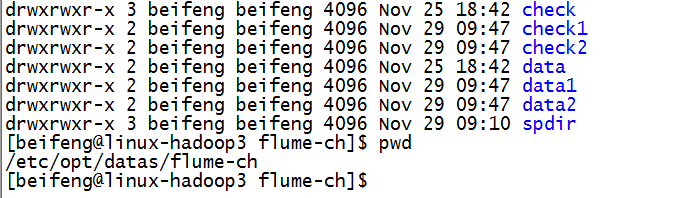
新建存储的文件
配置
5.效果

十三:企业实际架构
1.flume的collect
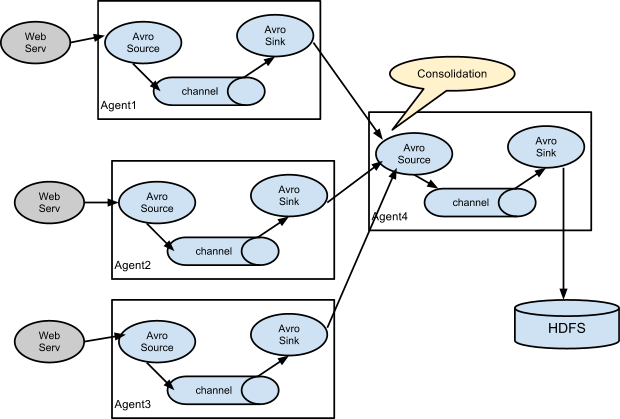
主要解决多台flume对HDFS的写入,会造成IO,所以多出一个collect agent进行一个收集其他的agent的数据,然后再写入HDFS上。
Avro Source与Avro Sink是成对出现的,因为Avro Sink的数据有Avro Source进行采集。
2.案例
启动三台机器,其中两台为agent,一台collect。
192.168.134.241:collect
192.168.134.242:agent
192.168.134.243:agent
3.arvo-agent.properties
这个源文件的功能是将源日志发送到collect agent。
 # The configuration file needs to define the sources,

 # the channels and the sinks.

 # Sources, channels and sinks are defined per a1,

 # in this case called 'a1'

 a1.sources = s1

 a1.channels = c1

 a1.sinks = k1

 # define source

 a1.sources.s1.type = exec

 a1.sources.s1.command = tail -F /opt/cdh-5.3.6/hive-0.13.1-cdh5.3.6/logs/hive.log

 a1.sources.s1.shell = /bin/sh -c

 #define channel

 a1.channels.c1.type = memory

 a1.channels.c1.capacity = 1000

 a1.channels.c1.transactionCapacity = 1000

 #define  sinks

 a1.sinks.k1.type = avro

 a1.sinks.k1.hostname = 192.168.134.241

 a1.sinks.k1.port = 50505

 # zuhe

 a1.sources.s1.channels = c1

 a1.sinks.k1.channel = c1
4.操作
因为242与243的都是讲hive.log发送到241的机器,所以,直接将在242上刚写的文件avro-agent拷贝到243的flume的conf中即可。
5.avro-collect.properties
bind的意思是,取数据的ip。其实,别的机器都发送到241,所以取数据还是在241上取数据。
 # The configuration file needs to define the sources,

 # the channels and the sinks.

 # Sources, channels and sinks are defined per a1,

 # in this case called 'a1'

 a1.sources = s1

 a1.channels = c1

 a1.sinks = k1

 # define source

 a1.sources.s1.type = avro

 a1.sources.s1.bind = 192.168.134.241

 a1.sources.s1.port = 50505

 #define channel

 a1.channels.c1.type = memory

 a1.channels.c1.capacity = 1000

 a1.channels.c1.transactionCapacity = 1000

 #define  sinks

 a1.sinks.k1.type = hdfs

 a1.sinks.k1.hdfs.path = /flume/hdfs

 a1.sinks.k1.hdfs.fileType = DataStream

 a1.sinks.k1.hdfs.filePrefix = avro

 # zuhe

 a1.sources.s1.channels = c1

 a1.sinks.k1.channel = c1
6.运行
运行:collect
bin/flume-ng agent -c conf/ -n a1 -f conf/avro-collect.properties -Dflume.root.logger=INFO,console
运行:agent
bin/flume-ng agent -c conf/ -n a1 -f conf/avro-agent.properties -Dflume.root.logger=INFO,console
十四:关于文件夹中文件处于追加的监控的处理
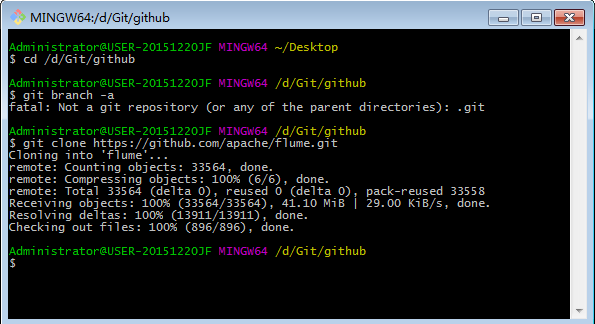
1.安装git
2.新建一个文件下
3.在git bash 中进入目录
4.在此目录下下载源码
5.进入flume目录
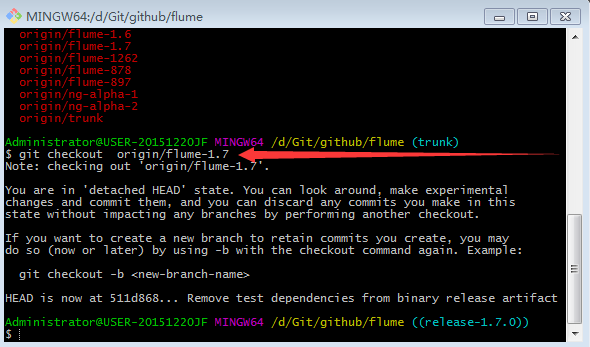
6.查看源码有哪些分支

7.切换分支
8.复制出flume-taildir-source
九。编译
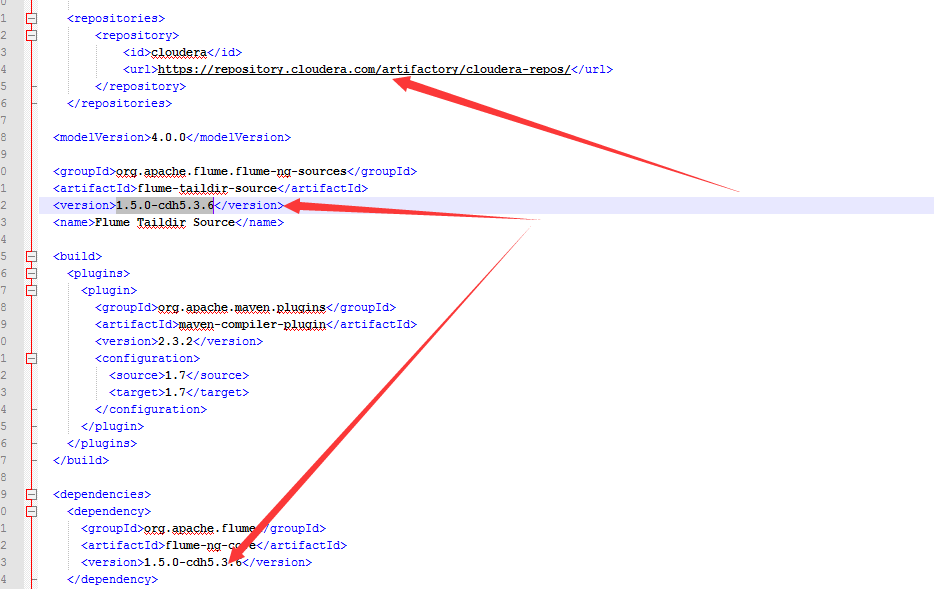
1.pom文件
配置maven源,修改版本
2.在1.5.0中添加一个1.7.0中的类
PollableSourceConstants
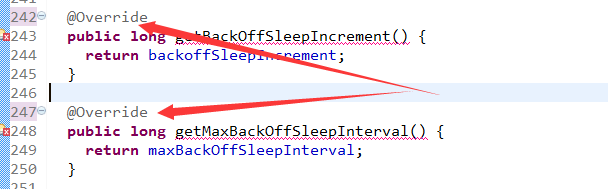
3.删除override
4.编译
run as -> maven build
goals -> skip testf

5.将jar包放在flume的lib目录下
6.使用
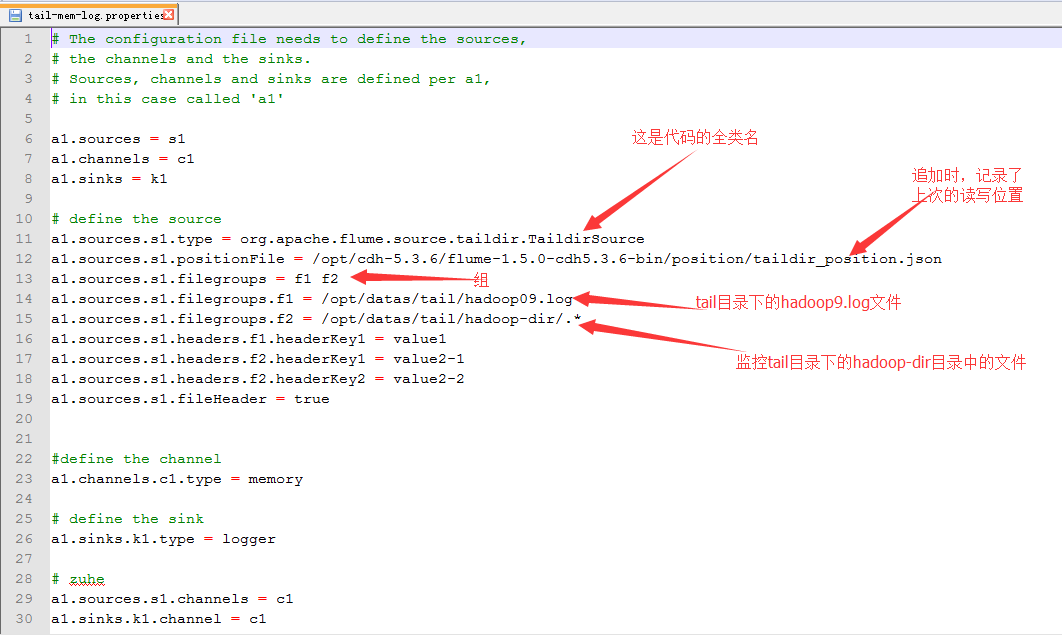
因为这是1.7.0的源码,所以在1.5的文档中没有。
所以:可以看源码
或者看1.7.0的参考文档关于Tail的介绍案例
\flume\flume-ng-doc\sphinx\FlumeUserGuide
7.配置
067 Flume协作框架的更多相关文章
- Flume协作框架
1.概述 ->flume的三大功能 collecting, aggregating, and moving 收集 聚合 移动 2.框图 3.架构特点 ->on streaming data ...
- Oozie协作框架
一:概述 1.大数据协作框架 2.Hadoop的任务调度 3.Oozie的三大功能 Oozie Workflow jobs Oozie Coordinator jobs Oozie Bundle 4. ...
- Hue协作框架
http://archive.cloudera.com/cdh5/cdh/5/hue-3.7.0-cdh5.3.6/manual.html 一:框架 1.支持的框架 ->job ->yar ...
- 069 Hue协作框架
一:介绍 1.官网 官网:http://gethue.com/ 下载:http://archive.cloudera.com/cdh5/cdh/5/,只能在这里下载,不是Apache的 手册:http ...
- 【Hadoop 分布式部署 八:分布式协作框架Zookeeper架构功能讲解 及本地模式安装部署和命令使用 】
What is Zookeeper 是一个开源的分布式的,为分布式应用提供协作服务的Apache项目 提供一个简单的原语集合,以便与分布式应用可以在他之上构建更高层次的同步服务 设计非常简单易于编 ...
- 【Hadoop 分布式部署 九:分布式协作框架Zookeeper架构 分布式安装部署 】
1.首先将运行在本地上的 zookeeper 给停止掉 2.到/opt/softwares 目录下 将 zookeeper解压到 /opt/app 目录下 命令: tar -zxvf zoo ...
- Hadoop调度框架
大数据协作框架是一个桐城,就是Hadoop2生态系统中几个辅助的Hadoop2.x框架.主要如下: 1,数据转换工具Sqoop 2,文件搜集框架Flume 3,任务调度框架Oozie 4,大数 ...
- Sqoop框架基础
Sqoop框架基础 本节我们主要需要了解的是大数据的一些协作框架,也是属于Hadoop生态系统或周边的内容,比如: ** 数据转换工具:Sqoop ** 文件收集库框架:Flume ** 任务调度框架 ...
- 【转】Flume日志收集
from:http://www.cnblogs.com/oubo/archive/2012/05/25/2517751.html Flume日志收集 一.Flume介绍 Flume是一个分布式.可 ...
随机推荐
- 关于windows下的虚拟机Homestead在推送代码上github 步骤
1.ssh 秘钥登录配置 使用以下命令检查主机是否生成SSH Key: > ls -al ~/.ssh 2.如果有秘钥,那就跳过这个步骤,如果没有秘钥,则运行以下命令来生成秘钥: ssh-key ...
- struct 与 class 的区别
C++中的struct对C中的struct进行了扩充,它已经不再只是一个包含不同数据类型的数据结构了,它已经获取了太多的功能. struct能包含成员函数吗? 能! struct能继承吗? 能!! s ...
- 一份通过IPC$和lpk.dll感染方式的病毒分析报告
样本来自52pojie论坛,从事过两年渗透开始学病毒分析后看到IPC$真是再熟悉不过. 1.样本概况 1.1 样本信息 病毒名称:3601.exe MD5值:96043b8dcc7a977b16a28 ...
- 【vim】跳转到上/下一个修改的位置
当你编辑一个很大的文件时,经常要做的事是在某处进行修改,然后跳到另外一处.如果你想跳回之前修改的地方,使用命令: Ctrl+o 来回到之前修改的地方 类似的: Ctrl+i 会回退上面的跳动.
- log4j2使用入门(二)——与不同日志框架的适配
在之前博客中已经指出log4j2可以与不同的日志框架进行适配,这里举一些实际应用进行说明: 1.比如我们在项目中使用了log4j2作为日志器,使用了log4j-api2.6.2.jar和log4j-c ...
- WiFi基本知识【转】
转自:http://blog.csdn.net/myarrow/article/details/7930131 1. IE802.11简介 标准号 IEEE 802.11b IEEE 802.11a ...
- centos6.5下编译安装mariadb-10.0.20
源码编译安装mariadb-10.0.20.tar.gz 一.安装cmake编译工具 跨平台编译器 # yum install -y gcc* # yum install -y cmake 解决依赖关 ...
- android 手机拍照返回 Intent==null 以及intent.getData==null
手机拍照第一种情况:private void takePicture(){ Intent intent = new Intent(MediaStore.ACTION_IMAGE_CAPTURE);Si ...
- 了解的CAP和BASE等理论
CAP,BASE和最终一致性是NoSQL数据库存在的三大基石.而五分钟法则是内存数据存储的理论依据.这个是一切的源头. 几个名词解释: 网络分区:俗称“脑裂”.当网络发生异常情况,导致分布式系统中部分 ...
- 用javascript判断当前是安卓平台还是ios平台
通常判断运行环境都是通过navigator.userAgent if (/android/gi.test(navigator.userAgent)){ // todo : android} if (/ ...