
JavaWeb-SpringSecurity在数据库中查询登陆用户
系列博文
项目已上传至guthub 传送门
JavaWeb-SpringSecurity初认识 传送门
JavaWeb-SpringSecurity在数据库中查询登陆用户 传送门
JavaWeb-SpringSecurity自定义登陆页面 传送门
JavaWeb-SpringSecurity实现需求-判断请求是否以html结尾 传送门
JavaWeb-SpringSecurity自定义登陆配置 传送门
JavaWeb-SpringSecurity图片验证ImageCode 传送门
JavaWeb-SpringSecurity记住我功能 传送门
JavaWeb-SpringSecurity使用短信验证码登陆 传送门
在MySQL数据库中创建springsecurity数据库

(id、username、password都是根据User.java映射过来的)
在application.properties中编写配置文件
#datasource

spring.datasource.url=jdbc:mysql:///springsecurity?serverTimezone=UTC&characterEncoding=utf-8

spring.datasource.username=root

spring.datasource.password=123456

spring.datasource.dricer-class-name=com.mysql.jdbc.Driver

#jpa

#打印出数据库语句

spring.jpa.show-sql=true

#更新数据库表

spring.jpa.hibernate.ddl-auto=update
创建domain实体层User.java和repository存储层接口UserRepository.java
书写用户User.java实体
    //用户是否没有失效

    @Transient

    private boolean accountNonExpried;

    //用户是否冻结

    @Transient

    private boolean accountNonLocked;

    //证明是否过期

    @Transient

    private boolean credentialsNonExpired;

    //判断是否删除

    @Transient

    private boolean enabled;

    @Transient

    //添加    @Transient 注解可以不将  Set<GrantedAuthority>映射到数据库表上

    private Set<GrantedAuthority> authorities;

//给hibernatre用的构造方法

    protected User() {

    }

    public User(Long id,String username,String password)

    {

        this.id = id;

        this.username = username;

        this.password = password;

    }

    //给SpringSecurity用的构造方法

    public User(String username,String password,

            Collection<? extends GrantedAuthority> authorities) {

            this(username,password,true,true,true,true,authorities);

    }

    public User(String username, String password, boolean enabled,

            boolean accountNonExpired, boolean credentialsNonExpired,

            boolean accountNonLocked, Collection<? extends GrantedAuthority> authorities) {

        if (((username == null) || "".equals(username)) || (password == null)) {

            throw new IllegalArgumentException(

                    "Cannot pass null or empty values to constructor");

        }

        this.username = username;

        this.password = password;

        this.enabled = enabled;

        this.accountNonExpried = accountNonExpired;

        this.credentialsNonExpired = credentialsNonExpired;

        this.accountNonLocked = accountNonLocked;

        this.authorities = Collections.unmodifiableSet(sortAuthorities(authorities));

    }

    private static SortedSet<GrantedAuthority> sortAuthorities(

            Collection<? extends GrantedAuthority> authorities) {

        Assert.notNull(authorities, "Cannot pass a null GrantedAuthority collection");

        // Ensure array iteration order is predictable (as per

        // UserDetails.getAuthorities() contract and SEC-717)

        SortedSet<GrantedAuthority> sortedAuthorities = new TreeSet<>(

                new AuthorityComparator());

        for (GrantedAuthority grantedAuthority : authorities) {

            Assert.notNull(grantedAuthority,

                    "GrantedAuthority list cannot contain any null elements");

            sortedAuthorities.add(grantedAuthority);

        }

        return sortedAuthorities;

    }

    private static class AuthorityComparator implements Comparator<GrantedAuthority>,

    Serializable {

    private static final long serialVersionUID = SpringSecurityCoreVersion.SERIAL_VERSION_UID;

    public int compare(GrantedAuthority g1, GrantedAuthority g2) {

    // Neither should ever be null as each entry is checked before adding it to

    // the set.

    // If the authority is null, it is a custom authority and should precede

    // others.

    if (g2.getAuthority() == null) {

        return -1;

    }

    if (g1.getAuthority() == null) {

        return 1;

    }

    return g1.getAuthority().compareTo(g2.getAuthority());

    }

    }
package com.Gary.GaryRESTful.domain;

import java.io.Serializable;

import java.util.Collection;

import java.util.Collections;

import java.util.Comparator;

import java.util.Set;

import java.util.SortedSet;

import java.util.TreeSet;

import javax.persistence.Entity;

import javax.persistence.GeneratedValue;

import javax.persistence.GenerationType;

import javax.persistence.Id;

import javax.persistence.Transient;

import org.springframework.security.core.GrantedAuthority;

import org.springframework.security.core.SpringSecurityCoreVersion;

import org.springframework.security.core.userdetails.UserDetails;

import org.springframework.util.Assert;

@Entity

public class User implements UserDetails{

    @Id

    @GeneratedValue(strategy = GenerationType.IDENTITY)

    private Long id;

    private String username;

    private String password;

    //用户是否没有失效

    @Transient

    private boolean accountNonExpried;

    //用户是否冻结

    @Transient

    private boolean accountNonLocked;

    //证明是否过期

    @Transient

    private boolean credentialsNonExpired;

    //判断是否删除

    @Transient

    private boolean enabled;

    @Transient

    //添加    @Transient 注解可以不将  Set<GrantedAuthority>映射到数据库表上

    private Set<GrantedAuthority> authorities;

    //给hibernatre用的构造方法

    protected User() {

    }

    public User(Long id,String username,String password)

    {

        this.id = id;

        this.username = username;

        this.password = password;

    }

    //给SpringSecurity用的构造方法

    public User(String username,String password,

            Collection<? extends GrantedAuthority> authorities) {

            this(username,password,true,true,true,true,authorities);

    }

    public User(String username, String password, boolean enabled,

            boolean accountNonExpired, boolean credentialsNonExpired,

            boolean accountNonLocked, Collection<? extends GrantedAuthority> authorities) {

        if (((username == null) || "".equals(username)) || (password == null)) {

            throw new IllegalArgumentException(

                    "Cannot pass null or empty values to constructor");

        }

        this.username = username;

        this.password = password;

        this.enabled = enabled;

        this.accountNonExpried = accountNonExpired;

        this.credentialsNonExpired = credentialsNonExpired;

        this.accountNonLocked = accountNonLocked;

        this.authorities = Collections.unmodifiableSet(sortAuthorities(authorities));

    }

    private static SortedSet<GrantedAuthority> sortAuthorities(

            Collection<? extends GrantedAuthority> authorities) {

        Assert.notNull(authorities, "Cannot pass a null GrantedAuthority collection");

        // Ensure array iteration order is predictable (as per

        // UserDetails.getAuthorities() contract and SEC-717)

        SortedSet<GrantedAuthority> sortedAuthorities = new TreeSet<>(

                new AuthorityComparator());

        for (GrantedAuthority grantedAuthority : authorities) {

            Assert.notNull(grantedAuthority,

                    "GrantedAuthority list cannot contain any null elements");

            sortedAuthorities.add(grantedAuthority);

        }

        return sortedAuthorities;

    }

    private static class AuthorityComparator implements Comparator<GrantedAuthority>,

    Serializable {

    private static final long serialVersionUID = SpringSecurityCoreVersion.SERIAL_VERSION_UID;

    public int compare(GrantedAuthority g1, GrantedAuthority g2) {

    // Neither should ever be null as each entry is checked before adding it to

    // the set.

    // If the authority is null, it is a custom authority and should precede

    // others.

    if (g2.getAuthority() == null) {

        return -1;

    }

    if (g1.getAuthority() == null) {

        return 1;

    }

    return g1.getAuthority().compareTo(g2.getAuthority());

    }

    }

    public Long getId() {

        return id;

    }

    public void setId(Long id) {

        this.id = id;

    }

    public String getUsername() {

        return username;

    }

    public void setUsername(String username) {

        this.username = username;

    }

    public String getPassword() {

        return password;

    }

    public void setPassword(String password) {

        this.password = password;

    }

    //用户权限

    @Override

    public Collection<? extends GrantedAuthority> getAuthorities() {

        // TODO Auto-generated method stub

        return authorities;

    }

    //用户是否没有失效

    @Override

    public boolean isAccountNonExpired() {

        // TODO Auto-generated method stub

        return accountNonExpried;

    }

    //用户是否被冻结

    @Override

    public boolean isAccountNonLocked() {

        // TODO Auto-generated method stub

        return accountNonLocked;

    }

    //用户是否证明权限过期

    @Override

    public boolean isCredentialsNonExpired() {

        // TODO Auto-generated method stub

        return credentialsNonExpired;

    }

    //判断用户是否删除

    @Override

    public boolean isEnabled() {

        // TODO Auto-generated method stub

        return enabled;

    }

}
User.java
完善User.java实体
    public User(Long id,String username,String password)

    {

        this.id = id;

        this.username = username;

        this.password = password;

    }

    //给SpringSecurity用的构造方法

    public User(String username,String password,

            Collection<? extends GrantedAuthority> authorities) {

            this(username,password,true,true,true,true,authorities);

    }

    public User(String username, String password, boolean enabled,

            boolean accountNonExpired, boolean credentialsNonExpired,

            boolean accountNonLocked, Collection<? extends GrantedAuthority> authorities) {

        if (((username == null) || "".equals(username)) || (password == null)) {

            throw new IllegalArgumentException(

                    "Cannot pass null or empty values to constructor");

        }

        this.username = username;

        this.password = password;

        this.enabled = enabled;

        this.accountNonExpried = accountNonExpired;

        this.credentialsNonExpired = credentialsNonExpired;

        this.accountNonLocked = accountNonLocked;

        this.authorities = Collections.unmodifiableSet(sortAuthorities(authorities));

    }

    private static SortedSet<GrantedAuthority> sortAuthorities(

            Collection<? extends GrantedAuthority> authorities) {

        Assert.notNull(authorities, "Cannot pass a null GrantedAuthority collection");

        // Ensure array iteration order is predictable (as per

        // UserDetails.getAuthorities() contract and SEC-717)

        SortedSet<GrantedAuthority> sortedAuthorities = new TreeSet<>(

                new AuthorityComparator());

        for (GrantedAuthority grantedAuthority : authorities) {

            Assert.notNull(grantedAuthority,

                    "GrantedAuthority list cannot contain any null elements");

            sortedAuthorities.add(grantedAuthority);

        }

        return sortedAuthorities;

    }

    private static class AuthorityComparator implements Comparator<GrantedAuthority>,

    Serializable {

    private static final long serialVersionUID = SpringSecurityCoreVersion.SERIAL_VERSION_UID;

    public int compare(GrantedAuthority g1, GrantedAuthority g2) {

    // Neither should ever be null as each entry is checked before adding it to

    // the set.

    // If the authority is null, it is a custom authority and should precede

    // others.

    if (g2.getAuthority() == null) {

        return -1;

    }

    if (g1.getAuthority() == null) {

        return 1;

    }

    return g1.getAuthority().compareTo(g2.getAuthority());

    }

    }
package com.Gary.GaryRESTful.domain;

import java.io.Serializable;

import java.util.Collection;

import java.util.Collections;

import java.util.Comparator;

import java.util.Set;

import java.util.SortedSet;

import java.util.TreeSet;

import javax.persistence.Entity;

import javax.persistence.GeneratedValue;

import javax.persistence.GenerationType;

import javax.persistence.Id;

import org.springframework.security.core.GrantedAuthority;

import org.springframework.security.core.SpringSecurityCoreVersion;

import org.springframework.security.core.userdetails.UserDetails;

import org.springframework.util.Assert;

@Entity

public class User implements UserDetails{

    @Id

    @GeneratedValue(strategy = GenerationType.IDENTITY)

    private Long id;

    private String username;

    private String password;

    //用户是否没有失效

    private boolean accountNonExpried;

    //用户是否冻结

    private boolean accountNonLocked;

    //证明是否过期

    private boolean credentialsNonExpired;

    //判断是否删除

    private boolean enabled;

    private Set<GrantedAuthority> authorities;

    //给hibernatre用的构造方法

    protected User() {

    }

    public User(Long id,String username,String password)

    {

        this.id = id;

        this.username = username;

        this.password = password;

    }

    //给SpringSecurity用的构造方法

    public User(String username,String password,

            Collection<? extends GrantedAuthority> authorities) {

            this(username,password,true,true,true,true,authorities);

    }

    public User(String username, String password, boolean enabled,

            boolean accountNonExpired, boolean credentialsNonExpired,

            boolean accountNonLocked, Collection<? extends GrantedAuthority> authorities) {

        if (((username == null) || "".equals(username)) || (password == null)) {

            throw new IllegalArgumentException(

                    "Cannot pass null or empty values to constructor");

        }

        this.username = username;

        this.password = password;

        this.enabled = enabled;

        this.accountNonExpried = accountNonExpired;

        this.credentialsNonExpired = credentialsNonExpired;

        this.accountNonLocked = accountNonLocked;

        this.authorities = Collections.unmodifiableSet(sortAuthorities(authorities));

    }

    private static SortedSet<GrantedAuthority> sortAuthorities(

            Collection<? extends GrantedAuthority> authorities) {

        Assert.notNull(authorities, "Cannot pass a null GrantedAuthority collection");

        // Ensure array iteration order is predictable (as per

        // UserDetails.getAuthorities() contract and SEC-717)

        SortedSet<GrantedAuthority> sortedAuthorities = new TreeSet<>(

                new AuthorityComparator());

        for (GrantedAuthority grantedAuthority : authorities) {

            Assert.notNull(grantedAuthority,

                    "GrantedAuthority list cannot contain any null elements");

            sortedAuthorities.add(grantedAuthority);

        }

        return sortedAuthorities;

    }

    private static class AuthorityComparator implements Comparator<GrantedAuthority>,

    Serializable {

    private static final long serialVersionUID = SpringSecurityCoreVersion.SERIAL_VERSION_UID;

    public int compare(GrantedAuthority g1, GrantedAuthority g2) {

    // Neither should ever be null as each entry is checked before adding it to

    // the set.

    // If the authority is null, it is a custom authority and should precede

    // others.

    if (g2.getAuthority() == null) {

        return -1;

    }

    if (g1.getAuthority() == null) {

        return 1;

    }

    return g1.getAuthority().compareTo(g2.getAuthority());

    }

    }

    public Long getId() {

        return id;

    }

    public void setId(Long id) {

        this.id = id;

    }

    public String getUsername() {

        return username;

    }

    public void setUsername(String username) {

        this.username = username;

    }

    public String getPassword() {

        return password;

    }

    public void setPassword(String password) {

        this.password = password;

    }

    //用户权限

    @Override

    public Collection<? extends GrantedAuthority> getAuthorities() {

        // TODO Auto-generated method stub

        return authorities;

    }

    //用户是否没有失效

    @Override

    public boolean isAccountNonExpired() {

        // TODO Auto-generated method stub

        return accountNonExpried;

    }

    //用户是否被冻结

    @Override

    public boolean isAccountNonLocked() {

        // TODO Auto-generated method stub

        return accountNonLocked;

    }

    //用户是否证明权限过期

    @Override

    public boolean isCredentialsNonExpired() {

        // TODO Auto-generated method stub

        return credentialsNonExpired;

    }

    //判断用户是否删除

    @Override

    public boolean isEnabled() {

        // TODO Auto-generated method stub

        return enabled;

    }

}
User.java
完善UserRepository.java接口,实现查找用户姓名方法
    @Query(value = "select * from user where username = ?1",nativeQuery = true)

    User findUserByUsername(String username);
在UserService.java中实现查找用户Service
    @Autowired

    private PasswordEncoder passwordEncoder;

    @Autowired

    private UserRepository userRepository;

    //spring security默认处理登陆(username为输入的username)

    @Override

    public UserDetails loadUserByUsername(String username) throws UsernameNotFoundException {

        // TODO Auto-generated method stub

        //System.out.println(username);

        User user = userRepository.findUserByUsername(username);

        //用户名,密码,权限

        //User实现UserDetails接口

        return new User(username,passwordEncoder.encode(user.getPassword()),AuthorityUtils.commaSeparatedStringToAuthorityList("admin"));

    }
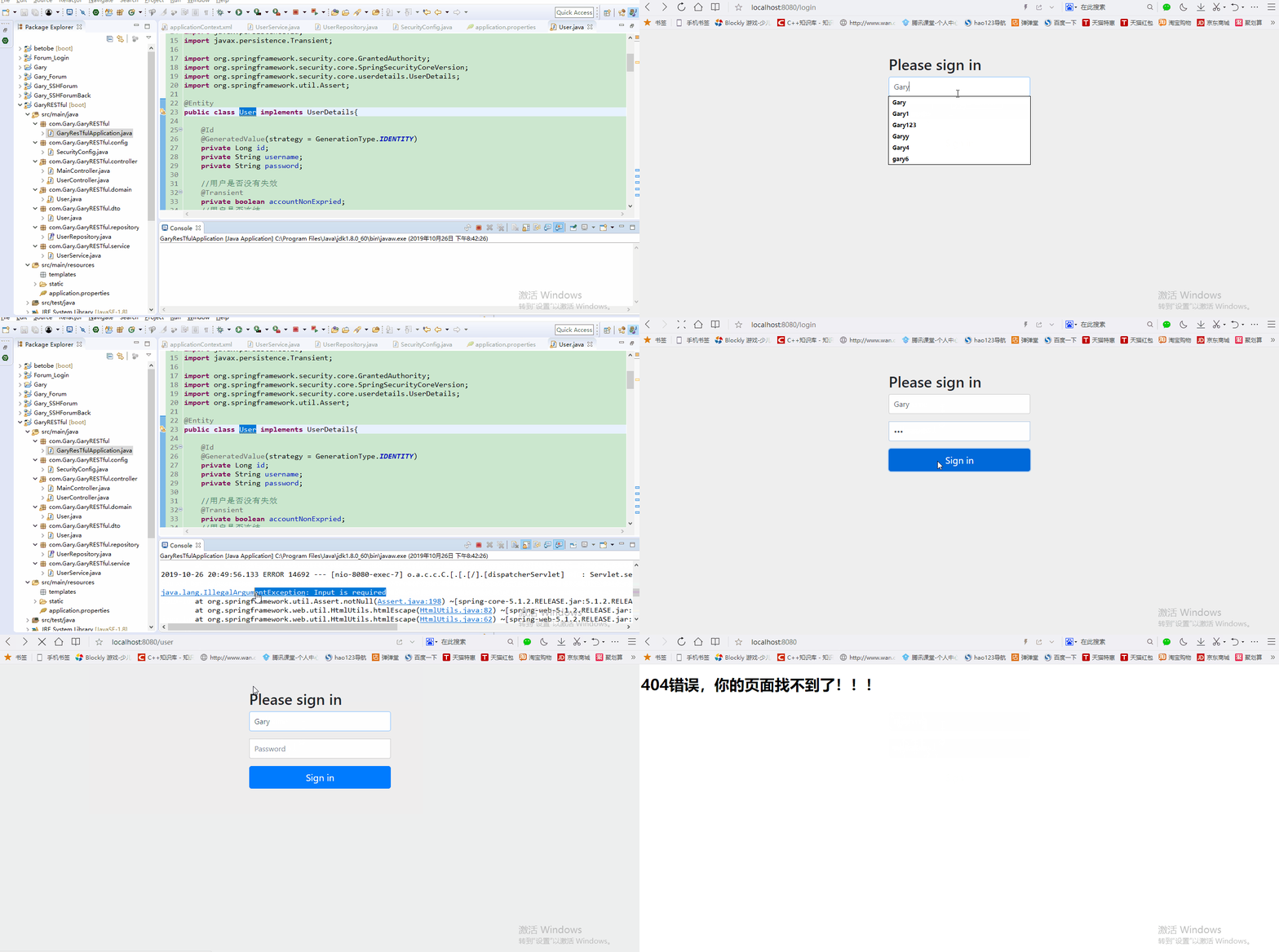
测试时发现,当用户输入错误的用户名和密码时,控制台会报空指针异常,前台为给出“坏的凭证”给用户提示信息。
原因:springsecurity会拦截一切其它的请求。只有当用户输入正确的用户名和密码,springsecurity才会释放用户正常的请求。
package com.Gary.GaryRESTful.config;

import org.springframework.context.annotation.Bean;

import org.springframework.context.annotation.Configuration;

import org.springframework.security.config.annotation.web.builders.HttpSecurity;

import org.springframework.security.config.annotation.web.configuration.WebSecurityConfigurerAdapter;

import org.springframework.security.crypto.bcrypt.BCryptPasswordEncoder;

import org.springframework.security.crypto.password.PasswordEncoder;

//Web应用安全适配器

@Configuration

public class SecurityConfig extends WebSecurityConfigurerAdapter{

    //告诉SpringSecurity密码用什么加密的

    @Bean

    public PasswordEncoder passwordEncoder()

    {

        return new BCryptPasswordEncoder();

    }

    //表单验证(身份认证)

    protected void configure(HttpSecurity http) throws Exception{

        http.formLogin()

            .and()

            //请求授权

            .authorizeRequests()

            //所有请求都被拦截,跳转到(/login请求中)

            .anyRequest()

            //都需要我们身份认证

            .authenticated();

    }

}
SecurityConfig.java
package com.Gary.GaryRESTful.repository;

import org.springframework.data.jpa.repository.Query;

import org.springframework.data.repository.CrudRepository;

import com.Gary.GaryRESTful.domain.User;

public interface UserRepository extends CrudRepository<User,Long>{

    @Query(value = "select * from user where username = ?1",nativeQuery = true)

    User findUserByUsername(String username);

}
UserRepository.java
package com.Gary.GaryRESTful.service;

import org.springframework.beans.factory.annotation.Autowired;

import org.springframework.security.core.authority.AuthorityUtils;

//import org.springframework.security.core.userdetails.User;

import org.springframework.security.core.userdetails.UserDetails;

import org.springframework.security.core.userdetails.UserDetailsService;

import org.springframework.security.core.userdetails.UsernameNotFoundException;

import org.springframework.security.crypto.password.PasswordEncoder;

import org.springframework.stereotype.Component;

import com.Gary.GaryRESTful.domain.User;

import com.Gary.GaryRESTful.repository.UserRepository;

//用SprinSecurity默认的登陆系统

//UserService要实现UserDetailsService接口

@Component

public class UserService implements UserDetailsService{

    @Autowired

    private PasswordEncoder passwordEncoder;

    @Autowired

    private UserRepository userRepository;

    //spring security默认处理登陆(username为输入的username)

    @Override

    public UserDetails loadUserByUsername(String username) throws UsernameNotFoundException {

        // TODO Auto-generated method stub

        //System.out.println(username);

        User user = userRepository.findUserByUsername(username);

        //用户名,密码,权限

        //User实现UserDetails接口

        return new User(username,passwordEncoder.encode(user.getPassword()),AuthorityUtils.commaSeparatedStringToAuthorityList("admin"));

    }

}
UserService.java
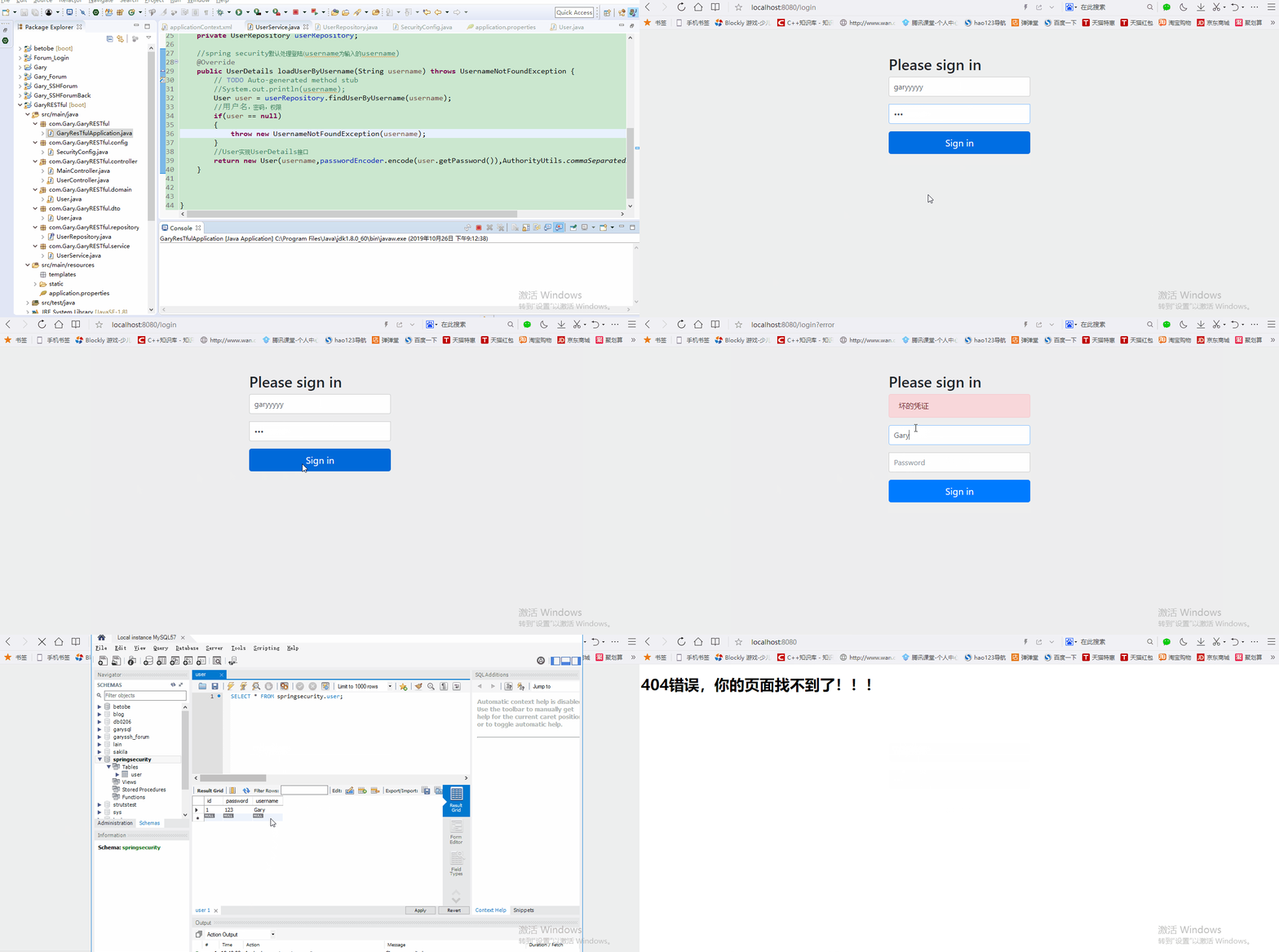
所以我们可以在UserDetails.java中进行修改,添加判断,如果在数据库中未查询到用户时返回null
  @Override

    public UserDetails loadUserByUsername(String username) throws UsernameNotFoundException {

        // TODO Auto-generated method stub

        //System.out.println(username);

        User user = userRepository.findUserByUsername(username);

        //用户名,密码,权限

        if(user == null)

        {

            throw new UsernameNotFoundException(username);

        }

        //User实现UserDetails接口

        return new User(username,passwordEncoder.encode(user.getPassword()),AuthorityUtils.commaSeparatedStringToAuthorityList("admin"));

    }
package com.Gary.GaryRESTful.service;

import org.springframework.beans.factory.annotation.Autowired;

import org.springframework.security.core.authority.AuthorityUtils;

//import org.springframework.security.core.userdetails.User;

import org.springframework.security.core.userdetails.UserDetails;

import org.springframework.security.core.userdetails.UserDetailsService;

import org.springframework.security.core.userdetails.UsernameNotFoundException;

import org.springframework.security.crypto.password.PasswordEncoder;

import org.springframework.stereotype.Component;

import com.Gary.GaryRESTful.domain.User;

import com.Gary.GaryRESTful.repository.UserRepository;

//用SprinSecurity默认的登陆系统

//UserService要实现UserDetailsService接口

@Component

public class UserService implements UserDetailsService{

    @Autowired

    private PasswordEncoder passwordEncoder;

    @Autowired

    private UserRepository userRepository;

    //spring security默认处理登陆(username为输入的username)

    @Override

    public UserDetails loadUserByUsername(String username) throws UsernameNotFoundException {

        // TODO Auto-generated method stub

        //System.out.println(username);

        User user = userRepository.findUserByUsername(username);

        //用户名,密码,权限

        if(user == null)

        {

            throw new UsernameNotFoundException(username);

        }

        //User实现UserDetails接口

        return new User(username,passwordEncoder.encode(user.getPassword()),AuthorityUtils.commaSeparatedStringToAuthorityList("admin"));

    }

}
UserService.java
拓展:根据SpringSecurity提供的User方法
    //给SpringSecurity用的构造方法

    public User(String username,String password,

            Collection<? extends GrantedAuthority> authorities) {

            this(username,password,true,true,true,true,authorities);

    }
可以在UserService.java中提供的UserDetails返回值中添加4个boolean值
return new User(user.getUsername(),passwordEncoder.encode(user.getPassword()),true,true,true,true,AuthorityUtils.commaSeparatedStringToAuthorityList("admin"));
这四个boolean值代表着
        //用户是否没有失效

    @Transient

    private boolean accountNonExpried;

    //用户是否冻结

    @Transient

    private boolean accountNonLocked;

    //证明是否过期

    @Transient

    private boolean credentialsNonExpired;

    //判断是否删除

    @Transient

    private boolean enabled;
如果return返回值中四个参数都为true,springscurity不会去进行拦截验证,
当其中一个参数为false时,springsecurity就会对用户进行拦截验证~
JavaWeb-SpringSecurity在数据库中查询登陆用户的更多相关文章
- flask再学习-思考之怎么从数据库中查询数据在页面展示!
看别人视频觉得很简单,要自己做蒙蔽了!这样子.NO! 1. 流程: 首先要有和数据库连接的驱动!一般有PYMySQL mysqlclient 等 使用扩展Flask-SQLAlchemy 获得orm对 ...
- JDBC方式从数据库中查询数据并显示
1.创建数据库表myuser DROP TABLE IF EXISTS `myuser`; CREATE TABLE `myuser` ( `) NOT NULL COMMENT '姓名', `id` ...
- SQL Server数据库中还原孤立用户的方法集合
虽然SQL Server现在搬迁的技术越来越多,自带的方法也越来越高级. 但是我们的SQL Server在搬迁的会出现很多孤立用户,微软没有自动的处理. 因为我们的数据库权限表都不会在应用数据库中,但 ...
- SQLServer: 解决“错误15023:当前数据库中已存在用户或角色
解决SQL Server 2008 错误15023:当前数据库中已存在用户或角色,SQLServer2008,错误15023, 在使用SQL Server 2008时,我们经常会遇到一个情况:需要把一 ...
- SQL Server 2008 错误15023:当前数据库中已存在用户或角色
解决SQL Server 2008 错误15023:当前数据库中已存在用户或角色,SQLServer2008,错误15023,在使用SQL Server 2008时,我们经常会遇到一个情况:需要把一台 ...
- 从Oracle数据库中查询前几个月数据时需要注意的一些问题
在最近的一个项目中,有一个需求就是要查询数据库中前几个月的历史数据,但是由于自己考虑不全面造成了程序的bug,现在将这一块好好作一个总结,希望以后不再犯这种很低级的错误,首先贴出查询中用到的一个子函数 ...
- 在mysql数据库中创建Oracle数据库中的scott用户表
在mysql数据库中创建Oracle数据库中的scott用户表 作者:Eric 微信:loveoracle11g create table DEPT ( DEPTNO int(2) not null, ...
- MongoDB数据库中查询数据(下)
MongoDB数据库中查询数据(下) 在find中,options参数值为一个对象,用来设置查询数据时使用的选项,下面我们来对该参数值对象中可以使用的属性进行介绍: 1. fields; 该属性值为一 ...
- 在MongoDB数据库中查询数据(上)
在MongoDB数据库中查询数据(上) 在MongoDB数据库中,可以使用Collection对象的find方法从一个集合中查询多个数据文档,find方法使用方法如下所示: collection.fi ...
随机推荐
- Linux下离线安装Docker最新版本
一.基础环境1.操作系统:CentOS 7.32.Docker版本:18.06.1 官方下载地址(打不开可能需要梯子)3.百度云Docker 18.06.1地址:https://pan.baidu.c ...
- VPS磁盘划分建立新磁盘
今天我们来教下大家拿到VPS后,如何划分电脑内的磁盘空间.很多朋友可能遇到拿到VPS,为什么会打开电脑后在电脑盘那看到就一个C盘.还有些用户以为怎么只有那小的磁盘空间啊!怎么和卖的不一样啊!其实了我们 ...
- curl 的使用
curl 的使用 作者:与蟒唯舞链接:https://www.jianshu.com/p/f05bbd5007d9 curl 是一种命令行工具,作用是发出网络请求,然后获取数据,显示在"标准 ...
- 题解 POJ1964/UVA1330/SP277 【City Game】
题目链接: https://www.luogu.org/problemnew/show/UVA1330 http://poj.org/problem?id=1964 https://www.luogu ...
- 记一次被自己DDOS攻击
服务器报警初步分析进一步分析最终分析总结 TOC 服务器报警 7月24号下午5点半开始,突然服务器报警,检查监控,发现CPU异常100%. 该服务器正常情况下CPU使用率在40%已经算高了,另外负载经 ...
- export CommonJS AMD ES6
export https://www.cnblogs.com/fayin/p/6831071.html 导入文件: a - b - c ,对象隔代消失,可转成函数返回 导入模块对象(命名) ...
- 错误处理:java.lang.NoClassDefFoundError: javax/jms/JMSContext
原因是少包,需要在pom文件增加依赖 <dependency> <groupId>javax.jms</groupId> <artifactId>jav ...
- 第十一章、特性property
目录 第十一章.特性property 一.property是一种特殊的属性,访问它时会执行一段功能(函数)然后返回值 二.为什么要用property 三.封装与拓展性 第十一章.特性property ...
- Tomcat集成到MyEclipse
1.Tomcat集成到MyEclipse 使用MyEclipse配置服务器后,就可以使用MyEclipse来启动和停止服务器了.当然,你需要先安装好服务器(Tomcat),才能配置.MyEclipse ...
- Arm汇编指令集2
什么是协处理器: SoC内部另一处理核心,协助CPU实现某些功能,被主CPU调用执行一定任务. ARM设计上支持16个协处理器,但是一般SoC只实现其中的CP15(cp就是cooperation pr ...