
javanio2
package com.lanhuigu.nio.selector;

import java.net.InetSocketAddress;

import java.nio.ByteBuffer;

import java.nio.channels.SelectionKey;

import java.nio.channels.Selector;

import java.nio.channels.ServerSocketChannel;

import java.nio.channels.SocketChannel;

import java.util.Iterator;

public class NIOServer {

    private Selector selector;

    public void initServer(int port) throws Exception {

        ServerSocketChannel serverChannel = ServerSocketChannel.open();

        // 设置通道为非阻塞

        serverChannel.configureBlocking(false);

        serverChannel.socket().bind(new InetSocketAddress(port));

        this.selector = Selector.open();

        /*

         * 当事件到达的时候,selector.select()会返回,

         * 如果事件没有到达selector.select()会一直阻塞

         */

        SelectionKey selectionKey1 = serverChannel.register(selector, SelectionKey.OP_ACCEPT);//感兴趣事件是16,准备好的事件是0。

        int interestSet = selectionKey1.interestOps();//感兴趣事件是16

        boolean isInterestedInAccept  = (interestSet & SelectionKey.OP_ACCEPT) == SelectionKey.OP_ACCEPT;//true

        int isInterestedInConnect = interestSet & SelectionKey.OP_CONNECT;//

        int isInterestedInRead    = interestSet & SelectionKey.OP_READ;//

        int isInterestedInWrite   = interestSet & SelectionKey.OP_WRITE;//

        int readySet = selectionKey1.readyOps();//

    }

    /**

     * 采用轮训的方式监听selector上是否有需要处理的事件,如果有,进行处理

     */

    public void listen() throws Exception {

        System.out.println("start server");

        while (true) {

            // 当注册事件到达时,方法返回,否则该方法会一直阻塞

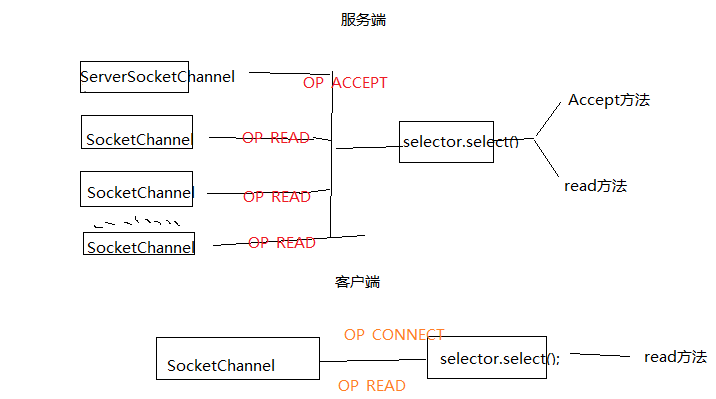
            selector.select();//客户端条用connect方法接触阻塞。这个selector的channelArray数组里面绑定了一个ServerSocketChannelImpl和 n 个SocketChannel。接收客户端的事件,有连接事件和传递数据过来事件,就会解除阻塞分别调用Accept和read方法。

            // 获得selector中选中的相的迭代器,选中的相为注册的事件

            Iterator ite = this.selector.selectedKeys().iterator();

            while (ite.hasNext()) {

                SelectionKey key = (SelectionKey) ite.next();//客户端条用connect方法,key的感兴趣是16,准备好是16,不准备好select()就会一直阻塞,

                // 删除已选的key以防重负处理

                ite.remove();

                // 客户端请求连接事件

                if (key.isAcceptable()) {

                    ServerSocketChannel server = (ServerSocketChannel) key.channel();//接收连接的channel

                    SocketChannel channel = server.accept();//处理客户端数据的channel

                    // 设置成非阻塞

                    channel.configureBlocking(false);

                    // 在这里可以发送消息给客户端

                    channel.write(ByteBuffer.wrap(new String("hello client").getBytes()));

                    // 在客户端连接成功之后,为了可以接收到客户端的信息,需要给通道设置读的权限

                    SelectionKey selectionKey2 = channel.register(this.selector, SelectionKey.OP_READ);

                    //这个selector绑定了2个channel,分别是服务端和客户端channel,分别关心OP_ACCEPT和OP_READ事件。

                    //这个客户端channel感兴趣是1准备好是0,

                    int interestSet = selectionKey2.interestOps();

                    boolean isInterestedInAccept  = (interestSet & SelectionKey.OP_ACCEPT) == SelectionKey.OP_ACCEPT;

                    int isInterestedInConnect = interestSet & SelectionKey.OP_CONNECT;

                    int isInterestedInRead    = interestSet & SelectionKey.OP_READ;

                    int isInterestedInWrite   = interestSet & SelectionKey.OP_WRITE;

                    int readySet = selectionKey2.readyOps();

                    // 获得了可读的事件

                } else if (key.isReadable()) {

                    read(key);

                }

            }

        }

    }

    private void read(SelectionKey key) throws Exception {

        // 服务器可读消息,得到事件发生的socket通道

        SocketChannel channel = (SocketChannel) key.channel();

        // 读取的缓冲区

        ByteBuffer buffer = ByteBuffer.allocate(10);

        channel.read(buffer);

        byte[] data = buffer.array();

        String msg = new String(data).trim();

        System.out.println("server receive from client: " + msg);

        ByteBuffer outBuffer = ByteBuffer.wrap(msg.getBytes());

        channel.write(outBuffer);

    }

    public static void main(String[] args) throws Throwable {

        NIOServer server = new NIOServer();

        server.initServer(8989);

        server.listen();

    }

}
package com.lanhuigu.nio.selector;

import java.io.IOException;

import java.net.InetSocketAddress;

import java.nio.ByteBuffer;

import java.nio.channels.SelectionKey;

import java.nio.channels.Selector;

import java.nio.channels.SocketChannel;

import java.util.Iterator;

public class NIOClient {

    private Selector selector;

    public void initClient(String ip, int port) throws IOException {

        SocketChannel channel = SocketChannel.open();

        // 设置通道为非阻塞

        channel.configureBlocking(false);

        this.selector = Selector.open();

        // 客户端连接服务器,其实方法执行并没有实现连接,需要在listen()方法中调用channel.finishConnect();才能完成连接

        channel.connect(new InetSocketAddress(ip, port));   //channel连接通了,传统IO是连接上了之后就通过IO流来传输数据。服务端selector就会得到OP_ACCEPT事件select方法就会返回。

        // 将通道管理器和该通道绑定,并为该通道注册SelectionKey.OP_CONNECT事件

        SelectionKey selectionKey1 = channel.register(selector, SelectionKey.OP_CONNECT);  // channel和selector绑定,这个selector关心这个channel的OP_CONNECT事件,selector的通道数组里面只有一个。

        int interestSet = selectionKey1.interestOps();//感兴趣的是8,准备好的是0,

        boolean isInterestedInAccept  = (interestSet & SelectionKey.OP_ACCEPT) == SelectionKey.OP_ACCEPT;//false

        int isInterestedInConnect = interestSet & SelectionKey.OP_CONNECT;//

        int isInterestedInRead    = interestSet & SelectionKey.OP_READ;//

        int isInterestedInWrite   = interestSet & SelectionKey.OP_WRITE;//

        int readySet = selectionKey1.readyOps();//

    }

    @SuppressWarnings("unchecked")

    public void listen() throws Exception {

        while (true) {

            /*

             * 选择一组可以进行I/O操作的事件,放在selector中,客户端的该方法不会阻塞,

             * selector的wakeup方法被调用,方法返回,而对于客户端来说,通道一直是被选中的

             * 这里和服务端的方法不一样,查看api注释可以知道,当至少一个通道被选中时。

            */

            int I = selector.select();//OP_CONNECT事件已有,不会阻塞

            // 获得selector中选中的项的迭代器

            Iterator ite = this.selector.selectedKeys().iterator();

            while (ite.hasNext()) {

                SelectionKey key = (SelectionKey) ite.next();

                // 删除已选的key,以防重复处理

                ite.remove();

                // 连接事件发生

                if (key.isConnectable()) {

                    // 如果正在连接,则完成连接

                    SocketChannel channel = (SocketChannel) key.channel();

                    if (channel.isConnectionPending()) {//该方法返回true表示连接成功

                        channel.finishConnect();

                    }

                    // 设置成非阻塞

                    channel.configureBlocking(false);

                    // 在这里可以给服务端发送信息哦

                    channel.write(ByteBuffer.wrap(new String("hello server!").getBytes()));

                    // 在和服务端连接成功之后,为了可以接收到服务端的信息,需要给通道设置读的权限。

                    SelectionKey selectionKey2 = channel.register(this.selector, SelectionKey.OP_READ); // 获得了可读的事件,此时感兴趣是1准备好是8,selector数组里面还是只有一个SelectionKeyImpl

                    //这个selctor关心这个channel的OP_READ和OP_CONNECT事件,并且只有这一个channel.

                    int interestSet = selectionKey2.interestOps();//

                    boolean isInterestedInAccept  = (interestSet & SelectionKey.OP_ACCEPT) == SelectionKey.OP_ACCEPT;//fasle

                    int isInterestedInConnect = interestSet & SelectionKey.OP_CONNECT;//

                    int isInterestedInRead    = interestSet & SelectionKey.OP_READ;//

                    int isInterestedInWrite   = interestSet & SelectionKey.OP_WRITE;//

                    int readySet = selectionKey2.readyOps();

                } else if (key.isReadable()) {

                    read(key);

                }

            }

        }

    }

    private void read(SelectionKey key) throws Exception {

        SocketChannel channel = (SocketChannel) key.channel();

        // 分配缓冲区

        ByteBuffer buffer = ByteBuffer.allocate(10);

        channel.read(buffer);

        byte[] data = buffer.array();

        String msg = new String(data).trim();

        System.out.println("client receive msg from server:" + msg);

        ByteBuffer outBuffer = ByteBuffer.wrap(msg.getBytes());

        channel.write(outBuffer);

    }

    public static void main(String[] args) throws Exception {

        NIOClient client = new NIOClient();

        client.initClient("localhost", 8989);

        client.listen();

    }

}
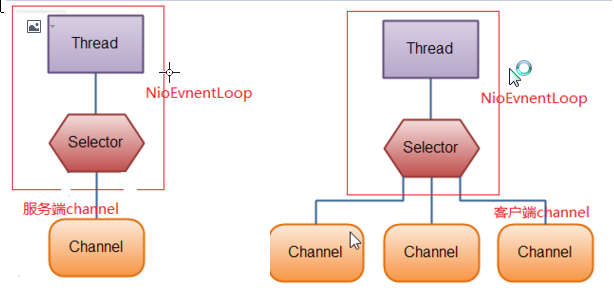
netty的服务端是有2个NioEventLoop,2个线程,2个selector的。 这里服务端只有一个selector既处理服务端channel也处理客户端channel。
javanio2的更多相关文章
随机推荐
- 6个laravel常用目录路径函数
public_path() public_path函数返回public目录的绝对路径:$path = public_path(); base_path() base_path函数返回项目根目录的绝对路 ...
- Python3学习之路~8.2 socket简单实例 实现ssh 发送大量数据
实例1: 利用socket模拟客户端和服务器端各自收发一次数据: #Author:Zheng Na # 客户端 import socket # 声明socket类型,同时生成socket连接对象 cl ...
- GOROOT、GOPATH、GOBIN
GOROOT golang安装路径. GOPATH GOPATH可以设置多个工程目录,linux下用冒号分隔(必须用冒号,fish shell的空格分割会出错),windows下用分号分隔,但是go ...
- git flow 使用步骤
Mac安装git-flow:brew install git-flow 克隆新代码:git clone git@gitlab.xxx.cn:abc/test.git 切换到远程的develop分支(很 ...
- 抛异常 throw的注意事项
子类覆盖父类只能抛出父类的异常或者子类或者子集注意:如果父类的方法没有抛异常,那么子类覆盖时绝对不能抛. 子类继承父类时,方法抛异常,要么抛父类,要么抛父类下的子类,不能抛父类平级或以上的异常 原因是 ...
- MySQL数据库之part1
一.初始数据库 链接:http://www.cnblogs.com/linhaifeng/articles/7126847.html 一.MySQL介绍 1.MySQL是什么 MySQL是一个关系型数 ...
- Hyperledger Fabric CA的命令行用法
介绍Hyperledger Fabric CA的命令行方式简单用法 Hyperledger Fabric CA由server和client两部分组成. 设置两个环境变量 export FABRIC_C ...
- Python中self和__init__的含义与使用
原文地址https://blog.csdn.net/love666666shen/article/details/78189984 Python中的self 在Python中的类Class的代码中,常 ...
- 多么痛的领悟---关于RMB数据类型导致的元转分分转元的bug
关于金额的数据类型,以及元转分分转元之间这种转换,以及元和分的比较,我相信很多人都踩过坑. 反正我是踩过. 而且,昨天和今天又重重的踩了两脚. 代付查询接口,支付中心给溢+响应的报文里,amount的 ...
- caffe中的caffemodel参数提取方法
需要的文件为:deploy.prototxt caffemodel net = caffe.Net(deploy.txt,caffe_model,caffe.TEST)具体代码: import caf ...