
Spring Aop实例@Aspect、@Before、@AfterReturning@Around 注解方式配置(转)
用过spring框架进行开发的人,多多少少会使用过它的AOP功能,都知道有@Before、@Around和@After等advice。最近,为了实现项目中的输出日志和权限控制这两个需求,我也使用到了AOP功能。我使用到了@Before、@Around这两个advice。但在,使用过程中,却对它们的执行顺序并不清楚。为了弄清楚在不同情况下,这些advice到底是以怎么样的一个顺序进行执行的,我作了个测试,在此将其记录下来,以供以后查看。
前提
- 对于AOP相关类(aspect、pointcut等)的概念,本文不作说明。
- 对于如何让spring框架扫描到AOP,本文也不作说明。
情况一: 一个方法只被一个Aspect类拦截
当一个方法只被一个Aspect拦截时,这个Aspect中的不同advice是按照怎样的顺序进行执行的呢?请看:
添加 PointCut类
该pointcut用来拦截test包下的所有类中的所有方法。
package test;

import org.aspectj.lang.annotation.Pointcut;

public class PointCuts {

    @Pointcut(value = "within(test.*)")

    public void aopDemo() {

    }

}
- package test; import org.aspectj.lang.annotation.Pointcut; public class PointCuts { @Pointcut(value = "within(test.*)") public void aopDemo() { } }
添加Aspect类
该类中的advice将会用到上面的pointcut,使用方法请看各个advice的value属性。
package test;

import org.aspectj.lang.JoinPoint;

import org.aspectj.lang.ProceedingJoinPoint;

import org.aspectj.lang.annotation.*;

import org.springframework.stereotype.Component;

@Component

@Aspect

public class Aspect1 {

    @Before(value = "test.PointCuts.aopDemo()")

    public void before(JoinPoint joinPoint) {

        System.out.println("[Aspect1] before advise");

    }

    @Around(value = "test.PointCuts.aopDemo()")

    public void around(ProceedingJoinPoint pjp) throws  Throwable{

        System.out.println("[Aspect1] around advise 1");

        pjp.proceed();

        System.out.println("[Aspect1] around advise2");

    }

    @AfterReturning(value = "test.PointCuts.aopDemo()")

    public void afterReturning(JoinPoint joinPoint) {

        System.out.println("[Aspect1] afterReturning advise");

    }

    @AfterThrowing(value = "test.PointCuts.aopDemo()")

    public void afterThrowing(JoinPoint joinPoint) {

        System.out.println("[Aspect1] afterThrowing advise");

    }

    @After(value = "test.PointCuts.aopDemo()")

    public void after(JoinPoint joinPoint) {

        System.out.println("[Aspect1] after advise");

    }

}
添加测试用Controller
添加一个用于测试的controller,这个controller中只有一个方法,但是它会根据参数值的不同,会作出不同的处理:一种是正常返回一个对象,一种是抛出异常(因为我们要测试@AfterThrowing这个advice)
package test;

import test.exception.TestException;

import org.springframework.http.HttpStatus;

import org.springframework.web.bind.annotation.*;

@RestController

@RequestMapping(value = "/aop")

public class AopTestController {

    @ResponseStatus(HttpStatus.OK)

    @RequestMapping(value = "/test", method = RequestMethod.GET)

    public Result test(@RequestParam boolean throwException) {

        // case 1

        if (throwException) {

            System.out.println("throw an exception");

            throw new TestException("mock a server exception");

        }

        // case 2

        System.out.println("test OK");

        return new Result() {{

            this.setId(111);

            this.setName("mock a Result");

        }};

    }

    public static class Result {

        private int id;

        private String name;

        public int getId() {

            return id;

        }

        public void setId(int id) {

            this.id = id;

        }

        public String getName() {

            return name;

        }

        public void setName(String name) {

            this.name = name;

        }

    }

}
测试 正常情况
在浏览器直接输入以下的URL,回车:
http://192.168.142.8:7070/aoptest/v1/aop/test?throwException=false我们会看到输出的结果是:
[Aspect1] around advise 1

[Aspect1] before advise

test OK

[Aspect1] around advise2

[Aspect1] after advise

[Aspect1] afterReturning advise
测试 异常情况
在浏览器中直接输入以下的URL,回车:
http://192.168.142.8:7070/aoptest/v1/aop/test?throwException=true
我们会看到输出的结果是:
- [Aspect1] around advise 1
- [Aspect1] before advise
- throw an exception
- [Aspect1] after advise
- [Aspect1] afterThrowing advise
结论
在一个方法只被一个aspect类拦截时,aspect类内部的 advice 将按照以下的顺序进行执行:
正常情况: 

情况二: 同一个方法被多个Aspect类拦截
此处举例为被两个aspect类拦截。
有些情况下,对于两个不同的aspect类,不管它们的advice使用的是同一个pointcut,还是不同的pointcut,都有可能导致同一个方法被多个aspect类拦截。那么,在这种情况下,这多个Aspect类中的advice又是按照怎样的顺序进行执行的呢?请看:
pointcut类保持不变
添加一个新的aspect类
package test;

import org.aspectj.lang.JoinPoint;

import org.aspectj.lang.ProceedingJoinPoint;

import org.aspectj.lang.annotation.*;

import org.springframework.stereotype.Component;

@Component

@Aspect

public class Aspect2 {

    @Before(value = "test.PointCuts.aopDemo()")

    public void before(JoinPoint joinPoint) {

        System.out.println("[Aspect2] before advise");

    }

    @Around(value = "test.PointCuts.aopDemo()")

    public void around(ProceedingJoinPoint pjp) throws Throwable{

        System.out.println("[Aspect2] around advise 1");

        pjp.proceed();

        System.out.println("[Aspect2] around advise2");

    }

    @AfterReturning(value = "test.PointCuts.aopDemo()")

    public void afterReturning(JoinPoint joinPoint) {

        System.out.println("[Aspect2] afterReturning advise");

    }

    @AfterThrowing(value = "test.PointCuts.aopDemo()")

    public void afterThrowing(JoinPoint joinPoint) {

        System.out.println("[Aspect2] afterThrowing advise");

    }

    @After(value = "test.PointCuts.aopDemo()")

    public void after(JoinPoint joinPoint) {

        System.out.println("[Aspect2] after advise");

    }

}
测试用Controller也不变
还是使用上面的那个Controller。但是现在 aspect1 和 aspect2 都会拦截该controller中的方法。
下面继续进行测试!
测试 正常情况
在浏览器直接输入以下的URL,回车:
http://192.168.142.8:7070/aoptest/v1/aop/test?throwException=false
我们会看到输出的结果是:
[Aspect2] around advise 1

[Aspect2] before advise

[Aspect1] around advise 1

[Aspect1] before advise

test OK

[Aspect1] around advise2

[Aspect1] after advise

[Aspect1] afterReturning advise

[Aspect2] around advise2

[Aspect2] after advise

[Aspect2] afterReturning advise
但是这个时候,我不能下定论说 aspect2 肯定就比 aspect1 先执行。
不信?你把服务务器重新启动一下,再试试,说不定你就会看到如下的执行结果:
- [Aspect1] around advise 1
- [Aspect1] before advise
- [Aspect2] around advise 1
- [Aspect2] before advise
- test OK
- [Aspect2] around advise2
- [Aspect2] after advise
- [Aspect2] afterReturning advise
- [Aspect1] around advise2
- [Aspect1] after advise
- [Aspect1] afterReturning advise
也就是说,这种情况下, aspect1 和 aspect2 的执行顺序是未知的。那怎么解决呢?不急,下面会给出解决方案。
测试 异常情况
在浏览器中直接输入以下的URL,回车:
http://192.168.142.8:7070/aoptest/v1/aop/test?throwException=true
我们会看到输出的结果是:
- [Aspect2] around advise 1
- [Aspect2] before advise
- [Aspect1] around advise 1
- [Aspect1] before advise
- throw an exception
- [Aspect1] after advise
- [Aspect1] afterThrowing advise
- [Aspect2] after advise
- [Aspect2] afterThrowing advise
同样地,如果把服务器重启,然后再测试的话,就可能会看到如下的结果:
- [Aspect1] around advise 1
- [Aspect1] before advise
- [Aspect2] around advise 1
- [Aspect2] before advise
- throw an exception
- [Aspect2] after advise
- [Aspect2] afterThrowing advise
- [Aspect1] after advise
- [Aspect1] afterThrowing advise
也就是说,同样地,异常情况下, aspect1 和 aspect2 的执行顺序也是未定的。
那么在 情况二 下,如何指定每个 aspect 的执行顺序呢?
方法有两种:
- 实现org.springframework.core.Ordered接口,实现它的getOrder()方法
- 给aspect添加@Order注解,该注解全称为:org.springframework.core.annotation.Order
不管采用上面的哪种方法,都是值越小的 aspect 越先执行。
比如,我们为 apsect1 和 aspect2 分别添加 @Order 注解,如下:
- @Order(5)
- @Component
- @Aspect
- public class Aspect1 {
- // ...
- }
- @Order(6)
- @Component
- @Aspect
- public class Aspect2 {
- // ...
- }
这样修改之后,可保证不管在任何情况下, aspect1 中的 advice 总是比 aspect2 中的 advice 先执行。如下图所示:
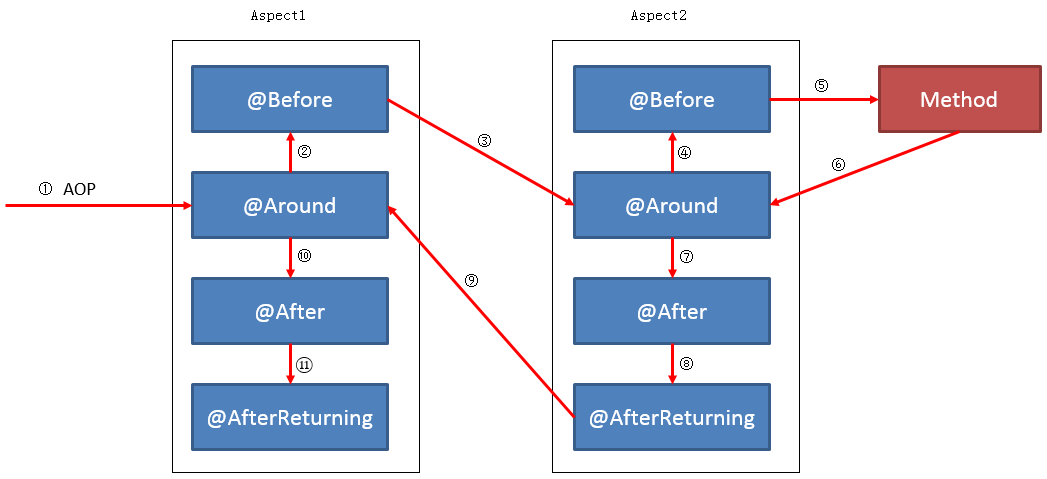
注意点
如果在同一个 aspect 类中,针对同一个 pointcut,定义了两个相同的 advice(比如,定义了两个 @Before),那么这两个 advice 的执行顺序是无法确定的,哪怕你给这两个 advice 添加了 @Order 这个注解,也不行。这点切记。
对于@Around这个advice,不管它有没有返回值,但是必须要方法内部,调用一下 pjp.proceed();否则,Controller 中的接口将没有机会被执行,从而也导致了 @Before这个advice不会被触发。比如,我们假设正常情况下,执行顺序为”aspect2 -> apsect1 -> controller”,如果,我们把 aspect1中的@Around中的 pjp.proceed();给删掉,那么,我们看到的输出结果将是:
- [Aspect2] around advise 1
- [Aspect2] before advise
- [Aspect1] around advise 1
- [Aspect1] around advise2
- [Aspect1] after advise
- [Aspect1] afterReturning advise
- [Aspect2] around advise2
- [Aspect2] after advise
- [Aspect2] afterReturning advise
从结果可以发现, Controller 中的 接口 未被执行,aspect1 中的 @Before advice 也未被执行。
参考资料
- Spring 4.3.2.RELEASE 官方资料:http://docs.spring.io/spring/docs/current/spring-framework-reference/htmlsingle/
- 其中,AOP的执行顺序章节为:http://docs.spring.io/spring/docs/current/spring-framework-reference/htmlsingle/#aop-ataspectj-advice-ordering
Spring Aop实例@Aspect、@Before、@AfterReturning@Around 注解方式配置(转)的更多相关文章
- Spring Aop实例@Aspect、@Before、@AfterReturning@Around 注解方式配置
用过spring框架进行开发的人,多多少少会使用过它的AOP功能,都知道有@Before.@Around和@After等advice.最近,为了实现项目中的输出日志和权限控制这两个需求,我也使用到了A ...
- SSH深度历险(十) AOP原理及相关概念学习+AspectJ注解方式配置spring AOP
AOP(Aspect Oriented Programming),是面向切面编程的技术.AOP基于IoC基础,是对OOP的有益补充. AOP之所以能得到广泛应用,主要是因为它将应用系统拆分分了2个部分 ...
- Spring AOP 的@Aspect
Spring AOP 的@Aspect 转自:http://blog.csdn.net/tanghw/article/details/3862987 从Spring 2.0开始,可以使用基于sch ...
- 跟着刚哥学习Spring框架--通过注解方式配置Bean(四)
组件扫描:Spring能够从classpath下自动扫描,侦测和实例化具有特定注解的组件. 特定组件包括: 1.@Component:基本注解,识别一个受Spring管理的组件 2.@Resposit ...
- spring bean的介绍以及xml和注解的配置方法
5.Bean 下边我们来了解一下Bean的: Bean的作用域Bean的生命周期Bean的自动装配Resources和ResourceLoader 5.1Bean容器的初始化 Bean容器的初始化 两 ...
- Spring声明式事务管理(基于注解方式实现)
----------------------siwuxie095 Spring 声明式事务管理(基于注解方式实现) 以转 ...
- spring学习笔记 星球日two - 注解方式配置bean
注解要放在要注解的对象的上方 @Autowired private Category category; <?xml version="1.0" encoding=" ...
- Spring boot 基于注解方式配置datasource
Spring boot 基于注解方式配置datasource 编辑 Xml配置 我们先来回顾下,使用xml配置数据源. 步骤: 先加载数据库相关配置文件; 配置数据源; 配置sqlSessionF ...
- Spring配置文件中bean标签中init-method和destroy-method和用注解方式配置
Person类: public class Person { private int i = 0; public Person(){ System.o ...
随机推荐
- 彻底理解JavaScript中的prototype、__proto__
虽然在JavaScript里一切皆对象,但为了理解原型链系统,我们需要将JavaScript的对象分为对象和函数两大类.在此基础上,JavaScript的原型链逻辑遵从以下通用规则: 对象有__pro ...
- java日志框架系列(5):logback框架appender详解
1.appender 1.什么是appender Appender 是负责写记录事件的组件. Appender 必须实现接口“ch.qos.logback.core.Appender”.该接口的重要方 ...
- Vue中常用知识点demo
<!DOCTYPE html> <html lang="zh-CN"> <head> <meta charset="utf-8& ...
- 十一、三星平台framebuffer驱动
和总线设备驱动模型类似,framebuffer分为核心层.驱动层和设备层. 核心层:就是上一章分析的fbmem.c文件 驱动层(控制器层):一般由芯片原厂提供,实现了LCD控制器通用的操作接口和配置接 ...
- JVM Java 内存区域透彻分析(转)
出处: Java 内存区域透彻分析 Java8内存模型—永久代(PermGen)和元空间(Metaspace) 这篇文章主要介绍Java内存区域,也是作为Java虚拟机的一些最基本的知识,理解了这 ...
- 少儿编程 | 01.Scratch 3.0简介
欢迎参加这套Scratch3.0少儿编程课程的学习.本系列课程将通过视频和图文的方式进行(视频制作中,后续会发布).如果喜欢本系列课程,欢迎点击订阅关注或者转发. 这是本系列课程的第一课,主要是给家长 ...
- odoo——日历的一对多与多对一
# model文件 # -*- coding: utf-8 -*- from odoo import api, fields, models class TodoTestYear(models.Mod ...
- c#学习笔记-深度复制 与浅度复制
关于值类型和引用类型: 浅度复制(shallow copy)只复制值类型(char,int )的值,而对于引用类型不会复制,浅度复制可以通过派生于System.Object的MemberwiseClo ...
- VBA消息框(MsgBox)(五)
MsgBox函数显示一个消息框,并等待用户点击一个按钮,然后根据用户点击的按钮执行相关的操作. 语法 MsgBox(prompt[,buttons][,title][,helpfile,context ...
- SQLiteDatabase执行update、insert操作的时候,conflictAlgorithm参数的含义区别
/** * When a constraint violation occurs, an immediate ROLLBACK occurs, * thus ending the current tr ...