
Java容器List接口
List接口是Java中经常用到的接口,如果对具体的List实现类的特性不了解的话,可能会导致程序性能的下降,下面从原理上简单的介绍List的具体实现:

可以看到,List继承了Collection接口,而Collection接口继承了Iterable接口。其中还有AbstractCollection和AbstractList的实现,用于List对象的公共部分代码的复用:
public interface List<E> extends Collection<E> {

    // Query Operations
public interface Collection<E> extends Iterable<E> {

    // Query Operations
public abstract class AbstractList<E> extends AbstractCollection<E> implements List<E> {

    /**

     * Sole constructor.  (For invocation by subclass constructors, typically

     * implicit.)

     */

    protected AbstractList() {

    }
public abstract class AbstractCollection<E> implements Collection<E> {

    /**

     * Sole constructor.  (For invocation by subclass constructors, typically

     * implicit.)

     */

    protected AbstractCollection() {

    }
具体这三个接口定义的方法如下:
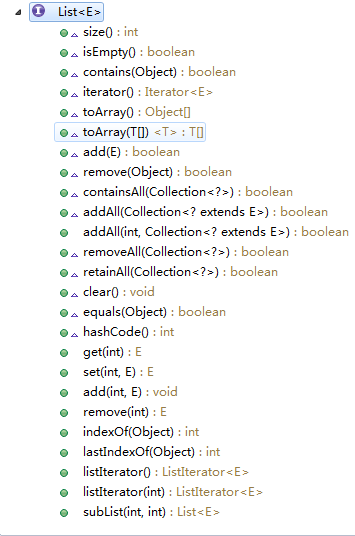

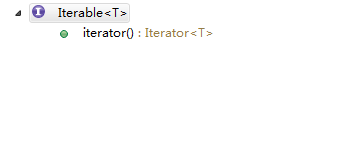
现在来看看List接口的具体特性:
1、Vector
Vector类是通过数组实现的,支持线程的同步,即某一时刻只有一个线程能够写Vector,避免多线程同时写而引起的不一致性,但实现同步需要很高的花费,因此,访问它的效率不是很高。
现在来看一下Vector的成员变量和其中部分的构造方法:
public class Vector<E>

    extends AbstractList<E>

    implements List<E>, RandomAccess, Cloneable, java.io.Serializable

{

    /**

     * The array buffer into which the components of the vector are

     * stored. The capacity of the vector is the length of this array buffer,

     * and is at least large enough to contain all the vector's elements.

     *

     * <p>Any array elements following the last element in the Vector are null.

     *

     * @serial

     */

    protected Object[] elementData;

    /**

     * The number of valid components in this {@code Vector} object.

     * Components {@code elementData[0]} through

     * {@code elementData[elementCount-1]} are the actual items.

     *

     * @serial

     */

    protected int elementCount;

    /**

     * The amount by which the capacity of the vector is automatically

     * incremented when its size becomes greater than its capacity.  If

     * the capacity increment is less than or equal to zero, the capacity

     * of the vector is doubled each time it needs to grow.

     *

     * @serial

     */

    protected int capacityIncrement;

    /** use serialVersionUID from JDK 1.0.2 for interoperability */

    private static final long serialVersionUID = -2767605614048989439L;

    /**

     * Constructs an empty vector with the specified initial capacity and

     * capacity increment.

     *

     * @param   initialCapacity     the initial capacity of the vector

     * @param   capacityIncrement   the amount by which the capacity is

     *                              increased when the vector overflows

     * @throws IllegalArgumentException if the specified initial capacity

     *         is negative

     */

    public Vector(int initialCapacity, int capacityIncrement) {

    super();

        if (initialCapacity < 0)

            throw new IllegalArgumentException("Illegal Capacity: "+

                                               initialCapacity);

    this.elementData = new Object[initialCapacity];

    this.capacityIncrement = capacityIncrement;

    }
对数据结构有一定了解的人都知道,使用数组作为存储底层,当存储空间不够了的时候,是会重新分配一块更大的内存空间,然后把原空间的数据全部都copy过去,最后释放原空间,这样会导致程序性能的下降,或者是GC的消耗(Vector是默认扩展1倍)。所以我们对处理的数据量要有一定的预估,初始化Vector的时候指定容量大小。由于对Vector所有动作都添加synchronized关键字,同样会导致执行的性能下降。
下面是对Vector添加元素的时候的代码:
    /**

     * Appends the specified element to the end of this Vector.

     *

     * @param e element to be appended to this Vector

     * @return {@code true} (as specified by {@link Collection#add})

     * @since 1.2

     */

    public synchronized boolean add(E e) {

    modCount++;

    ensureCapacityHelper(elementCount + 1);

    elementData[elementCount++] = e;

        return true;

    }
    /**

     * This implements the unsynchronized semantics of ensureCapacity.

     * Synchronized methods in this class can internally call this

     * method for ensuring capacity without incurring the cost of an

     * extra synchronization.

     *

     * @see #ensureCapacity(int)

     */

    private void ensureCapacityHelper(int minCapacity) {

    int oldCapacity = elementData.length;

    if (minCapacity > oldCapacity) {

        Object[] oldData = elementData;

        int newCapacity = (capacityIncrement > 0) ?

        (oldCapacity + capacityIncrement) : (oldCapacity * 2);

            if (newCapacity < minCapacity) {

        newCapacity = minCapacity;

        }

            elementData = Arrays.copyOf(elementData, newCapacity);

    }

    }
2、Stack
Stack 类表示后进先出(LIFO)的对象堆栈。它通过五个操作对类 Vector 进行了扩展,同样是线程安全的 ,允许将向量视为堆栈。它提供了通常的 push 和 pop 操作,以及取堆栈顶点的 peek 方法、测试堆栈是否为空的 empty 方法、在堆栈中查找项并确定到堆栈顶距离的 search 方法。当操作的集合不存在元素的时候,抛出EmptyStackException。
public

class Stack<E> extends Vector<E> {

    /**

     * Creates an empty Stack.

     */

    public Stack() {

    }

3、ArrayList
同样,ArrayList内部是通过数组实现的,它允许对元素进行快速随机访问。数组的缺点是每个元素之间不能有间隔,当数组大小不满足时需要增加存储能力,就要讲已经有数组的数据复制到新的存储空间中。当从ArrayList的中间位置插入或者删除元素时,需要对数组进行复制、移动、代价比较高(ArrayList在内存不够时默认是扩展50% + 1个)。因此,它适合随机查找和遍历,不适合插入和删除。由于没有添加同步,所以是非线程安全的,执行效率也要比Vector高很多
public class ArrayList<E> extends AbstractList<E>

        implements List<E>, RandomAccess, Cloneable, java.io.Serializable

{

    private static final long serialVersionUID = 8683452581122892189L;

    /**

     * The array buffer into which the elements of the ArrayList are stored.

     * The capacity of the ArrayList is the length of this array buffer.

     */

    private transient Object[] elementData;

    /**

     * The size of the ArrayList (the number of elements it contains).

     *

     * @serial

     */

    private int size;

    /**

     * Constructs an empty list with the specified initial capacity.

     *

     * @param   initialCapacity   the initial capacity of the list

     * @exception IllegalArgumentException if the specified initial capacity

     *            is negative

     */

    public ArrayList(int initialCapacity) {

    super();

        if (initialCapacity < 0)

            throw new IllegalArgumentException("Illegal Capacity: "+

                                               initialCapacity);

    this.elementData = new Object[initialCapacity];

    }
    public void ensureCapacity(int minCapacity) {

    modCount++;

    int oldCapacity = elementData.length;

    if (minCapacity > oldCapacity) {

        Object oldData[] = elementData;

        int newCapacity = (oldCapacity * 3)/2 + 1;

            if (newCapacity < minCapacity)

        newCapacity = minCapacity;

            // minCapacity is usually close to size, so this is a win:

            elementData = Arrays.copyOf(elementData, newCapacity);

    }

    }
4、LinkedList
LinkedList是用双向链表结构存储数据的,很适合数据的动态插入和删除,随机访问和遍历速度比较慢。另外,他还提供了List接口中没有定义的方法,专门用于操作表头和表尾元素,可以当作堆栈、队列和双向队列使用。
public class LinkedList<E>

    extends AbstractSequentialList<E>

    implements List<E>, Deque<E>, Cloneable, java.io.Serializable

{

    private transient Entry<E> header = new Entry<E>(null, null, null);

    private transient int size = 0;

    /**

     * Constructs an empty list.

     */

    public LinkedList() {

        header.next = header.previous = header;

    }
    Entry(E element, Entry<E> next, Entry<E> previous) {

        this.element = element;

        this.next = next;

        this.previous = previous;

    }

    }
总结:根据不同实现类的特性,选择对应的数据结构,能提高程序的运行效率 。需要注意的是,一条线程在进行list列表元素迭代的时候,另外一条线程如果想要在迭代过程中,想要对元素进行操作的时候,比如满足条件添加新元素,会发生ConcurrentModificationException并发修改异常。当然后来版本的CopyOnWrite容器解决了该问题,后续会介绍。
Java容器List接口的更多相关文章
- Java容器Map接口
Map接口容器存放的是key-value对,由于Map是按key索引的,因此 key 是不可重复的,但 value 允许重复. 下面简单介绍一下Map接口的实现,包括HashMap,LinkedHas ...
- Java容器---Collection接口中的共有方法
1.Collection 接口 (1)Collection的超级接口是Iterable (2)Collection常用的子对象有:Map.List.Set.Queue. 右图中实现黑框的ArrayLi ...
- Java容器——List接口
1. 定义 List是Collection的子接口,元素有序并且可以重复,表示线性表. 2. 常用实现类 ArrayList:它为元素提供了下标,可以看作长度可变的数组,为顺序线性表. LinkedL ...
- java容器——Collection接口
Collection是Set,List接口的父类接口,用于存储集合类型的数据. 2.方法 int size():返回集合的长度 void clear():清除集合里的所有元素,将集合长度变为0 Ite ...
- Java容器——Set接口
1.定义 set中不允许放入重复的元素(元素相同时只取一个).它使用equals()方法进行比较,如果返回true,两个对象的HashCode值也应该相等. 2.方法 TreeSet中常用的方法: b ...
- Java容器——Map接口
1.定义 Map用于保存存在映射关系<key, value>的数据.其中key值不能重复(使用equals()方法比较),value值可以重复. 2.常用实现类 HashMap:和Hash ...
- Java容器Set接口
Set接口的实现,可以方便地将指定的类型以集合类型保存在一个变量中.Set是一个不包含重复元素的Collection,更确切地讲,Set 不包含满足 e1.equals(e2) 的元素对,并且最多包含 ...
- Java容器深入浅出之Collection与Iterator接口
Java中用于保存对象的容器,除了数组,就是Collection和Map接口下的容器实现类了,包括用于迭代容器中对象的Iterator接口,构成了Java数据结构主体的集合体系.其中包括: 1. Co ...
- 【Java心得总结七】Java容器下——Map
我将容器类库自己平时编程及看书的感受总结成了三篇博文,前两篇分别是:[Java心得总结五]Java容器上——容器初探和[Java心得总结六]Java容器中——Collection,第一篇从宏观整体的角 ...
随机推荐
- IE盒模型与W3C盒模型区别
前两天被人问到,叫我解释一下标准盒模型与IE盒模型,额,当时只能说,知道一点,但是没有深入的去探讨过,所以下来之后就自己写了例子,亲自去验证并且查看了网上的一些资料,现将其整理如下: 一.css盒模型 ...
- SQL Server:获取本月最后一天[转]
方法一:set @EndDate = dateadd(month, datediff(month, -1, @StoredDate), -1) @StoredDate为本月的任意一天 这里datedi ...
- 关于js基本类型与引用类型(堆内存、栈内存的理解)
js 基本类型与引用类型的区别 ECMAScirpt 变量有两种不同的数据类型:基本类型,引用类型.也有其他的叫法,比如原始类型和对象类型,拥有方法的类型和不能拥有方法的类型,还可以分为可变类型和不可 ...
- JDK和CGLIB动态代理原理
1.JDK动态代理利用拦截器(拦截器必须实现InvocationHanlder)加上反射机制生成一个实现代理接口的匿名类, 在调用具体方法前调用InvokeHandler来处理. 2.CGLiB动态代 ...
- 【设计模式】—— 原型模式Prototype
前言:[模式总览]——————————by xingoo 模式意图 由于有些时候,需要在运行时指定对象时哪个类的实例,此时用工厂模式就有些力不从心了.通过原型模式就可以通过拷贝函数clone一个原有的 ...
- Html5 web 本地存储 (localStorage、sessionStorage)
HTML5 提供了两种在客户端存储数据的新方法localStorage,sessionStorage sessionStorage(临时存储) :为每一个数据源维持一个存储区域,在浏览器打开期间存在, ...
- 第212天:15种CSS居中的方式,最全了
CSS居中是前端工程师经常要面对的问题,也是基本技能之一.今天有时间把CSS居中的方案整理了一下,目前包括水平居中,垂直居中及水平垂直居中方案共15种.如有漏掉的,还会陆续的补充进来,算做是一个备忘录 ...
- zabbix自定义web检测
zabbix自定义web检测 本博客使用zabbix 版本 4.0.3 Web监控的原理 Web监控即对HTTP服务的监控,模拟用户去访问网站,对特定的结果进行比较,如状态码.返回字符串等特定的数据进 ...
- MySQL 大表备份、改表
0.背景: 需要对一个千万行数据的表新增字段,具体操作: a.dump 数据 b.delete 数据 c.alter 表 MySQL 版本为5.5,alter表时MySQL会锁表:表行数虽多,当数据 ...
- 深踩 AndroidStudio 缓存的坑
本文记录的是今天在群里提到的昨天所踩的一个坑,有关 AndroidStudio 缓存的. 先说一下背景. 我负责的一个项目,对一个图表库有外部依赖.这个图表库是我在维护的,由于新功能在开发中,所以我就 ...