
框架应用:Mybatis(二) - 动态SQL
MybatisUtil工具类
在实际开发中,我们可以编写一个MybatisUtil辅助类来进行对进行操作。
1)在静态初始化块中加载mybatis配置文件和StudentMapper.xml文件一次
2)使用ThreadLocal对象让当前线程与SqlSession对象绑定在一起
3)获取当前线程中的SqlSession对象,如果没有的话,从SqlSessionFactory对象中获取SqlSession对象
4)获取当前线程中的SqlSession对象,再将其关闭,释放其占用的资源
/**
 * MyBatis工具类
 * @author AdminTC
 */
public class MyBatisUtil {
    private static ThreadLocal<SqlSession> threadLocal = new ThreadLocal<SqlSession>();
    private static SqlSessionFactory sqlSessionFactory;
    static{
        try {
            Reader reader = Resources.getResourceAsReader("mybatis.xml");
            sqlSessionFactory = new SqlSessionFactoryBuilder().build(reader);
        } catch (IOException e) {
            e.printStackTrace();
            throw new RuntimeException(e);
        }
    }
    private MyBatisUtil(){}
    public static SqlSession getSqlSession(){
        SqlSession sqlSession = threadLocal.get();
        if(sqlSession == null){
            sqlSession = sqlSessionFactory.openSession();
            threadLocal.set(sqlSession);
        }
        return sqlSession;
    }
    public static void closeSqlSession(){
        SqlSession sqlSession = threadLocal.get();
        if(sqlSession != null){
            sqlSession.close();
            threadLocal.remove();
        }
    }
    public static void main(String[] args) {
        Connection conn = MyBatisUtil.getSqlSession().getConnection();
        System.out.println(conn!=null?"连接成功":"连接失败");
    }
}
MybatisUtil.java
动态SQL
什么是动态SQL,如下图,当你不知道用户会选择多少个筛选条件的时候,你只有等待用户选择而动态地选择SQL查询条件。
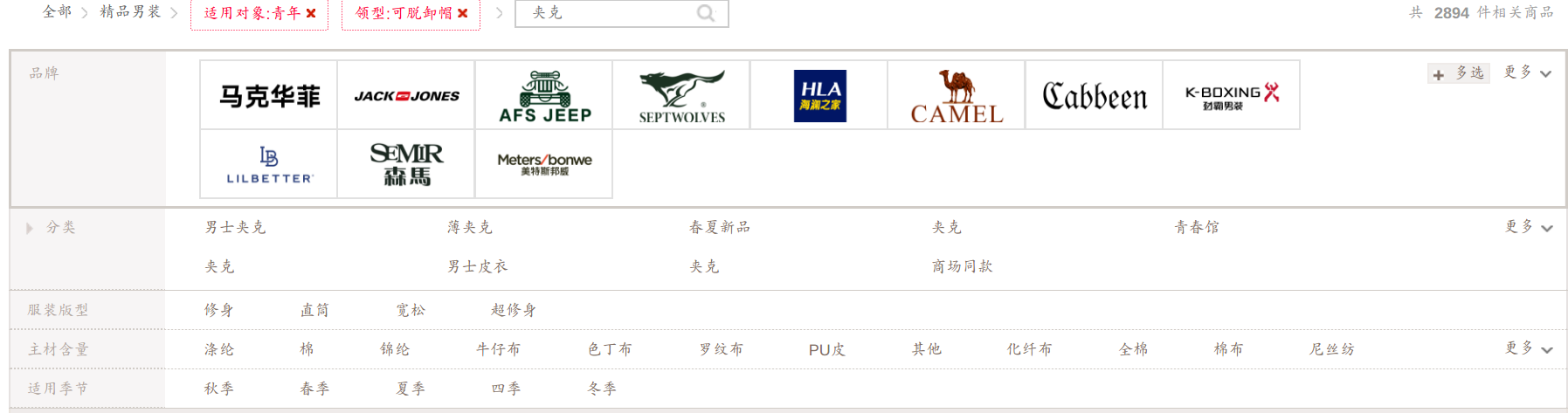
动态SQL-选择
加入IUserDao接口,注意因为与数据库互动需要,Dao接口一般要以类作为参数。
package com.harry.dao;

import java.sql.SQLException;
import java.util.List;
import java.util.Set;

import com.harry.entity.User;

public interface IUserDao {
     public boolean doCreate(User entity) throws Exception;

     public boolean doUpdate(User entity) throws Exception;

     public boolean doRemove(Set<Integer> ids)throws Exception;

     public User findById(Integer id)throws Exception;

     public List<User> findAll() throws  Exception;

     public List<User> findAllSplite(String column, String keyword, Integer currentPage, Integer lineSize) throws Exception;

     public Integer getAllCount(String column, String keyword) throws Exception;
}
IUserDao
书写UserDaoImpl,并在其后添加动态查询的查询方法dynaSQLwithSelect。
package com.harry.dao.impl;

import java.util.LinkedHashMap;
import java.util.List;
import java.util.Map;
import java.util.Set;

import org.apache.ibatis.session.SqlSession;

import com.harry.dao.IUserDao;
import com.harry.entity.User;
import com.harry.util.MybatisUtil;

public class UserDaoImpl implements IUserDao {

    @Override
    public boolean doCreate(User entity) throws Exception {
        // TODO Auto-generated method stub
        return false;
    }

    @Override
    public boolean doUpdate(User entity) throws Exception {
        // TODO Auto-generated method stub
        return false;
    }

    @Override
    public boolean doRemove(Set<Integer> ids) throws Exception {
        // TODO Auto-generated method stub
        return false;
    }

    @Override
    public User findById(Integer id) throws Exception {
        // TODO Auto-generated method stub
        return null;
    }

    @Override
    public List<User> findAll() throws Exception {
        // TODO Auto-generated method stub
        return null;
    }

    @Override
    public List<User> findAllSplite(String column, String keyword, Integer currentPage, Integer lineSize)
            throws Exception {
        // TODO Auto-generated method stub
        return null;
    }

    @Override
    public Integer getAllCount(String column, String keyword) throws Exception {
        // TODO Auto-generated method stub
        return null;
    }

    public List<User> dynaSQLwithSelect(String uname,Character usex) throws Exception{
        SqlSession sqlSession = MybatisUtil.getSqlSession();
        try{
            Map<String,Object> map = new LinkedHashMap<String, Object>();
            map.put("uname",uname);
            map.put("usex", usex);
            return sqlSession.selectList("dynaSQLwithSelect",map);
        }catch(Exception e){
            e.printStackTrace();
            sqlSession.rollback();
            throw e;
        }finally{
            sqlSession.commit();
            MybatisUtil.closeSqlSession();
        }
    }

}
UserDaoImpl
在User.xml中配置相应的SQL方法映射。
<!-- map为调用该方法的外界传入 -->
    <select id="dynaSQLwithSelect" parameterType="map" resultType="com.harry.entity.User">
        select id,username,sex from user
        <where>
            <!-- 如果map中uname不为null,则在where后添加username = uname; -->
            <if test="uname!=null">
                and username=#{uname}
            </if>
            <!-- 如果map中usex不为null,则在where语句后添加 and sex = usex; -->
            <if test="usex!=null">
                and sex=#{usex}
            </if>
        </where>
    </select>
User.xml
测试方法
@Test
    public void testdynaSQLwithSelect() throws Exception {
        UserDaoImpl userDao = new UserDaoImpl();
        List<User> list = userDao.dynaSQLwithSelect("张飞", null);
        Iterator<User> iterator = list.iterator();
        while(iterator.hasNext()){
            System.out.println(iterator.next());
        }
    }
MybatisTest
动态SQL增删改查基本相同,重点是Mybatis通过在配置文件中书写<where>语句来避免数据库SQL拼接。
动态SQL-更新
public boolean dynaSQLwithUpdate(Integer uid, String uname, String usex) throws Exception{
        //session应该在事务层进行开关,这里为了方便
        SqlSession sqlSession = MybatisUtil.getSqlSession();
        try{
            Map<String,Object> map = new LinkedHashMap<>();
            map.put("uid", uid);
            map.put("uname", uname);
            map.put("usex", usex);
            sqlSession.update("dynaSQLwithUpdate",map);
            return true;
        }catch(Exception e){
            e.printStackTrace();
            sqlSession.rollback();
            throw e;
        }finally{
            sqlSession.commit();
            MybatisUtil.closeSqlSession();
        }
    }
UserDaoImpl
<update id="dynaSQLwithUpdate" parameterType="map">
        UPDATE user
        <set>
            <if test="uname!=null">
                username=#{user.username},
            </if>
            <if test="usex!=null">
                sex=#{usex},
            </if>
        </set>
        where id=#{uid}
    </update>
User.xml
动态SQL-删除
public boolean dynaSQLwithDelete(Integer... ids) throws Exception{
        //session应该在事务层进行开关,这里为了方便
        SqlSession sqlSession = MybatisUtil.getSqlSession();
        try{
            Map<String, Object> map = new LinkedHashMap<>();
            map.put("ids", ids);
            sqlSession.delete("dynaSQLwithDelete",map);
            return true;
        }catch(Exception e){
            e.printStackTrace();
            sqlSession.rollback();
            throw e;
        }finally{
            sqlSession.commit();
            MybatisUtil.closeSqlSession();
        }
    }
UserDaoImpl
<delete id="dynaSQLwithDelete" parameterType="map">
        DELETE FROM user WHERE id IN
        <!-- foreach 用来迭代数组元素 -->
        <!-- open表示开始符号 -->
        <!-- close表示结束符号 -->
        <!-- separator表示分隔符 -->
        <!-- item表示迭代的数组 -->
        <foreach collection="ids" open="(" close=")" separator="," item="id">
            #{id}
        </foreach>
    </delete>
User.xml
动态SQL- 插入
public boolean dynaSQLwithInsert(User... users) throws Exception{
        //session应该在事务层进行开关,这里为了方便
        SqlSession sqlSession = MybatisUtil.getSqlSession();
        try{
            Map<String, Object> map = new LinkedHashMap<>();
            map.put("users", users);
            sqlSession.insert("dynaSQLwithInsert",map);
            return true;
        }catch(Exception e){
            e.printStackTrace();
            sqlSession.rollback();
            throw e;
        }finally{
            sqlSession.commit();
            MybatisUtil.closeSqlSession();
        }
    }
UserDaoImpl
<insert id="dynaSQLwithInsert" parameterType="map" useGeneratedKeys="true" keyProperty="id">
        INSERT INTO user (username, birthday, sex, address) VALUES
        <foreach collection="users" item="user" separator=",">
            (#{user.username},#{user.birthday},#{user.sex},#{user.address})
        </foreach>
    </insert>
</mapper>
User.xml
框架应用:Mybatis(二) - 动态SQL的更多相关文章
- 使用Mybatis实现动态SQL(二)
使用Mybatis实现动态SQL 作者 : Stanley 罗昊 [转载请注明出处和署名,谢谢!] 写在前面: *本章节适合有Mybatis基础者观看* 使用Mybatis实现动态SQL ...
- 9、SpringBoot+Mybatis整合------动态sql
开发工具:STS 前言: mybatis框架中最具特色的便是sql语句中的自定义,而动态sql的使用又使整个框架更加灵活. 动态sql中的语法: where标签 if标签 trim标签 set标签 s ...
- MyBatis的动态SQL详解
MyBatis的动态SQL是基于OGNL表达式的,它可以帮助我们方便的在SQL语句中实现某些逻辑,本文详解mybatis的动态sql,需要的朋友可以参考下 MyBatis 的一个强大的特性之一通常是它 ...
- mybatis中的.xml文件总结——mybatis的动态sql
resultMap resultType可以指定pojo将查询结果映射为pojo,但需要pojo的属性名和sql查询的列名一致方可映射成功. 如果sql查询字段名和pojo的属性名不一致,可以通过re ...
- MyBatis的动态SQL详解-各种标签使用
MyBatis的动态SQL是基于OGNL表达式的,它可以帮助我们方便的在SQL语句中实现某些逻辑. MyBatis中用于实现动态SQL的元素主要有: if choose(when,otherwise) ...
- Java-MyBatis:MyBatis 3 动态 SQL
ylbtech-Java-MyBatis:MyBatis 3 动态 SQL 1.返回顶部 1. 动态 SQL MyBatis 的强大特性之一便是它的动态 SQL.如果你有使用 JDBC 或其它类似框架 ...
- 一分钟带你了解下MyBatis的动态SQL!
MyBatis的强大特性之一便是它的动态SQL,以前拼接的时候需要注意的空格.列表最后的逗号等,现在都可以不用手动处理了,MyBatis采用功能强大的基于OGNL的表达式来实现,下面主要介绍下. 一. ...
- Mybatis中动态SQL语句中的parameterType不同数据类型的用法
Mybatis中动态SQL语句中的parameterType不同数据类型的用法1. 简单数据类型, 此时#{id,jdbcType=INTEGER}中id可以取任意名字如#{a,jdbcType ...
- Mybatis解析动态sql原理分析
前言 废话不多说,直接进入文章. 我们在使用mybatis的时候,会在xml中编写sql语句. 比如这段动态sql代码: <update id="update" parame ...
随机推荐
- SSM简明教程:简单的十步教你搭建人生第一个SSM框架[ SSM框架整合教程(Spring+SpringMVC+MyBatis) ]
SSM_BookSystem SSM框架基础 SSM_BookSystem ---> Hello CRUD 说明:本项目目前包含基础的CRUD 日期:2017-05-01 22:25:37 作者 ...
- [目标检测]PVAnet原理
创新点:基于Faster-RCNN使用更高效的基础网络 1.1 创新点 PVAnet是RCNN系列目标方向,基于Faster-RCNN进行改进,Faster-RCNN基础网络可以使用ZF.VGG.Re ...
- SpringMVC的@RequestParam的解释
自SpringMVC4.2之后,RequestParam内部有4个参数: 1.String name 2.String value 3.boolean required 4.String defaul ...
- Django项目之小博客
学习了几天Django,学着做了一个简易的小博客,主要用来练习Django基本的操作. 主要用到的命令和Django包.模块等: django.urls.url django.urls.import ...
- linux ls 命令
ls 命令是 Linux 下最常用的命令之一,用来查询目录下的内容(list directory contents).本文将介绍其基本的用法和一些典型的用例.笔者使用的测试环境为 ubuntu 16. ...
- ASP.Net Core WebApi几种版本控制对比
版本控制的好处: (1)助于及时推出功能, 而不会破坏现有系统. (2)它还可以帮助为选定的客户提供额外的功能. API 版本控制可以采用不同的方式进行控制,方法如下: (1)在 URL 中追加版本或 ...
- Thread类源码剖析
目录 1.引子 2.JVM线程状态 3.Thread常用方法 4.拓展点 一.引子 说来也有些汗颜,搞了几年java,忽然发现竟然没拜读过java.lang.Thread类源码,这次特地拿出来晒一晒. ...
- Day4 - Linux分区规划与xshell使用排错
1.1 没有重要数据 /boot 200M 存放系统的引导信息 内核 swap 交换分区 防止内存用光了 临时的一个内存 如果你的内存小于8G swap是内存的1.5倍 如果你的 ...
- Visual Studio2017 远程调试 Remote Debugger
前言 大家在使用vs打包后的文件部署到服务器后,有时候我们需要对线网的后台进行调试.但是它不像在VS中.这个时候我们该怎么调试呢? 微软想到了这一点,他们在 VS 中给我们提供了一个功能: Remot ...
- 慎用kill -9,kill -15的作用
详见:http://blog.yemou.net/article/query/info/tytfjhfascvhzxcyt334 Perl语言专家Randal Schwartz在一篇短文里这样写: n ...