
hdu.1067.Gap(bfs+hash)
Gap
Time Limit: 20000/10000 MS (Java/Others) Memory Limit: 65536/32768 K (Java/Others) Total Submission(s): 690 Accepted Submission(s): 380
First, you shu2e the cards and lay them face up on the table in four rows of seven cards, leaving a space of one card at the extreme left of each row. The following shows an example of initial layout.
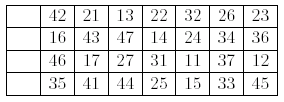
Next, you remove all cards of value 1, and put them in the open space at the left end of the rows: "11" to the top row, "21" to the next, and so on.
Now you have 28 cards and four spaces, called gaps, in four rows and eight columns. You start moving cards from this layout.
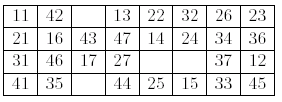
At each move, you choose one of the four gaps and fill it with the successor of the left neighbor of the gap. The successor of a card is the next card in the same suit, when it exists. For instance the successor of "42" is "43", and "27" has no successor.
In the above layout, you can move "43" to the gap at the right of "42", or "36" to the gap at the right of "35". If you move "43", a new gap is generated to the right of "16". You cannot move any card to the right of a card of value 7, nor to the right of a gap.
The goal of the game is, by choosing clever moves, to make four ascending sequences of the same suit, as follows.
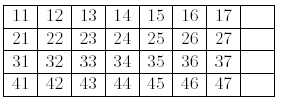
Your task is to find the minimum number of moves to reach the goal layout.
Each layout consists of five lines - a blank line and four lines which represent initial layouts of four rows. Each row has seven two-digit numbers which correspond to the cards.
12 13 14 15 16 17 21
22 23 24 25 26 27 31
32 33 34 35 36 37 41
42 43 44 45 46 47 11
26 31 13 44 21 24 42
17 45 23 25 41 36 11
46 34 14 12 37 32 47
16 43 27 35 22 33 15
17 12 16 13 15 14 11
27 22 26 23 25 24 21
37 32 36 33 35 34 31
47 42 46 43 45 44 41
27 14 22 35 32 46 33
13 17 36 24 44 21 15
43 16 45 47 23 11 26
25 37 41 34 42 12 31
33
60
-1
 #include<stdio.h>

 #include<queue>

 #include<string.h>

 typedef long long ll ;

 int T ;

 struct Map

 {

     int step ;

     int map[][] ;

 }ans , tmp ;

 const int bas =  ;

 const int mod =  +  ;

 struct edge

 {

     ll w ;

     int nxt ;

 }e[mod];

 int H[mod] , E ;

 void insert (ll x)

 {

     int y = x % mod ;

     if (y < ) y += mod ;

     e[++ E].w = y ;

     e[E].nxt = H[y] ;

     H[y] = E ;

 }

 bool find (ll x)

 {

     int y = x % mod ;

     if (y < ) y += mod ;

     for (int i = H[y] ; i ; i = e[i].nxt) {

         if (e[i].w == x) return true ;

     }

     return false ;

 }

 void bfs (Map ans)

 {

     std::queue<Map> q ;

     while (!q.empty ()) q.pop () ;

     memset (H ,  , sizeof(H)) ; E =  ;

     ans.step =  ;

     q.push (ans) ;

     while (!q.empty ()) {

         ans = q.front () ; q.pop () ;

         bool flag =  ;

         for (int i =  ; i <  && flag ; i ++) for (int j =  ; j <  && flag ; j ++) if (ans.map[i][j] != (i + ) *  + j + ) flag =  ;

         if (flag ) {

             printf ("%d\n" , ans.step) ;

             return ;

         }

         for (int i =  ; i <  ; i ++) {

             for (int j =  ;  j <  ; j ++) {

                 tmp = ans ;

                 if (ans.map[i][j] ==  ) {

                     int num = ans.map[i][j - ] +  ;

                   //  printf ("num=%d\n" , num ) ;

                    // printf ("(%d,%d)\n" , i , j ) ;

                     if ((num %  >  )|| (num %  == )) continue ;

                     for (int s =  ; s <  ; s ++) {

                             for (int t =  ; t <  ; t ++) {

                                 if (ans.map[s][t] == num) {

                                     tmp.map[i][j] = num ;

                                     tmp.map[s][t] =  ;

                                 }

                             }

                     }

                     ll rhs =  ;

                     for (int e =  ; e <  ; e ++) {

                         for (int f =  ; f <  ; f ++) {

                             rhs = (rhs * bas + tmp.map[e][f]) % mod ;

                         }

                     }

                    // printf ("rhs=%lld\n" , rhs) ;

                     if ( !find (rhs)) insert (rhs) ;

                     else continue ;

                     tmp.step ++ ;

                     q.push (tmp) ;

                 }

             }

         }

     }

     puts ("-1") ;

 }

 int main ()

 {

     //freopen ("a.txt" , "r" , stdin ) ;

     scanf ("%d" , &T) ;

     while (T --) {

         for (int i =  ; i <  ; i ++) for (int j =  ; j <  ; j ++) scanf ("%d" , &ans.map[i][j]) ;

         for (int i =  ; i <  ; i ++) for (int j =  ; j <  ; j ++) if (ans.map[i][j] %  == ) ans.map[i][j] =  ;

         ans.map[][] =  ; ans.map[][] =  ; ans.map[][] =  ; ans.map[][] =  ;

       /*  for (int i = 0 ; i < 4 ; i ++) {

             for (int j = 0 ; j < 8 ; j ++) {

                 printf ("%2d " , ans.map[i][j]) ;

             }

             puts ("") ;

         }*/

         bfs (ans) ;

     }

     return  ;

 }
hash有些没准心,我用那种叫bkdhash,虽说使用上成功率颇高,但我这边交了三发才过。
还有一开始错误认为每个出队的都会产生15种状态,事实上只用4种。
hdu.1067.Gap(bfs+hash)的更多相关文章
- HDU - 1067 Gap (bfs + hash) [kuangbin带你飞]专题二
题意: 起初定28张卡牌的排列,把其中11, 21, 31, 41移动到第一列,然后就出现四个空白,每个空白可以用它的前面一个数的下一个数填充,例如43后面的空格可以用44填充,但是47后面即 ...
- HDU 1067 Gap
HDU 1067 Gap Time Limit: 2000/1000 MS (Java/Others) Memory Limit: 65536/32768 K (Java/Others) P ...
- HDU-1043 Eight八数码 搜索问题(bfs+hash 打表 IDA* 等)
题目链接 https://vjudge.net/problem/HDU-1043 经典的八数码问题,学过算法的老哥都会拿它练搜索 题意: 给出每行一组的数据,每组数据代表3*3的八数码表,要求程序复原 ...
- 【BZOJ】1054: [HAOI2008]移动玩具(bfs+hash)
http://www.lydsy.com/JudgeOnline/problem.php?id=1054 一开始我还以为要双向广搜....但是很水的数据,不需要了. 直接bfs+hash判重即可. # ...
- [BZOJ1054][HAOI2008]移动玩具 bfs+hash
1054: [HAOI2008]移动玩具 Time Limit: 10 Sec Memory Limit: 162 MBSubmit: 2432 Solved: 1355[Submit][Stat ...
- NOIP 模拟 玩积木 - 迭代加深搜索 / bfs+hash+玄学剪枝
题目大意: 有一堆积木,0号节点每次可以和其上方,下方,左上,右下的其中一个交换,问至少需要多少次达到目标状态,若步数超过20,输出too difficult 目标状态: 0 1 1 2 2 2 3 ...
- [hdu 1067]bfs+hash
题目链接:http://acm.hdu.edu.cn/showproblem.php?pid=1067 queue里面果然不能放vector,还是自己写的struct比较省内存…… #include& ...
- BFS+Hash(储存,判重) HDOJ 1067 Gap
题目传送门 题意:一个图按照变成指定的图,问最少操作步数 分析:状态转移简单,主要是在图的存储以及判重问题,原来队列里装二维数组内存也可以,判重用神奇的hash技术 #include <bits ...
- 【hdu 1067】Gap
Time Limit: 20000/10000 MS (Java/Others) Memory Limit: 65536/32768 K (Java/Others) Total Submission( ...
随机推荐
- 使用PreApplicationStartMethodAttribute
第一次见到这个东西是在公司的框架里,刚开始还挺郁闷怎么框架的Application_Start里没东西,初始化的那些代码都哪去了,后来通过一些线索找到了PreApplicationStartMetho ...
- rpm包安装过程中依赖问题“libc.so.6 is needed by XXX”解决方法
rpm包安装过程中依赖问题"libc.so.6 is needed by XXX"解决方法 折腾了几天,终于搞定了CentOS上的Canon LBP2900打印机驱动.中间遇到了一 ...
- [JavaEE] NIO与IO的区别
nio是new io的简称,从jdk1.4就被引入了.现在的jdk已经到了1.6了,可以说不是什么新东西了.但其中的一些思想值得我来研究.这两天,我研究了下其中的套接字部分,有一些心得,在此分享. 首 ...
- [Android] HttpURLConnection & HttpClient & Socket
Android的三种网络联接方式 1.标准Java接口:java.net.*提供相关的类//定义地址URL url = new URL("http://www.google.com" ...
- ASP.NET WEB API 测试
编码时测试: Postman + Fiddler4 Postman进行发包 Fiddler4进行抓包 编码结束后测试: 通过Nuget引入组件WebApiTestClient: 接口文档 类属性 测试
- Jint .net平台的javascript引擎
使用需求 有时候一段Javascript代码写的很棒,而我们又无法将之翻译成.net或翻译之成本很高的时候 我们就可以使用Jint引擎来运行Javascript代码,来得到我们想要的结果 或者上 ht ...
- LINUX 下chmod|chown|chgrp和用法和区别
1.chgrp(转变文件所属用户组) chgrp 用户组 文件名 ###便是这个格了.若是整个目次下的都改,则加-R参数用于递归. 如:chgrp -R user smb.conf 2.chown(转 ...
- win7安装virtualbox
1.下载软件 VirtualBox-4.3.24-98716-Win.1425444683.exe 2.修改安装路径 3.确定选择下一步 4.下一步 5.yes 6.安装 7.安装完成 到此win7 ...
- 9月22日上午JavaScript----window对象
window对象 window属性: opener:打开当前窗口的源窗口,如果这个窗口是由别的网页点击链接跳转过来的,或者是从另外一个页面点击打开窗口打开的,opener就是找到源页面的.如果当前窗口 ...
- mvc-1