
Telegraf和Grafana监控多平台上的SQL Server
问题
SQL Server在很多企业中部署在多个平台上(Windows,Linux和Container),需要一种能支持多平台的解决方案用于收集和展示相关的监控指标。
我选择企业中比较流行的监控展示工具Grafana和监控指标收集工具Telegraf进行实现。这也是为了方便与企业中已经在存在监控平台进行整合和对接。
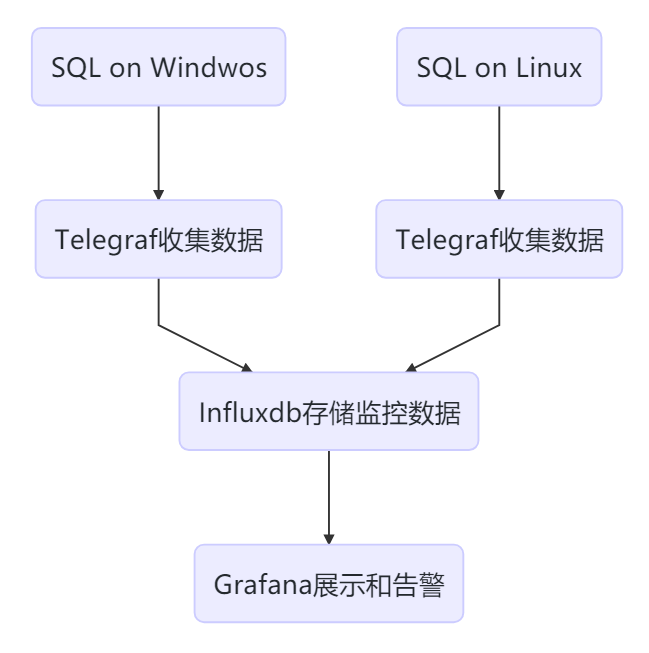
如上图所示,Telegraf部署在SQL所在host,收集数据发送给时序数据库Influxdb存储,然后Grafana用于展示数据。
解决方案
安装和配置InfluxDB
我将InfluxDB和Grafana安装在同一台CentOS主机上,生产环境中最好是分开。
# 下载1.8的stable version后进行安装

wget https://dl.influxdata.com/influxdb/releases/influxdb-1.8.0.x86_64.rpm

chmod 755 influxdb-1.8.0.x86_64.rpm

yum localinstall influxdb-1.8.0.x86_64.rpm

# 启动并设置自启动

systemctl start influxdb

systemctl enable influxdb

# 8086用于客户端的HTTP连接,8088用于CLI调用RPC进行备份和还原操作

firewall-cmd --zone=public --add-port=8086/tcp --permanent

firewall-cmd --zone=public --add-port=8088/tcp --permanent

firewall-cmd --reload

# 连接到influxdb并创建用户

fluxdb

> CREATE USER admin WITH PASSWORD '<password>' WITH ALL PRIVILEGES

# 启用http用户验证,修改influxdb.conf中http section中auth-enabled = true

vim /etc/influxdb/influxdb.conf

systemctl restart influxdb

# 创建用于存储监控数据的数据库,保存6个月的数据

influx -username 'admin' -password '<password>'

> CREATE DATABASE telegraf

> CREATE RETENTION POLICY telegraf_6m ON telegraf DURATION 180d REPLICATION 1 DEFAULT

> SHOW DATABASES
安装和配置Grafana
# 下载并安装Grafana

wget https://dl.grafana.com/oss/release/grafana-7.0.1-1.x86_64.rpm

chmod 775 grafana-7.0.1-1.x86_64.rpm

yum localinstall grafana-7.0.1-1.x86_64.rpm

# 设置自启动

systemctl start grafana-server.service

systemctl enable grafana-server.service

# 允许Grafana默认的端口3000

firewall-cmd --zone=public --add-port=3000/tcp --permanent

firewall-cmd --reload
然后在Browser中访问http://:3000,第一次访问时默登录认账号和密码都为admin,登录后会提示修改密码。
在客户端主机安装和配置Telegraf
所谓客户端,就是SQL所在主机
Telegraf连接到SQL,需要一个login,具有 VIEW SERVER STATE and VIEW ANY DEFINITION的权限,所以在每个被监控的实例上都需要创建之。
USE master;

GO

CREATE LOGIN [telegraf] WITH PASSWORD = N'1qaz@WSX';

GO

GRANT VIEW SERVER STATE TO [telegraf];

GO

GRANT VIEW ANY DEFINITION TO [telegraf];

GO
Telegraf on Linux
wget https://dl.influxdata.com/telegraf/releases/telegraf-1.14.3-1.x86_64.rpm

sudo yum localinstall telegraf-1.14.3-1.x86_64.rpm
安装完成后,先要修改Telegraf的配置文件,再启动。在配置文件中主要配置两个部分:inputs和outputs。 inputs表示监控数据从哪里来,outputs表示监控要发送到哪里去。
打开/etc/telegraf/telegraf.conf,找到[[outputs.influxdb]]部分,所有配置项默认都被注释了。我们需要删除注释并配置一些项。主要是Influxdb的地址,用户名、密码和数据库名等。
[[outputs.influxdb]]

  ## The full HTTP or UDP URL for your InfluxDB instance.

  ##

  ## Multiple URLs can be specified for a single cluster, only ONE of the

  ## urls will be written to each interval.

  # urls = ["unix:///var/run/influxdb.sock"]

  # urls = ["udp://127.0.0.1:8089"]

  urls = ["http://172.17.2.4:8086"]

  ## The target database for metrics; will be created as needed.

  ## For UDP url endpoint database needs to be configured on server side.

  database = "telegraf"

  ## The value of this tag will be used to determine the database.  If this

  ## tag is not set the 'database' option is used as the default.

  # database_tag = ""

  ## If true, the 'database_tag' will not be included in the written metric.

  # exclude_database_tag = false

  ## If true, no CREATE DATABASE queries will be sent.  Set to true when using

  ## Telegraf with a user without permissions to create databases or when the

  ## database already exists.

  skip_database_creation = true

  ## Name of existing retention policy to write to.  Empty string writes to

  ## the default retention policy.  Only takes effect when using HTTP.

  retention_policy = ""

  ## The value of this tag will be used to determine the retention policy.  If this

  ## tag is not set the 'retention_policy' option is used as the default.

  # retention_policy_tag = ""

  ## If true, the 'retention_policy_tag' will not be included in the written metric.

  # exclude_retention_policy_tag = false

  ## Write consistency (clusters only), can be: "any", "one", "quorum", "all".

  ## Only takes effect when using HTTP.

  write_consistency = "any"

  ## Timeout for HTTP messages.

  timeout = "5s"

  ## HTTP Basic Auth

  username = "admin"

  password = "<password>"
- 找到[[inputs.sqlserver]]部分,取消相关配置项的注释,servers部分连接到本地实例。
Telegraf默认的Plugin中包括了对SQL Server的实现, 这个Plugin还包括了对Azure SQL PaaS的实现
# # Read metrics from Microsoft SQL Server

 [[inputs.sqlserver]]

#   ## Specify instances to monitor with a list of connection strings.

#   ## All connection parameters are optional.

#   ## By default, the host is localhost, listening on default port, TCP 1433.

#   ##   for Windows, the user is the currently running AD user (SSO).

#   ##   See https://github.com/denisenkom/go-mssqldb for detailed connection

#   ##   parameters, in particular, tls connections can be created like so:

#   ##   "encrypt=true;certificate=<cert>;hostNameInCertificate=<SqlServer host fqdn>"

        servers = [

                        "Server=localhost;Port=1433;User Id=telegraf;Password=<yourPassword>;app name=telegraf;log=1;"

                ]

#

#   ## Optional parameter, setting this to 2 will use a new version

#   ## of the collection queries that break compatibility with the original

#   ## dashboards.

        query_version = 2

#

#   ## If you are using AzureDB, setting this to true will gather resource utilization metrics

#   # azuredb = false

#

#   ## Possible queries:

#   ## - PerformanceCounters

#   ## - WaitStatsCategorized

#   ## - DatabaseIO

#   ## - DatabaseProperties

#   ## - CPUHistory

#   ## - DatabaseSize

#   ## - DatabaseStats

#   ## - MemoryClerk

#   ## - VolumeSpace

#   ## - PerformanceMetrics

#   ## - Schedulers

#   ## - AzureDBResourceStats

#   ## - AzureDBResourceGovernance

#   ## - SqlRequests

#   ## - ServerProperties

#   ## A list of queries to include. If not specified, all the above listed queries are used.

#   # include_query = []

#

#   ## A list of queries to explicitly ignore.

#   exclude_query = [ 'Schedulers' , 'SqlRequests']
启动Telegraf之后,可以看到时已经加载的inputs和收集间隔
[root@SQL19N1 log]# systemctl status telegraf

● telegraf.service - The plugin-driven server agent for reporting metrics into InfluxDB

   Loaded: loaded (/usr/lib/systemd/system/telegraf.service; enabled; vendor preset: disabled)

   Active: active (running) since Tue 2020-05-26 14:19:07 UTC; 19min ago

     Docs: https://github.com/influxdata/telegraf

 Main PID: 12359 (telegraf)

   CGroup: /system.slice/telegraf.service

           └─12359 /usr/bin/telegraf -config /etc/telegraf/telegraf.conf -config-directory /etc/telegraf/telegraf.d

May 26 14:19:07 SQL19N1 systemd[1]: Started The plugin-driven server agent for reporting metrics into InfluxDB.

May 26 14:19:07 SQL19N1 telegraf[12359]: 2020-05-26T14:19:07Z I! Starting Telegraf 1.14.3

May 26 14:19:07 SQL19N1 telegraf[12359]: 2020-05-26T14:19:07Z I! Loaded inputs: system cpu disk diskio kernel mem processes swap sqlserver

May 26 14:19:07 SQL19N1 telegraf[12359]: 2020-05-26T14:19:07Z I! Loaded aggregators:

May 26 14:19:07 SQL19N1 telegraf[12359]: 2020-05-26T14:19:07Z I! Loaded processors:

May 26 14:19:07 SQL19N1 telegraf[12359]: 2020-05-26T14:19:07Z I! Loaded outputs: influxdb

May 26 14:19:07 SQL19N1 telegraf[12359]: 2020-05-26T14:19:07Z I! Tags enabled: host=SQL19N1

May 26 14:19:07 SQL19N1 telegraf[12359]: 2020-05-26T14:19:07Z I! [agent] Config: Interval:20s, Quiet:false, Hostname:"SQL19N1", Flush Interval:10s
Telegraf on Windows
以管理员身份执行如下PowerShell命令
# 下载软件

wget https://dl.influxdata.com/telegraf/releases/telegraf-1.14.3_windows_amd64.zip ·

    -OutFile "c:\temp\telegraf-1.14.3_windows_amd64.zip"

# 解压缩到C:\Program Files\Telegraf

Expand-Archive "c:\temp\telegraf-1.14.3_windows_amd64.zip", "C:\Program Files"

# 将telegraf安装为windows服务

C:\"Program Files"\Telegraf\telegraf.exe --service install
修改telegraf.conf中outputs.influxdb和添加inputs.sqlserver部分,这些内容和在Linux上的配置一样,就不赘述了。
conf修改完成后,可以先测试一下telegraf是否能正常启动,没问题的话就启动telegraf服务。
# 测试

C:\"Program Files"\Telegraf\telegraf.exe --config C:\"Program Files"\Telegraf\telegraf.conf --test

# 启动服务

C:\"Program Files"\Telegraf\telegraf.exe --service start
配置Grafana的数据源和Dashboard
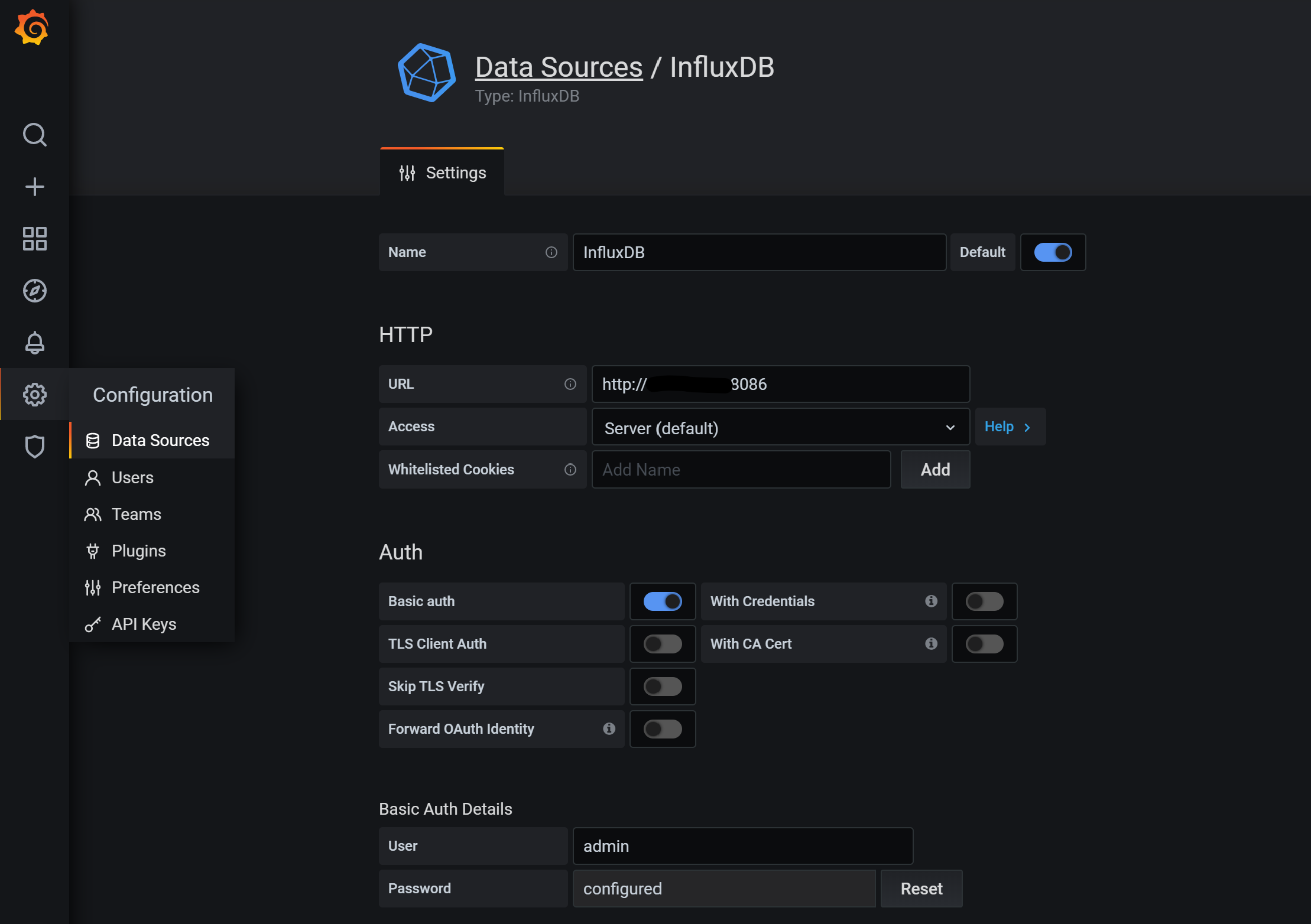
登录Grafana后,在左侧的Configuration->Data Source中配置InfluxDB数据源,填写地址、账号、密码并设置为默认数据源,如下图
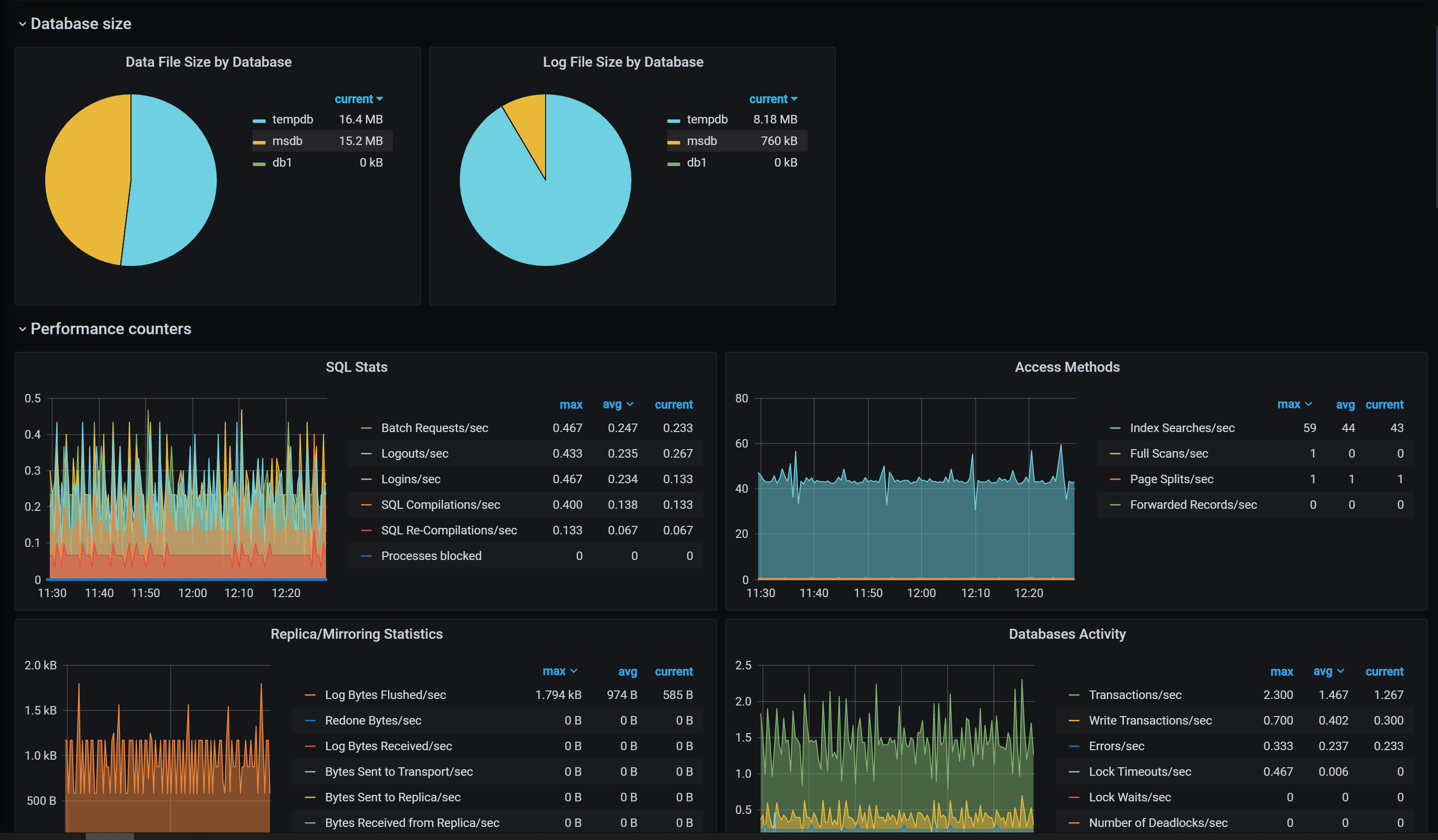
Dashboard,可以自己创建,也可以在采用公开社区的(感谢热心无私的大佬们)。这里,我采用SQL Servers by Jonathan Rioux。这个Dashboard中使用的Piechart不是Grafana预置的,所以还需要安装:
# Grafana所在Host安装,重启服务生效

grafana-cli plugins install grafana-piechart-panel

systemctl restart grafana-server.service
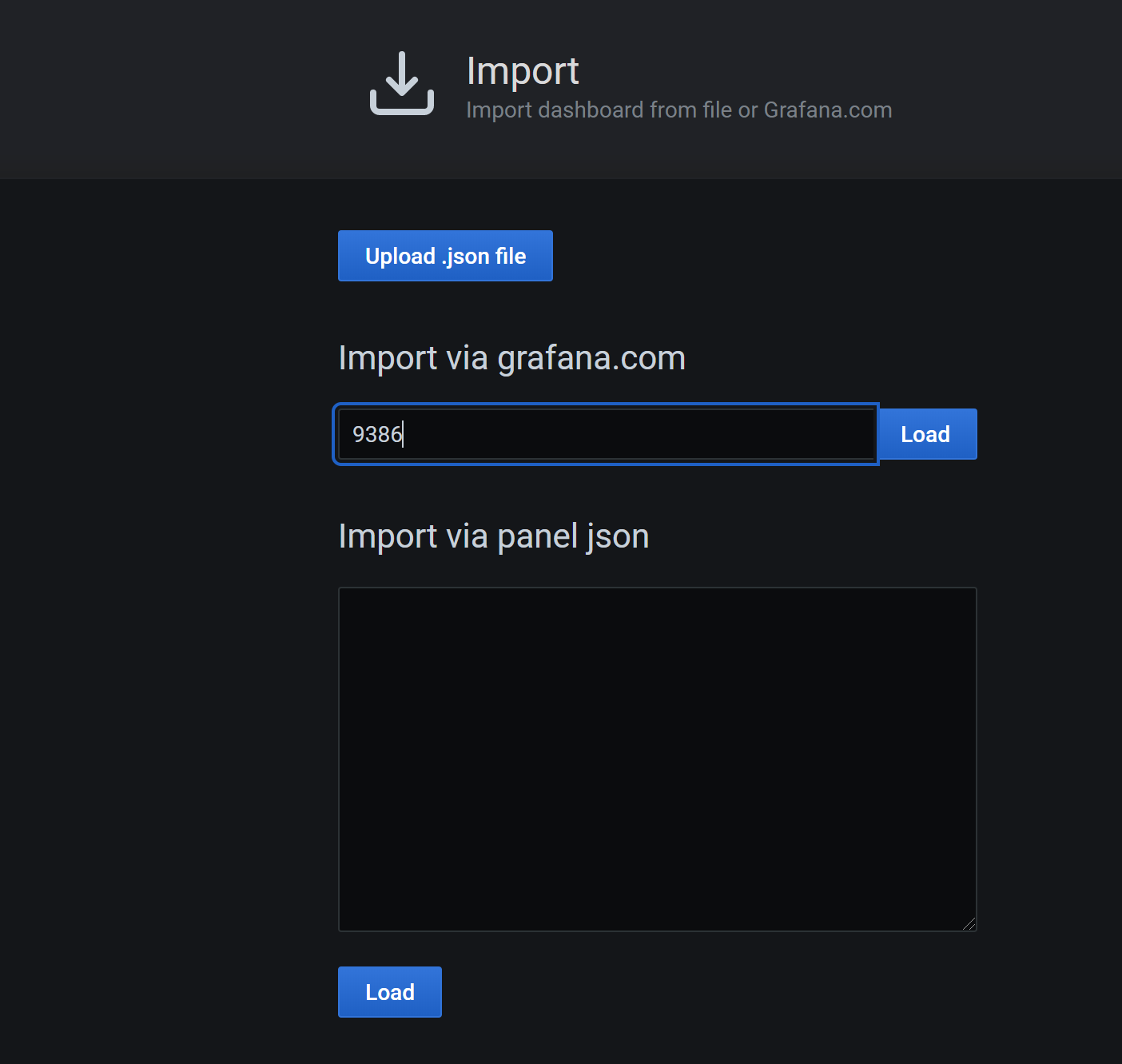
然后在Grafana界面,选择左侧的Dashboard->Import->填入Dashboard ID->Import,如下图:
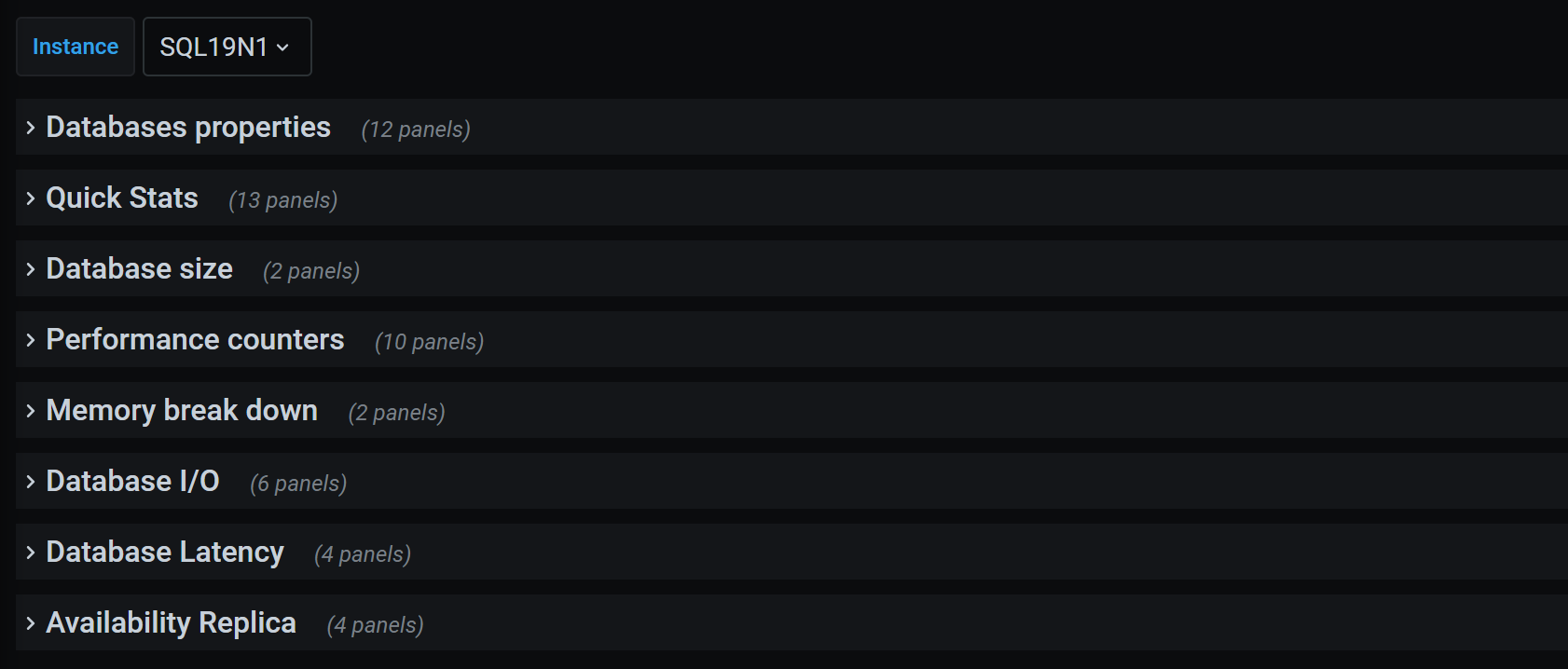
配置完成后的,可以看这个Dashboard提供的信息还比较丰富的,您也可以根据自己的需要修改和添加相关内容.

总结
实际情况中,自带的数据收集和报表不能完全满足业务需求,自定义的数据收集和自定义的Dashboard,也是非常容易实现的,下次再写
如果已经在使用Zabbix了,Grafana可以直接对接到Zabbix的数据输出。
Telegraf能非常好的支持Cloud环境,下次说说对Azure SQL PaaS的监控
本文内容仅代表个人观点,与任何公司和组织无关
Telegraf和Grafana监控多平台上的SQL Server的更多相关文章
- Telegraf和Grafana监控多平台上的SQL Server-自定义监控数据收集
问题 在上一篇文章中,我们使用Telegraf自带的Plugin配置好了的监控,但是自带的Plugin并不能完全覆盖我们想要的监控指标,就需要收集额外的自定义的监控数据,实现的方法有: 开发自己的Te ...
- 使用Telegraf + Influxdb + Grafana 监控SQLserver服务器的运行状况
使用Telegraf + Influxdb + Grafana 监控SQLserver服务器的运行状况 前言 本文在Debian9下采用Docker的方式安装Telegraf + Influxdb + ...
- SQL Server自动化运维系列——监控磁盘剩余空间及SQL Server错误日志(Power Shell)
需求描述 在我们的生产环境中,大部分情况下需要有自己的运维体制,包括自己健康状态的检测等.如果发生异常,需要提前预警的,通知形式一般为发邮件告知. 在所有的自检流程中最基础的一个就是磁盘剩余空间检测. ...
- SQL Server自动化运维系列 - 监控磁盘剩余空间及SQL Server错误日志(Power Shell)
需求描述 在我们的生产环境中,大部分情况下需要有自己的运维体制,包括自己健康状态的检测等.如果发生异常,需要提前预警的,通知形式一般为发邮件告知. 在所有的自检流程中最基础的一个就是磁盘剩余空间检测. ...
- SQL Server 自动化运维系列 - 监控磁盘剩余空间及SQL Server错误日志(Power Shell)
需求描述 在我们的生产环境中,大部分情况下需要有自己的运维体制,包括自己健康状态的检测等.如果发生异常,需要提前预警的,通知形式一般为发邮件告知. 在所有的自检流程中最基础的一个就是磁盘剩余空间检测. ...
- 搭建 Telegraf + InfluxDB + Grafana 监控遇到几个小问题
1:如果同一台服务器上安装有多个MongoDB实例,telegraf.conf 中关于 MongoDB 如何配置?配置数据在[INPUT PLUGINS的[[inputs.mongodb]]]部分. ...
- SQL Server 监控系列(文章索引)
一.前言(Introduction) SQL Server监控在很多时候可以帮助我们了解数据库做了些什么,比如谁谁在什么时候修改了表结构,谁谁在删除了某个对象,当这些事情发生了,老板在后面追着说这是谁 ...
- SQL Server自动化运维系列——监控跑批Job运行状态(Power Shell)
需求描述 在我们的生产环境中,大部分情况下需要有自己的运维体制,包括自己健康状态的检测等.如果发生异常,需要提前预警的,通知形式一般为发邮件告知. 在上一篇文章中已经分析了SQL SERVER中关于邮 ...
- SQL Server 监控 使用sp_trace_create
监控前言 上一节我们提到了MSSQL的基于SQL Event的监控,但是有些时候我们需要更加详细.适用于调优排错的监控.SQL Server内部运行的可见性是的查询调整.优化和综合排查成为可能!这一节 ...
随机推荐
- P1790 矩形分割(隐含的电风扇)
描述:https://www.luogu.com.cn/problem/P1790 有一个长为a,宽为b的矩形(1≤a≤6,2≤b≤6).可以把这个矩形看作是a*b个小方格. 我们现在接到了这样的一个 ...
- STM32CubeMX 多通道 ADC DMA 配置 测试小程序
要点: 1.STM32F103C8T6单片机 2.ADC+DMA 多通道 重点是ADC+DMA配置,ADC+DMA配置如下 其他配置略略略略. 然后各位自行直看.ioc文件,生成代码后在while之前 ...
- SpringMVC源码学习:容器初始化+MVC初始化+请求分发处理+参数解析+返回值解析+视图解析
目录 一.前言 二.初始化 1. 容器初始化 根容器查找的方法 容器创建的方法 加载配置文件信息 2. MVC的初始化 文件上传解析器 区域信息解析器 handler映射信息解析 3. Handler ...
- 【Spark】如何用Spark查询IP地址?
文章目录 需求 思路 ip地址转换为Long类型的两种方法 ip地址转换数字地址的原理 第一种方法 第二种方法 步骤 一.在mysql创建数据库表 二.开发代码 需求 日常生活中,当我们打开地图时,会 ...
- Jekyll 解决Jekyll server本地预览文章not found的问题
layout: post tags: [Jekyll] comments: true 执行Jekyll本地浏览器预览指令 bundle exec jekyll serve 进入浏览器输入127.0.0 ...
- Windows10系统优化(批处理)
经历过XP.Win7.Vista.Win8之后,Win10有了很大的改变,虽然Win10刚出时,非常糟糕,甚至很长一段时间被认为没有Win7,但是随着Win10的不断优化不断更新,已经慢慢的变得更好了 ...
- springData表关系:一对一
一.编写两个实体类 1.一对一关系实现:a:使用外键关联 b:使用主键关联,两个表的主键相同 2.外键方案:配置关联关系:两个实体类互相关联,并且在关联的属性上添加一个@OneToOne代表一个对一个 ...
- 很好的awk教程
讲的内容配合分析web log ,疗效很好! http://www.ibm.com/developerworks/cn/linux/l-cn-awk-httplog/ 出差归来,哈哈,吐槽的不必写了, ...
- lonic常用组件之五------按钮
一.Ionic常用组件之五------按钮 <ion-button color="主题色" size="small/large" expand=& ...
- 201771010128王玉兰《面向对象程序设计(Java)第十四周学习总结》
第一部分:理论知识总结: (1)Swing 设计模式(Design pattern)是设计者一种流行的 思考设计问题的方法,是一套被反复使用,多数人 知晓的,经过分类编目的,代码设计经验的总结. 使用 ...