
Spring源码解析-Web容器启动过程
Web容器启动过程,主要讲解Servlet和Spring容器结合的内容。
流程图如下:
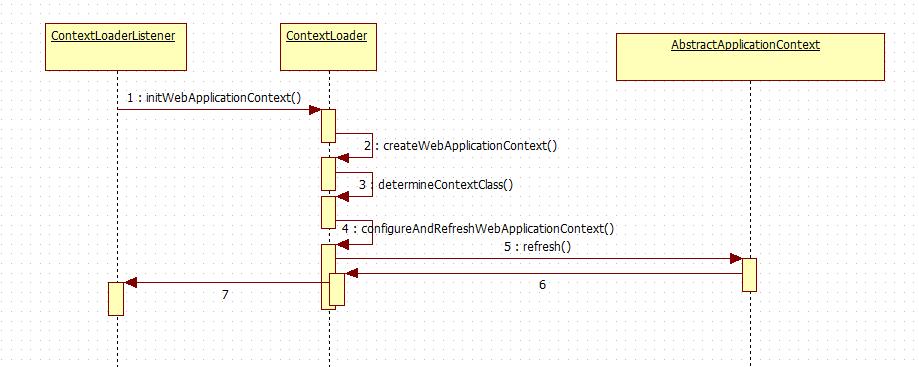
Web容器启动的Root Context是有ContextLoaderListener,一般使用spring,都会在web.xml中配置这个监听器。
<listener>

        <listener-class>org.springframework.web.context.ContextLoaderListener</listener-class>

    </listener>
下面就从这里入手,看看它是如何启动spring容器。
public class ContextLoaderListener extends ContextLoader implements ServletContextListener {

    public ContextLoaderListener(WebApplicationContext context) {

        super(context);

    }

    /**

     * Initialize the root web application context.

     */

    @Override

    public void contextInitialized(ServletContextEvent event) {

        initWebApplicationContext(event.getServletContext());

    }

    /**

     * Close the root web application context.

     */

    @Override

    public void contextDestroyed(ServletContextEvent event) {

        closeWebApplicationContext(event.getServletContext());

        ContextCleanupListener.cleanupAttributes(event.getServletContext());

    }

}
这个类继承了ContextLoader,同时实现了ServletContextListener,从注释上可以看出,web应用会调用contextInitalized方法进行初始化。
先看一下ServletContextListener.
public interface ServletContextListener extends EventListener {

    void contextInitialized(ServletContextEvent var1);

    void contextDestroyed(ServletContextEvent var1);

}
从名字可以看出,一个是初始化方法,另一个是销毁是调用的方法。
回到上面而initWebApplicationContext方法,通过createWebApplicationContext方法获取WebApplicationContext,调用determineContextClass方法如下:
/**

     * Return the WebApplicationContext implementation class to use, either the

     * default XmlWebApplicationContext or a custom context class if specified.

     * @param servletContext current servlet context

     * @return the WebApplicationContext implementation class to use

     * @see #CONTEXT_CLASS_PARAM

     * @see org.springframework.web.context.support.XmlWebApplicationContext

     */

    protected Class<?> determineContextClass(ServletContext servletContext) {

        String contextClassName = servletContext.getInitParameter(CONTEXT_CLASS_PARAM);

        if (contextClassName != null) {

            try {

                return ClassUtils.forName(contextClassName, ClassUtils.getDefaultClassLoader());

            }

            catch (ClassNotFoundException ex) {

                throw new ApplicationContextException(

                        "Failed to load custom context class [" + contextClassName + "]", ex);

            }

        }

        else {

            contextClassName = defaultStrategies.getProperty(WebApplicationContext.class.getName());

            try {

                return ClassUtils.forName(contextClassName, ContextLoader.class.getClassLoader());

            }

            catch (ClassNotFoundException ex) {

                throw new ApplicationContextException(

                        "Failed to load default context class [" + contextClassName + "]", ex);

            }

        }

    }
从注释上可以看出返回的是XmlWebApplicationContext。
回到initWebApplicationContext方法中,有一段
if (this.context instanceof ConfigurableWebApplicationContext) {

                ConfigurableWebApplicationContext cwac = (ConfigurableWebApplicationContext) this.context;

                if (!cwac.isActive()) {

                    // The context has not yet been refreshed -> provide services such as

                    // setting the parent context, setting the application context id, etc

                    if (cwac.getParent() == null) {

                        // The context instance was injected without an explicit parent ->

                        // determine parent for root web application context, if any.

                        ApplicationContext parent = loadParentContext(servletContext);

                        cwac.setParent(parent);

                    }

                    configureAndRefreshWebApplicationContext(cwac, servletContext);

                }

            }
会调用configureAndRefreshWebApplication方法,感觉是配置和刷新,进入方法。
protected void configureAndRefreshWebApplicationContext(ConfigurableWebApplicationContext wac, ServletContext sc) {

        if (ObjectUtils.identityToString(wac).equals(wac.getId())) {

            // The application context id is still set to its original default value

            // -> assign a more useful id based on available information

            String idParam = sc.getInitParameter(CONTEXT_ID_PARAM);

            if (idParam != null) {

                wac.setId(idParam);

            }

            else {

                // Generate default id...

                wac.setId(ConfigurableWebApplicationContext.APPLICATION_CONTEXT_ID_PREFIX +

                        ObjectUtils.getDisplayString(sc.getContextPath()));

            }

        }

        wac.setServletContext(sc);
        //获取配置的参数信息

        String configLocationParam = sc.getInitParameter(CONFIG_LOCATION_PARAM);

        if (configLocationParam != null) {

            wac.setConfigLocation(configLocationParam);

        }

        // The wac environment's #initPropertySources will be called in any case when the context

        // is refreshed; do it eagerly here to ensure servlet property sources are in place for

        // use in any post-processing or initialization that occurs below prior to #refresh

        ConfigurableEnvironment env = wac.getEnvironment();

        if (env instanceof ConfigurableWebEnvironment) {

            ((ConfigurableWebEnvironment) env).initPropertySources(sc, null);

        }

        customizeContext(sc, wac);
       //刷新上下文-->AbsreactApplicationContext.refresh()

        wac.refresh();

    }
至此,通过wac.refresh()启动Spring容器。
Spring源码解析-Web容器启动过程的更多相关文章
- spring源码:web容器启动(li)
web项目中可以集成spring的ApplicationContext进行bean的管理,这样使用起来bean更加便捷,能够利用到很多spring的特性.我们比较常用的web容器有jetty,tomc ...
- spring源码:web容器启动
web项目中可以集成spring的ApplicationContext进行bean的管理,这样使用起来bean更加便捷,能够利用到很多spring的特性.我们比较常用的web容器有jetty,tomc ...
- Fabric1.4源码解析: 链码容器启动过程
想写点东西记录一下最近看的一些Fabric源码,本文使用的是fabric1.4的版本,所以对于其他版本的fabric,内容可能会有所不同. 本文想针对Fabric中链码容器的启动过程进行源码的解析.这 ...
- Spring源码解析 – AnnotationConfigApplicationContext容器创建过程
Spring在BeanFactory基础上提供了一些列具体容器的实现,其中AnnotationConfigApplicationContext是一个用来管理注解bean的容器,从AnnotationC ...
- Spring源码解析-ioc容器的设计
Spring源码解析-ioc容器的设计 1 IoC容器系列的设计:BeanFactory和ApplicatioContext 在Spring容器中,主要分为两个主要的容器系列,一个是实现BeanFac ...
- Spring源码-IOC部分-容器初始化过程【2】
实验环境:spring-framework-5.0.2.jdk8.gradle4.3.1 Spring源码-IOC部分-容器简介[1] Spring源码-IOC部分-容器初始化过程[2] Spring ...
- 【Spring源码解析】—— 结合SpringMVC过程理解IOC容器初始化
关于IOC容器的初始化,结合之前SpringMVC的demo,对其过程进行一个相对详细的梳理,主要分为几个部分: 一.IOC的初始化过程,结合代码和debug过程重点说明 1. 为什么要debug? ...
- Spring源码解析-IOC容器的实现-ApplicationContext
上面我们已经知道了IOC的建立的基本步骤了,我们就可以用编码的方式和IOC容器进行建立过程了.其实Spring已经为我们提供了很多实现,想必上面的简单扩展,如XMLBeanFacroty等.我们一般是 ...
- Spring源码解析-IOC容器的实现
1.IOC容器是什么? IOC(Inversion of Control)控制反转:本来是由应用程序管理的对象之间的依赖关系,现在交给了容器管理,这就叫控制反转,即交给了IOC容器,Spring的IO ...
随机推荐
- lesson 20 pioneer pilots
lesson 20 Pioneer pilots driver pilot rider cyclist 骑自行车的人 介词后不加that cover + 距离 = travel 了一段距离 by su ...
- Swift使用AVAudioPlayer来调节游戏的背景音乐大小
音乐文件的声音大小有时在做为游戏背景音乐时会过大,而如果我们只是简单应用SKAudioNode来加载音乐的话,是无法进行声音大小的调节的,因此我们必须使用更强大的AVAudioPlayer来进行声音大 ...
- leetcode个人题解——#11 Container with most water
class Solution { public: int maxArea(vector<int>& height) { ; ; ; while(l < r) { int h ...
- Linux命令详解----ln
ln命令 ln命令为文件或文件夹创建连接,连接类型有硬链接和符号连接两种,符号连接需要使用"-s"选项 ln语法 ln [选项] 参数 使用 ln --help查看可用选项 [ro ...
- 给你的WP应用加上帮助文档
背景 这算是Windows Phone编程回顾续篇, 接着给大家聊WP开发经验. 在开发了数个WP应用并发布后, 陆续收到很多反馈邮件, 其中接近一半的邮件是在问"某某功能有没有?" ...
- 【IdentityServer4文档】- 贡献
贡献 我们非常乐于接受社区贡献,但您应遵循一些指导原则,以便我们可以很方便的解决这个问题. 如何贡献? 最简单的方法是打开一个问题并开始讨论.然后,我们可以决定如何实现一个特性或一个变更.如果您即将提 ...
- TCP系列38—拥塞控制—1、概述
在本篇中我们继续上一篇文章wireshark的示例讲解,上一篇介绍了一个综合示例后,本篇介绍一些简单的示例,在读本篇前建议先把上一篇读完,为了节省篇幅,本篇只针对一些特殊的场景点报文进行讲解,不会像上 ...
- 《学习OpenCV》课后习题解答5
题目:(P104) 为一个图像创建多个图像头.读取一个大小至少为100*100的图像.另创建两个图像头并设置它们的origion,depth,nChannels和widthStep属性同之前读取的图像 ...
- C# 正则表达式 最全的验证类
///<summary> ///验证输入的数据是不是正整数 ///</summary> ///<param name="str">传入字符串&l ...
- 在 Range 对象中,Min (14)必须小于或等于 max (-1)。
DataTable dt = ds.Tables[]; DataRow[] drs = dt.Select("Id=" + categoryID ); 解决方法:将参数用单引号阔起 ...