
MyBatis:二级缓存原理分析
MyBatis从入门到放弃七:二级缓存原理分析
前言
说起mybatis的一级缓存和二级缓存我特意问了几个身边的朋友他们平时会不会用,结果没有一个人平时业务场景中用。 好吧,那我暂且用来学习源码吧。一级缓存我个人认为也确实有些鸡肋,mybatis默认开启一级缓存,支持在同一个会话(sqlsession)同一个statement执行两次,则第二次会默认会使用第一次创建的缓存对象。
二级缓存前一篇粗略介绍了下,默认使用内存对象【PerpetualCache】内部维护一个HashMap对象来存储。
MyBatis缓存设计及二级缓存工作模式
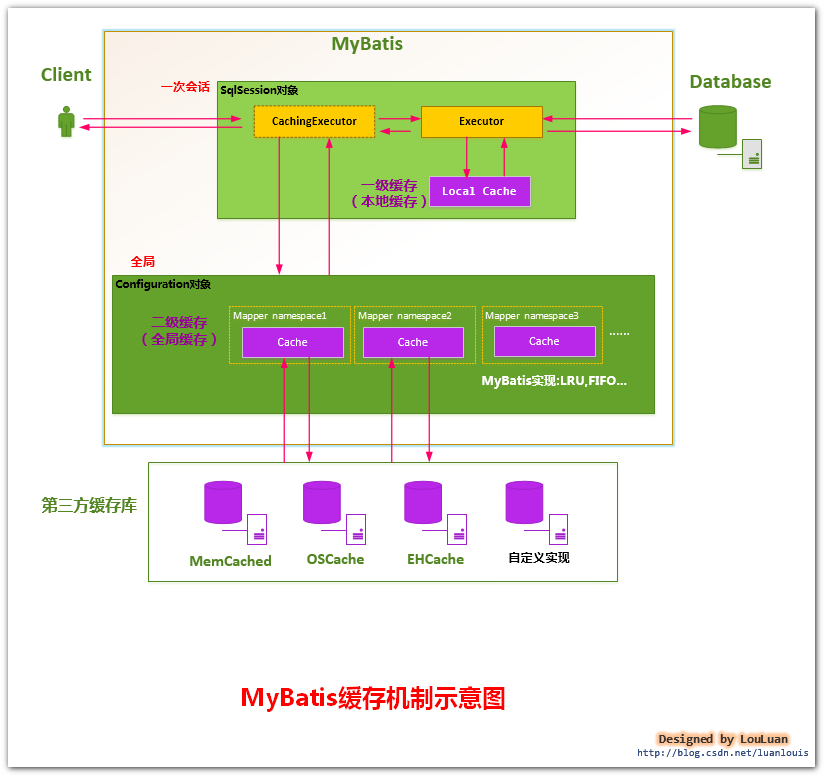
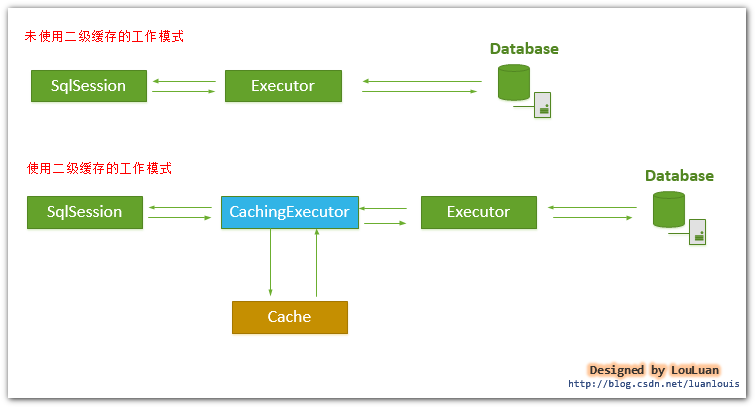
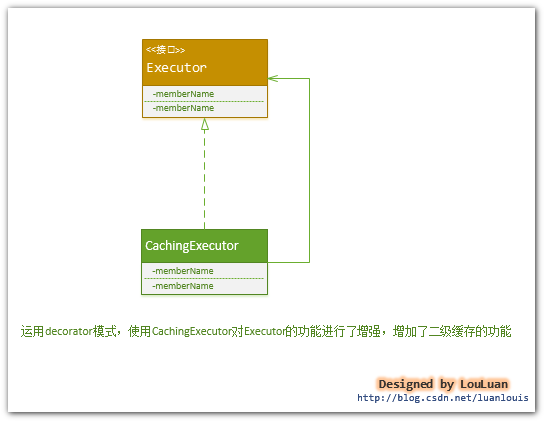
从上面三张图中我们得出结论,一级缓存是sqlsession级别、二级缓存是Mapper级别。mybatis定义了【Cache】接口,支持自定义缓存,同时还支持集成第三方缓存库,现在为了更细粒度的控制缓存,更多的集成【ehcache】、【redis】。
那么mybatis的二级缓存主要是在Executor对象上来做文章,当mybatis发现你在mybatis.xml配置文件中设置了cacheEnabled=true时,mybatis在创建sqlsession时创建Executor对象,同时会对Executor加上装饰者【CacheExecutor】。CacheExecutor对于查询请求,会判断application级别的二级缓存是否有缓存结果,如果有查询结果则直接返回,如果没有再交给查询器Executor实现类,也就是【SimpleExecutor】来执行查询。再就是缓存结果,返回给用户。
贴出SmpleExecutor源码:
|
1
2
3
4
5
6
7
8
9
10
11
12
13
14
15
16
17
18
19
20
21
22
23
24
25
26
27
28
29
30
31
32
33
34
35
36
37
38
39
40
41
42
43
44
45
46
47
48
49
50
51
52
53
54
55
56
57
58
59
60
61
62
63
64
65
66
67
68
69
70
71
72
73
74
75
76
77
78
79
80
81
82
83
84
85
86
87
88
89
90
|
/** * Copyright 2009-2016 the original author or authors. * * Licensed under the Apache License, Version 2.0 (the "License"); * you may not use this file except in compliance with the License. * You may obtain a copy of the License at * * http://www.apache.org/licenses/LICENSE-2.0 * * Unless required by applicable law or agreed to in writing, software * distributed under the License is distributed on an "AS IS" BASIS, * WITHOUT WARRANTIES OR CONDITIONS OF ANY KIND, either express or implied. * See the License for the specific language governing permissions and * limitations under the License. */package org.apache.ibatis.executor;import org.apache.ibatis.cursor.Cursor;import org.apache.ibatis.executor.statement.StatementHandler;import org.apache.ibatis.logging.Log;import org.apache.ibatis.mapping.BoundSql;import org.apache.ibatis.mapping.MappedStatement;import org.apache.ibatis.session.Configuration;import org.apache.ibatis.session.ResultHandler;import org.apache.ibatis.session.RowBounds;import org.apache.ibatis.transaction.Transaction;import java.sql.Connection;import java.sql.SQLException;import java.sql.Statement;import java.util.Collections;import java.util.List;/** * @author Clinton Begin */public class SimpleExecutor extends BaseExecutor { public SimpleExecutor(Configuration configuration, Transaction transaction) { super(configuration, transaction); } @Override public int doUpdate(MappedStatement ms, Object parameter) throws SQLException { Statement stmt = null; try { Configuration configuration = ms.getConfiguration(); StatementHandler handler = configuration.newStatementHandler(this, ms, parameter, RowBounds.DEFAULT, null, null); stmt = prepareStatement(handler, ms.getStatementLog()); return handler.update(stmt); } finally { closeStatement(stmt); } } @Override public <E> List<E> doQuery(MappedStatement ms, Object parameter, RowBounds rowBounds, ResultHandler resultHandler, BoundSql boundSql) throws SQLException { Statement stmt = null; try { Configuration configuration = ms.getConfiguration(); StatementHandler handler = configuration.newStatementHandler(wrapper, ms, parameter, rowBounds, resultHandler, boundSql); stmt = prepareStatement(handler, ms.getStatementLog()); return handler.<E>query(stmt, resultHandler); } finally { closeStatement(stmt); } } @Override protected <E> Cursor<E> doQueryCursor(MappedStatement ms, Object parameter, RowBounds rowBounds, BoundSql boundSql) throws SQLException { Configuration configuration = ms.getConfiguration(); StatementHandler handler = configuration.newStatementHandler(wrapper, ms, parameter, rowBounds, null, boundSql); Statement stmt = prepareStatement(handler, ms.getStatementLog()); return handler.<E>queryCursor(stmt); } @Override public List<BatchResult> doFlushStatements(boolean isRollback) throws SQLException { return Collections.emptyList(); } private Statement prepareStatement(StatementHandler handler, Log statementLog) throws SQLException { Statement stmt; Connection connection = getConnection(statementLog); stmt = handler.prepare(connection, transaction.getTimeout()); handler.parameterize(stmt); return stmt; }} |
那么,缓存起来的数据怎么过期呢,这也是我这篇文章重点关心的。一般流量不大的站点,数据由后台维护,使用二级缓存足够了。先来看全局配置文件,配置只关心一点:cacheEnabled=true。

<?xml version="1.0" encoding="UTF-8"?>

<!DOCTYPE configuration PUBLIC "-//mybatis.org//DTD Config 3.0//EN"

        "http://mybatis.org/dtd/mybatis-3-config.dtd">

<configuration>

    <settings>

        <!--开启二级缓存-->

        <setting name="cacheEnabled" value="true"/>

    </settings>

    <typeAliases>

        <typeAlias alias="User" type="com.autohome.model.User" />

    </typeAliases>

    <mappers>

        <mapper resource="mapper/UserMapper.xml" />

    </mappers>

</configuration>
Mapper.xml
这里配置Cache对象。这里的eviction参数提到几个算法策略:
LRU:(Least Recently Used),最近最少使用算法,即如果缓存中容量已经满了,会将缓存中最近做少被使用的缓存记录清除掉,然后添加新的记录;
FIFO:(First in first out),先进先出算法,如果缓存中的容量已经满了,那么会将最先进入缓存中的数据清除掉;
Scheduled:指定时间间隔清空算法,该算法会以指定的某一个时间间隔将Cache缓存中的数据清空;
<?xml version="1.0" encoding="UTF-8"?>

<!DOCTYPE mapper PUBLIC "-//mybatis.org//DTD Mapper 3.0//EN"

        "http://mybatis.org/dtd/mybatis-3-mapper.dtd">

<!--命名空间和接口保持一致-->

<mapper namespace="com.autohome.dao.UserMapper">

    <!--

    eviction LRU

    flushInterval缓存时间,以毫秒为单位

    size缓存大小

    readOnly如果为false的话,缓存对象必须是可序列化的-->

    <cache eviction="LRU"

           type="org.apache.ibatis.cache.impl.PerpetualCache"

           flushInterval="120000"

           size="1024"

           readOnly="true"/>

    <select id="listAllUser" resultType="User">

        select * from t_userinfo

    </select>

</mapper>
配图看demo
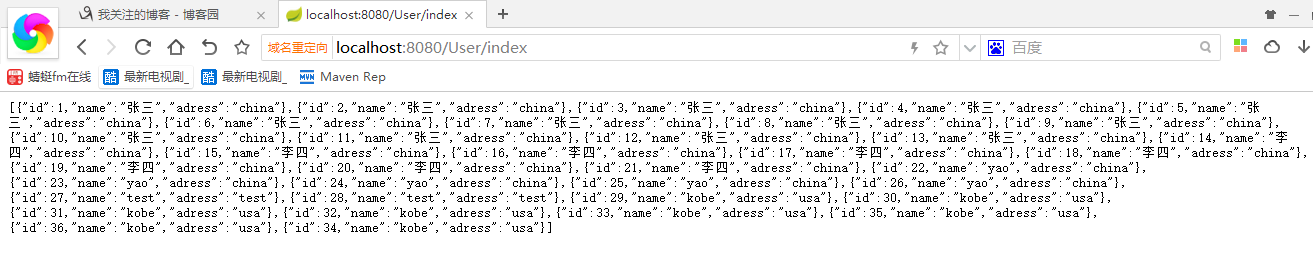
第一次查询是36条数据,我配置缓存是2分钟。然后再insert一条,你再刷新页面数据不变。等两分钟。。。。

总结
OK,所谓的存在即合理吧,适合不适合取决于你的业务场景。mybatis也提供了接口以便扩展。小流量、数据量小使用mybatis二级缓存足以。
MyBatis:二级缓存原理分析的更多相关文章
- MyBatis从入门到放弃七:二级缓存原理分析
前言 说起mybatis的一级缓存和二级缓存我特意问了几个身边的朋友他们平时会不会用,结果没有一个人平时业务场景中用. 好吧,那我暂且用来学习源码吧.一级缓存我个人认为也确实有些鸡肋,mybatis默 ...
- Mybatis 一级缓存和二级缓存原理区别 (图文详解)
Java面试经常问到Mybatis一级缓存和二级缓存,今天就给大家重点详解Mybatis一级缓存和二级缓存原理与区别@mikechen Mybatis缓存 缓存就是内存中的数据,常常来自对数据库查询结 ...
- 如何细粒度地控制你的MyBatis二级缓存(mybatis-enhanced-cache插件实现)
前几天网友chanfish 给我抛出了一个问题,笼统地讲就是如何能细粒度地控制MyBatis的二级缓存问题,酝酿了几天,觉得可以写个插件来实现这个这一功能.本文就是从问题入手,一步步分析现存的MyBa ...
- MyBatis 二级缓存全详解
目录 MyBatis 二级缓存介绍 二级缓存开启条件 探究二级缓存 二级缓存失效的条件 第一次SqlSession 未提交 更新对二级缓存影响 探究多表操作对二级缓存的影响 二级缓存源码解析 二级缓存 ...
- Mybatis 二级缓存应用 (21)
[MyBatis 二级缓存] 概述:一级缓存作用域为同一个SqlSession对象,而二级缓存用来解决一级缓存不能夸会话共享,作用范围是namespace级,可以被多个SqlSession共享(只要是 ...
- Mybatis接口编程原理分析(三)
前面两篇博客Mybatis接口编程原理分析(一)和Mybatis接口编程原理分析(二)我们介绍了MapperProxyFactory.MapperProxy和MapperMethod的操作及源码分析, ...
- Mybatis接口编程原理分析(二)
在上一篇博客中 Mybatis接口编程原理分析(一)中我们介绍了MapperProxyFactory和MapperProxy,接下来我们要介绍的是MapperMethod MapperMethod:它 ...
- mybatis二级缓存应用及与ehcache整合
mybaits的二级缓存是mapper范围级别,除了在SqlMapConfig.xml设置二级缓存的总开关,还要在具体的mapper.xml中开启二级缓存. 1.开启mybatis的二级缓存 在核心配 ...
- 深入了解MyBatis二级缓存
深入了解MyBatis二级缓存 标签: mybatis二级缓存 2015-03-30 08:57 41446人阅读 评论(13) 收藏 举报 分类: Mybatis(51) 版权声明:版权归博主所 ...
随机推荐
- DIV+CSS初学随记
字间隔word-spacing 属性可以改变字(单词)之间的标准间隔.其默认值 normal 与设置值为 0 是一样的. word-spacing 属性接受一个正长度值或负长度值.如果提供一个正长度值 ...
- JS的MD5加密
/* * A JavaScript implementation of the RSA Data Security, Inc. MD5 Message * Digest Algorithm, as d ...
- 在AndroidStudio上使用AddressSanitizer
在AndroidStudio上使用AddressSanitizer AddressSanitizer是Google主导的一个开源内存问题检测工具.现在也开始支持Android平台,且受Google推荐 ...
- myapp——自动生成小学四则运算题目的命令行程序(侯国鑫 谢嘉帆)
1.Github项目地址 https://github.com/baiyexing/myapp.git 2.功能要求 题目:实现一个自动生成小学四则运算题目的命令行程序 功能(已全部实现) 使用 -n ...
- 如何在MongoDB设计存储你的数据(JSON化)?
第一步 定义要描述的数据集 当我们决定将数据存储下来的时候,我们首先要回答的一个问题就是:“我打算存储什么样的数据?这些数据之间有什么关系?实体之间有什么关系?实体的属性之间有什么关系”. 为了说明问 ...
- 解决sqlserver数据库显示单个用户
今天突然发现数据库显示为单个用户并且,访问速度超慢,执行以下语句解决了 USE master; GO DECLARE @SQL VARCHAR(MAX); SET @SQL='' SELECT @SQ ...
- LeetCode算法题-Perfect Number(Java实现)
这是悦乐书的第249次更新,第262篇原创 01 看题和准备 今天介绍的是LeetCode算法题中Easy级别的第116题(顺位题号是507).我们定义Perfect Number是一个正整数,它等于 ...
- java 非访问修饰符 final 的用法
final 修饰符,用来修饰类.方法和变量 final修饰的类不能被继承 举例,String类是final类,不可以被继承: final修饰的方法不能被重写 只是不能重写,也就是不能被子类修改,但是可 ...
- Vue-Router的Hash说起的URL相关知识
最近被问到VueRouter的两种模式的区别,答:Hash模式url上有#号,History模式url上没有#.完! 也不知道这么回答对不对,就看了看资料,发现也就是这个意思吧! Vue-Router ...
- 纯代码系列:Python实现验证码图片(PIL库经典用法用法,爬虫12306思路)
现在的网页中,为了防止机器人提交表单,图片验证码是很常见的应对手段之一.这里就不详细介绍了,相信大家都遇到过. 现在就给出用Python的PIL库实现验证码图片的代码.代码中有详细注释. #!/usr ...