
吴裕雄--天生自然python Google深度学习框架:经典卷积神经网络模型

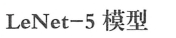

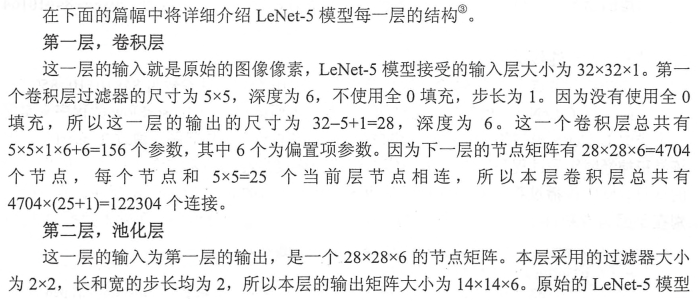
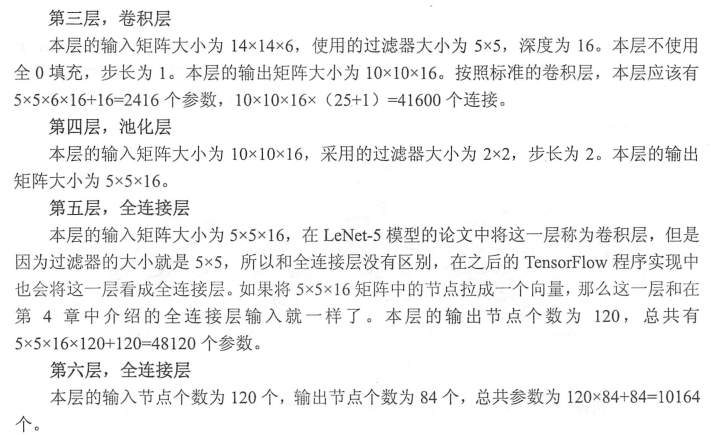
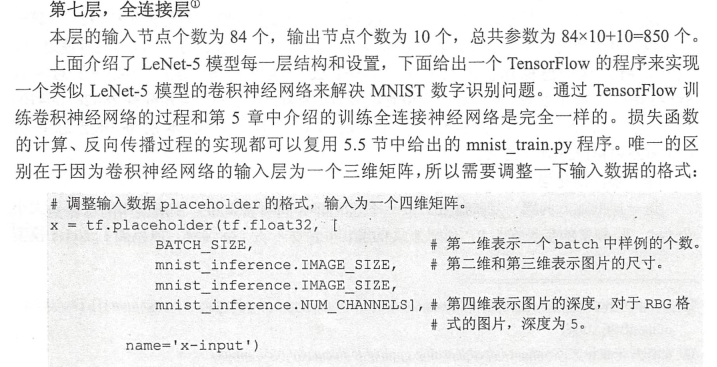

import tensorflow as tf

INPUT_NODE = 784

OUTPUT_NODE = 10

IMAGE_SIZE = 28

NUM_CHANNELS = 1

NUM_LABELS = 10

CONV1_DEEP = 32

CONV1_SIZE = 5

CONV2_DEEP = 64

CONV2_SIZE = 5

FC_SIZE = 512

def inference(input_tensor, train, regularizer):

    with tf.variable_scope('layer1-conv1'):

        conv1_weights = tf.get_variable(

            "weight", [CONV1_SIZE, CONV1_SIZE, NUM_CHANNELS, CONV1_DEEP],

            initializer=tf.truncated_normal_initializer(stddev=0.1))

        conv1_biases = tf.get_variable("bias", [CONV1_DEEP], initializer=tf.constant_initializer(0.0))

        conv1 = tf.nn.conv2d(input_tensor, conv1_weights, strides=[1, 1, 1, 1], padding='SAME')

        relu1 = tf.nn.relu(tf.nn.bias_add(conv1, conv1_biases))

    with tf.name_scope("layer2-pool1"):

        pool1 = tf.nn.max_pool(relu1, ksize = [1,2,2,1],strides=[1,2,2,1],padding="SAME")

    with tf.variable_scope("layer3-conv2"):

        conv2_weights = tf.get_variable(

            "weight", [CONV2_SIZE, CONV2_SIZE, CONV1_DEEP, CONV2_DEEP],

            initializer=tf.truncated_normal_initializer(stddev=0.1))

        conv2_biases = tf.get_variable("bias", [CONV2_DEEP], initializer=tf.constant_initializer(0.0))

        conv2 = tf.nn.conv2d(pool1, conv2_weights, strides=[1, 1, 1, 1], padding='SAME')

        relu2 = tf.nn.relu(tf.nn.bias_add(conv2, conv2_biases))

    with tf.name_scope("layer4-pool2"):

        pool2 = tf.nn.max_pool(relu2, ksize=[1, 2, 2, 1], strides=[1, 2, 2, 1], padding='SAME')

        pool_shape = pool2.get_shape().as_list()

        nodes = pool_shape[1] * pool_shape[2] * pool_shape[3]

        reshaped = tf.reshape(pool2, [pool_shape[0], nodes])

    with tf.variable_scope('layer5-fc1'):

        fc1_weights = tf.get_variable("weight", [nodes, FC_SIZE],

                                      initializer=tf.truncated_normal_initializer(stddev=0.1))

        if regularizer != None: tf.add_to_collection('losses', regularizer(fc1_weights))

        fc1_biases = tf.get_variable("bias", [FC_SIZE], initializer=tf.constant_initializer(0.1))

        fc1 = tf.nn.relu(tf.matmul(reshaped, fc1_weights) + fc1_biases)

        if train: fc1 = tf.nn.dropout(fc1, 0.5)

    with tf.variable_scope('layer6-fc2'):

        fc2_weights = tf.get_variable("weight", [FC_SIZE, NUM_LABELS],

                                      initializer=tf.truncated_normal_initializer(stddev=0.1))

        if regularizer != None: tf.add_to_collection('losses', regularizer(fc2_weights))

        fc2_biases = tf.get_variable("bias", [NUM_LABELS], initializer=tf.constant_initializer(0.1))

        logit = tf.matmul(fc1, fc2_weights) + fc2_biases

    return logit
import tensorflow as tf

from tensorflow.examples.tutorials.mnist import input_data

import LeNet5_infernece

import os

import numpy as np

BATCH_SIZE = 100

LEARNING_RATE_BASE = 0.01

LEARNING_RATE_DECAY = 0.99

REGULARIZATION_RATE = 0.0001

TRAINING_STEPS = 6000

MOVING_AVERAGE_DECAY = 0.99

def train(mnist):

    # 定义输出为4维矩阵的placeholder

    x = tf.placeholder(tf.float32, [

            BATCH_SIZE,

            LeNet5_infernece.IMAGE_SIZE,

            LeNet5_infernece.IMAGE_SIZE,

            LeNet5_infernece.NUM_CHANNELS],

        name='x-input')

    y_ = tf.placeholder(tf.float32, [None, LeNet5_infernece.OUTPUT_NODE], name='y-input')

    regularizer = tf.contrib.layers.l2_regularizer(REGULARIZATION_RATE)

    y = LeNet5_infernece.inference(x,False,regularizer)

    global_step = tf.Variable(0, trainable=False)

    # 定义损失函数、学习率、滑动平均操作以及训练过程。

    variable_averages = tf.train.ExponentialMovingAverage(MOVING_AVERAGE_DECAY, global_step)

    variables_averages_op = variable_averages.apply(tf.trainable_variables())

    cross_entropy = tf.nn.sparse_softmax_cross_entropy_with_logits(logits=y, labels=tf.argmax(y_, 1))

    cross_entropy_mean = tf.reduce_mean(cross_entropy)

    loss = cross_entropy_mean + tf.add_n(tf.get_collection('losses'))

    learning_rate = tf.train.exponential_decay(

        LEARNING_RATE_BASE,

        global_step,

        mnist.train.num_examples / BATCH_SIZE, LEARNING_RATE_DECAY,

        staircase=True)

    train_step = tf.train.GradientDescentOptimizer(learning_rate).minimize(loss, global_step=global_step)

    with tf.control_dependencies([train_step, variables_averages_op]):

        train_op = tf.no_op(name='train')

    # 初始化TensorFlow持久化类。

    saver = tf.train.Saver()

    with tf.Session() as sess:

        tf.global_variables_initializer().run()

        for i in range(TRAINING_STEPS):

            xs, ys = mnist.train.next_batch(BATCH_SIZE)

            reshaped_xs = np.reshape(xs, (

                BATCH_SIZE,

                LeNet5_infernece.IMAGE_SIZE,

                LeNet5_infernece.IMAGE_SIZE,

                LeNet5_infernece.NUM_CHANNELS))

            _, loss_value, step = sess.run([train_op, loss, global_step], feed_dict={x: reshaped_xs, y_: ys})

            if i % 1000 == 0:

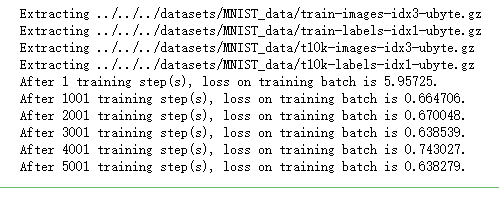
                print("After %d training step(s), loss on training batch is %g." % (step, loss_value))

def main(argv=None):

    mnist = input_data.read_data_sets("../../../datasets/MNIST_data", one_hot=True)

    train(mnist)

if __name__ == '__main__':

    main()

吴裕雄--天生自然python Google深度学习框架:经典卷积神经网络模型的更多相关文章
- 吴裕雄--天生自然python Google深度学习框架:Tensorflow实现迁移学习
import glob import os.path import numpy as np import tensorflow as tf from tensorflow.python.platfor ...
- 吴裕雄--天生自然python Google深度学习框架:图像识别与卷积神经网络
- 吴裕雄--天生自然python Google深度学习框架:MNIST数字识别问题
import tensorflow as tf from tensorflow.examples.tutorials.mnist import input_data INPUT_NODE = 784 ...
- 吴裕雄--天生自然python Google深度学习框架:深度学习与深层神经网络
- 吴裕雄--天生自然python Google深度学习框架:TensorFlow实现神经网络
http://playground.tensorflow.org/
- 吴裕雄--天生自然python Google深度学习框架:Tensorflow基础应用
import tensorflow as tf a = tf.constant([1.0, 2.0], name="a") b = tf.constant([2.0, 3.0], ...
- 吴裕雄--天生自然python Google深度学习框架:人工智能、深度学习与机器学习相互关系介绍
- 吴裕雄--天生自然神经网络与深度学习实战Python+Keras+TensorFlow:Bellman函数、贪心算法与增强性学习网络开发实践
!pip install gym import random import numpy as np import matplotlib.pyplot as plt from keras.layers ...
- 吴裕雄--天生自然神经网络与深度学习实战Python+Keras+TensorFlow:使用TensorFlow和Keras开发高级自然语言处理系统——LSTM网络原理以及使用LSTM实现人机问答系统
!mkdir '/content/gdrive/My Drive/conversation' ''' 将文本句子分解成单词,并构建词库 ''' path = '/content/gdrive/My D ...
随机推荐
- Arduino - Nano针脚分配时需要注意的事项
0.1为Rx.Tx 针脚,这两个针脚一般作为串口使用,非串口设备尽量不占用该针脚.2.3为中断口,分别对应中断0.中断1,需要中断功能的设备,必须接入此.2-13.A0-A5,共18个针脚,都可以作为 ...
- RecyclerView使用介绍
来源 http://jinyudong.com/2014/11/13/Introduce-RecyclerView-%E4%B8%80/ 编辑推荐:稀土掘金,这是一个针对技术开发者的一个应用,你可以在 ...
- <mvc:default-servlet-handler />说明
优雅REST风格的资源URL不希望带 .html 或 .do 等后缀.由于早期的Spring MVC不能很好地处理静态资源,所以在web.xml中配置DispatcherServlet的请求映射,往往 ...
- mysql数据库索引优化
参考 :http://www.cnblogs.com/yangmei123/archive/2016/04/10/5375723.html MySQL数据库的优化: 数据库优化的目的: ...
- 201803-2 碰撞的小球 Java
思路: 直接按照题意模拟,感觉没什么太好的办法.另外注意:int这种基础数据类型不能用equals这个方法 ,必须是Integer类型 import java.util.Scanner; public ...
- SQL SERVER 2012 OBJECT_ID
原来一个存储过程执行正常,升级sqlserver后提示临时表已存在,后查找资料 sql server 2012 OBJECT_ID('临时表')返回的数值是负数,在 2008r2及前是正数,所以导致 ...
- JavaSE--Arrays.copyof
背景: 想偷懒一次数组赋值下面多个例子复制下数组就好了.. 以为 Arrays.copyof(Arrays.copyof内部调用的是 System.copy, 所以同 Arrays.copy)拷贝出来 ...
- 从1到n整数中1的个数
[问题]求出1~13的整数中1出现的次数,并算出100~1300的整数中1出现的次数?为此他特别数了一下1~13中包含1的数字有1.10.11.12.13因此共出现6次,但是对于后面问题他就没辙了.A ...
- 吴裕雄--天生自然 PHP开发学习:条件语句
<?php $t=date("H"); if ($t<"20") { echo "Have a good day!"; } ?& ...
- android stutio 添加依赖
添加依赖有 3种方法: 1 :copy jar 包到libs目录 ,add to library 2: copy aar 文件到libs ,gradle 文件 android 节点添加 repo ...