
[原创]spring及springmvc精简版--IOC
本篇博客为自己学习spring和springmvc的一个总结。主要以代码为主,至于文字性描述理解性东西,可以自行百度。有认识不妥的地方,还望指出,相互学习。
以前很困惑spring中的一些概念,在学习过程中遇到了很都问题,目前基本解决。解决的方法:
① 总结Spring框架的运行流程:在框架中,程序如何运行的?流程是什么? 可以适当的参考一部分源码解析
② 理解IOC本质。因为spring是一个容器框架,所以就是用来装东西的,就像tomcat,作用服务器一样。而IOC就是spring通过主配置文件(applicationContext.xml)的相关配置,为我们程序中自动的(底层通过反射方式,反射在框架中用的很过,私底下自己也在继续的深入的研究)为程序创建我们想要的bean对象。在spring中称之为注入,而所依赖的正是applicationContext.xml的配置。
配置方式:spring中提供了两种配置方式:基于xml方式的配置和基于注解的配置。对于前者可以实现对bean的统一的,清晰的,管理,但是需要手动的写,很麻烦(程序天生的就是为人的懒惰而服务);对于后者当然开发时候自己写的东西就少了,但是在统一管理方面稍差。凡事存在即合理。可以根据自己的需求选择自己的配置方式。
③ 理解AOP。java是一种面向对象的语言。而AOP是面向切面,在我看来是面向逻辑或者业务编程,它是对一组逻辑的抽象和分配。
经典例子,很多系统都有日志。以登录为例子。常规编程流程大致如下:点击登录--->写入日志--->后台处理--->写入日志。因为我们的系统中会有很多功能逻辑代码都是如此去处理日志。假设有一天,需求改变不需要日志了。那么我们如何去处理这些已经存在于整体逻辑单元中的日志代码?无非是找到每一个使用日志的地方,逐一删除。大家可想这样的效率?代码的耦合度?
而AOP变成。就是为了高度的解耦儿产生。它将登录的整个流程进行按照特定的,共同的业务逻辑进行切割,从而抽象出来了一组公共的逻辑单元。然后在根据不同业务模块的需求,在某些业务指定的地方将公共的业务逻辑植入其中,从而形成了一个整体的业务逻辑单元,实现某一模块功能。(这些是自己思考,总结的,刚开始接触的时候,没有理解到这点,也吃了很多闭门羹)有了这样的认识和理解,我们理解spring AOP中的一些常用的概念就很简单:
横切关注点:哪些业务需要拦截,拦截后干什么?
切面:若干个横切关注点的抽象结合。即:抽象出来的公共的业务逻辑单元
连接点:需要拦截的业务。原本剩下的业务逻辑
切入点:连接点的表达式。和通知相似。
通知:将共同的逻辑代码植入的提示。前置,后置,异常,返回,环绕。
IOC:控制反转,依赖注入。配置bean
1.注入方式:setter方法注入,构造器注入,复杂类型注入
 <?xml version="1.0" encoding="UTF-8"?>

 <beans xmlns="http://www.springframework.org/schema/beans"

     xmlns:xsi="http://www.w3.org/2001/XMLSchema-instance"

     xmlns:aop="http://www.springframework.org/schema/aop"

     xmlns:context="http://www.springframework.org/schema/context"

     xmlns:tx="http://www.springframework.org/schema/tx"

     xsi:schemaLocation="http://www.springframework.org/schema/beans http://www.springframework.org/schema/beans/spring-beans.xsd

         http://www.springframework.org/schema/aop http://www.springframework.org/schema/aop/spring-aop-4.0.xsd

         http://www.springframework.org/schema/context http://www.springframework.org/schema/context/spring-context-4.0.xsd

         http://www.springframework.org/schema/tx http://www.springframework.org/schema/tx/spring-tx-4.0.xsd">

     <!--

     person p = new person();

     p.setname("lisi");

      -->

      <!-- setter方法注入:1-空构造  2-属性提供setter方法 -->

     <bean id="p" class="com.bena.Person">

         <property name="anme" value="lisi"></property>

     </bean>

     <!-- person p1 = new person("lisi",23); -->

     <!-- 构造器注入:前提:必须提供对应的构造器 -->

     <bean id="p1" class="com.bena.Person">

         <constructor-arg value="lisi"></constructor-arg>

         <constructor-arg value="23"></constructor-arg>

     </bean>

     <!-- 复杂类型注入 -->

     <bean id="addr" class="com.bena.Addrs">

         <property name="sheng" value="shanxi"></property>

         <property name="shi" value="xian"></property>

     </bean>

     <bean id="person1" class="com.bena.Person1">

         <property name="name" value="zhangsan"></property>

         <property name="age" value="23"></property>

         <!-- <property name="addr" ref="addr"></property> -->

         <property name="addr">

         <!-- 匿名对象 -->

             <bean class="com.bena.Addrs">

                 <property name="sheng" value="shanxi"></property>

                 <property name="shi" value="xian"></property>

             </bean>

         </property>

     </bean>

 </beans>
2.继承,模式改变,自动注入(byName,byType)
 <?xml version="1.0" encoding="UTF-8"?>

 <beans xmlns="http://www.springframework.org/schema/beans"

     xmlns:xsi="http://www.w3.org/2001/XMLSchema-instance"

     xmlns:aop="http://www.springframework.org/schema/aop"

     xmlns:context="http://www.springframework.org/schema/context"

     xmlns:tx="http://www.springframework.org/schema/tx"

     xsi:schemaLocation="http://www.springframework.org/schema/beans http://www.springframework.org/schema/beans/spring-beans.xsd

         http://www.springframework.org/schema/aop http://www.springframework.org/schema/aop/spring-aop-4.0.xsd

         http://www.springframework.org/schema/context http://www.springframework.org/schema/context/spring-context-4.0.xsd

         http://www.springframework.org/schema/tx http://www.springframework.org/schema/tx/spring-tx-4.0.xsd" default-autowire="byName">

     <!-- 继承 -->

     <bean id="animal" class="com.bean2.Animal" abstract="true">

         <property name="name" value="123"></property>

         <property name="age" value="23"></property>

     </bean>

     <!-- 默认单例,通过:scope改变模式:prototype:原型(非单例) -->

     <bean id="student" class="com.bean2.Student" parent="animal">

         <property name="num" value="123456"></property>

     </bean>

     <bean id="teacher" class="com.bean2.Teacher" parent="animal">

         <property name="jixiao" value="12312"></property>

     </bean>

     <!-- 自动注入:在beans里添加:default-autowire属性

            值:1-byName:根据名字注入:bean的id要跟类中的属性名相同

             2-byType:根据类型注入:只能有一个该类型的bean跟属性的类型匹配

      -->

     <bean id="dao" class="com.bean3.Dao"></bean>

     <bean id="service" class="com.bean3.Service"></bean>

     <bean id="handler" class="com.bean3.Handler"></bean>

 </beans>
3.自动扫描
 <?xml version="1.0" encoding="UTF-8"?>

 <beans xmlns="http://www.springframework.org/schema/beans"

     xmlns:xsi="http://www.w3.org/2001/XMLSchema-instance"

     xmlns:aop="http://www.springframework.org/schema/aop"

     xmlns:context="http://www.springframework.org/schema/context"

     xmlns:tx="http://www.springframework.org/schema/tx"

     xsi:schemaLocation="http://www.springframework.org/schema/beans http://www.springframework.org/schema/beans/spring-beans.xsd

         http://www.springframework.org/schema/aop http://www.springframework.org/schema/aop/spring-aop-4.0.xsd

         http://www.springframework.org/schema/context http://www.springframework.org/schema/context/spring-context-4.0.xsd

         http://www.springframework.org/schema/tx http://www.springframework.org/schema/tx/spring-tx-4.0.xsd" default-autowire="byName">

 <!-- 配置扫描路径 -->

     <context:component-scan base-package="com.bean4"></context:component-scan>

 </beans>
3.注解方式:举例我所接触的注解
@component :标识为spring组件,由spring容器管理
@Autowired:设置自动注入bean。 默认名字为与当前bean的类一致,首字母小写。
@Service:业务层Bean。一般作用于服务层的类,dao层,service层
@Controller:展示层Bean。一般用于控制层的类,controller层
@Repository:应存储层Bean。一般用于model层的类
详细的可以参照: Spring 注解总结
步骤:
1.下载相应的jar包。搭建环境。本人用的是:spring-framework-4.0.0.RELEASE-dist
2.新建java工程:在工程的根目录新建 lib目录,将相关jar导入

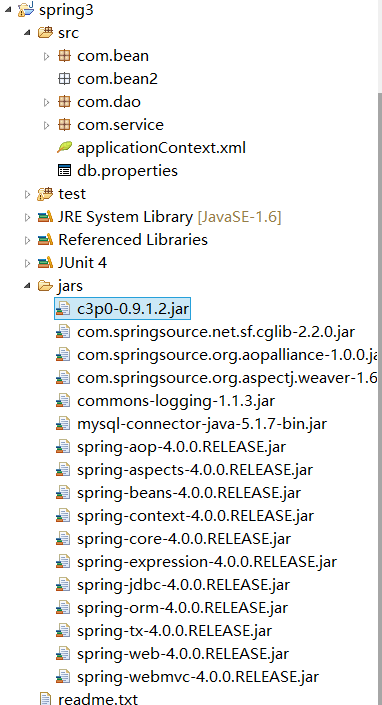
3.创建bean
Goods
 package com.bean;

 public class Goods {

     private int gid;

     private int gprice;

     private int gnum;

     public int getGid() {

         return gid;

     }

     public void setGid(int gid) {

         this.gid = gid;

     }

     public int getGprice() {

         return gprice;

     }

     public void setGprice(int gprice) {

         this.gprice = gprice;

     }

     public int getGnum() {

         return gnum;

     }

     public void setGnum(int gnum) {

         this.gnum = gnum;

     }

 }
Person
 package com.bean;

 public class Person {

     private String name;

     private int age;

     public String getName() {

         return name;

     }

     public void setName(String name) {

         this.name = name;

     }

     public int getAge() {

         return age;

     }

     public void setAge(int age) {

         this.age = age;

     }

 }
Users
 package com.bean;

 public class Users {

     private int uid    ;

     private String uname;

     private int umoney;

     public int getUid() {

         return uid;

     }

     public void setUid(int uid) {

         this.uid = uid;

     }

     public String getUname() {

         return uname;

     }

     public void setUname(String uname) {

         this.uname = uname;

     }

     public int getUmoney() {

         return umoney;

     }

     public void setUmoney(int umoney) {

         this.umoney = umoney;

     }

 }
[原创]spring及springmvc精简版--IOC的更多相关文章
- [原创]spring及springmvc精简版--AOP
接上一篇:[原创]spring及springmvc精简版--IOC 理解AOP.java是一种面向对象的语言.而AOP是面向切面,在我看来是面向逻辑或者业务编程,它是对一组逻辑的抽象和分配. 经典例子 ...
- [原创]spring及springmvc精简版--继承数据源,声明式事物
1.前期:导入c3p0 jar包,相关数据库连接jar包,我用的是mysql 2.关注事物管理器的配置和AOP配置 代码: 核心关注bean配置文件 application.xml <?xml ...
- spring与springMVC的父子容器关系
背景和概述 在spring与springMVC中通过IOC可以管理bean对象,有两个配置文件可以配置ioc spring的配置文件applicationContext.xmlspringMVC的配置 ...
- [原创] RT7 Lite win7旗舰版精简方案
[原创] RT7 Lite win7旗舰版精简方案 墨雪SEED 发表于 2016-1-26 21:23:54 https://www.itsk.com/thread-362912-1-5.html ...
- ssm(Spring、Springmvc、Mybatis)实战之淘淘商城-第十四天(非原创)
文章大纲 一.淘淘商城总体架构介绍二.淘淘商城重要技术点总结三.项目常见面试题四.项目学习(all)资源下载五.参考文章 一.淘淘商城总体架构介绍 1. 功能架构 2. 技术选型 (1)Sprin ...
- Spring、SpringMVC、SpringData + JPA 整合详解
原创播客,如需转载请注明出处.原文地址:http://www.cnblogs.com/crawl/p/7759874.html ------------------------------------ ...
- Spring与SpringMVC的区别
Spring是IOC和AOP的容器框架,SpringMVC是基于Spring功能之上添加的Web框架,想用SpringMVC必须先依赖Spring. 简单点的话可以将SpringMVC类比于Strut ...
- [转帖]spring、springMvc、springBoot和springCloud的联系与区别
spring.springMvc.springBoot和springCloud的联系与区别 -- :: 尘光掠影 阅读数 文章标签: springspringmvcspringbootspringCl ...
- spring、springMvc、springBoot和springCloud的联系与区别
spring和springMvc: 1. spring是一个一站式的轻量级的java开发框架,核心是控制反转(IOC)和面向切面(AOP),针对于开发的WEB层(springMvc).业务层(Ioc) ...
随机推荐
- LeetCode560. Subarray Sum Equals K
Description Given an array of integers and an integer k, you need to find the total number of contin ...
- tomcat 测试页面显示
首先下载匹配jdk版本的tomcat 解压即可使用 将完成的html文件直接放置到webapps目录下的子目录中是无法使用的 原因是tomcat默认加载的是jsp文件,且需要文件配置 所以,除去在we ...
- POJ 3304 Segments(计算几何:直线与线段相交)
POJ 3304 Segments 大意:给你一些线段,找出一条直线可以穿过全部的线段,相交包含端点. 思路:遍历全部的端点,取两个点形成直线,推断直线是否与全部线段相交,假设存在这种直线,输出Yes ...
- 关于 SQLNET.AUTHENTICATION_SERVICES 验证方式的说明
今天去客户那里巡检,客户提出为了提高数据库安全性考虑,须要改动sys/systempassword,并通过数据库验证方式来代替默认的操作系统方式,如今我来把这两种验证方式总结一下. 操作系统验证.即通 ...
- 在NodeJS中使用流程控制工具Async
本文介绍一款流程控制工具async,在编写接口或者编写测试用例的过程中总是会用到它. 由于nodejs是异步编程模型,有一些在同步编程中很容易做到的事情,现在却变得很麻烦.Async的流程控制就是为了 ...
- Android-ViewPagerIndicator框架使用——Circle
前言:Circle适用于应用新功能的展示页和商品的多张图片的展示功能. 1.定义布局文件:SampleCirclesDefault中添加了一个布局:simple_circles. 布局中定义一个Lin ...
- ios--后台返回信息有字符串和数字组成的,如何获取电话号码,让用户能够点击并且进行拨打?
-(void)callPhone:(NSString*)phoneNumber{ NSString *phoneStr=[NSString stringWithFormat:@"tel:// ...
- array_sum的用法
众所周知,PHP中函数是功能很强大的,那么今天就说下array_sum的功能吧. 函数功能:返回数组中所有值的和. 举例: <?php $a = array(1,2); $b = array_s ...
- Laravel5.1 模型--查询作用域
所谓的查询作用域就是允许你自定义一个查询语句 把它封装成一个方法. 1 定义一个查询作用域 定义查询作用域就是在模型中声明一个scope开头的方法: public function scopeHotA ...
- react import改为绝对路径
最近在使用react时发现路径用../../很不方便,特别是修改项目结构时,加减../都能改到吐血, 所有在网上找了半天webpack的配置,特此记录下 module.exports = (webpa ...