
[转贴]JAVA:RESTLET开发实例(二)使用Component、Application的REST服务
上一篇文章,我们介绍了基于JAX-RS的REST服务,本篇文章我们介绍不基于JAX-RS的模式。JAX-RS其实就是一个简单的 Application服务。和我们接下来介绍的Application基本一致,唯一不同的地方就是,不使用JAX-RS自动映射为xml。 restlet的一些基本概念可以参考上篇文章 RESTLET开发实例(一)基于JAX-RS的REST服务 的介绍,这里不再阐述。
一、基于ServerResource的REST,来实现JAX-RS中get方法。
1、新建RestApplication Web工程。
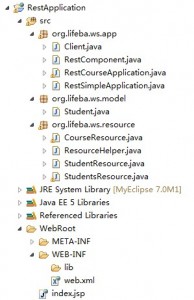
然后把相应的restlet的lib下的全部jar加入工程引用中,然后在web.xml,加入如下配置:
<context-param>
<param-name>org.restlet.application</param-name>
<param-value>org.lifeba.ws.app.RestSimpleApplication</param-value>
</context-param>
<servlet>
<servlet-name>RestletServlet</servlet-name>
<servlet-class>org.restlet.ext.servlet.ServerServlet</servlet-class>
</servlet>
<servlet-mapping>
<servlet-name>RestletServlet</servlet-name>
<url-pattern>/*</url-pattern>
</servlet-mapping>
上面的配置和基于JAX-RS的配置一样的。
2、新建RestSimpleApplication对象。将应用程序和资源类绑定在一起,代码如下:
public class RestSimpleApplication extends org.restlet.Application{
@Override
public Restlet createInboundRoot() {
Router router = new Router(getContext());
router.attach("/student/{studentId}", StudentResource.class);
return router;
}
}
和JAX-RS不同主要有2个地方:
1)RestSimpleApplication直接扩展了Application对象,而不是JAX-RS中的JaxRsApplication对象。
2)重载了createInboundRoot通过attach方法绑定资源类,并且制定了访问路径。而JAX-RS中调用了this.add(new StudentApplication())来绑定资源类,并且不用指定访问路径,因为是在资源类中指定。
3、新建Student对象,代码如下:和JAX-RS的区别就是少了@XmlRootElement(name="Student")标注。
public class Student {
private int id;
private String name;
private int sex;
private int clsId;
private int age;
public int getId() {
return id;
}
public void setId(int id) {
this.id = id;
}
public String getName() {
return name;
}
public void setName(String name) {
this.name = name;
}
public int getSex() {
return sex;
}
public void setSex(int sex) {
this.sex = sex;
}
public int getClsId() {
return clsId;
}
public void setClsId(int clsId) {
this.clsId = clsId;
}
public int getAge() {
return age;
}
public void setAge(int age) {
this.age = age;
}
public String toString(){
return "Id:"+this.id+"\r\nName:"+this.name+"\r\nClass:"+
this.clsId+"\r\nSex:"+this.sex+"\r\nAge:"+this.age;
}
}
4、新建StudentResource类,该类扩展ServerResource类。代码如下:
public class StudentResource extends ServerResource{
private int id;
@Override
protected void doInit() throws ResourceException {
id = Integer.valueOf((String) getRequestAttributes().get("studentId"));
}
public Representation get(Representation entity) {
Student student = ResourceHelper.findStudent(id);
return new StringRepresentation(student.toString());
}
}
上面的代码实现的功能和JAX-RS中的下面的代码的功能一样,都是根据ID来获取对应的student信息。
@Path("{id}/xml")
@Produces("application/xml")
public Student getStudentXml(@PathParam("id") int id) {
return ResourceHelper.findStudent(id);
}
非JAX-RS模式的,扩展了ServerResource类,并且重载了doInit()方法用来获取传递过来的studentId占位符的值。因为没 有传递method方法,默认是调用@Get标注的无参方法,最后返回StringRepresentation对象(你也可以返回xml或json的 Representation对象)。
JAX-RS的也是类似,不过他的方法是带参数,并且返回一个Student对象(会根据@Produces("application/xml")自动封装xml数据)。
5、完成了上面的主要类得创建和编写,你就可以在tomcat中运行了,启动tomcat后,访问http://localhost:8085/RestApplication/student/1,你将看到下面界面:

二、实现更新、删除、添加(delete,put,post)及列表展示
1、上面的介绍,我们实现将JAX-RS中的get方法,用ServerResource方式的来实现。根据rest规范,对StudentResource,除了有get方法外,还有delete及put方法。
public Representation delete() {
int status = ResourceHelper.deleteStudent(id);
return new StringRepresentation(String.valueOf(status));
}
@Put
public Representation put(Representation entity)
throws ResourceException {
Form form = new Form(entity);
Student student = ResourceHelper.findStudent(id);
String name = form.getFirstValue("name");
int clsId = Integer.parseInt(form.getFirstValue("clsId"));
int sex = Integer.parseInt(form.getFirstValue("sex"));
student.setClsId(clsId);
student.setName(name);
student.setSex(sex);
return new StringRepresentation(String.valueOf(ResourceHelper.updateStudent(student)));
}
2、测试更新和删除:
1)通过页面修改用户资料
update.jsp页面中加入:
<form action="/RestApplication/student/1?method=put" method="post">
用户名:<input type="text" name="name"><br>
班级:<input type="text" name="clsId"><br>
性别:<input type="text" name="sex"><br>
<input type="submit" value="提交">
</form>
提交后访问,返回1表示修改成功。

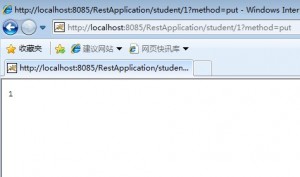
访问http://localhost:8085/RestApplication/student/1就会看到名字已经修改了。

2)通过客户端删除用户资料。新建Client类,加入如下代码,执行成功返回1.
public void student_delete(){
try {
ClientResource client = new ClientResource("http://localhost:8085/RestApplication/student/1");
Representation representation =client.delete();
System.out.println(representation.getText());
} catch (Exception e) {
e.printStackTrace();
}
}
这个时候访问 http://localhost:8085/RestApplication/student/1 ,会提示错误。因为找不到这个1的用户。
3、添加一个student,及显示全部student信息
1)StudentResource资源,按照restlet的规范,包含了get put delete方法。所以添加一个student及显示全部student信息我们需要再加入一个资源类StudentsResource,代码如下:
public Representation get(Representation entity) {
StringBuilder sb = new StringBuilder();
Iterator it = ResourceHelper.students.keySet().iterator();
while(it.hasNext()){
sb.append(ResourceHelper.students.get(it.next()).toString()+"\r\n\r\n");
}
return new StringRepresentation(sb.toString());
}
public Representation post(Representation entity)
throws ResourceException {
Form form = new Form(entity);
String name = form.getFirstValue("name");
int clsId = Integer.parseInt(form.getFirstValue("clsId"));
int sex = Integer.parseInt(form.getFirstValue("sex"));
Student student = new Student();
student.setClsId(clsId);
student.setName(name);
student.setSex(sex);
ResourceHelper.maxId++;
int id = ResourceHelper.maxId;
student.setId(id);
return new StringRepresentation(String.valueOf(ResourceHelper.addStudent(student)));
}
添加了上面代码后,我们还要在RestSimpleApplication添加下面代码,指定下资源类StudentsResource的访问路径才可以。
router.attach("/student", StudentsResource.class);
2)首先我们添加一个id为2的student对象,client类中加入下面代码,执行成功后返回新添加的studentid:2。
public void student_post(){
try {
Form queryForm = new Form();
queryForm.add("name","steven3");
queryForm.add("clsId","201002");
queryForm.add("sex","2");
queryForm.add("age","12");
ClientResource client = new ClientResource("http://localhost:8085/RestApplication/student");
Representation representation =client.post(queryForm.getWebRepresentation());
System.out.println(representation.getText());
} catch (Exception e) {
e.printStackTrace();
}
}
访问http://localhost:8085/RestApplication/student 如下,返回了全部的student资料:
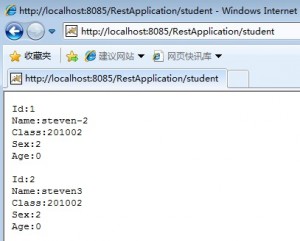
可以看到我们已经成功添加了一个2的student。
三、使用Component绑定多个Application
我们已经实现了一个student的application。里面包含了2个资源类(StudentResource和 StudentsResource)。如果我们加入一个course的资源类,我们可以按照上面的方式直接建立CourseResource,然后在 RestSimpleApplication中绑定下 router.attach("/course/{courseId}", CourseResource.class)。不过这样处理会把业务逻辑混在一起,并不是很好的方法。因此我们建立一个 RestCourseApplication,然后在这里绑定CourseResource类,来实现业务逻辑的分离。
RestCourseApplication代码如下:
public class RestCourseApplication extends org.restlet.Application{
@Override
public Restlet createInboundRoot() {
Router router = new Router(getContext());
router.attach("/course/{courseId}", CourseResource.class);
return router;
}
}
CourseResource代码如下:
public class CourseResource extends ServerResource{
private int id;
@Override
protected void doInit() throws ResourceException {
id = Integer.valueOf((String) getRequestAttributes().get("courseId"));
}
public Representation get(Representation entity) {
return new StringRepresentation("course id:"+id);
}
}
现在我们有2个Application了,web.xml中就不能使用org.restlet.application了,必须使用org.restlet.component。
<context-param>
<param-name>org.restlet.application</param-name>
<param-value>org.lifeba.ws.app.RestSimpleApplication</param-value>
</context-param>
把上面的代码改为:
<init-param>
<param-name>org.restlet.component</param-name>
<param-value>component</param-value>
</init-param>
新建RestComponent类,代码如下,因为必须执行路径,所以在访问的时候记得要带上对应的前缀。
public class RestComponent extends org.restlet.Component{
public RestComponent(){
getDefaultHost().attach("/a", new RestSimpleApplication());
getDefaultHost().attach("/b", new RestCourseApplication());
}
}
访问:http://localhost:8085/RestApplication/a/student

访问:http://localhost:8085/RestApplication/b/course/1

四、资源下载
[转贴]JAVA:RESTLET开发实例(二)使用Component、Application的REST服务的更多相关文章
- [转贴]JAVA :RESTLET开发实例(一)基于JAX-RS的REST服务
RESTLET介绍 Restlet项目为“建立REST概念与Java类之间的映射”提供了一个轻量级而全面的框架.它可用于实现任何种类的REST式系统,而不仅仅是REST式Web服务. Restlet项 ...
- [转贴]JAVA:RESTLET开发实例(三)基于spring的REST服务
前面两篇文章,我们介绍了基于JAX-RS的REST服务以及Application的Rest服务.这里将介绍restlet如何整合spring框架进行开发.Spring 是一个开源框架,是为了解决企业应 ...
- RESTLET开发实例(一)基于JAX-RS的REST服务
RESTLET介绍 Restlet项目为“建立REST概念与Java类之间的映射”提供了一个轻量级而全面的框架.它可用于实现任何种类的REST式系统,而不仅仅是REST式Web服务. Restlet项 ...
- RESTLET开发实例(三)基于spring的REST服务
http://www.lifeba.org/arch/restlet_spring_3.html 前面两篇文章,我们介绍了基于JAX-RS的REST服务以及Application的Rest服务.这里将 ...
- NDK 开发实例二(添加 Eigen库)
上一篇,我已经阐述了如何创建一个简单的NDK实例: NDK 开发实例一(Android.mk环境配置下) 在上一篇的基础上,我们来添加Eigen库,然后做一个简单实例. Eigen是一个高层次的C + ...
- RESTLET开发实例
1 前提 由于近期工作的需要,要把RESTLET应用到项目中,于是在网上参考了一些资料的基础上,实践了一个关于RESTLET接口的小例子. Restlet的思想是:HTTP客户端与HTTP服务器之间的 ...
- 【温故知新】Java web 开发(二)Servlet 和 简单JSP
系列一介绍了新建一个 web 项目的基本步骤,系列二就准备介绍下基本的 jsp 和 servlet 使用. (关于jsp的编译指令.动作指令.内置对象不在本文讨论范围之内) 1. 首先,在 pom. ...
- java web开发入门二(struts)基于eclispe
JavaBean JavaBean, 咖啡豆. JavaBean是一种开发规范,可以说是一种技术. JavaBean就是一个普通的java类.只有符合以下规定才能称之为javabean: 1)必须提 ...
- Spring Boot 使用IntelliJ IDEA创建一个web开发实例(二)
1. 创建一个Controller类 package com.example.demo; import org.springframework.web.bind.annotation.RequestM ...
随机推荐
- 万网免费主机wordpress快速建站教程-wordpress下载及安装
进入wordpress官网(http://cn.wordpress.org)下载最新的wordpress安装程序,下载完成后解压到任意电脑目录. 解压完毕后,使用FTP管理工具上传安装文件至主机htd ...
- ASP.NET Identity 用户注册相关设定
此部分可以在 Web项目中的App_Start目录下的 IdentityConfig.cs 文件进行设置. 1.配置密码的验证逻辑 manager.PasswordValidator = new Pa ...
- maven是什么?(转自oracle官网)
Maven 是一个项目管理和构建自动化工具.但是对于我们程序员来说,我们最关心的是它的项目构建功能.所以这里我们介绍的就是怎样用 maven 来满足我们项目的日常需要.Maven 使用惯例优于配置的原 ...
- mysql merge表介绍
在Mysql数据库中,Mysql Merge表有点类似于视图.下面就让我们来一起了解一下Mysql Merge表都有哪些优点,希望对您能有所帮助. Mysql Merge表的优点: A: 分离静态的和 ...
- C#&JQuery非缓存式无刷新临时存储数据之仿购物车功能
感谢广大博问博友的帮助和共同研究讨论,终于实现了一个无缓存无刷新仿购物车的小功能: 一.实现效果简述: 有一种列表,是由双层Repeater嵌套,第一层用来显示类别,第二层用来显示类别下的商品数据, ...
- 自动生成get,set方法
引发的问题: Action中有一个属性名字叫private boolean isHideNumber 用struts2的<s:if test ="isHideNumber"& ...
- linux/windows系统oracle数据库简单冷备同步
linux/windows系统oracle数据库简单冷备同步 我们有一个财务系统比较看重财务数据的安全性,同时我们拥有两套系统,一个生产环境(linux),一个应急备份环境(windows).备份环境 ...
- 获取键盘输入或者USB扫描枪数据
/// <summary> /// 获取键盘输入或者USB扫描枪数据 可以是没有焦点 应为使用的是全局钩子 /// USB扫描枪 是模拟键盘按下 /// 这里主要处理扫描枪的值,手动输入的 ...
- SDL实现按钮
是的,按钮控件很常见,几乎在每一个Windows窗体内都能找到它的身影.SDL作为一套“一套开放源代码的跨平台多媒体开发库”,自然可以实现按钮.而按钮实现的重点,就是SDL的鼠标响应事件. SDL的鼠 ...
- datagrid合并行列--并不能影响序号列内容...(formatter的锅.)
datagrid合并行列 //datagrid组件. $('#id_dailylist_dg').datagrid({ //url:'datagrid_data.json', columns:[[ { ...