
理解ASP.NET Core - [02] Middleware
注:本文隶属于《理解ASP.NET Core》系列文章,请查看置顶博客或点击此处查看全文目录
中间件
先借用微软官方文档的一张图:
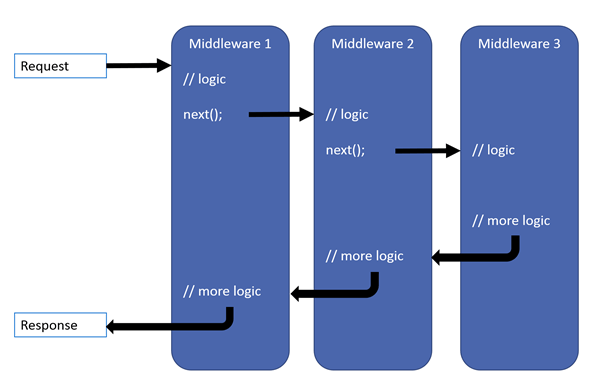
可以看到,中间件实际上是一种配置在HTTP请求管道中,用来处理请求和响应的组件。它可以:
- 决定是否将请求传递到管道中的下一个中间件
- 可以在管道中的下一个中间件处理之前和之后进行操作
此外,中间件的注册是有顺序的,书写代码时一定要注意!
中间件管道
Run
该方法为HTTP请求管道添加一个中间件,并标识该中间件为管道终点,称为终端中间件。也就是说,该中间件就是管道的末尾,在该中间件之后注册的中间件将永远都不会被执行。所以,该方法一般只会书写在Configure方法末尾。
public class Startup

{

    public void Configure(IApplicationBuilder app)

    {

        app.Run(async context =>

        {

            await context.Response.WriteAsync("Hello, World!");

        });

    }

}
Use
通过该方法快捷的注册一个匿名的中间件
public class Startup

{

    public void Configure(IApplicationBuilder app)

    {

        app.Use(async (context, next) =>

        {

            // 下一个中间件处理之前的操作

            Console.WriteLine("Use Begin");

            await next();

            // 下一个中间件处理完成后的操作

            Console.WriteLine("Use End");

        });

    }

}
注意:
- 如果要将请求发送到管道中的下一个中间件,一定要记得调用
next.Invoke / next(),否则会导致管道短路,后续的中间件将不会被执行 - 在中间件中,如果已经开始给客户端发送
Response,请千万不要调用next.Invoke / next(),也不要对Response进行任何更改,否则,将抛出异常。 - 可以通过
context.Response.HasStarted来判断响应是否已开始。
以下都是错误的代码写法
- 错误1:
public class Startup

{

    public void Configure(IApplicationBuilder app)

    {

        app.Use(async (context, next) =>

        {

            await context.Response.WriteAsync("Use");

            await next();

        });

        app.Run(context =>

        {

            // 由于上方的中间件已经开始 Response,此处更改 Response Header 会抛出异常

            context.Response.Headers.Add("test", "test");

            return Task.CompletedTask;

        });

    }

}
- 错误2:
public class Startup

{

    public void Configure(IApplicationBuilder app)

    {

        app.Use(async (context, next) =>

        {

            await context.Response.WriteAsync("Use");

            // 即使没有调用 next.Invoke / next(),也不能在 Response 开始后对 Response 进行更改

            context.Response.Headers.Add("test", "test");

        });

    }

}
UseWhen
通过该方法针对不同的逻辑条件创建管道分支。需要注意的是:
- 进入了管道分支后,如果管道分支不存在管道短路或终端中间件,则会再次返回到主管道。
- 当使用
PathString时,路径必须以“/”开头,且允许只有一个'/'字符 - 支持嵌套,即UseWhen中嵌套UseWhen等
- 支持同时匹配多个段,如 /get/user
public class Startup

{

    public void Configure(IApplicationBuilder app)

    {

        // /get 或 /get/xxx 都会进入该管道分支

        app.UseWhen(context => context.Request.Path.StartsWithSegments("/get"), app =>

        {

            app.Use(async (context, next) =>

            {

                Console.WriteLine("UseWhen:Use");

                await next();

            });

        });

        app.Use(async (context, next) =>

        {

            Console.WriteLine("Use");

            await next();

        });

        app.Run(async context =>

        {

            Console.WriteLine("Run");

            await context.Response.WriteAsync("Hello World!");

        });

    }

}
当访问 /get 时,输出如下:
UseWhen:Use

Use

Run
如果你发现输出了两遍,别慌,看看是不是浏览器发送了两次请求,分别是 /get 和 /favicon.ico
Map
通过该方法针对不同的请求路径创建管道分支。需要注意的是:
- 一旦进入了管道分支,则不会再回到主管道。
- 使用该方法时,会将匹配的路径从
HttpRequest.Path中删除,并将其追加到HttpRequest.PathBase中。 - 路径必须以“/”开头,且不能只有一个
'/'字符 - 支持嵌套,即Map中嵌套Map、MapWhen(接下来会讲)等
- 支持同时匹配多个段,如 /post/user
public class Startup

{

    public void Configure(IApplicationBuilder app)

    {

        // 访问 /get 时会进入该管道分支

        // 访问 /get/xxx 时会进入该管道分支

        app.Map("/get", app =>

        {

            app.Use(async (context, next) =>

            {

                Console.WriteLine("Map get: Use");

                Console.WriteLine($"Request Path: {context.Request.Path}");

                Console.WriteLine($"Request PathBase: {context.Request.PathBase}");

                await next();

            });

            app.Run(async context =>

            {

                Console.WriteLine("Map get: Run");

                await context.Response.WriteAsync("Hello World!");

            });

        });

        // 访问 /post/user 时会进入该管道分支

        // 访问 /post/user/xxx 时会进入该管道分支

        app.Map("/post/user", app =>

        {

            // 访问 /post/user/student 时会进入该管道分支

            // 访问 /post/user/student/1 时会进入该管道分支

            app.Map("/student", app =>

            {

                app.Run(async context =>

                {

                    Console.WriteLine("Map /post/user/student: Run");

                    Console.WriteLine($"Request Path: {context.Request.Path}");

                    Console.WriteLine($"Request PathBase: {context.Request.PathBase}");

                    await context.Response.WriteAsync("Hello World!");

                });

            });

            app.Use(async (context, next) =>

            {

                Console.WriteLine("Map post/user: Use");

                Console.WriteLine($"Request Path: {context.Request.Path}");

                Console.WriteLine($"Request PathBase: {context.Request.PathBase}");

                await next();

            });

            app.Run(async context =>

            {

                Console.WriteLine("Map post/user: Run");

                await context.Response.WriteAsync("Hello World!");

            });

        });

    }

}
当你访问 /get/user 时,输出如下:
Map get: Use

Request Path: /user

Request PathBase: /get

Map get: Run
当你访问 /post/user/student/1 时,输出如下:
Map /post/user/student: Run

Request Path: /1

Request PathBase: /post/user/student
其他情况交给你自己去尝试啦!
MapWhen
与Map类似,只不过MapWhen不是基于路径,而是基于逻辑条件创建管道分支。注意事项如下:
- 一旦进入了管道分支,则不会再回到主管道。
- 当使用
PathString时,路径必须以“/”开头,且允许只有一个'/'字符 HttpRequest.Path和HttpRequest.PathBase不会像Map那样进行特别处理- 支持嵌套,即MapWhen中嵌套MapWhen、Map等
- 支持同时匹配多个段,如 /get/user
public class Startup

{

    public void Configure(IApplicationBuilder app)

    {

        // /get 或 /get/xxx 都会进入该管道分支

        app.MapWhen(context => context.Request.Path.StartsWithSegments("/get"), app =>

        {

            app.MapWhen(context => context.Request.Path.ToString().Contains("user"), app =>

            {

                app.Use(async (context, next) =>

                {

                    Console.WriteLine("MapWhen get user: Use");

                    await next();

                });

            });

            app.Use(async (context, next) =>

            {

                Console.WriteLine("MapWhen get: Use");

                await next();

            });

            app.Run(async context =>

            {

                Console.WriteLine("MapWhen get: Run");

                await context.Response.WriteAsync("Hello World!");

            });

        });

    }

}
当你访问 /get/user 时,输出如下:
MapWhen get user: Use
可以看到,即使该管道分支没有终端中间件,也不会回到主管道。
Run & Use & UseWhen & Map & Map
一下子接触了4个命名相似的、与中间件管道有关的API,不知道你有没有晕倒,没关系,我来帮大家总结一下:
Run用于注册终端中间件,Use用来注册匿名中间件,UseWhen、Map、MapWhen用于创建管道分支。UseWhen进入管道分支后,如果管道分支中不存在短路或终端中间件,则会返回到主管道。Map和MapWhen进入管道分支后,无论如何,都不会再返回到主管道。UseWhen和MapWhen基于逻辑条件来创建管道分支,而Map基于请求路径来创建管道分支,且会对HttpRequest.Path和HttpRequest.PathBase进行处理。
编写中间件并激活
上面已经提到过的Run和Use就不再赘述了。
基于约定的中间件
“约定大于配置”,先来个约法三章:
- 拥有公共(public)构造函数,且该构造函数至少包含一个类型为
RequestDelegate的参数 - 拥有名为
Invoke或InvokeAsync的公共(public)方法,必须包含一个类型为HttpContext的方法参数,且该参数必须位于第一个参数的位置,另外该方法必须返回Task类型。 - 构造函数中的其他参数可以通过依赖注入(DI)填充,也可以通过
UseMiddleware传参进行填充。- 通过DI填充时,只能接收 Transient 和 Singleton 的DI参数。这是由于中间件是在应用启动时构造的(而不是按请求构造),所以当出现 Scoped 参数时,构造函数内的DI参数生命周期与其他不共享,如果想要共享,则必须将Scoped DI参数添加到
Invoke/InvokeAsync来进行使用。 - 通过
UseMiddleware传参时,构造函数内的DI参数和非DI参数顺序没有要求,传入UseMiddleware内的参数顺序也没有要求,但是我建议将非DI参数放到前面,DI参数放到后面。(这一块感觉微软做的好牛皮)
- 通过DI填充时,只能接收 Transient 和 Singleton 的DI参数。这是由于中间件是在应用启动时构造的(而不是按请求构造),所以当出现 Scoped 参数时,构造函数内的DI参数生命周期与其他不共享,如果想要共享,则必须将Scoped DI参数添加到
Invoke/InvokeAsync的其他参数也能够通过依赖注入(DI)填充,可以接收 Transient、Scoped 和 Singleton 的DI参数。
一个简单的中间件如下:
public class MyMiddleware

{

    // 用于调用管道中的下一个中间件

    private readonly RequestDelegate _next;

    public MyMiddleware(

        RequestDelegate next,

        ITransientService transientService,

        ISingletonService singletonService)

    {

        _next = next;

    }

    public async Task InvokeAsync(

        HttpContext context,

        ITransientService transientService,

        IScopedService scopedService,

        ISingletonService singletonService)

    {

        // 下一个中间件处理之前的操作

        Console.WriteLine("MyMiddleware Begin");

        await _next(context);

        // 下一个中间件处理完成后的操作

        Console.WriteLine("MyMiddleware End");

    }

}
然后,你可以通过UseMiddleware方法将其添加到管道中
public class Startup

{

    public void Configure(IApplicationBuilder app)

    {

        app.UseMiddleware<MyMiddleware>();

    }

}
不过,一般不推荐直接使用UseMiddleware,而是将其封装到扩展方法中
public static class AppMiddlewareApplicationBuilderExtensions

{

    public static IApplicationBuilder UseMy(this IApplicationBuilder app) => app.UseMiddleware<MyMiddleware>();

}

public class Startup

{

    public void Configure(IApplicationBuilder app)

    {

        app.UseMy();

    }

}
基于工厂的中间件
优势:
- 按照请求进行激活。这个就是说,上面基于约定的中间件实例是单例的,但是基于工厂的中间件,可以在依赖注入时设置中间件实例的生命周期。
- 使中间件强类型化(因为其实现了接口
IMiddleware)
该方式的实现基于IMiddlewareFactory和IMiddleware。先来看一下接口定义:
public interface IMiddlewareFactory

{

    IMiddleware? Create(Type middlewareType);

    void Release(IMiddleware middleware);

}

public interface IMiddleware

{

    Task InvokeAsync(HttpContext context, RequestDelegate next);

}
你有没有想过当我们调用UseMiddleware时,它是如何工作的呢?事实上,UseMiddleware扩展方法会先检查中间件是否实现了IMiddleware接口。 如果实现了,则使用容器中注册的IMiddlewareFactory实例来解析该IMiddleware的实例(这下你知道为什么称为“基于工厂的中间件”了吧)。如果没实现,那么就使用基于约定的中间件逻辑来激活中间件。
注意,基于工厂的中间件,在应用的服务容器中一般注册为 Scoped 或 Transient 服务。
这样的话,咱们就可以放心的将 Scoped 服务注入到中间件的构造函数中了。
接下来,咱们就来实现一个基于工厂的中间件:
public class YourMiddleware : IMiddleware

{

    public async Task InvokeAsync(HttpContext context, RequestDelegate next)

    {

        // 下一个中间件处理之前的操作

        Console.WriteLine("YourMiddleware Begin");

        await next(context);

        // 下一个中间件处理完成后的操作

        Console.WriteLine("YourMiddleware End");

    }

}

public static class AppMiddlewareApplicationBuilderExtensions

{

    public static IApplicationBuilder UseYour(this IApplicationBuilder app) => app.UseMiddleware<YourMiddleware>();

}
然后,在ConfigureServices中添加中间件依赖注入
public class Startup

{

    public void ConfigureServices(IServiceCollection services)

    {

        services.AddTransient<YourMiddleware>();

    }

}
最后,在Configure中使用中间件
public class Startup

{

    public void Configure(IApplicationBuilder app)

    {

        app.UseYour();

    }

}
微软提供了IMiddlewareFactory的默认实现:
public class MiddlewareFactory : IMiddlewareFactory

{

    // The default middleware factory is just an IServiceProvider proxy.

    // This should be registered as a scoped service so that the middleware instances

    // don't end up being singletons.

    // 默认的中间件工厂仅仅是一个 IServiceProvider 的代理

    // 该工厂应该注册为 Scoped 服务,这样中间件实例就不会成为单例

    private readonly IServiceProvider _serviceProvider;

    public MiddlewareFactory(IServiceProvider serviceProvider)

    {

        _serviceProvider = serviceProvider;

    }

    public IMiddleware? Create(Type middlewareType)

    {

        return _serviceProvider.GetRequiredService(middlewareType) as IMiddleware;

    }

    public void Release(IMiddleware middleware)

    {

        // The container owns the lifetime of the service

        // DI容器来管理服务的生命周期

    }

}
可以看到,该工厂使用过DI容器来解析出服务实例的。因此,当使用基于工厂的中间件时,是无法通过UseMiddleware向中间件的构造函数传参的。
基于约定的中间件 VS 基于工厂的中间件
- 基于约定的中间件实例都是 Singleton;而基于工厂的中间件实例可以是 Singleton、Scoped 和 Transient(当然,不建议注册为 Singleton)
- 基于约定的中间件实例构造函数中可以通过依赖注入传参,也可以用过
UseMiddleware传参;而基于工厂的中间件只能通过依赖注入传参 - 基于约定的中间件实例可以在
Invoke/InvokeAsync中添加更多的依赖注入参数;而基于工厂的中间件只能按照IMiddleware的接口定义进行实现。
理解ASP.NET Core - [02] Middleware的更多相关文章
- 目录-理解ASP.NET Core
<理解ASP.NET Core>基于.NET5进行整理,旨在帮助大家能够对ASP.NET Core框架有一个清晰的认识. 目录 [01] Startup [02] Middleware [ ...
- ASP.NET Core中Middleware的使用
https://www.cnblogs.com/shenba/p/6361311.html ASP.NET 5中Middleware的基本用法 在ASP.NET 5里面引入了OWIN的概念,大致意 ...
- 理解 ASP.NET Core: 处理管道
理解 ASP.NET Core 处理管道 在 ASP.NET Core 的管道处理部分,实现思想已经不是传统的面向对象模式,而是切换到了函数式编程模式.这导致代码的逻辑大大简化,但是,对于熟悉面向对象 ...
- 理解ASP.NET Core - [01] Startup
注:本文隶属于<理解ASP.NET Core>系列文章,请查看置顶博客或点击此处查看全文目录 准备工作:一份ASP.NET Core Web API应用程序 当我们来到一个陌生的环境,第一 ...
- 理解ASP.NET Core - 路由(Routing)
注:本文隶属于<理解ASP.NET Core>系列文章,请查看置顶博客或点击此处查看全文目录 Routing Routing(路由):更准确的应该叫做Endpoint Routing,负责 ...
- 理解ASP.NET Core - 日志(Logging)
注:本文隶属于<理解ASP.NET Core>系列文章,请查看置顶博客或点击此处查看全文目录 快速上手 添加日志提供程序 在文章主机(Host)中,讲到Host.CreateDefault ...
- 理解ASP.NET Core - 错误处理(Handle Errors)
注:本文隶属于<理解ASP.NET Core>系列文章,请查看置顶博客或[点击此处查看全文目录](https://www.cnblogs.com/xiaoxiaotank/p/151852 ...
- 在ASP.NET Core使用Middleware模拟Custom Error Page功能
一.使用场景 在传统的ASP.NET MVC中,我们可以使用HandleErrorAttribute特性来具体指定如何处理Action抛出的异常.只要某个Action设置了HandleErrorAtt ...
- ASP.NET Core中间件(Middleware)实现WCF SOAP服务端解析
ASP.NET Core中间件(Middleware)进阶学习实现SOAP 解析. 本篇将介绍实现ASP.NET Core SOAP服务端解析,而不是ASP.NET Core整个WCF host. 因 ...
随机推荐
- Servlet 单例多线程详解(六)
一.Servlet 单例多线程 Servlet如何处理多个请求访问?Servlet容器默认是采用单实例多线程的方式处理多个请求的:1.当web服务器启动的时候(或客户端发送请求到服务器时),Servl ...
- odoo ORM中的filed的关系映射的使用详解1
前言 前面我们详细讲解了odoo ORM中fields中的常见属性的使用,根据不同的属性可以对字段进行不同的限制操作,比如readonly只读,store是否存储到数据库.今天我们继续研究ORM中的关 ...
- SpringBoot Aop 详解和多种使用场景
前言 aop面向切面编程,是编程中一个很重要的思想本篇文章主要介绍的是SpringBoot切面Aop的使用和案例 什么是aop AOP(Aspect OrientedProgramming):面向切面 ...
- vue源码解析之observe
一. vue文档中有"由于 JavaScript 的限制,Vue 不能检测以下数组的变动",是否真是由于JavaScript的限制,还是出于其他原因考虑 当你利用索引直接设置一个数 ...
- PHP 后台数组数据 传输给前台JS 使用
一. PHP: $a = array('aaa','bbb'); $a= json_encode($a); JS: var a_json = {$a}; //此处a_json数组便可使用 二. H ...
- SaltStack 任意文件读写漏洞(CVE-2020-11652)
漏洞影响 SaltStack < 2019.2.4 SaltStack < 3000.2 同CVE-2020-11651 poc git clone https://github.com/ ...
- 一键设置WPS_Office_2019专业版的定时自动备份的批处理文件
一键设置WPS_Office_2019专业版的定时自动备份的批处理文件 rem ================================================ rem 一键设置WPS ...
- YOLO-V4 实现口罩识别(附加数据、数据批量处理程序)
一.YOLO-v4概念 如果想要了解和认识yolo-v4的基本概念,首先要提的就是它的基础版本yolo-v1,对于yolo来说,最经典的算是yolo-v3.如果想要了解它的由来和历史的话,可以自行搜索 ...
- WarError syncing load balancer: failed to ensure load balancer: network.SubnetsClient#Get: Failure responding to request: StatusCode=403
Warning SyncLoadBalancerFailed 4m55s (x8 over 15m) service-controller Error syncing load balancer: f ...
- AuthorizationFailed""The client '***' with object id '***' does not have authorization to perform action 'or the scope is invalid. If access was recently granted, please refresh your credentials
Warning SyncLoadBalancerFailed 4m9s (x11 over 29m) service-controller Error syncing load balanc ...