
Scalable IO in Java
Scalable IO in Java
http://gee.cs.oswego.edu/dl/cpjslides/nio.pdf
大部分IO都是下面这个步骤,
Most have same basic structure:
Read request
Decode request
Process service
Encode reply
Send reply
关键是如何处理并发, 最原始就是单纯的用多线程

class Server implements Runnable {

    public void run() {

        try {

            ServerSocket ss = new ServerSocket(PORT);

            while (!Thread.interrupted())

            new Thread(new Handler(ss.accept())).start(); //创建新线程来handle

            // or, single-threaded, or a thread pool

        } catch (IOException ex) { /* ... */ }

    }

    static class Handler implements Runnable {

        final Socket socket;

        Handler(Socket s) { socket = s; }

        public void run() {

            try {

                byte[] input = new byte[MAX_INPUT];

                socket.getInputStream().read(input);

                byte[] output = process(input);

                socket.getOutputStream().write(output);

            } catch (IOException ex) { /* ... */ }

        }

        private byte[] process(byte[] cmd) { /* ... */ }

    }

}
显然简单的多线程会带来扩展性问题, 当client数量变的很多的时候, 还其他的可用性, 性能的问题
解决方法就是Divide-and-conquer, 分开后, 就需要Event-driven Designs来串联起来...
单线程版本的Reactor, 所有事情read, process, write都由单个线程完成, 完成一步重新设置下一步的event, 然后干其他的事
问题当然就是, 其中任何步骤不能消耗太多时间, 因为只有一个线程, 你占住了就会block其他任务
ps, 不明白为什么要画那么大个acceptor, 只是作为第一步的callback对象...
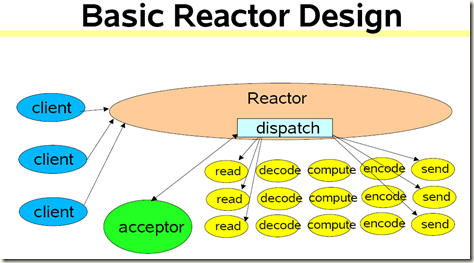
看代码会更清楚,
class Reactor implements Runnable {

    final Selector selector;

    final ServerSocketChannel serverSocket;

    Reactor(int port) throws IOException { //Reactor初始化

        selector = Selector.open();

        serverSocket = ServerSocketChannel.open();

        serverSocket.socket().bind(new InetSocketAddress(port));

        serverSocket.configureBlocking(false); //非阻塞

        SelectionKey sk = serverSocket.register(selector, SelectionKey.OP_ACCEPT); //分步处理,第一步,接收accept事件

        sk.attach(new Acceptor()); //attach callback object, Acceptor

    }

    public void run() {

        try {

            while (!Thread.interrupted()) {

                selector.select();

                Set selected = selector.selectedKeys();

                Iterator it = selected.iterator();

                while (it.hasNext())

                    dispatch((SelectionKey)(it.next()); //Reactor负责dispatch收到的事件

                selected.clear();

            }

        } catch (IOException ex) { /* ... */ }

    }

    void dispatch(SelectionKey k) {

    	Runnable r = (Runnable)(k.attachment()); //调用之前注册的callback对象

    	if (r != null)

    	    r.run();

    }

    class Acceptor implements Runnable { // inner

        public void run() {

            try {

                SocketChannel c = serverSocket.accept();

                if (c != null)

                new Handler(selector, c);

            }

            catch(IOException ex) { /* ... */ }

        }

    }

}

final class Handler implements Runnable {

    final SocketChannel socket;

    final SelectionKey sk;

    ByteBuffer input = ByteBuffer.allocate(MAXIN);

    ByteBuffer output = ByteBuffer.allocate(MAXOUT);

    static final int READING = 0, SENDING = 1;

    int state = READING;

    Handler(Selector sel, SocketChannel c) throws IOException {

        socket = c; c.configureBlocking(false);

        // Optionally try first read now

        sk = socket.register(sel, 0);

        sk.attach(this); //将Handler作为callback对象

        sk.interestOps(SelectionKey.OP_READ); //第二步,接收Read事件

        sel.wakeup();

    }

    boolean inputIsComplete() { /* ... */ }

    boolean outputIsComplete() { /* ... */ }

    void process() { /* ... */ }

    public void run() {

        try {

            if (state == READING) read();

            else if (state == SENDING) send();

        } catch (IOException ex) { /* ... */ }

    }

    void read() throws IOException {

        socket.read(input);

        if (inputIsComplete()) {

            process();

            state = SENDING;

            // Normally also do first write now

            sk.interestOps(SelectionKey.OP_WRITE); //第三步,接收write事件

        }

    }

    void send() throws IOException {

        socket.write(output);

        if (outputIsComplete()) sk.cancel(); //write完就结束了, 关闭select key

    }

}

//上面 的实现用Handler来同时处理Read和Write事件, 所以里面出现状态判断

//我们可以用State-Object pattern来更优雅的实现

class Handler { // ...

    public void run() { // initial state is reader

        socket.read(input);

        if (inputIsComplete()) {

            process();

            sk.attach(new Sender());  //状态迁移, Read后变成write, 用Sender作为新的callback对象

              sk.interest(SelectionKey.OP_WRITE);

            sk.selector().wakeup();

        }

    }

    class Sender implements Runnable {

        public void run(){ // ...

            socket.write(output);

            if (outputIsComplete()) sk.cancel();

        }

    }

}
单线程模式的局限还是比较明显的
所以改进是, 将比较耗时的部分, 从reactor线程中分离出去, 让reactor专门负责IO
而另外创建Thread Pool和queue来缓存和处理任务
所以其实已经进化成Proactor模式, 异步模式

class Handler implements Runnable {

    // uses util.concurrent thread pool

    static PooledExecutor pool = new PooledExecutor(...);

    static final int PROCESSING = 3;

    // ...

    synchronized void read() { // ...

        socket.read(input);

        if (inputIsComplete()) {

            state = PROCESSING;

            pool.execute(new Processer()); //使用线程pool异步执行

        }

    }

    synchronized void processAndHandOff() {

        process();

        state = SENDING; // or rebind attachment

        sk.interest(SelectionKey.OP_WRITE); //process完,开始等待write事件

    }

    class Processer implements Runnable {

        public void run() { processAndHandOff(); }

    }

}
使用多个reactor进程, 主reactor只负责accept, 然后将接收到的socketchannel交给subReactor去listen和处理
当然也可以在subReactor下加上线程池进行异步处理
坦白的说, 没看出用多个reactor有啥大的提升, 降低mainReactor listen的负担?

Selector[] selectors; //subReactors集合, 一个selector代表一个subReactor

int next = 0;

class Acceptor { // ...

    public synchronized void run() { ...

        Socket connection = serverSocket.accept(); //主selector负责accept

        if (connection != null)

            new Handler(selectors[next], connection); //选个subReactor去负责接收到的connection

        if (++next == selectors.length) next = 0;

    }

}
Scalable IO in Java的更多相关文章
- 《Scalable IO in Java》笔记
Scalable IO in Java http://gee.cs.oswego.edu/dl/cpjslides/nio.pdf 基本上所有的网络处理程序都有以下基本的处理过程:Read reque ...
- 【精尽Netty源码解析】1.Scalable IO in Java——多Reactor的代码实现
Java高伸缩性IO处理 在Doug Lea大神的经典NIO框架文章<Scalable IO in Java>中,具体阐述了如何把Reactor模式和Java NIO整合起来,一步步理论结 ...
- Netty Reator(二)Scalable IO in Java
Netty Reator(二)Scalable IO in Java Netty 系列目录 (https://www.cnblogs.com/binarylei/p/10117436.html) Do ...
- 《Scalable IO in Java》译文
<Scalable IO in Java> 是java.util.concurrent包的作者,大师Doug Lea关于分析与构建可伸缩的高性能IO服务的一篇经典文章,在文章中Doug L ...
- 学习 Doug Lea 大神写的——Scalable IO in Java
学习 Doug Lea 大神写的--Scalable IO in Java 网络服务 Web services.分布式对象等等都具有相同的处理结构 Read request Decode reques ...
- 一文弄懂-《Scalable IO In Java》
目录 一. <Scalable IO In Java> 是什么? 二. IO架构的演变历程 1. Classic Service Designs 经典服务模型 2. Event-drive ...
- Scalable IO in Java【java高效IO】
第一次翻译,如有错误,请指正 1.Outline 大纲Scalable network services 高效网络服务 Event-driven processing 事件驱动处理 Reactor ...
- 【转载】高性能IO设计 & Java NIO & 同步/异步 阻塞/非阻塞 Reactor/Proactor
开始准备看Java NIO的,这篇文章:http://xly1981.iteye.com/blog/1735862 里面提到了这篇文章 http://xmuzyq.iteye.com/blog/783 ...
- hive运行query语句时提示错误:org.apache.hadoop.ipc.RemoteException: java.io.IOException: java.io.IOException:
hive> select product_id, track_time from trackinfo limit 5; Total MapReduce jobs = 1 Launching Jo ...
随机推荐
- 转:python之如何在某文件中调用其他文件内的函数
假设名为A.py的文件需要调用B.py文件内的C(x,y)函数 情形1:在同一目录下, (1) import B if __name__ == "__main__": B.C(x, ...
- django中使用POST方法报错 URL via POST, but the URL doesn't end in a slash
该方式是因为URL路径没有使用slash(斜线"/")结尾造成的. 因此在使用POST的JavaScript函数的路径参数中,路径URL必须使用/结尾.
- Macbook上Windows的触摸板设置工具
Macbook上用Boot Camp装了双系统后,没了触摸板的三指拖拽功能,滚动(scroll)也太过灵敏,装Boot Camp官方驱动也没用. 装了Trackpad++这个第三方驱动,就能完美实现M ...
- mui调用webservice
document.getElementById("confirm").addEventListener('tap', function() {var respnoseEl = do ...
- 猫猫学iOS 之微博项目实战(5)微博自己定义搜索框searchBar
猫猫分享.必须精品 原创文章.欢迎转载. 转载请注明:翟乃玉的博客 地址:http://blog.csdn.net/u013357243 一:效果 用UITextField简单定义一个搜索框 二:调用 ...
- poj1961 Period kmp解决找字符串的最小循环节
/** 题目:poj1961 Period 链接:http://poj.org/problem?id=1961 题意:求从1到i这个前缀(2<=i<=N) ,如果有循环节(不能自身单独一个 ...
- hdu6073 Matching In Multiplication 分析+拓扑序
Matching In Multiplication Time Limit: 6000/3000 MS (Java/Others) Memory Limit: 524288/524288 K ( ...
- 命令行执行php
D:\software\phpStudy\php55
- 【转】VC下的Unicode编程
转自http://www.leewei.org/?p=1304 UniCode简述 在Windows下用VC编程,如果编写的程序要在多种语言环境下运行(比如日文.中文.葡萄牙文等),使用VC默认的MB ...
- convolutional neural network 课程笔记
一.CNN基础 (1)CNN在CV方面的应用 image classification(图像识别).object detection(目标检测).neural style transfer(风格迁移) ...