
深入浅出Mybatis系列(十)---SQL执行流程分析(源码篇)
最近太忙了,一直没时间继续更新博客,今天忙里偷闲继续我的Mybatis学习之旅。在前九篇中,介绍了mybatis的配置以及使用, 那么本篇将走进mybatis的源码,分析mybatis 的执行流程, 好啦,鄙人不喜欢口水话,还是直接上干活吧:
1. SqlSessionFactory 与 SqlSession.
通过前面的章节对于mybatis 的介绍及使用,大家都能体会到SqlSession的重要性了吧, 没错,从表面上来看,咱们都是通过SqlSession去执行sql语句(注意:是从表面看,实际的待会儿就会讲)。那么咱们就先看看是怎么获取SqlSession的吧:
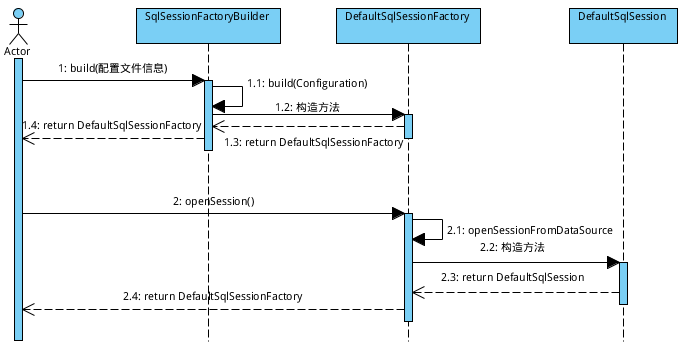
(1)首先,SqlSessionFactoryBuilder去读取mybatis的配置文件,然后build一个DefaultSqlSessionFactory。源码如下:
/**

   * 一系列的构造方法最终都会调用本方法(配置文件为Reader时会调用本方法,还有一个InputStream方法与此对应)

   * @param reader

   * @param environment

   * @param properties

   * @return

   */

  public SqlSessionFactory build(Reader reader, String environment, Properties properties) {

    try {

      //通过XMLConfigBuilder解析配置文件,解析的配置相关信息都会封装为一个Configuration对象

      XMLConfigBuilder parser = new XMLConfigBuilder(reader, environment, properties);

      //这儿创建DefaultSessionFactory对象

      return build(parser.parse());

    } catch (Exception e) {

      throw ExceptionFactory.wrapException("Error building SqlSession.", e);

    } finally {

      ErrorContext.instance().reset();

      try {

        reader.close();

      } catch (IOException e) {

        // Intentionally ignore. Prefer previous error.

      }

    }

  }

  public SqlSessionFactory build(Configuration config) {

    return new DefaultSqlSessionFactory(config);

  }
(2)当我们获取到SqlSessionFactory之后,就可以通过SqlSessionFactory去获取SqlSession对象。源码如下:
/**

   * 通常一系列openSession方法最终都会调用本方法

   * @param execType

   * @param level

   * @param autoCommit

   * @return

   */

  private SqlSession openSessionFromDataSource(ExecutorType execType, TransactionIsolationLevel level, boolean autoCommit) {

    Transaction tx = null;

    try {

      //通过Confuguration对象去获取Mybatis相关配置信息, Environment对象包含了数据源和事务的配置

      final Environment environment = configuration.getEnvironment();

      final TransactionFactory transactionFactory = getTransactionFactoryFromEnvironment(environment);

      tx = transactionFactory.newTransaction(environment.getDataSource(), level, autoCommit);

      //之前说了,从表面上来看,咱们是用sqlSession在执行sql语句, 实际呢,其实是通过excutor执行, excutor是对于Statement的封装

      final Executor executor = configuration.newExecutor(tx, execType);

      //关键看这儿,创建了一个DefaultSqlSession对象

      return new DefaultSqlSession(configuration, executor, autoCommit);

    } catch (Exception e) {

      closeTransaction(tx); // may have fetched a connection so lets call close()

      throw ExceptionFactory.wrapException("Error opening session.  Cause: " + e, e);

    } finally {

      ErrorContext.instance().reset();

    }

  }
通过以上步骤,咱们已经得到SqlSession对象了。接下来就是该干嘛干嘛去了(话说还能干嘛,当然是执行sql语句咯)。看了上面,咱们也回想一下之前写的Demo,
SqlSessionFactory sessionFactory = null;

String resource = "mybatis-conf.xml";

try {

     //SqlSessionFactoryBuilder读取配置文件

    sessionFactory = new SqlSessionFactoryBuilder().build(Resources

              .getResourceAsReader(resource));

} catch (IOException e) {

    e.printStackTrace();

}
//通过SqlSessionFactory获取SqlSession
SqlSession sqlSession = sessionFactory.openSession();
还真这么一回事儿,对吧!
SqlSession咱们也拿到了,咱们可以调用SqlSession中一系列的select..., insert..., update..., delete...方法轻松自如的进行CRUD操作了。 就这样? 那咱配置的映射文件去哪儿了? 别急, 咱们接着往下看:
2. 利器之MapperProxy:
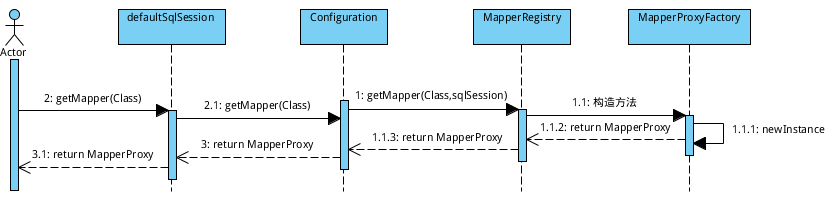
在mybatis中,通过MapperProxy动态代理咱们的dao, 也就是说, 当咱们执行自己写的dao里面的方法的时候,其实是对应的mapperProxy在代理。那么,咱们就看看怎么获取MapperProxy对象吧:
(1)通过SqlSession从Configuration中获取。源码如下:
/**

   * 什么都不做,直接去configuration中找, 哥就是这么任性

   */

  @Override

  public <T> T getMapper(Class<T> type) {

    return configuration.<T>getMapper(type, this);

  }
(2)SqlSession把包袱甩给了Configuration, 接下来就看看Configuration。源码如下:
/**

   * 烫手的山芋,俺不要,你找mapperRegistry去要

   * @param type

   * @param sqlSession

   * @return

   */

  public <T> T getMapper(Class<T> type, SqlSession sqlSession) {

    return mapperRegistry.getMapper(type, sqlSession);

  }
(3)Configuration不要这烫手的山芋,接着甩给了MapperRegistry, 那咱看看MapperRegistry。 源码如下:
/**

   * 烂活净让我来做了,没法了,下面没人了,我不做谁来做

   * @param type

   * @param sqlSession

   * @return

   */

  @SuppressWarnings("unchecked")

  public <T> T getMapper(Class<T> type, SqlSession sqlSession) {

    //能偷懒的就偷懒,俺把粗活交给MapperProxyFactory去做

    final MapperProxyFactory<T> mapperProxyFactory = (MapperProxyFactory<T>) knownMappers.get(type);

    if (mapperProxyFactory == null) {

      throw new BindingException("Type " + type + " is not known to the MapperRegistry.");

    }

    try {

      //关键在这儿

      return mapperProxyFactory.newInstance(sqlSession);

    } catch (Exception e) {

      throw new BindingException("Error getting mapper instance. Cause: " + e, e);

    }

  }
(4)MapperProxyFactory是个苦B的人,粗活最终交给它去做了。咱们看看源码:
/**

   * 别人虐我千百遍,我待别人如初恋

   * @param mapperProxy

   * @return

   */

  @SuppressWarnings("unchecked")

  protected T newInstance(MapperProxy<T> mapperProxy) {

    //动态代理我们写的dao接口

    return (T) Proxy.newProxyInstance(mapperInterface.getClassLoader(), new Class[] { mapperInterface }, mapperProxy);

  }

  public T newInstance(SqlSession sqlSession) {

    final MapperProxy<T> mapperProxy = new MapperProxy<T>(sqlSession, mapperInterface, methodCache);

    return newInstance(mapperProxy);

  }
通过以上的动态代理,咱们就可以方便地使用dao接口啦, 就像之前咱们写的demo那样:
 UserDao userMapper = sqlSession.getMapper(UserDao.class);

 User insertUser = new User();
这下方便多了吧, 呵呵, 貌似mybatis的源码就这么一回事儿啊。
别急,还没完, 咱们还没看具体是怎么执行sql语句的呢。
3. Excutor:
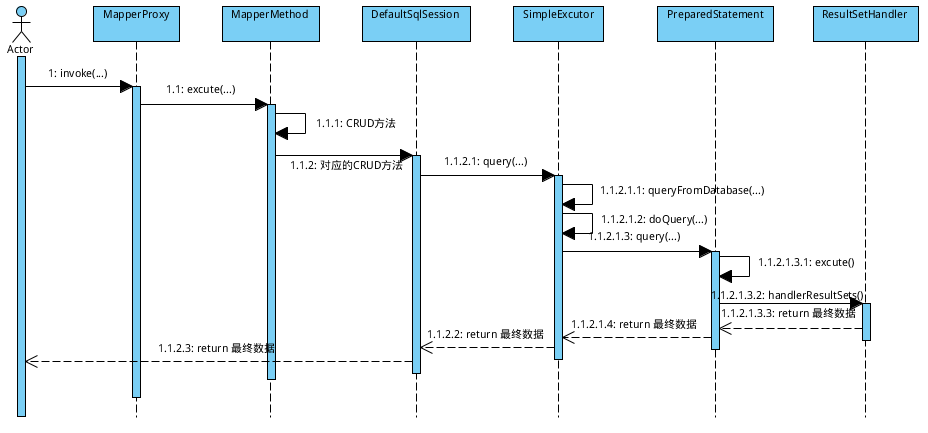
接下来,咱们才要真正去看sql的执行过程了。
上面,咱们拿到了MapperProxy, 每个MapperProxy对应一个dao接口, 那么咱们在使用的时候,MapperProxy是怎么做的呢? 源码奉上:
MapperProxy:
/**

   * MapperProxy在执行时会触发此方法

   */

  @Override

  public Object invoke(Object proxy, Method method, Object[] args) throws Throwable {

    if (Object.class.equals(method.getDeclaringClass())) {

      try {

        return method.invoke(this, args);

      } catch (Throwable t) {

        throw ExceptionUtil.unwrapThrowable(t);

      }

    }

    final MapperMethod mapperMethod = cachedMapperMethod(method);

    //二话不说,主要交给MapperMethod自己去管

    return mapperMethod.execute(sqlSession, args);

  }
MapperMethod:
 /**

   * 看着代码不少,不过其实就是先判断CRUD类型,然后根据类型去选择到底执行sqlSession中的哪个方法,绕了一圈,又转回sqlSession了

   * @param sqlSession

   * @param args

   * @return

   */

  public Object execute(SqlSession sqlSession, Object[] args) {

    Object result;

    if (SqlCommandType.INSERT == command.getType()) {

      Object param = method.convertArgsToSqlCommandParam(args);

      result = rowCountResult(sqlSession.insert(command.getName(), param));

    } else if (SqlCommandType.UPDATE == command.getType()) {

      Object param = method.convertArgsToSqlCommandParam(args);

      result = rowCountResult(sqlSession.update(command.getName(), param));

    } else if (SqlCommandType.DELETE == command.getType()) {

      Object param = method.convertArgsToSqlCommandParam(args);

      result = rowCountResult(sqlSession.delete(command.getName(), param));

    } else if (SqlCommandType.SELECT == command.getType()) {

      if (method.returnsVoid() && method.hasResultHandler()) {

        executeWithResultHandler(sqlSession, args);

        result = null;

      } else if (method.returnsMany()) {

        result = executeForMany(sqlSession, args);

      } else if (method.returnsMap()) {

        result = executeForMap(sqlSession, args);

      } else {

        Object param = method.convertArgsToSqlCommandParam(args);

        result = sqlSession.selectOne(command.getName(), param);

      }

    } else {

      throw new BindingException("Unknown execution method for: " + command.getName());

    }

    if (result == null && method.getReturnType().isPrimitive() && !method.returnsVoid()) {

      throw new BindingException("Mapper method '" + command.getName()

          + " attempted to return null from a method with a primitive return type (" + method.getReturnType() + ").");

    }

    return result;

  }
既然又回到SqlSession了, 那么咱们就看看SqlSession的CRUD方法了,为了省事,还是就选择其中的一个方法来做分析吧。这儿,咱们选择了selectList方法:
public <E> List<E> selectList(String statement, Object parameter, RowBounds rowBounds) {

    try {

      MappedStatement ms = configuration.getMappedStatement(statement);

      //CRUD实际上是交给Excetor去处理, excutor其实也只是穿了个马甲而已,小样,别以为穿个马甲我就不认识你嘞!

      return executor.query(ms, wrapCollection(parameter), rowBounds, Executor.NO_RESULT_HANDLER);

    } catch (Exception e) {

      throw ExceptionFactory.wrapException("Error querying database.  Cause: " + e, e);

    } finally {

      ErrorContext.instance().reset();

    }

  }
然后,通过一层一层的调用,最终会来到doQuery方法, 这儿咱们就随便找个Excutor看看doQuery方法的实现吧,我这儿选择了SimpleExecutor:
public <E> List<E> doQuery(MappedStatement ms, Object parameter, RowBounds rowBounds, ResultHandler resultHandler, BoundSql boundSql) throws SQLException {

    Statement stmt = null;

    try {

      Configuration configuration = ms.getConfiguration();

      StatementHandler handler = configuration.newStatementHandler(wrapper, ms, parameter, rowBounds, resultHandler, boundSql);

      stmt = prepareStatement(handler, ms.getStatementLog());

      //StatementHandler封装了Statement, 让 StatementHandler 去处理

      return handler.<E>query(stmt, resultHandler);

    } finally {

      closeStatement(stmt);

    }

  }
接下来,咱们看看StatementHandler 的一个实现类 PreparedStatementHandler(这也是我们最常用的,封装的是PreparedStatement), 看看它使怎么去处理的:
public <E> List<E> query(Statement statement, ResultHandler resultHandler) throws SQLException {

     //到此,原形毕露, PreparedStatement, 这个大家都已经滚瓜烂熟了吧

    PreparedStatement ps = (PreparedStatement) statement;

    ps.execute();

    //结果交给了ResultSetHandler 去处理

    return resultSetHandler.<E> handleResultSets(ps);

  }
到此, 一次sql的执行流程就完了。 我这儿仅抛砖引玉,建议有兴趣的去看看Mybatis3的源码。
好啦,本次就到此结束啦,最近太忙了, 又该忙去啦。
深入浅出Mybatis系列(十)---SQL执行流程分析(源码篇)的更多相关文章
- 深入浅出Mybatis系列十-SQL执行流程分析(源码篇)
注:本文转载自南轲梦 注:博主 Chloneda:个人博客 | 博客园 | Github | Gitee | 知乎 最近太忙了,一直没时间继续更新博客,今天忙里偷闲继续我的Mybatis学习之旅.在前 ...
- Hive SQL执行流程分析
转自 http://www.tuicool.com/articles/qyUzQj 最近在研究Impala,还是先回顾下Hive的SQL执行流程吧. Hive有三种用户接口: cli (Command ...
- SpringMVC执行流程及源码分析
SpringMVC流程及源码分析 前言 学了一遍SpringMVC以后,想着做一个总结,复习一下.复习写下面的总结的时候才发现,其实自己学的并不彻底.牢固.也没有学全,视频跟书本是要结合起来一起, ...
- django Rest Framework----APIView 执行流程 APIView 源码分析
在django—CBV源码分析中,我们是分析的from django.views import View下的执行流程,这篇博客我们介绍django Rest Framework下的APIView的源码 ...
- Django 基于类的视图(CBV)执行流程 CBV 源码分析
一.CBV(基于类的视图) 视图是可以调用的,它接受请求并返回响应,这不仅仅是一个函数,Django提供了一些可以用作视图的类的例子,这些允许您通过继承或mixin来构建视图并重用代码. 基本示例 D ...
- Struts流程分析+源码分析
1.初始化工作 读取配置---转换器-----读取插件 当struts-config.xml配置文件加载到内存,则会创建两个map:ActionConfigs,FromBeans.这两个map都交由M ...
- 深入浅出Mybatis系列(九)---强大的动态SQL
上篇文章<深入浅出Mybatis系列(八)---mapper映射文件配置之select.resultMap>简单介绍了mybatis的查询,至此,CRUD都已讲完.本文将介绍mybatis ...
- 深入浅出Mybatis系列(九)---强大的动态SQL(转载)
原文出处:http://www.cnblogs.com/dongying/p/4092662.html 上篇文章<深入浅出Mybatis系列(八)---mapper映射文件配置之select.r ...
- 深入浅出Mybatis系列九-强大的动态SQL
注:本文转载自南轲梦 注:博主 Chloneda:个人博客 | 博客园 | Github | Gitee | 知乎 上篇文章<深入浅出Mybatis系列(八)---mapper映射文件配置之se ...
随机推荐
- [比较老的文章]三维渲染引擎 OGRE 与 OSG 的比较综述
1 .引言随着计算机可视化.虚拟现实技术的飞速发展,人们对实时真实感渲染以及场景复杂度提出了更高的要求.传统的直接使用底层图形接口如OpenGL.DirectX开发图形应用的模式越来越暴露出开发复杂性 ...
- Http状态码(转)
什么是Http状态码?(转自http://bbs.tui18.com/thread-11597640-1-1.html) 百度百科上解释为:HTTP状态码(HTTP Status Code)是用以表示 ...
- mysql压缩包安装配置
1.在环境变量中添加:MYSQL_HOME:C:\05_study\mysql-5.7.10-winx64,在path路径中加入:%MYSQL_HOME%\bin.配置环境变量不是必须的,只是为了能更 ...
- [Linux] vimdiff 快速比较和合并少量文件
纯文本文件比较和合并工具一直是软件开发过程中比较重要的组成部分,vimdiff 能够在比较出来的多处差异之间快速定位,很容易的进行文件合并操作.在需要快速比较和合并少量文件的时候,vimdiff是很好 ...
- sql中文日期格式转换(xxxx年x月x日)
) set @dd='2014年10月1日' select replace(replace( replace(@dd,'日',''),'月','-'),'年','-') 别人的方法 )='2012年1 ...
- [poj2247] Humble Numbers (DP水题)
DP 水题 Description A number whose only prime factors are 2,3,5 or 7 is called a humble number. The se ...
- table表格,让thead固定,tbody有滚动条,关键是都对齐的纯css写法。
找了好久才找到一篇可以简单粗暴就能用的,所以拿过来算是收藏了.里面有一个css2里的命令是我没用过的也是这里面关键的:table-layout:fixed; 原理很简单,有爱研究的童鞋可以去css官网 ...
- 连接MySQL错误:Can't connect to MySQL server (10060)
问题原因: 导致些问题可能有以下几个原因: 1.网络不通: 2.服务未启动: 3.防火墙端口未开放: ----防火墙端口未开放的可能性比较大
- PHP interface(接口)的示例代码
<?php class DocumentStore { protected $data = []; public function addDocument(Documentable $docum ...
- DP4J -- mnist
标签(空格分隔): DeepLearning mnist mnist是一个数据集,其中包含很多手写数字的图片,每张图片都已经打上了label: Deep Learning 传统的机器学习神经网络由一层 ...